Best Gold Bracelets: Karat, Weight and What Lasts

This post may contain affiliate links. Read our affiliate policy
- U7 Mens Gold Rope Chain Bracelet, 14K Gold Plated Twisted Wrist Chain 8.3"
- Kooljewelry Womens Rope Chain - 14k Gold Filled Rope Chain Bracelet
- Luxmad 14K Gold Rope Bracelet for Women Men, 1.5mm Twisted Link
- 10k Yellow Gold 2.6mm Men's or Women's Rope Chain Bracelet (7.5 inch)
- Nuragold 14k Real Yellow Gold Cuban Curb Link 3.5mm Chain Bracelet - 7"
- IceCarats 14K Yellow Gold 3.5mm Figaro Chain Link Bracelet, 7 inch
Two bracelets sit next to each other in the search results. Both are stamped 14K. One is $80, the other $435. Between them the listings offer a width in millimetres, a length in inches, and photographs shot to make each look substantial. Neither publishes the number that would let you compare them: how many grams of gold you are buying.
This article contains affiliate links. We may earn a commission if you make a purchase through our links, at no extra cost to you.
That missing number is the subject of this article. A gold bracelet's price is set by how many grams of gold it contains, and almost no listing tells you the gram weight. Karat describes the purity of the metal that is present, not how much of it there is — which is why two bracelets with the same stamp can differ fivefold in price and both prices be honest.
Our six picks run from $16.49 to $435 as of September 2026, arranged as a ladder: plated, gold filled, then three grades of solid gold. The best gold bracelet for you is the one whose construction matches how often you plan to wear it, and the karat stamp will not tell you that. If you are new to the category, our pillar on how to choose a bracelet covers fit and closures.
Table of Contents
- The Four Things "Gold" Can Mean
- Karat, Fineness and What the Stamp Leaves Out
- Hollow or Solid: Doing the Arithmetic
- Reading a Listing Line by Line
- Our Picks, Cheapest First
- Clasps: The Cheap Part That Loses the Bracelet
- The Six at a Glance
- Choosing by Budget and by Wear
- FAQ
The Four Things "Gold" Can Mean
Four words do almost all the work here, and three carry US legal definitions with numbers attached — numbers smaller than most buyers assume.
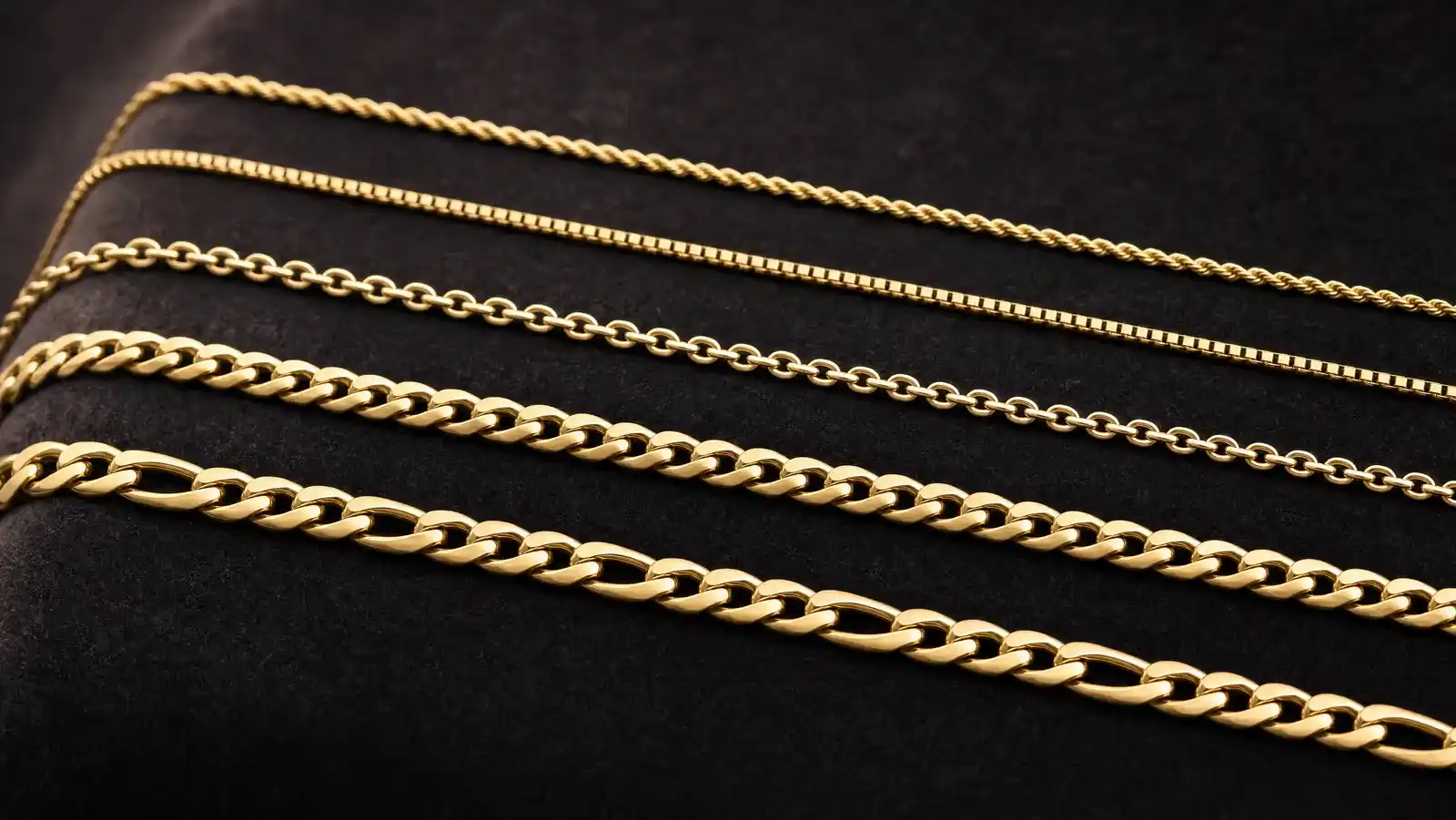
Gold plated is an electroplated film over base metal. According to the Federal Trade Commission's Guides for the Jewelry, Precious Metals, and Pewter Industries at 16 CFR Part 23, an article may be marked "gold electroplate" when the coating is deposited electrolytically from gold of not less than 10 karat fineness at a minimum thickness throughout equivalent to 0.175 microns — approximately 7/1,000,000ths of an inch of fine gold. "Heavy gold electroplate" raises that floor to two and a half microns. Seven millionths of an inch is a colour, not a metal, which is why a karat figure on a plated item means very little. Our cheapest pick proves it by disagreeing with itself: the U7's title says 14K plated, a bullet in the same listing says 18K.
Gold filled is the term buyers most often underrate. The same Guides state that when the bonded plating constitutes at least 1/20th of the weight of the metal in the entire article, the term "Gold Filled" may be used. That is where the "1/20 14K GF" stamp on our Kooljewelry pick comes from: a 14 karat bonded layer accounting for one twentieth — 5 percent — of total weight. Gold filled carries orders of magnitude more gold than plating, and the FTC defines it by weight rather than by the micron-thin coating thickness that governs plating.
Solid gold means the alloy runs through the whole cross-section, so the piece can be repaired, resized and sold for scrap. It also hides the most: "solid" says nothing about whether the links are hollow tubes.
Vermeil is gold over sterling silver rather than base metal. Under 16 CFR 23.4, a product may be called vermeil when a sterling silver base is coated on all significant surfaces with gold of not less than 10 karat fineness at a minimum thickness throughout equivalent to two and a half microns. None of our picks is vermeil, but you meet it constantly at these prices: thicker than electroplate, still a coating. The same terms applied to neckwear are covered in our guide to gold chain necklaces.
Karat, Fineness and What the Stamp Leaves Out
A karat is a twenty-fourth. Pure gold is 24 karat; everything below is a mix of gold and other metals that do the structural work. Purity is also written as millesimal fineness, in parts per thousand: according to the Assay Office London, UK hallmarks use 585 for 14 carat and 750 for 18 carat. The matching US figures are 417 for 10k and 999 for 24k.
| Stamp | Fineness | Gold content |
|---|---|---|
| 10K / 417 | 417 parts per 1,000 | 41.7% |
| 14K / 585 / AU585 | 585 parts per 1,000 | 58.5% |
| 18K / 750 | 750 parts per 1,000 | 75% |
| 24K / 999 | 999 parts per 1,000 | 99.9% |
One wrinkle: 14 divided by 24 is 58.33 percent, but the fineness standard is set at 585, so 14k is manufactured to 58.5 percent. Use 585.
Note what the table does not say: that 18k is better. More gold means a warmer yellow and a softer surface; less gold a harder, paler alloy — the trade-off we describe in gold vs platinum. It is why our 10k pick is a defensible buy rather than a compromise.
The legal floor is lower than most people think. The FTC's 2018 revision of the Jewelry Guides removed the old karat thresholds, and as trade coverage by JCK and Jewelers of America explained at the time, marketers may now use gold terms for alloys above or below 10 karats provided they disclose the karat fineness clearly and conspicuously. Ten karat is the customary US floor, not a legal one. If a listing says "gold" with no number in front of it, that absence is the information.
Hollow or Solid: Doing the Arithmetic
This is the section the article exists for, and one pick makes it possible. The Nuragold is 14k, 3.5mm wide, 7 inches long, lobster clasp — and its listing states an approximate weight of 1.7 grams and hollow links. At $350.99 as of September 2026, that is rare: a listing that gives you enough to do the maths.
So do it. 1.7 grams at 58.5 percent gold is about 1.0 gram of fine gold. According to JM Bullion's live spot price chart, gold was quoted at $142.87 per gram — $4,443.63 per troy ounce — on September 4, 2026. That gram of fine gold was worth roughly $142, against a $350.99 retail price.
Be fair about what the gap is: drawing wire, forming and soldering hundreds of links, hand polishing, the clasp, Italian manufacture, import, the platform's cut and the retailer's margin. Gold jewelry has always sold well above melt, and a piece where metal is roughly 40 percent of the price is not a scandal. The point is that you should be able to see the gap — and on five of our six picks you cannot.
Then the practical consequence. Hollow links are formed from thin-walled tubing, which buys a 3.5mm profile at a fraction of the weight and price of a solid link with the same footprint — exactly why the Nuragold looks more expensive than it is. The cost is structural. Bench jewelers consistently warn that a hollow link crimped in a door dents inward and cannot easily be pushed back out, and that torch repairs are difficult because the thin wall melts before the solder flows. A solid link of the same width weighs several times as much and survives the accident.
Neither is wrong. A hollow 14k bracelet worn to dinner will outlive you; worn to the gym daily it is a repair waiting to be quoted.
Reading a Listing Line by Line
Six things to check, in order of how much they tell you.
- The stamp. 14K, 585, AU585, 1/20 14K GF. AU585 on the Luxmad is the European way of writing 14 karat — and the maker cites that stamp on the clasp, not a mark on the links.
- The gram weight. Usually absent. Treat its absence as information: a maker who built a heavy piece has every reason to say so.
- The width in mm. What decides how it looks, and the number a hollow construction lets a maker inflate cheaply.
- The length in inches. Order the finished length, not your wrist measurement, and add slack. Our bracelet size guide covers how much.
- The clasp. If it is not named, assume the cheapest option that fits the price.
- Whether the listing agrees with itself.
That last check is not theoretical. The U7 says 14K plated in the title and 18K in a bullet. The IceCarats says 7 inch in the title and 8 inches in the specification bullet — a full size apart — and calls its construction both solid 14k and "semi-solid". Neither is disqualifying. Both mean you confirm the exact variation with the seller before ordering, not after the box arrives.
Our Picks, Cheapest First
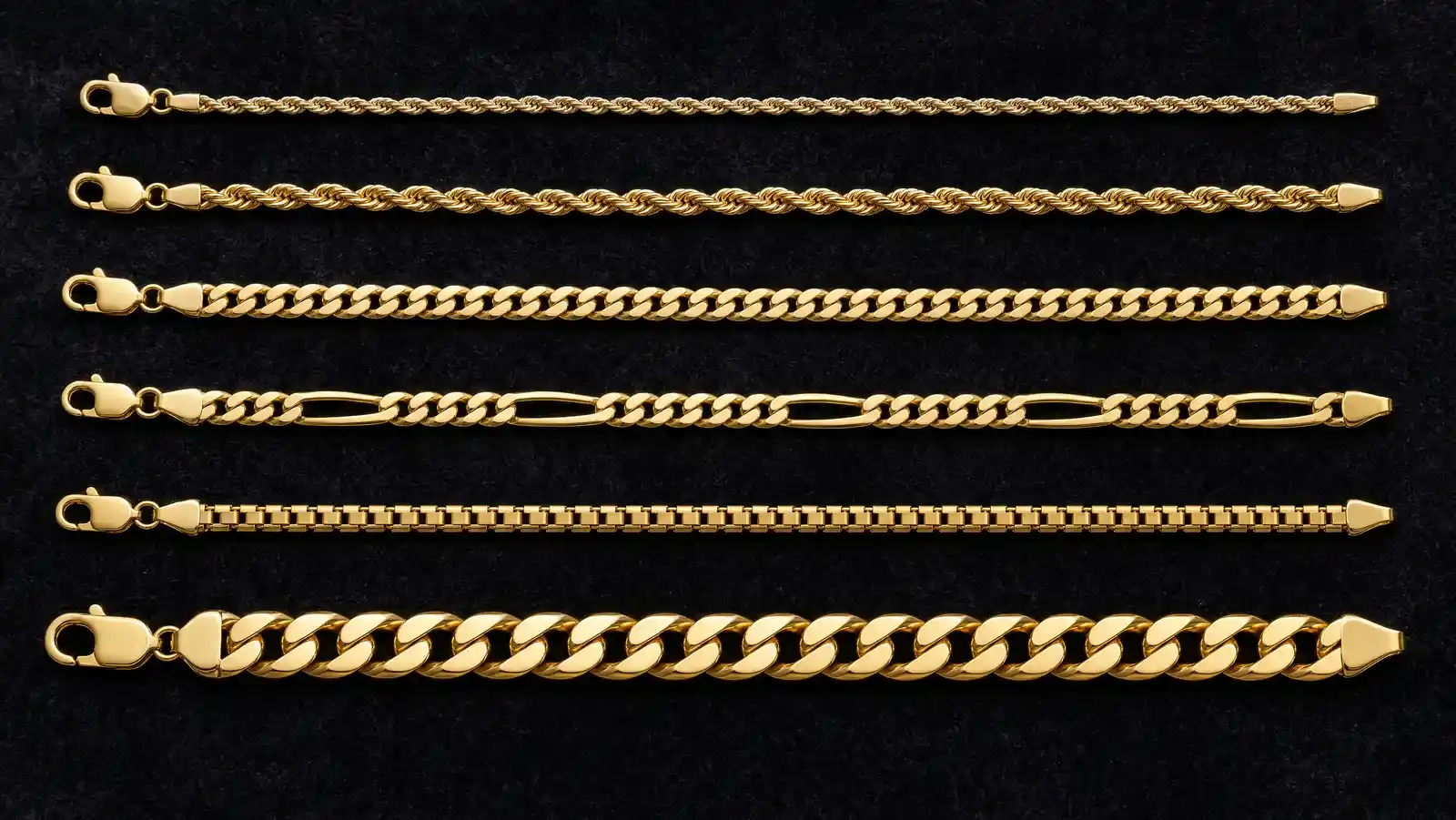
Six bracelets in rising price order, at prices as of September 2026.
Best Under $20: U7 3mm Plated Twisted Link
$16.49 buys a 3mm twisted link, 8.3 inches long, plated over a 316L stainless steel core, with a lobster claw. U7 states the metals are lead free, nickel free and hypoallergenic.
The stainless core beats the brass commonly used at this price: when the plating wears, the metal underneath is inert rather than green. But 8.3 inches is long — a men's size, loose on an average wrist. Buy it to test a look, not to keep.
Best Gold-Filled: Kooljewelry 1/20 14K GF Rope Link
$52, and per dollar of durable gold the strongest buy here. The stamp is the argument: a bonded 14 karat layer at one twentieth of the article's weight, the FTC threshold quoted above. It comes in 7.5 and 8.5 inch lengths with a lobster claw.
Gold filled behaves like gold on the surface, so our notes on how to clean ring metals transfer directly. The limit is that it is a layer over a core: no resizing, no meaningful scrap value outside a bulk refiner, and a deep gouge is permanent.
Cheapest Solid 14k: Luxmad 1.5mm Twisted Link
$80 is very little for metal that is gold all the way through, and the specification shows why: 1.5mm. Luxmad calls it lightweight and delicate, which is accurate rather than modest, and offers 6.5, 7 and 7.5 inch lengths with an AU585 stamp on the clasp as proof of purity.
At 1.5mm the strand is about the thickness of a heavy thread — a real style that layers well, but the width most likely to part on a snag, and a repair never looks quite the same.
Best 10k Option: Kooljewelry 2.6mm 10k Link
$196 for a 2.6mm twisted link in 10k, 7.5 inches, which the maker calls unisex and suitable for everyday wear. Dropping from 14k to 10k is the least glamorous way to buy more bracelet, and it works: at 41.7 percent gold the alloy costs less per gram and is harder at the surface.
Colour is the first trade-off — 10k reads paler and cooler beside 14k. The second is the closure: the only spring ring here, and we would have it changed.
Most Transparent Listing: Nuragold 14k Cuban Curb, 3.5mm
$350.99 for a 3.5mm flat curb link, 7 inches, made in Italy, lobster clasp, approximately 1.7 grams, hollow links. Nuragold states it is not plated, not filled and not overlayed, and that each link is hand polished.
We have done the arithmetic: about 1.0 gram of fine gold, worth roughly $142 at the September 4, 2026 spot price. Beyond that you are buying a 3.5mm silhouette you could not otherwise get near this price, made properly. Just wear it knowing the walls are thin. If you would rather have stones than metal at this budget, best tennis bracelets is the comparison page.
Best Flat-Link Pattern: IceCarats 3.5mm 14k Figaro
$435, the most substantial-looking piece here: a 3.5mm figaro pattern of alternating short and long flat links in 14k, polished, with a lobster clasp. Flat links sit closer to the skin than round ones, which is why the pattern reads dressier.
Be clear-eyed about what you are not told. No gram weight. The same bullets call the construction both solid 14k and semi-solid. The title says 7 inch, the specification says 8 inches. At this price the piece belongs on a jewelry insurance schedule — but first pin the seller down on which variation ships.
Clasps: The Cheap Part That Loses the Bracelet
A bracelet fails differently from a necklace. A necklace clasp that opens drops the piece down your front; a bracelet clasp that opens drops it in a parking lot, and you find out at home.
Four of our six picks use a lobster claw: a spring-loaded gate inside a shaped body, opened by a lever that needs a deliberate pull.
The Kooljewelry 10k uses a spring ring — a hollow ring with a small gate worked by a thumb tab. It is the weakest closure in common use: the spring is fine wire, it fatigues, and it is the part that most often fails on an older bracelet. That does not make a $196 bracelet a bad buy; it makes it one whose clasp we would have swapped for a lobster claw, a modest bench job.
The Luxmad names no clasp type at all — only a small stainless steel internal spring, which is a mechanism, not a closure. For how closures differ across cuffs, bangles and charm designs, types of bracelets covers the field.
The Six at a Glance
| Pick | Construction | Karat | Width | Length | Clasp | Price (Sep 2026) |
|---|---|---|---|---|---|---|
| U7 Twisted Link | Plated over 316L stainless | 14K per title, 18K per bullet | 3mm | 8.3 in | Lobster claw | $16.49 |
| Kooljewelry Gold Filled | Gold filled, stamped 1/20 14K GF | 14k layer, 5% of weight | Not stated | 7.5 or 8.5 in | Lobster claw | $52.00 |
| Luxmad Twisted Link | Solid gold | 14k, AU585 on clasp | 1.5mm | 6.5, 7 or 7.5 in | Not stated | $80.00 |
| Kooljewelry 10k | Solid gold | 10k | 2.6mm | 7.5 in | Spring ring | $196.00 |
| Nuragold Cuban Curb | Solid gold, hollow links, approx 1.7 g | 14k | 3.5mm | 7 in | Lobster clasp | $350.99 |
| IceCarats Figaro | Solid 14k, maker also says semi-solid | 14k | 3.5mm | 7 in title, 8 in spec | Lobster clasp | $435.00 |
Choosing by Budget and by Wear
Under $60, worn daily. Buy the gold filled Kooljewelry at $52 and stop looking. This is the counterintuitive recommendation of the whole article: a gold-filled piece worn every day may well outlast a very fine solid chain, because gauge beats purity for durability. A bonded 14k layer over a substantial core does not care that it is 5 percent gold by weight; a 1.5mm solid strand cares very much that it is 1.5mm.
$80 to $200, you want real gold. The Luxmad at $80 if you want 14k colour and will take it off at night. The 10k Kooljewelry at $196 if you want a 2.6mm link you can forget about and will budget for a clasp swap.
$350 and up, you want presence. The Nuragold at $350.99 gives the most honest description here; the IceCarats at $435 gives the best flat-link look and the least information. Both are 3.5mm; only one tells you what it weighs.
A note on 18k. None of our six is 18k, and that is not an oversight. At 75 percent gold the metal cost roughly doubles against 10k for the same volume, so an 18k bracelet with any real weight starts above this range. Expect to pay for grams, not for the stamp.
Two last things. Measure your wrist and add your slack before you shop — fit sends more bracelets back than metal quality does. And if you are shopping wider links and 8-inch-plus lengths, a dedicated roundup of best men's bracelets is the better starting point. For how gold sits against the other bracelet materials, our complete guide to bracelets is the next page to read.
FAQ
Does gold filled tarnish?
The gold surface does not, because gold does not oxidise. What tarnishes is exposed base metal — at a worn edge, a deep scratch, or where the bonded layer meets a solder joint. Because the FTC threshold requires that layer to be at least 1/20 of the article's weight, it is far thicker than electroplate, and wear-through commonly takes years rather than months. That is the practical difference between gold filled and plating.
Is 10k or 14k better for a bracelet?
Neither; it depends what you want. 14k is 58.5 percent gold: warmer colour, more metal value, softer surface. 10k is 41.7 percent gold: paler, cheaper per gram, harder against scuffing. For a bracelet, which takes more incidental abrasion than anything else you wear, 10k is a legitimate choice rather than a downgrade.
How many grams should a gold bracelet weigh?
There is no correct weight, only one that matches the look and the price. Use the figure as a comparison tool: at the September 4, 2026 spot price quoted by JM Bullion of $142.87 per gram, a 14k piece carries about $84 of fine gold per gram of finished weight. That tells you whether you are paying for metal or for making. Five of our six picks publish no weight at all.
Can a hollow gold bracelet be repaired?
Sometimes, and rarely invisibly. Bench jewelers report two problems: a crimped hollow link dents inward and the wall cannot be pushed back out cleanly, and the thin tubing tends to melt before gold solder flows, so not every shop takes the job. Buy solid if the bracelet will live a rough life.
What does 1/20 14K GF actually mean?
It is a weight ratio, not a thickness. Per the FTC Jewelry Guides, gold filled may be used when the bonded plating is at least 1/20th of the weight of the metal in the entire article; "14K" identifies the alloy in that layer. So 5 percent of the bracelet's metal weight is 14 karat gold, mechanically bonded rather than electroplated.
U7 Mens Gold Rope Chain Bracelet, 14K Gold Plated Twisted Wrist Chain 8.3"

U7 Mens Gold Rope Chain Bracelet 14K Gold Plated Twisted Wrist Chain 8 3
A 3mm twisted link measuring 8.
A 3mm twisted link measuring 8.3 inches, gold plated over a 316L grade stainless steel core and closed with a lobster claw clasp. The listing contradicts itself on karat: the title says 14K gold plated while a bullet describes thick 18K real gold plating over the whole chain. U7 states the metals are lead free, nickel free and hypoallergenic, and it ships in a gift box with a black velvet bag.
"The honest way to find out whether you like wearing a 3mm twisted link before spending twenty times as much on one, and stainless steel is a better plating substrate than the brass commonly used under cheap plated bracelets. Two trade-offs: the plating is a finish rather than a metal thickness, so it wears at the clasp and the underside first, and at 8.3 inches this is a long bracelet that will hang loose on an average wrist.
Kooljewelry Womens Rope Chain - 14k Gold Filled Rope Chain Bracelet

Kooljewelry Womens Rope Chain 14k Gold Filled Rope Chain Bracelet
A classic twisted rope link in 14K gold filled construction, stamped 1/20 14K GF, offered in 7.
A classic twisted rope link in 14K gold filled construction, stamped 1/20 14K GF, offered in 7.5 and 8.5 inch lengths and closed with a lobster claw clasp. The maker describes it as unisex. The stamp is the specification that matters: it identifies the bonded layer as 14 karat and states its weight relationship to the whole article.
"The value pick of the six and the one we would hand to someone who wants a gold-coloured bracelet for daily wear without a repair bill attached. The trade-off is that gold filled is still a layer over a base core: it will not wear through the way plating does, but a deep scratch or a resize goes straight into base metal, and while specialist refiners do buy gold-filled scrap, a jeweler's counter generally will not.
Luxmad 14K Gold Rope Bracelet for Women Men, 1.5mm Twisted Link

Luxmad 14K Gold Rope Bracelet for Women Men 1 5mm Twisted Link
A 1.
A 1.5mm twisted link that the maker states is genuine 14K gold, offered in 6.5, 7 and 7.5 inch lengths and described by the maker as lightweight and delicate. Luxmad cites a clasp stamped AU585 as its authenticity evidence, and states that its fine jewelry clasps contain a small stainless steel internal spring for durability which does not affect gold purity. No gram weight is published.
"The least expensive route to metal that is gold all the way through, which means it can be repaired, resized and one day sold for its scrap value. The trade-off is gauge: 1.5mm is the finest link in this group, it is the width most likely to part if it snags on a coat cuff, and the authenticity mark the maker points to is on the clasp rather than on the links.
10k Yellow Gold 2.6mm Men's or Women's Rope Chain Bracelet (7.5 inch)

10k Yellow Gold 2 6mm Men s or Women s Rope Chain Bracelet 7 5 inch
A 2.
A 2.6mm twisted link in 10k yellow gold, 7.5 inches long, described by the maker as unisex, lightweight and suitable for everyday wear. It closes with a spring ring. No gram weight is published.
"A sensible way to buy a wider solid link for less money, because dropping from 14k to 10k buys you more metal per dollar and a harder alloy surface. Two trade-offs: 10k is a paler, less saturated yellow that some buyers dislike next to 14k, and this is the only pick here with a spring ring, the weakest closure in common use.
Nuragold 14k Real Yellow Gold Cuban Curb Link 3.5mm Chain Bracelet - 7"

Nuragold 14k Real Yellow Gold Cuban Curb Link 3 5mm Chain Bracelet 7
A 3.
A 3.5mm flat curb link in genuine 14k gold, stamped 14K, 7 inches long, with an approximate weight of 1.7 grams and hollow links, closed with a lobster clasp. Nuragold states it is not plated, not filled and not overlayed, that it is made in Italy with each link hand polished, and that it will not tarnish, fade or discolour.
"The only listing in this group that publishes both a gram weight and the fact that the links are hollow, which lets you work out exactly what you are buying instead of guessing. The trade-off is what that disclosure reveals: 1.7 grams is a small amount of metal for a 3.5mm profile, and a hollow link that gets crimped in a car door dents inward and is difficult for a bench jeweler to repair invisibly.
IceCarats 14K Yellow Gold 3.5mm Figaro Chain Link Bracelet, 7 inch

A 3.5mm figaro pattern of alternating short and long flat links in solid 14k gold with a polished finish and a lobster clasp. The maker also describes the construction as semi-solid, which it says keeps the bracelet lightweight while maintaining a substantial appearance, so the two descriptions sit in the same set of bullets. The listing contradicts itself on length as well: the title says 7 inch and the specification bullet says it measures 8 inches.
"The most visually substantial piece here, and a flat figaro pattern lies flatter against the wrist than a round twisted link of the same width. The trade-off is information: with no gram weight published and the same listing calling the piece both solid and semi-solid, you are paying the highest price in this group on the least specific description, so confirm both the construction and the length on the exact variation before you order.
Review of Our Favorite 3
U7 Mens Gold Rope Chain Bracelet 14K Gold Plated Twisted Wrist Chain 8 3
A 3mm twisted link measuring 8.
Kooljewelry Womens Rope Chain 14k Gold Filled Rope Chain Bracelet
A classic twisted rope link in 14K gold filled construction, stamped 1/20 14K GF, offered in 7.
Luxmad 14K Gold Rope Bracelet for Women Men 1 5mm Twisted Link
A 1.
About the Author
Alfreda Borror
Alfreda Borror is the founding editor of Opulent Opal, writing research-based buying guides on diamonds, birthstones, and fine jewelry.