Jewelry Insurance Guide: Protecting Your Engagement Ring

This post may contain affiliate links. Read our affiliate policy
Your engagement ring likely represents one of your largest purchases—and one of the most emotionally significant. Yet many people don't adequately insure their jewelry, leaving thousands of dollars at risk from theft, loss, or damage. This guide explains how to properly protect your jewelry investment. For overall care guidance, see our complete ring care maintenance guide.
Table of Contents
- Why You Need Jewelry Insurance
- Types of Jewelry Coverage
- Getting an Appraisal
- Understanding Policies
- Choosing Coverage
- Filing a Claim
- FAQ
Why You Need Jewelry Insurance
Standard homeowner's or renter's insurance typically provides inadequate coverage for valuable jewelry.
The Coverage Gap
Most standard policies include jewelry coverage, but with significant limitations:
Typical limits:
- $1,000-$2,500 total for all jewelry
- Per-item limits around $500-$1,000
- Limited coverage types (theft may be covered, loss may not be)
The problem:
- Average engagement ring costs $5,000-$7,000
- Single-item limits are far below ring value
- "Mysterious disappearance" (losing your ring) often isn't covered
What Can Go Wrong
Theft: Home burglary, car break-in, pickpocketing while traveling
Loss: Falls off finger, left somewhere accidentally, goes down drain
Damage: Stone chips, prong damage, crushed in car door, dropped
Mysterious disappearance: Ring is simply gone—no known cause
Without proper coverage, any of these scenarios means you absorb the full financial loss.
The Emotional Factor
Beyond financial loss, losing an engagement ring is emotionally devastating. Insurance can't replace sentimental value, but it enables you to recreate the ring or purchase a replacement, providing some comfort.
Types of Jewelry Coverage
Several options exist for insuring valuable jewelry.
Homeowner's/Renter's Insurance Endorsement
What it is: Adding a "rider," "floater," or "scheduled personal property endorsement" to your existing policy.
How it works:
- You list specific jewelry items with their appraised values
- Each piece is insured for its stated value
- Coverage extends beyond standard policy limits
Pros:
- Convenient (uses existing insurer)
- Often lower premiums than standalone
- Single bill with other coverage
Cons:
- Claim may raise homeowner's rates
- Coverage terms may be less favorable
- Deductible may apply
Cost: Typically $15-$30 per $1,000 of coverage annually ($75-$150/year for a $5,000 ring)
Standalone Jewelry Insurance
What it is: A separate policy specifically for jewelry, from specialized insurers.
Major providers:
- Jewelers Mutual
- Lavalier
- JIBNA
- Chubb (high-value pieces)
Pros:
- Specialized coverage designed for jewelry
- Often no deductible
- Claims don't affect homeowner's rates
- Typically covers more scenarios (including mysterious disappearance)
- Choice of jeweler for replacement
- Worldwide coverage standard
Cons:
- Additional bill to manage
- May cost slightly more than endorsement
Cost: Typically $10-$20 per $1,000 of coverage annually ($50-$100/year for a $5,000 ring)
Credit Card Protection
Some credit cards offer purchase protection:
- Limited time period (usually 90-120 days)
- May cover theft and damage
- Does not cover loss
- Not a long-term solution
Comparison: Endorsement vs Standalone
| Factor | Endorsement | Standalone |
|---|---|---|
| Deductible | Often applies | Often zero |
| Mysterious loss | Sometimes covered | Usually covered |
| Choice of jeweler | May be limited | Usually full choice |
| Claims affect rates | Yes | No |
| Worldwide coverage | Varies | Standard |
| Cash settlement option | Varies | Usually available |
| Premium | Lower | Slightly higher |
Getting an Appraisal
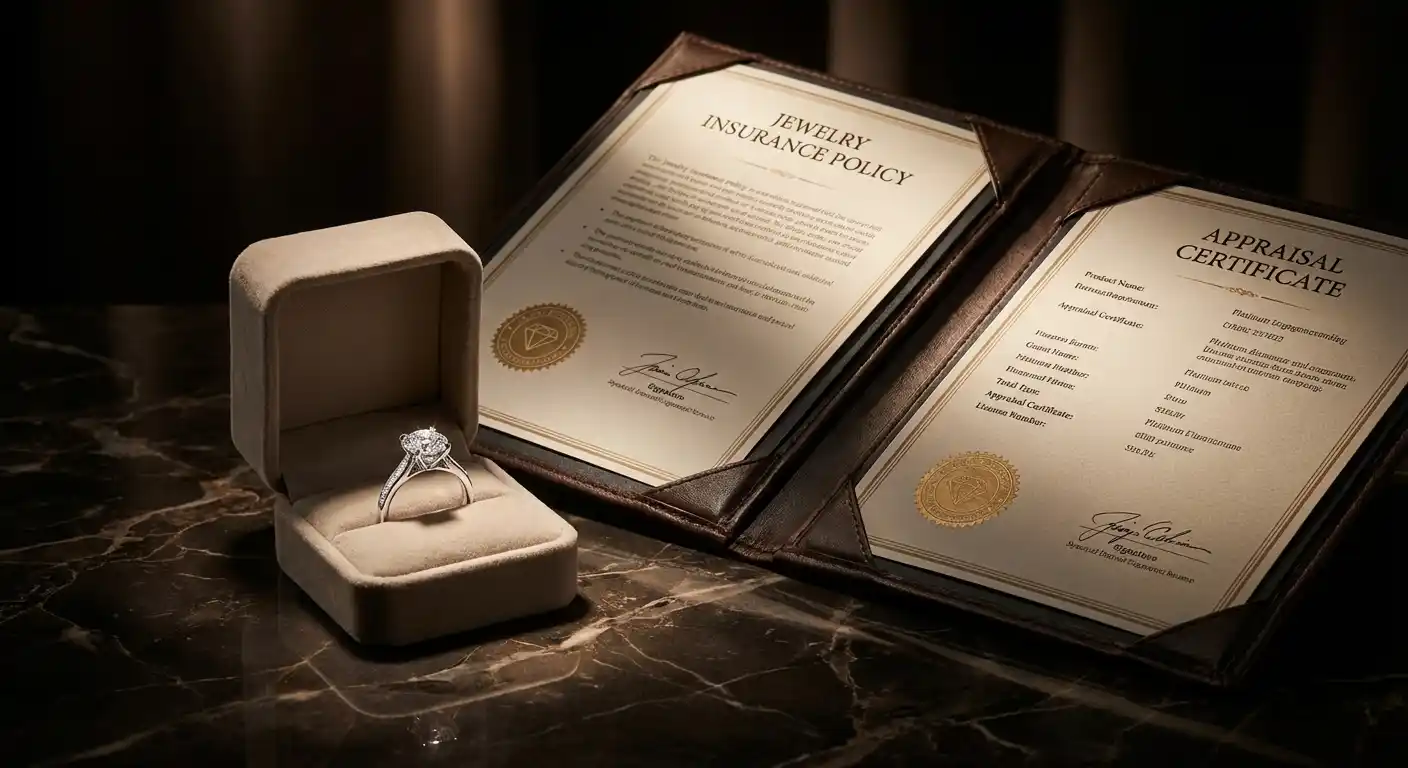
An appraisal establishes your ring's replacement value for insurance purposes.
What an Appraisal Includes
Documentation:
- Detailed description of item
- Metal type, weight, and purity
- Stone specifications (cut, color, clarity, carat for diamonds)
- Measurements and photographs
- Replacement value in current market
For diamonds, expect:
- Shape and cutting style
- Measurements and carat weight
- Color and clarity grades
- Cut grade (for round brilliants)
- Fluorescence
- Any identifying characteristics
Who Can Appraise
Best options:
- GIA Graduate Gemologist
- AGS Certified Gemologist Appraiser
- Independent appraiser with credentials
Acceptable:
- Jeweler with formal gemological training
- Certified appraisers from recognized organizations
Avoid:
- The store where you purchased (potential conflict of interest)
- Anyone without gemological credentials
- Online-only appraisals without physical examination
Appraisal Cost
Typical rates:
- $75-$175 for standard engagement ring
- Hourly rate: $50-$150/hour
- May be per-item fee for multiple pieces
What affects cost:
- Complexity of piece
- Number of stones
- Appraiser's credentials and location
- Rush service
Keeping Appraisals Current
Update appraisals every 2-3 years:
- Market values change (usually increase)
- Ensures adequate coverage
- Some policies require periodic updates
Store appraisals:
- Separate from the jewelry (in case of theft)—see our jewelry storage guide
- Digital backup (photos, cloud storage)
- Copy to insurance company
Understanding Policies
Key terms and coverage details to understand before purchasing.
Coverage Types
Actual Cash Value (ACV):
- Pays replacement cost minus depreciation
- Older jewelry receives less
- Generally not recommended for jewelry
Replacement Value:
- Pays to replace item with similar one
- Better protection
- Most common for jewelry insurance
Agreed Value:
- Insurer agrees to pay specific amount
- No negotiation at claim time
- Requires accurate, current appraisal
What's Typically Covered
Standard coverage usually includes:
- Theft (home burglary, robbery)
- Fire and natural disaster damage
- Accidental damage
- Mysterious disappearance (standalone policies)
- Worldwide coverage
May require additional coverage:
- Damage from wear and tear
- Damage during professional repairs
- Stones falling from settings (check specific policy)
What's Typically Not Covered
- Intentional damage
- Damage from nuclear events
- Government confiscation
- Wear and tear (normal use)
- Defects in manufacturing or design (warranty issue)
- Items not listed on policy
Settlement Options
Replacement:
- Insurer provides equivalent item
- May have designated jeweler network
Cash settlement:
- You receive monetary compensation
- Gives freedom to choose replacement
Repair:
- For damaged but repairable items
- Insurer pays repair costs
Choosing Coverage
Questions to ask when selecting insurance.
Key Questions for Any Policy
- What's the deductible? (Standalone policies often have none)
- Is mysterious disappearance covered?
- Is damage from wear covered?
- Can I choose my own jeweler for replacement?
- Is there worldwide coverage?
- Will a claim affect my homeowner's rates?
- How often must I update appraisals?
- What's the claims process?
Coverage Amounts
Insure for:
- Current replacement value (from appraisal)
- Not what you paid (prices increase)
- Not sentimental value (can't be quantified)
Example:
- You paid $5,000 for ring in 2020
- Current replacement value is $6,500
- Insure for $6,500
Annual Cost Estimates
| Ring Value | Endorsement | Standalone |
|---|---|---|
| $3,000 | $45-$90/year | $30-$60/year |
| $5,000 | $75-$150/year | $50-$100/year |
| $10,000 | $150-$300/year | $100-$200/year |
| $20,000 | $300-$600/year | $200-$400/year |
Actual rates vary by location, policy details, and insurer.
Recommended Coverage
For most engagement rings, standalone jewelry insurance offers:
- Better coverage terms
- Zero deductible
- No impact on homeowner's rates
- Specialized service
For less valuable pieces, a homeowner's endorsement may be adequate and simpler to manage.
Filing a Claim
Knowing the process before you need it reduces stress during a difficult time.
Immediate Steps
For loss or theft:
- File police report immediately (required for most claims)
- Contact insurer within required timeframe
- Document circumstances in detail
- Provide photos, appraisals, receipts
For damage:
- Don't attempt repairs yourself
- Photograph damage
- Contact insurer for instructions
- Take to jeweler only after insurer approval
Documentation Needed
Standard requirements:
- Police report number (if applicable)
- Copy of appraisal
- Photos of item
- Purchase receipts if available
- Detailed description of loss/damage
- Date and circumstances
Settlement Process
Typical timeline:
- Claim filed with documentation
- Adjuster reviews claim (1-2 weeks)
- Settlement offer made
- Acceptance and payment/replacement
Total time: 2-6 weeks for straightforward claims
Disputed Claims
If you disagree with settlement offer:
- Request detailed explanation
- Provide additional documentation
- Get independent appraisal
- Escalate within insurer
- Consult insurance regulator if necessary
Frequently Asked Questions
How soon after purchase should I insure my ring?
Immediately. Coverage should begin the moment you receive the ring. Many insurers can provide same-day coverage.
Do I need a separate appraisal from the store's documentation?
For insurance purposes, most insurers accept a detailed sales receipt initially. However, an independent appraisal is recommended within the first year and is typically required for policy renewals. Many jewelers provide appraisals during professional cleaning visits.
Can I insure an inherited ring?
Yes. You'll need an appraisal establishing current value. Some insurers may ask about provenance or documentation.
Does insurance cover upgrading my ring?
No. Insurance replaces what was lost with something comparable. If you want to upgrade, you pay the difference.
Will my premium increase after a claim?
With standalone jewelry insurance, typically no. With homeowner's endorsements, it may increase rates.
Is my ring covered during travel?
Most policies include worldwide coverage, but verify. Some exclusions may apply (war zones, extreme sports).
What if my ring increases in value?
Update your appraisal every 2-3 years and notify your insurer to adjust coverage. If under-insured, you only receive the insured amount.
Should I insure less valuable jewelry?
Consider insuring any piece you'd be upset to lose. For pieces under $500-$1,000, standard homeowner's coverage may be sufficient.
Action Checklist
Immediately after purchase:
- Take photos of ring
- Store receipt safely
- Contact insurer for coverage quote
Within 30 days:
- Obtain independent appraisal
- Purchase coverage
- Store appraisal separately from ring
Annually:
- Review coverage amounts
- Update photos
- Confirm policy details
Every 2-3 years:
- Get updated appraisal
- Adjust coverage if value increased
- Review policy terms
The small annual cost of jewelry insurance provides peace of mind that's invaluable when you're wearing something irreplaceable on your finger every day.
For complete ring care guidance, see our ring care maintenance guide.
SentrySafe Fireproof and Waterproof Safe with Digital Keypad

SentrySafe Fireproof and Waterproof Safe with Digital Keypad
Fireproof for 1 hour at 1700°F.
Fireproof for 1 hour at 1700°F. Waterproof. Digital lock with key backup. Perfect for jewelry, appraisals, and important documents.
"Peace of mind knowing my ring and appraisals are protected. Easy to use digital lock and solid construction.
Jewelry Inventory Log Book for Insurance Documentation

Jewelry Inventory Log Book for Insurance Documentation
Organized log book for documenting jewelry pieces.
Organized log book for documenting jewelry pieces. Includes spaces for photos, values, appraisals, and purchase information. Essential for insurance claims.
"Made the insurance process so much easier. Everything documented in one place with photo pockets.
Review of What We Liked
SentrySafe Fireproof and Waterproof Safe with Digital Keypad
Fireproof for 1 hour at 1700°F.
Jewelry Inventory Log Book for Insurance Documentation
Organized log book for documenting jewelry pieces.
About the Author
Alfreda Borror
Alfreda Borror is the founding editor of Opulent Opal, writing research-based buying guides on diamonds, birthstones, and fine jewelry.