How to Clean a Bracelet: Gold, Silver, Beads and Leather

This post may contain affiliate links. Read our affiliate policy
Ninety seconds in a borrowed countertop ultrasonic makes a gem-set line bracelet spectacularly bright, and occasionally one stone lighter. A leather cuff gets the bowl of soapy water that rescued a steel chain, then cracks at the first fold. Neither owner was careless. Both used a method that works beautifully on a different material.
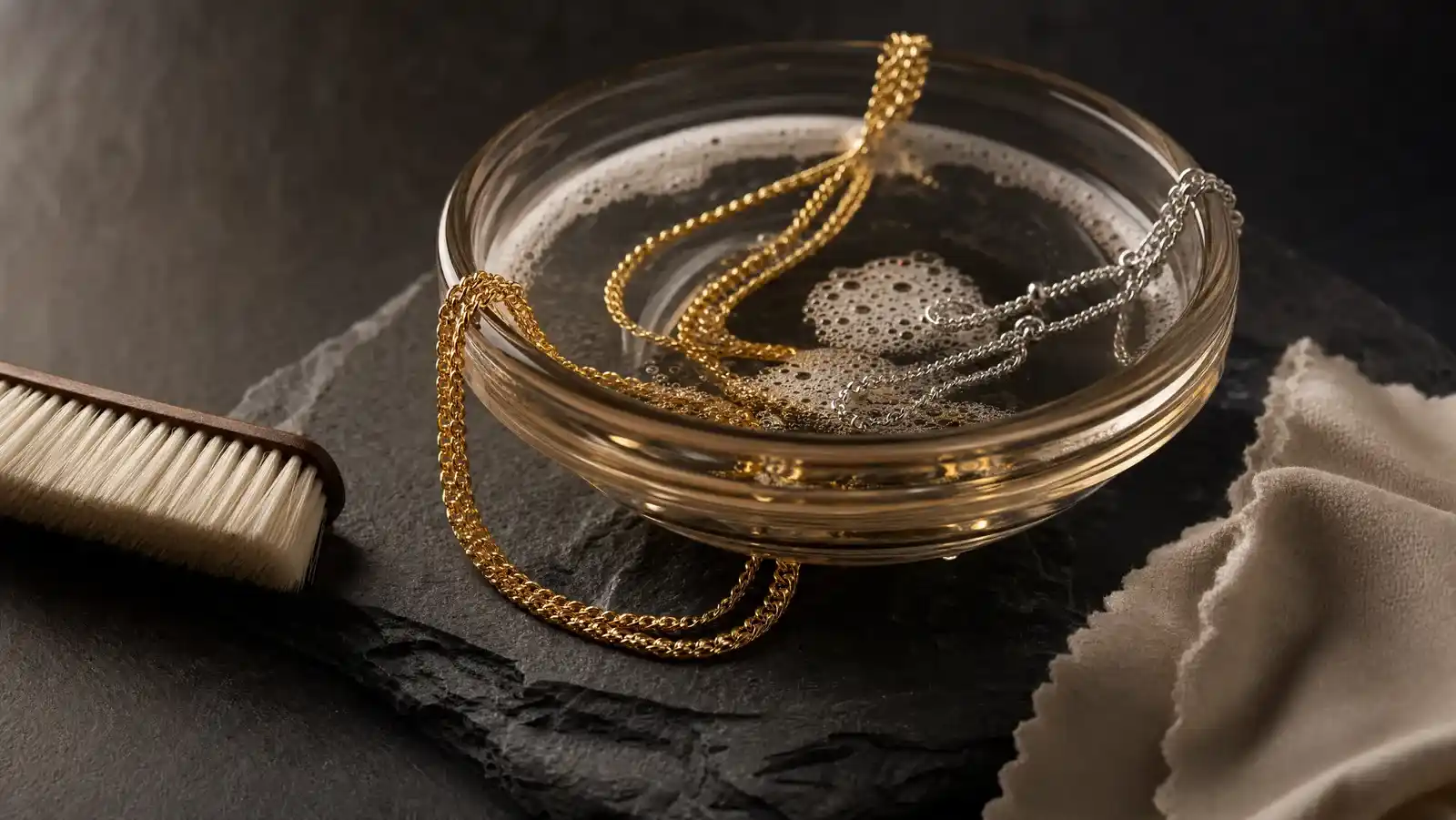
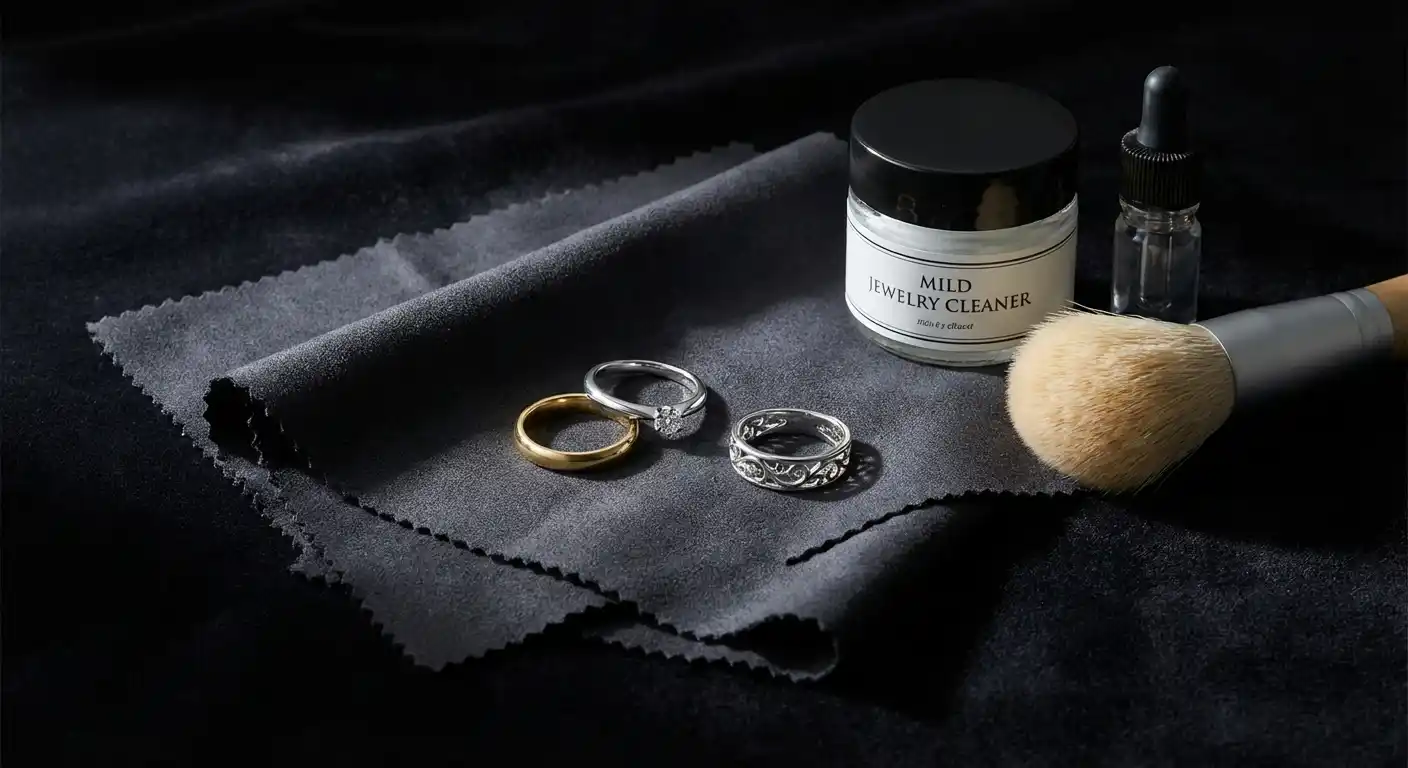
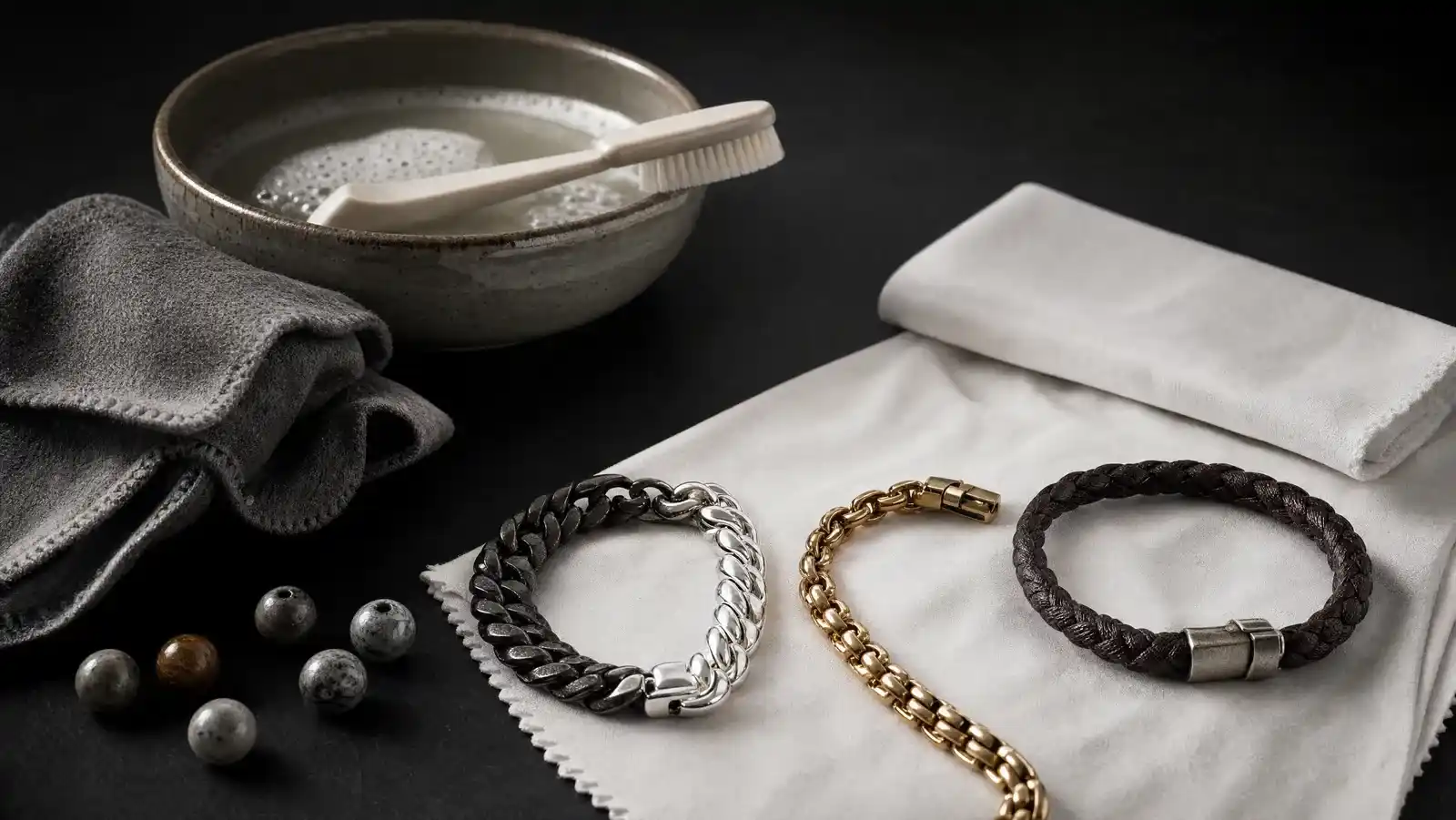
How to clean a bracelet, in short. For solid gold, platinum, sterling silver or stainless steel, soak the bracelet 10 to 15 minutes in warm water with a few drops of mild dish soap, brush it gently with a soft toothbrush, rinse it in clean water and pat it dry with a lint-free cloth. Pearls, porous stones, organic beads, leather and elastic cord are the exceptions — and the pieces most often destroyed.
Everything below is organised by material, because material is the only variable that matters. Our guide to how to choose a bracelet covers these materials before they become a cleaning problem.
Identify What You Are Holding First
This is the gate: get it wrong and nothing later saves you.
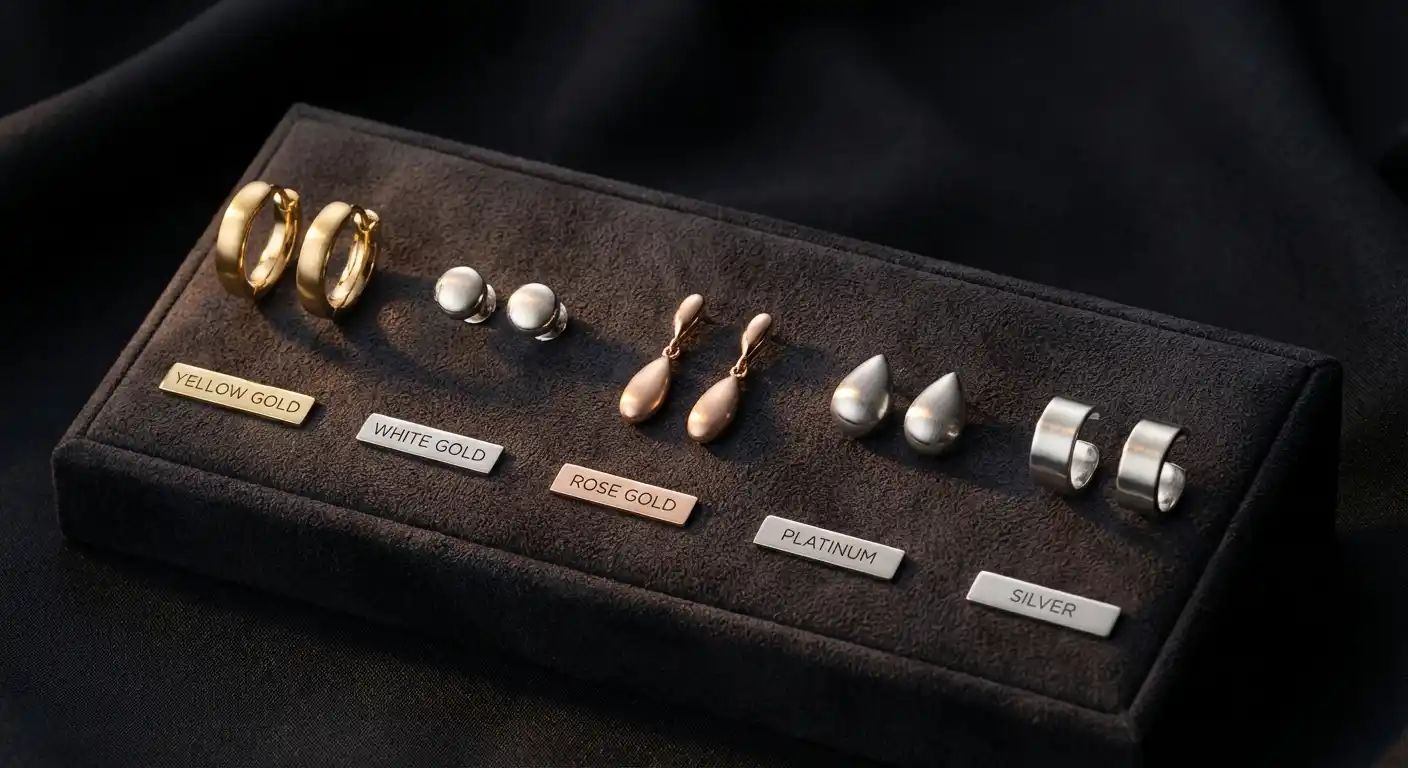
- Solid metal, no stones. Gold, platinum, sterling, steel, titanium. The forgiving category: soap, water, brush.
- Plated or vermeil. A microscopically thin layer of gold or rhodium over base metal or silver. Never polish it; keep abrasives away entirely.
- Set with durable stones. Diamond, sapphire, ruby. Soap and water are fine; the risk is mechanical, not chemical.
- Set with delicate or treated stones. Emerald, opal, turquoise, tanzanite, anything oiled, filled, dyed or impregnated. Brief contact with warm soapy water only.
- Organic beads. Pearl, coral, amber, wood, lava, mother of pearl. Wipe, never soak.
- Cord. Leather, fabric, waxed thread, elastic. Water is the enemy here, not the solution.
If you cannot tell a rolo from a rope by eye, our explainer on types of bracelets shows how each construction is built — and therefore where the dirt is hiding.
The Default Method for Metal Bracelets
This routine covers most of what people wear. Jewelers Mutual gives the gold version in four steps, and GIA's diamond care guidance is the same recipe applied to a set stone.
- Mix the bath. A small bowl of warm — Jewelers Mutual specifies warm, not hot — water with a few drops of mild dish soap. GIA calls the goal a gentle degreasing solution, which is all the chemistry a bracelet needs.
- Soak for 10 to 15 minutes. Jewelers Mutual puts the soak at 15 minutes. That time does the work; brushing only clears what the soak loosened.
- Brush. A soft-bristled toothbrush kept only for jewellery, as GIA recommends. Work into the joints between links and around the clasp box. On set stones, GIA notes the back of the stone collects the most oil and dirt, so brush from underneath.
- Rinse and dry. Rinse in a second bowl of clean warm water. Jewelers Mutual is blunt about the alternative: if you rinse under a tap, close the drain first. Pat dry, lint-free cloth.
The risk: brushing hard. Gold is a soft metal, Jewelers Mutual notes, and the brush that cleans will scratch a high-polish surface if you lean on it.
Never: chlorine bleach or abrasives such as household cleanser or toothpaste. GIA warns these can erode the metals used in settings and loosen prongs, or dissolve the metal outright. Pandora's care page says its jewellery must not be exposed to chlorine or salt water at all, and to keep it clear of makeup, creams and cleaning agents.
How to Clean a Gold Bracelet
Solid gold takes the default method unmodified. Jewelers Mutual also suggests removing gold before showering so it does not pick up a film from body wash, and warns that chlorine — especially hot chlorine, as in a hot tub — can permanently damage or discolour it.
Plated and gold-filled pieces are different. Wash them the same way, but never polish them. A treated silver polishing cloth is built to abrade tarnish off exposed silver, and on a plated surface, as the jeweller Dellyrica explains, that action dulls and wears the finish. White gold is usually rhodium plated, and J.M. Scully Jewelers notes that rhodium does not tarnish — it wears through, showing as warm or dark patches at high-contact points. That is a replating job, not a polishing job.
Never: toothpaste on any gold. It is an abrasive, and on plating it is a one-way trip.
How to Clean a Silver Bracelet and Lift Tarnish
Tarnish is not dirt. According to Science Notes, silver tarnish is black silver sulfide, Ag2S, formed when sulfur compounds in air or water combine with the silver. Soap and water will not touch it.
Three ways to remove it, in rising aggression:
- A treated polishing cloth. Slowest, most controllable, and the only method we would use on a piece we could not replace. It takes a little silver with the tarnish, so use it sparingly.
- The foil and baking soda bath. Line a non-metal bowl with aluminium foil, sprinkle in baking soda, lay the silver so it touches the foil and cover with hot water. Science Notes describes a redox reaction that transfers sulfur from the silver to the aluminium, usually within a couple of minutes.
- A commercial chemical dip. Fast, and the hardest to control, because it dissolves the silver sulfide indiscriminately.
The risk, and it is a big one. Science Notes warns that the foil method should not be used on silver plate, on pieces with a deliberate manufacturer's patina — the dark areas that make an engraved or oxidised design readable simply disappear — or on anything holding gemstones, pearls or wood, since porous materials suffer in hot liquid. Conservation guidance is stricter still. The Canadian Conservation Institute's CCI Note 9/7 warns that if an object is silver plated, any method of tarnish removal may be very damaging, and that every polish or chemical treatment takes away a certain amount of the silver underneath along with the tarnish. It also names a cost the chemistry write-ups skip: after the foil bath, silver from the tarnish is left on the surface as rough particles that give a dull, matte finish.
So a plain sterling curb link can take the foil bath, provided you accept that it may come out less bright than it went in. An antiqued, plated or stone-set piece cannot take it at all. Our roundup of the best sterling silver bracelets flags which finishes are polish-friendly.
Cleaning a Tennis Bracelet and Other Gem-Set Links
A line of stones is mostly cavities. Ritani's guidance for a tennis bracelet: soak it 15 to 20 minutes in warm water with a few drops of mild dish soap, work a soft-bristled toothbrush behind the stones and around the clasp, then pat dry with a lint-free cloth, avoiding fabric that can snag a prong. Monthly is a sensible cadence for a piece worn often.
Two habits matter more than the cleaning:
- Check the settings before and after. GIA advises confirming the stones are securely set in their mountings both before and after cleaning, because vibration can shake gems loose.
- Get the prongs looked at. With Clarity recommends taking a tennis bracelet to a professional periodically to check for loose stones or broken prongs. The clasp deserves equal attention: repair jewellers tend to report that a failed clasp, rather than a lost stone, is what puts a bracelet on the floor — which is why safety chains exist.
Ultrasonic and Steam: What They Wreck
GIA explains that an ultrasonic cleaner sends high-frequency sound waves through water or a cleaning solution, creating heat and pressure. That is superb on a plain diamond in a solid setting and catastrophic on a long list of everything else.
Per GIA, keep these out entirely:
- Organic materials: pearls, coral, tortoise shell, ivory, shell cameos, jet and amber.
- Heat-sensitive gems: tanzanite, sunstone, moonstone, fluorite, iolite, kunzite, lapis lazuli, malachite, opal, topaz, turquoise and zircon, among others susceptible to temperature change.
- Treated stones: fracture-filled, impregnated, coated or heat-treated material. GIA flags lead-glass-filled diamonds, the oil, resin or wax commonly filling emerald fractures, and star ruby and star sapphire.
GIA's alternative is unglamorous and correct: a solution formulated for delicate gems, or just warm, soapy water. Steam carries the same heat objection.
How to Clean a Beaded Bracelet
Beads on a bracelet fail at the drill hole, where cord meets stone and grit collects.
Pearls. GIA's routine is to wipe cultured pearls with a very soft, clean cloth after each wearing, and it says warm soapy water is safe for occasional thorough cleaning — but never an ultrasonic or a steam cleaner. Wring the cloth until it is damp, not dripping: the silk thread inside a strand absorbs water, and GIA says the string must be completely dry before you wear it again — lay the strand flat while it dries so it does not stretch. Pearls sit at about 2.5 on the Mohs scale, which is why hairspray, perfume, cosmetics and perspiration all leave a mark.
Porous stones and organics. Jewelers Mutual's guidance on soft and porous gemstones notes that stones such as turquoise, amber and opal can be stained by oils and liquids, and advises keeping them clear of face creams, lotions and household chemicals. Pandora's rule is the simplest we have seen: cultured pearls, wood, mother of pearl, leather and cloth items must only be cleaned with a soft brush or a cloth.
Never: a soak. Wood and lava beads drink water and the cord dries slowly inside the drill hole, which is how a bead strand starts to smell from the inside.
Leather and Fabric Cord: Wipe, Never Soak
Water does not clean leather; it removes what keeps leather flexible. As the leather-jewellery specialist NineTwoFive explains, soaking strips the natural oils, the band stiffens as it dries and then cracks at the fold points — and shower water plus shampoo does the same job slowly, daily. Pandora's leather instruction is one line: wipe the leather gently with a soft, dry cloth.
For anything worse than dust, NineTwoFive's method is a dry cloth first, then a barely damp cloth carrying one drop of moisturiser-free soap, worked in small circles, then room-temperature drying away from heat. Versani adds the step most people skip: without periodic conditioning with a product made for finished leather, even well-cleaned leather cracks.
Never: a hairdryer or radiator. Heat turns damp leather into brittle leather.
Elastic Cord Is a Consumable
Stretch bracelets are not repaired, they are restrung. Borsheims describes the failure mode plainly: over time the elastic cord dries out, frays or loses its memory and eventually breaks, and it suggests restringing every one to two years depending on wear and cord quality.
Borsheims' care advice is about sequence and handling. Put jewellery on after lotions and perfumes have dried, take it off before exercising or showering, and roll the bracelet over your knuckles rather than pulling it into a large circle. Every few months, gently pull the beads apart and look at the cord: tiny clear fibres mean restring it, before it lets go over a drain.
The Clasp, and Why a Bracelet Starts to Smell
If a bracelet smells bad, the cause is almost never the metal. The Steel Shop's explanation is intuitive: a bracelet that felt clean at 7 a.m. has collected sweat under the clasp by noon, and the spaces between links stay damp long after your skin looks dry. The biology behind it is well documented: sweat itself barely smells, and it is skin bacteria feeding on the oils, proteins and dead skin cells trapped in crevices and link joints that produce the volatile waste — sulfur-bearing thioalcohols among it — you actually smell.
The fix is mechanical, not chemical. Open the clasp before cleaning and brush inside the box and around the spring. On a bracelet hung with charms, brush each jump ring and the inside of every hollow charm: those are the deepest traps on the piece. Rinse thoroughly — leftover soap film attracts the next layer of grime — and dry the clasp completely before storing it.
If the clasp always feels gritty, it may be the wrong closure for how you wear the piece; our guide to bracelet clasp types compares how each one traps or sheds dirt.
Storage That Delays the Next Clean
Blue Nile's tarnish guidance is the short version of the conservation literature: store pieces separately, add anti-tarnish strips for silver, keep them out of bathrooms and off sunny windowsills where humidity swings, and never seal a piece into an airtight pouch while it is damp. The Canadian Conservation Institute says the same in museum terms — wrap each piece in acid-free tissue, seal it inside a polyethylene bag, and add a tarnish-inhibiting cloth.
Two habits beat any storage box: put the bracelet on last, after lotion, perfume and hairspray, and take it off first, before the gym, the pool and the shower.
When to Hand It to a Jeweller
Book a bench appointment if stones rattle when you tap the piece, a prong catches on fabric, the clasp springs open more easily than it used to, a strand of pearls has stretched or shows thread between the beads, or the piece has an antiqued finish you will not gamble on. GIA also recommends letting a professional handle periodic cleaning with equipment you should not be running at a kitchen table.
Frequently Asked Questions
How often should I clean a bracelet?
For a piece worn daily against skin, a soapy-water clean every one to two weeks stops oils building into a film. GIA suggests soaking diamond jewellery in a mild dish soap solution once or twice a week; for a gem-set line bracelet, monthly is a reasonable floor. Wipe pearls after every wearing, per GIA.
Can I use rubbing alcohol or vinegar?
We would not, and none of our sources recommend either for general use. GIA's warning against household cleansers and chlorine is about what they do to the metals in settings, and Jewelers Mutual tells you to keep household chemicals away from porous stones entirely. Warm water and mild dish soap do the job with no downside.
Will toothpaste polish out tarnish?
It removes tarnish, and some of the metal with it. Both GIA and Jewelers Mutual name toothpaste specifically as an abrasive to avoid. On plated pieces it takes the plating; on an oxidised finish it takes the design.
My beaded piece still smells after cleaning. Now what?
The odour is in the cord, not on the beads, and cord cannot be cleaned through a drill hole. Restring it. Borsheims treats restringing as routine maintenance on elastic-strung pieces at one- to two-year intervals, and the same logic applies to silk-strung pearls.
The Bottom Line
Cleaning a bracelet is two decisions: identify the material, then pick the gentlest method that works. Warm water, mild dish soap and a soft toothbrush handle the overwhelming majority of metal pieces. What goes catastrophically wrong is always a stronger method — an ultrasonic, a chemical dip, a polishing cloth, a long soak — applied to a material that cannot take it: a pearl, an opal, an antiqued finish, a plated surface, leather, elastic.
Start with the easy half tonight: take the piece off before the shower, put it on after the perfume, store it dry and separate. For everything upstream of care — construction, closures, fit and what each material costs to live with — see our complete guide to bracelets.
About the Author
Alfreda Borror
Alfreda Borror is the founding editor of Opulent Opal, writing research-based buying guides on diamonds, birthstones, and fine jewelry.