How to Clean Gold, Platinum & Silver Rings at Home

This post may contain affiliate links. Read our affiliate policy
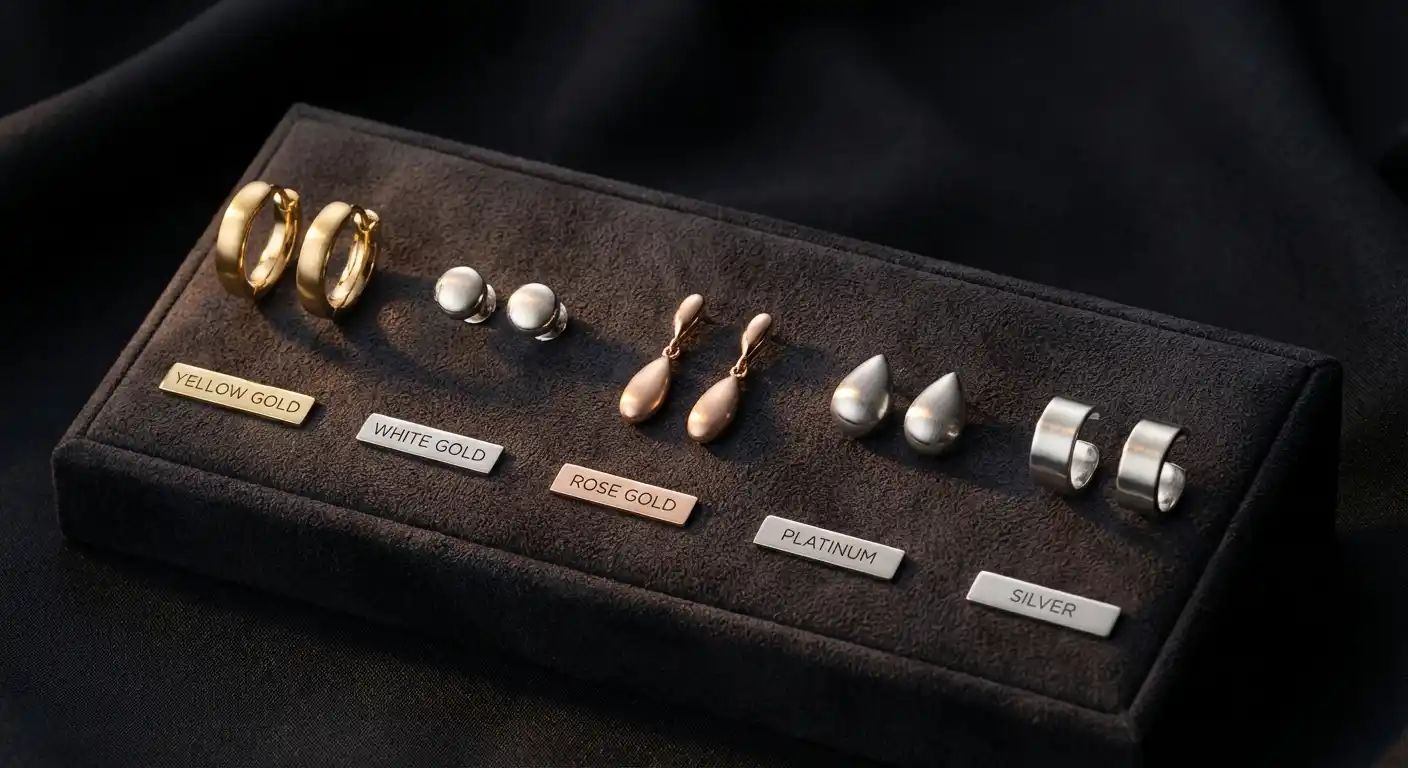
Different metals require different cleaning approaches. What works perfectly for platinum might damage silver, and methods safe for gold could harm other metals. This guide provides specific, safe cleaning instructions for the three most common ring metals: gold (yellow, white, and rose), platinum, and silver.
Understanding your ring's metal composition is the first step to proper care. When in doubt about your ring's metal type, check the hallmark stamp inside the band or consult a jeweler.
Table of Contents
- Gold Ring Cleaning (All Colors)
- Platinum Ring Cleaning
- Silver Ring Cleaning
- Alternative Metals
- What Never to Use
- FAQ
Gold Ring Cleaning
Gold rings—whether yellow, white, or rose—share similar cleaning requirements, with a few important variations for white gold's rhodium plating.
Understanding Gold Purity
The karat marking on your ring indicates gold content:
- 24K (99.9% gold): Too soft for rings; rarely used
- 18K (75% gold): Luxurious but softer; more prone to scratching
- 14K (58.3% gold): Most popular; excellent balance of beauty and durability
- 10K (41.7% gold): Most durable; budget-friendly option
Higher karat gold is softer and requires gentler handling, while lower karat gold is more durable but contains more alloy metals that may react to certain chemicals.
Basic Gold Cleaning Method
What you'll need:
- Small bowl
- Warm water (not hot)
- Mild dish soap (Dawn, Seventh Generation)
- Soft-bristled toothbrush
- Lint-free cloth or microfiber towel
Steps:
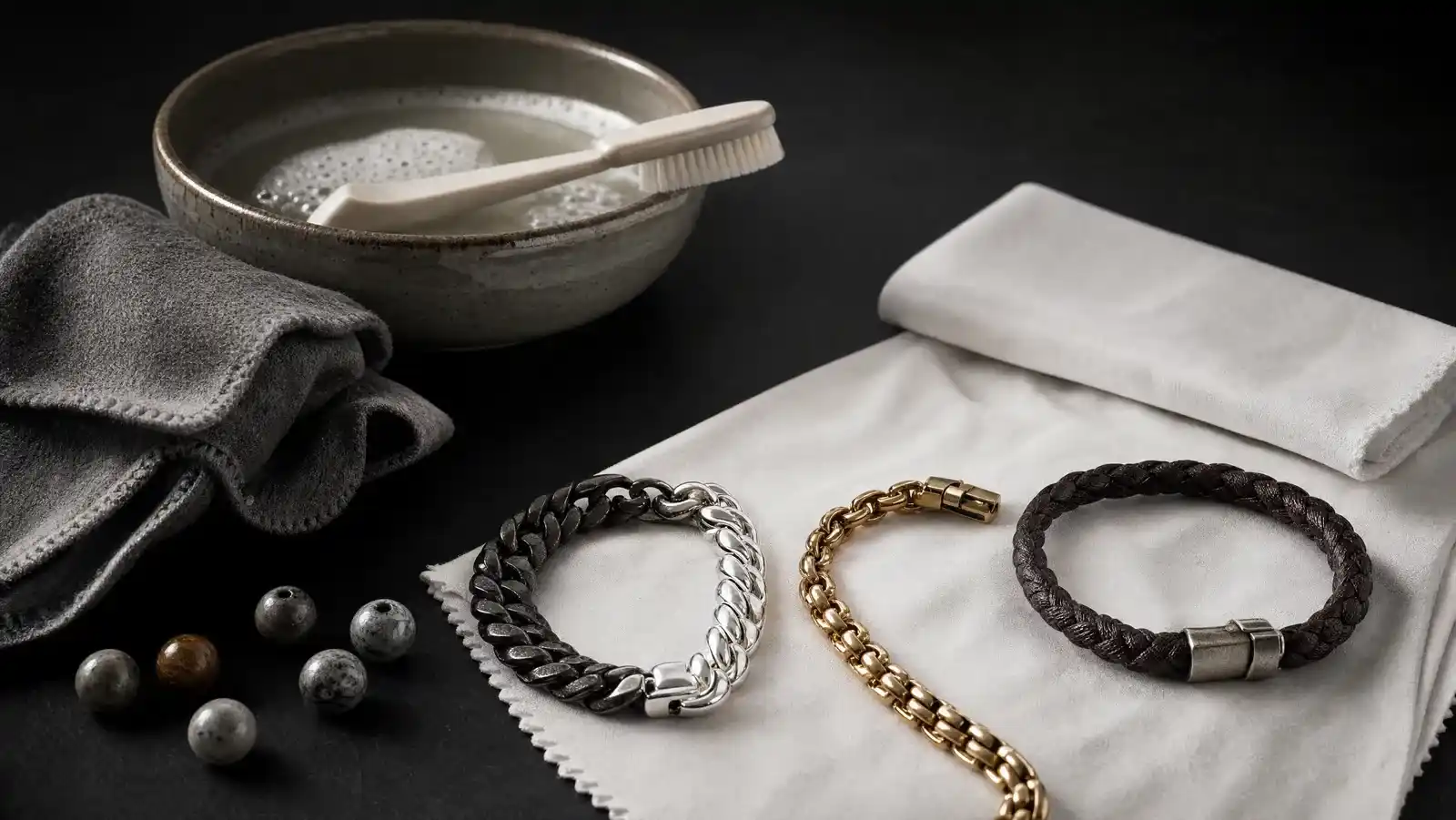
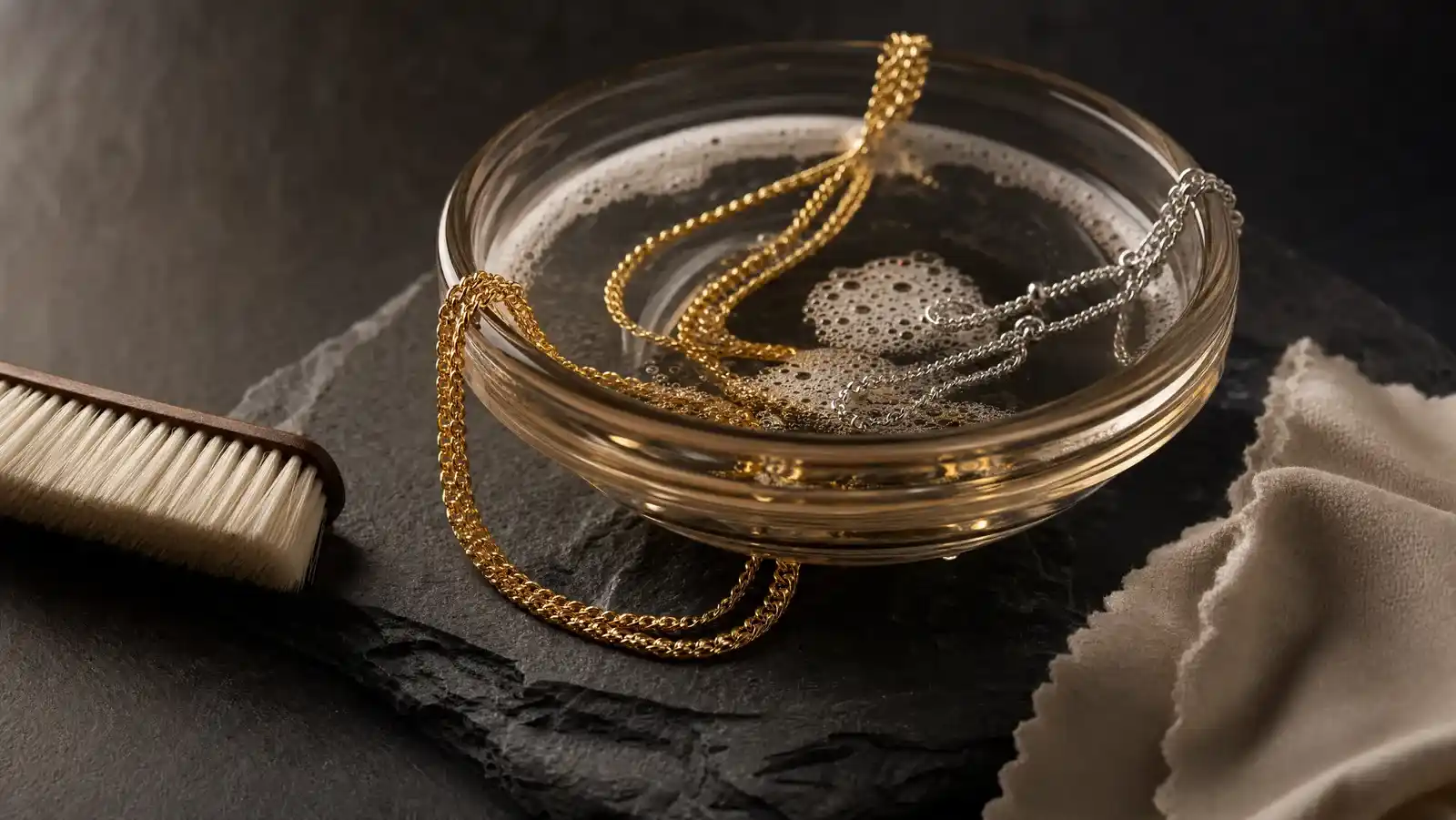
- Prepare solution: Mix a few drops of mild dish soap in warm water
- Soak: Place ring in solution for 15-20 minutes
- Brush gently: Use soft toothbrush to clean around settings and under the stone
- Rinse thoroughly: Hold under warm running water (close the drain first!)
- Dry completely: Pat with lint-free cloth, then air dry
Frequency: Weekly for daily-wear rings. For a complete overview of ring care including when to seek professional help, see our ring care maintenance guide.
Yellow Gold Specific Tips
Yellow gold shows oils and lotions more visibly than other colors. For stubborn buildup:
- Add a few drops of ammonia to your cleaning solution (use in well-ventilated area)
- Extend soaking time to 30 minutes
- Use a jewelry-specific cleaning solution for deeper cleaning
Yellow gold also shows scratches more readily than white metals. A professional polishing every few years restores the original finish.
White Gold Specific Tips
White gold's rhodium plating requires extra consideration:
- Avoid ammonia: Can accelerate rhodium wear
- Skip ultrasonic cleaners if rhodium is wearing (can cause uneven wear)
- Don't over-polish: Friction removes rhodium faster
- Plan for replating: Budget for rhodium replating every 1-3 years
When white gold starts showing yellow undertones, it's time for replating—not more aggressive cleaning.
Rose Gold Specific Tips
Rose gold's copper content makes it slightly more durable than yellow or white gold but can cause reactions in copper-sensitive individuals.
- Clean as you would yellow gold
- Copper content is resistant to tarnish (unlike pure copper)
- Avoid chlorine, which can react with copper alloys
- Rose gold rarely needs special treatment beyond basic cleaning
Platinum Ring Cleaning
Platinum is the most durable precious metal, but it develops a characteristic patina over time that some love and others prefer to remove.
Understanding Platinum Characteristics
- Purity: Usually 95% pure platinum (marked 950 Pt)
- Density: Heavier than gold (noticeable on the finger)
- Durability: Doesn't wear away like gold—metal displaces rather than rubbing off
- Patina: Develops soft, matte finish with wear
Basic Platinum Cleaning
Platinum tolerates most cleaning methods well:
Gentle method (weekly):
- Soak in warm soapy water for 20-30 minutes
- Brush gently with soft toothbrush
- Rinse thoroughly under warm water
- Dry with lint-free cloth
Deep cleaning (monthly):
- Ultrasonic cleaners work exceptionally well for platinum
- Steam cleaning is safe for platinum with secure settings
- Ammonia-based cleaners are safe for occasional deep cleaning
Managing Platinum Patina
Platinum's patina is a matte finish that develops as microscopic scratches accumulate. The metal isn't lost—it's displaced across the surface.
Options:
- Embrace it: Many prefer the soft, aged look that signals authentic wear
- Polish occasionally: Professional polishing restores original shine
- Home maintenance: Use a platinum polishing cloth between professional services
Important: Unlike gold, platinum isn't lost when scratched—it's just moved around. However, excessive polishing can thin the metal over time.
Platinum vs White Gold Maintenance
| Factor | Platinum | White Gold |
|---|---|---|
| Replating needed | Never | Every 1-3 years |
| Patina develops | Yes | No (reveals yellow underneath) |
| Cleaning tolerance | Excellent | Good (avoid ammonia) |
| Scratch visibility | Shows easily | Shows easily |
| Long-term maintenance | Lower | Higher |
For a detailed comparison of these metals for engagement rings, see our gold vs platinum guide.
Silver Ring Cleaning
Silver tarnishes naturally when exposed to air and sulfur compounds. Regular cleaning prevents heavy tarnish that becomes difficult to remove.
Understanding Silver Tarnish
Tarnish isn't dirt—it's a chemical reaction between silver and sulfur compounds in the air. The resulting silver sulfide creates that familiar dark coating.
Common tarnish accelerators:
- Humidity
- Rubber bands (sulfur content)
- Certain foods (eggs, onions, mayonnaise)
- Wool and some fabrics
- Cosmetics and lotions
- Chlorinated water
Gentle Silver Cleaning
For light tarnish:
- Create paste with baking soda and water (2:1 ratio)
- Apply with soft cloth in gentle circular motions
- Rinse thoroughly
- Dry immediately and completely
For moderate tarnish:
- Line bowl with aluminum foil, shiny side up
- Add 1 tablespoon baking soda and 1 tablespoon salt
- Pour in hot (not boiling) water
- Place silver ring on foil, ensuring contact
- Let sit 2-5 minutes (watch the tarnish disappear!)
- Remove, rinse, and dry immediately
This method uses electrolysis to transfer tarnish from silver to aluminum.
Commercial Silver Cleaners
For heavy tarnish or convenience:
- Silver polish paste: Effective but mildly abrasive
- Silver dip solutions: Quick but can be harsh with repeated use
- Pre-treated polishing cloths: Ideal for regular maintenance
- Silver cleaning wipes: Convenient for on-the-go touch-ups
Avoid for antique or oxidized (intentionally darkened) silver—these methods remove the intentional patina.
Preventing Silver Tarnish
- Store in anti-tarnish bags or with anti-tarnish strips
- Wear your silver regularly (skin oils slow tarnishing)
- Remove before swimming, cleaning, or applying cosmetics
- Keep away from rubber bands and certain plastics
- Store in low-humidity environment
For complete storage guidance, see our jewelry storage guide.
Alternative Metals
Modern rings may feature tungsten, titanium, cobalt, or other alternative metals. Each has specific care requirements.
Tungsten
- Cleaning: Mild soap and water only
- Avoid: Ultrasonic cleaners, harsh chemicals, steam
- Note: Cannot be resized; can shatter on hard impact
- Advantage: Nearly scratch-proof; maintains polish indefinitely
Titanium
- Cleaning: Mild soap and water; most methods safe
- Avoid: Abrasive cleaners (can scratch finish)
- Note: Lightweight; hypoallergenic; cannot be resized easily
- Advantage: Durable; won't tarnish; safe for sensitive skin
Cobalt Chrome
- Cleaning: Similar to white gold; warm soapy water
- Avoid: Harsh chemicals; chlorine
- Note: Brighter and whiter than white gold; no replating needed
- Advantage: Hypoallergenic; maintains shine; harder than gold
Stainless Steel
- Cleaning: Mild soap and water; most methods safe
- Avoid: Prolonged moisture exposure (can cause spots)
- Note: Very affordable; durable; no precious metal value
- Advantage: Hypoallergenic; extremely low maintenance
What Never to Use
Certain cleaning methods and substances damage precious metals:
Universal Don'ts
- Chlorine and bleach: Weakens gold alloys and prongs; causes discoloration
- Abrasive cleaners: Scratch all metal surfaces
- Toothpaste: Contrary to popular belief, it's too abrasive
- Baking soda paste on gold or platinum: Slightly abrasive; use only on silver
- Boiling water: Thermal shock can damage settings and some stones
- Ultrasonic cleaners with loose stones: Vibration can dislodge settings
Metal-Specific Cautions
| Metal | Avoid |
|---|---|
| Yellow Gold | Chlorine, harsh detergents |
| White Gold | Ammonia (accelerates rhodium wear), over-polishing |
| Rose Gold | Chlorine (reacts with copper) |
| Platinum | Excessive polishing (thins metal) |
| Silver | Rubber, sulfur compounds, prolonged moisture |
| Tungsten | Ultrasonic, steam, impacts |
Frequently Asked Questions
Can I use the same cleaner on all my rings?
Mild dish soap and warm water is safe for gold, platinum, and most silver. However, silver-specific cleaners shouldn't be used on gold or platinum, and ammonia-based cleaners should be avoided on white gold.
How often should I clean my rings?
Daily-wear rings benefit from weekly light cleaning. Silver may need more frequent attention if you live in a humid climate or notice tarnishing.
Why does my white gold look yellow?
The rhodium plating is wearing off, revealing the natural color of white gold (which is actually pale yellow). This is normal and requires replating—not cleaning.
Can I clean my ring with hand sanitizer?
Occasional exposure is fine for gold and platinum. Frequent use can dull finishes over time. Silver is more sensitive to alcohol. Best practice: sanitize hands, let dry completely, then put your ring on.
Should I take my ring to a jeweler for cleaning?
Professional cleaning is recommended every 6-12 months. Jewelers can deep clean while also inspecting prongs and settings—something home cleaning can't accomplish. Learn more in our guide to professional vs DIY ring cleaning.
Does wearing my ring frequently help keep it clean?
In some ways, yes. Regular wear exposes silver to skin oils that slow tarnishing. However, daily wear also means daily exposure to lotions, oils, and debris that build up in settings.
Maintenance Schedule
Weekly:
- Gentle cleaning with soap and water
Monthly:
- Check for visible buildup
- Silver: Check for tarnish and address promptly
Every 6-12 months:
- Professional cleaning and inspection
- Check prongs (see our prong inspection guide)
As needed:
- White gold: Rhodium replating
- Silver: Tarnish removal
- All metals: Scratch polishing
For care instructions based on your ring's gemstone rather than metal, see our guide to cleaning diamonds, gemstones, and pearls.
Weiman Jewelry Cleaner with Brush for Gold and Platinum

with Brush for Gold and Platinum
Professional-strength cleaner safe for gold and platinum.
Professional-strength cleaner safe for gold and platinum. Includes brush and soaking tray. Non-toxic formula.
"Works like magic on my wedding set. The included brush is perfect for getting into tiny settings.
Goddard's Long Shine Silver Polish Cloth

Goddard s Long Shine Silver Polish Cloth
Pre-treated cloth that removes tarnish and prevents future oxidation.
Pre-treated cloth that removes tarnish and prevents future oxidation. One cloth lasts for months of regular use.
"This cloth brought my grandmother's silver ring back to life. No mess, no fuss, instant shine.
Maui Liquid Jewelry Cleaner Solution Complete Kit with Cloth

Maui Liquid Jewelry Cleaner Solution Complete Kit with Cloth
Liquid solution kit with polishing cloth.
Liquid solution kit with polishing cloth. Works on gold, platinum, and most silver pieces — check the label for your specific metal before first use.
"I use this on all my rings regardless of metal. Great value for a complete kit.
Review of What We Liked
with Brush for Gold and Platinum
Professional-strength cleaner safe for gold and platinum.
Goddard s Long Shine Silver Polish Cloth
Pre-treated cloth that removes tarnish and prevents future oxidation.
Maui Liquid Jewelry Cleaner Solution Complete Kit with Cloth
Liquid solution kit with polishing cloth.
About the Author
Alfreda Borror
Alfreda Borror is the founding editor of Opulent Opal, writing research-based buying guides on diamonds, birthstones, and fine jewelry.