Best Diamond Carat Size for Your Budget: The Magic Number Strategy

This post may contain affiliate links. Read our affiliate policy
This article contains affiliate links. We may earn a commission if you make a purchase through our links, at no extra cost to you.
A 0.95-carat diamond costs 10-20% less than a 1.00-carat diamond. The size difference? Virtually invisible to the naked eye.
This pricing quirk exists because of "magic numbers"—psychological weight thresholds where demand spikes and prices jump disproportionately. Shoppers specifically search for "1 carat diamond," creating artificial premiums at these round numbers.
Understanding how carat weight affects pricing—and how to strategically shop around these thresholds—can save you hundreds or thousands of dollars without sacrificing visible size.
This guide shows you exactly how to maximize diamond size within your budget by working with, not against, market psychology.
For a complete overview of all diamond factors, see our comprehensive diamond buying guide.
Table of Contents
- What Is Carat Weight?
- The Magic Number Strategy
- Price-Per-Carat Explained
- Carat Size by Budget
- Carat and Diamond Shape
- Carat Weight Trade-Offs
- Finger Size and Diamond Proportions
- Using the Diamond Screener
- Common Carat Mistakes
- Frequently Asked Questions
What Is Carat Weight?
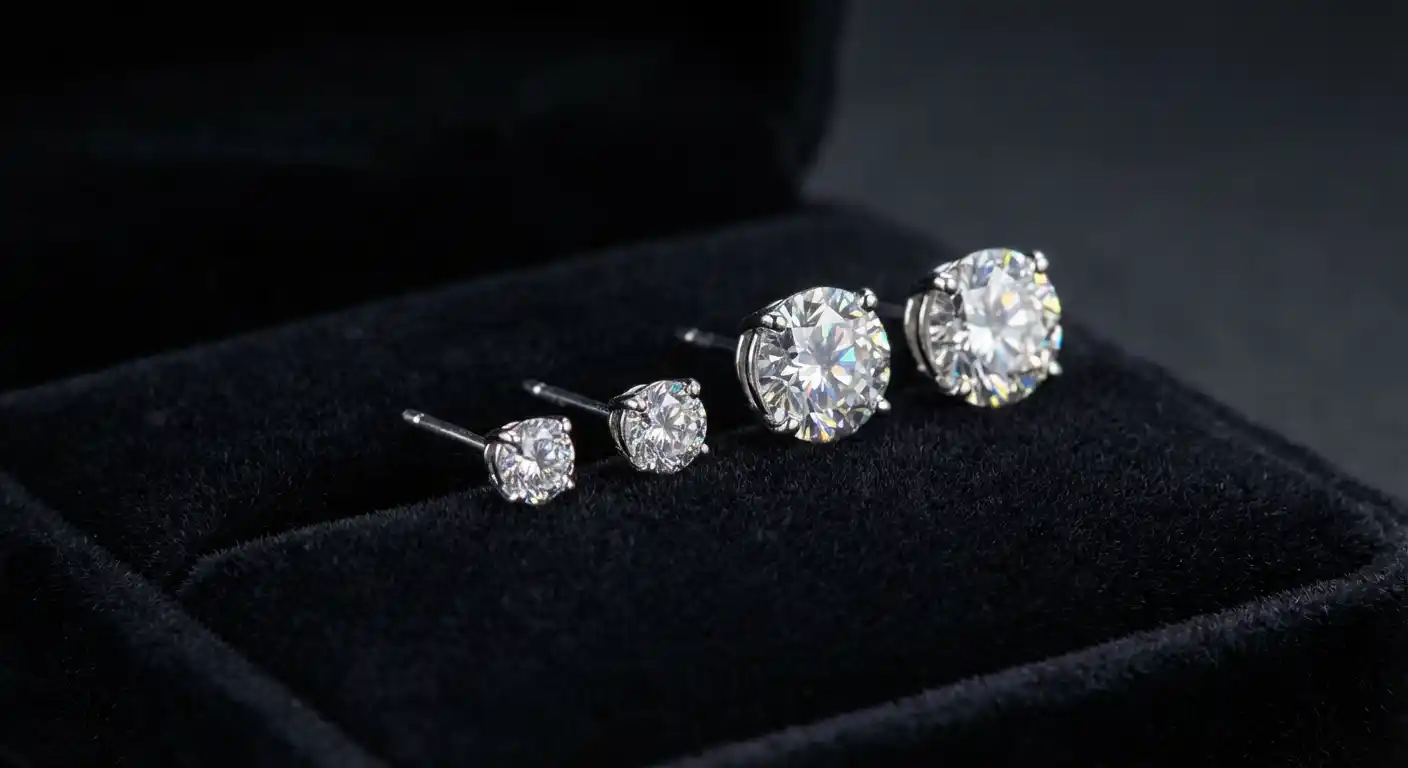
Carat is a unit of weight, not size. One carat equals 200 milligrams (0.2 grams). The term derives from the carob seeds historically used as balance weights due to their uniform size.
Carat Weight vs. Visual Size
Two diamonds of identical carat weight can appear quite different in size depending on their proportions:
Well-cut diamond: Weight distributed across the visible face, maximizing apparent size.
Deeply cut diamond: Weight hidden in the pavilion (bottom), making the diamond appear smaller from above.
When comparing diamonds, always check measurements (diameter for rounds, length x width for fancy shapes) rather than relying solely on carat weight.
Standard Measurements
For properly proportioned round brilliant diamonds:
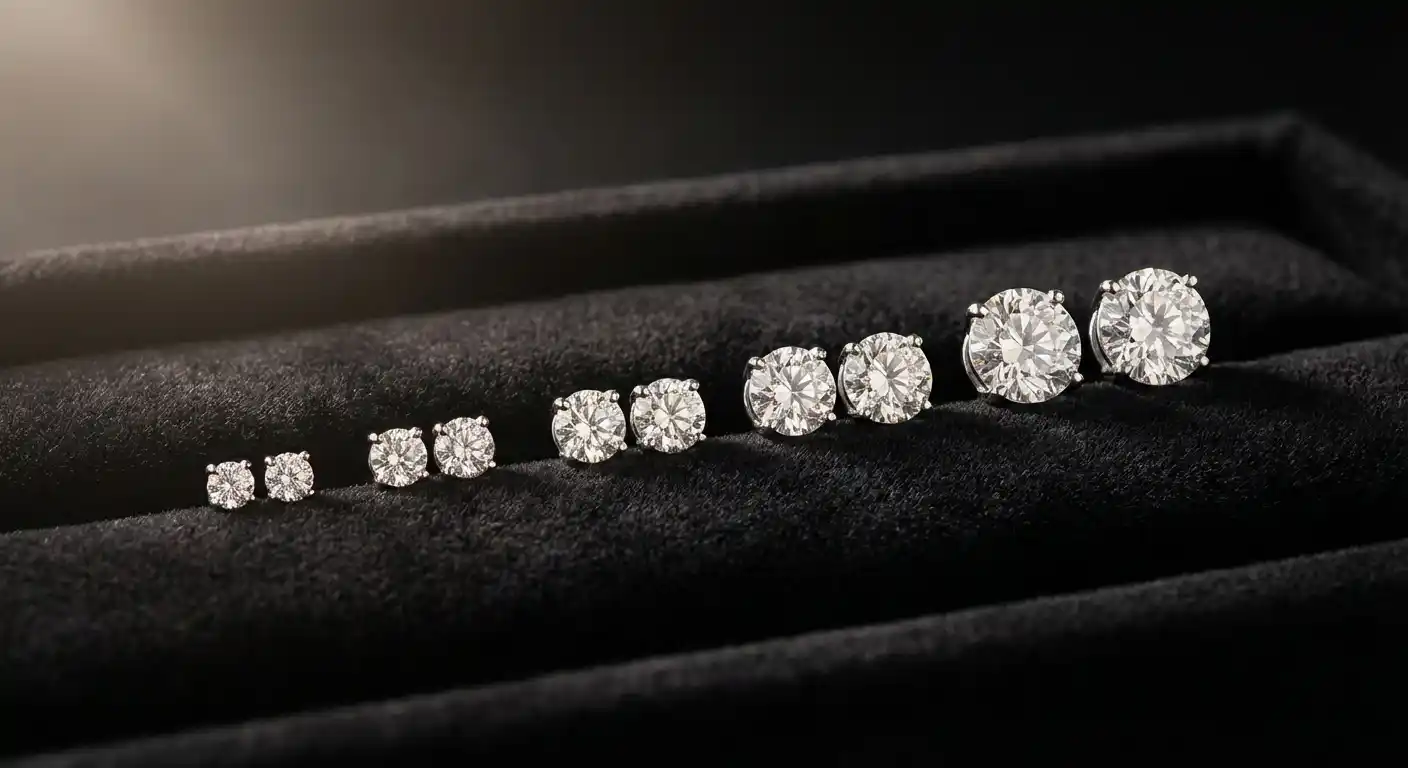
| Carat Weight | Approximate Diameter |
|---|---|
| 0.50 ct | 5.1 mm |
| 0.75 ct | 5.8 mm |
| 1.00 ct | 6.4 mm |
| 1.25 ct | 6.9 mm |
| 1.50 ct | 7.4 mm |
| 2.00 ct | 8.1 mm |
Diamonds significantly smaller or larger than these ranges may have proportion issues affecting light performance.
The Magic Number Strategy
Diamond prices don't increase linearly with carat weight. Instead, prices jump dramatically at certain psychologically significant thresholds:
Major Magic Numbers
| Weight | Premium Impact |
|---|---|
| 0.50 ct | First major threshold |
| 1.00 ct | Highest premium impact |
| 1.50 ct | Significant jump |
| 2.00 ct | Major threshold |
| 3.00+ ct | Luxury tier premiums |
At each magic number, price-per-carat increases 15-30% compared to stones just below the threshold.
How to Use This Knowledge
Shop just under magic numbers:
| Instead of... | Consider... | Typical Savings |
|---|---|---|
| 1.00 ct | 0.90-0.99 ct | 10-20% |
| 1.50 ct | 1.40-1.49 ct | 10-15% |
| 2.00 ct | 1.90-1.99 ct | 10-20% |
| 0.50 ct | 0.45-0.49 ct | 5-10% |
A 0.92-carat diamond looks identical to a 1.00-carat diamond when worn, but costs significantly less because it doesn't hit the psychological threshold that drives premium pricing.
Price-Per-Carat Explained
Diamond pricing uses a tiered system based on weight ranges. Understanding this helps you find optimal value.
How Pricing Works
Diamonds are priced by multiplying weight times price-per-carat. But price-per-carat itself varies by weight range:
Example: If 0.90-0.99 carat diamonds cost $5,000 per carat, and 1.00-1.10 carat diamonds cost $6,500 per carat:
- A 0.95 ct diamond costs: 0.95 × $5,000 = $4,750
- A 1.05 ct diamond costs: 1.05 × $6,500 = $6,825
The 0.10 carat difference (invisible to most observers) creates a $2,075 price gap.
Finding Value in Weight Ranges
Each weight tier has a sweet spot. Generally, diamonds at the top of a tier offer better value than diamonds at the bottom of the next tier.
| Weight Range | Sweet Spot |
|---|---|
| 0.80-0.89 ct | 0.86-0.89 ct |
| 0.90-0.99 ct | 0.96-0.99 ct |
| 1.00-1.09 ct | 1.00-1.02 ct (if must cross) |
| 1.40-1.49 ct | 1.46-1.49 ct |
Carat Size by Budget
Here's what you can realistically expect at various budget levels, assuming you follow smart shopping strategies (Excellent cut, G-H color, VS2-SI1 clarity):
Under $3,000
Natural diamonds: 0.60-0.80 carats Lab-grown diamonds: 1.00-1.50 carats
At this budget, lab-grown diamonds offer dramatically more size. A $2,500 budget can get a well-cut 1.25-carat lab-grown stone versus a 0.70-carat natural.
$3,000-$5,000
Natural diamonds: 0.80-1.10 carats Lab-grown diamonds: 1.50-2.00 carats
This range hits the popular 1-carat natural diamond threshold. Using the magic number strategy (buying 0.92-0.98 ct) maximizes value.
$5,000-$8,000
Natural diamonds: 1.10-1.50 carats Lab-grown diamonds: 2.00-3.00 carats
Consider 1.40-1.49 carat natural stones to stay under the 1.50-carat price jump.
$8,000-$12,000
Natural diamonds: 1.50-2.00 carats Lab-grown diamonds: 3.00+ carats
At this budget, 1.90-1.99 carat natural diamonds offer significant savings over 2.00 carat stones.
$12,000+
Natural diamonds: 2.00+ carats Lab-grown diamonds: 4.00+ carats
In this range, focus on quality over absolute size. A beautifully cut 2.00-carat diamond outshines a poorly cut 2.50-carat stone.
Carat and
Different diamond shapes carry their weight differently, affecting perceived size.
Shapes That Look Larger
Elongated and shallow-cut shapes appear larger per carat than round brilliants:
| Shape | Appearance vs. Round |
|---|---|
| Marquise | 15-20% larger looking |
| Pear | 10-15% larger looking |
| Oval | 10-15% larger looking |
| Emerald | 5-10% larger looking |
| Radiant | Similar to round |
| Cushion | Similar or slightly smaller |
| Princess | Similar or slightly smaller |
A 1-carat marquise can appear as large as a 1.25-1.30 carat round brilliant.
Shapes That Cost Less
Fancy shapes typically cost 25-35% less than round brilliants of equivalent quality because:
- Round cutting wastes more rough diamond
- Round demand drives higher prices
- Fancy shapes have less standardized grading
If you want maximum visual impact for your budget, consider an oval or elongated cushion in the 1.20-1.40 carat range rather than a 1.00-carat round.
Carat Weight Trade-Offs
When budget is limited, you may need to decide between size and other quality factors. Here's how to think about these trade-offs:
Carat vs. Cut
Never sacrifice cut for carat. A well-cut 0.90-carat diamond looks more brilliant and impressive than a poorly cut 1.10-carat diamond. The extra weight in a poorly cut stone is often hidden in depth that adds nothing to visual presence.
Carat vs. Color
Modest color compromises (G to H, or H to I) are rarely visible once a diamond is set. The savings can fund 10-15% more carat weight.
Carat vs. Clarity
Clarity compromises offer excellent value. Moving from VS2 to a carefully selected SI1 can save 15-20%, which translates to meaningful carat gains.
Recommended Priority
- Never compromise: Cut quality (Excellent or Very Good)
- Moderate flexibility: Color (G-H for white metals, H-I for yellow gold)
- Most flexibility: Clarity (VS2-SI1 typically eye-clean)
- Maximize within quality: Carat weight
Finger Size and Diamond Proportions
The "right" carat size also depends on the wearer's hand:
Smaller Hands (Ring Size 4-5.5)
0.75-1.25 carats appears substantial and well-proportioned. Larger stones may look overwhelming.
Medium Hands (Ring Size 6-7)
1.00-1.75 carats balances presence with proportion. This is the most common size range.
Larger Hands (Ring Size 7.5+)
1.50-2.50+ carats provides proportional presence. Smaller stones may appear less impressive.
Using the Diamond Screener
Our Diamond Screener makes applying the magic number strategy simple:
- Set your budget using the price filter
- Apply quality filters (Excellent cut, G-H color, VS2-SI1 clarity)
- Adjust carat range to target sweet spots (0.90-0.99 instead of 1.00+)
- Compare price-per-carat across options
- Identify efficiency frontier diamonds for optimal value
The screener shows exactly how much more diamond you get by shopping strategically around magic numbers.
Find your ideal carat size: Use our Diamond Screener to compare diamonds just under magic numbers and see exactly how much you can save.
Common Carat Mistakes
Fixating on round numbers: Insisting on exactly 1.00 carats costs money for psychological satisfaction, not visible benefit.
Ignoring proportions: A 1.10-carat diamond with poor depth can look smaller than a well-cut 0.95-carat stone.
Sacrificing cut for size: More carat weight in a dull diamond isn't worth it. Brilliance matters more than pure size.
Not considering lab-grown: If size is priority and resale value isn't, lab-grown offers 50-70% more carat weight per dollar.
Forgetting hand size: A 2-carat diamond on a size 4 finger looks different than on a size 8 finger. Consider proportion.
Frequently Asked Questions
What carat size looks biggest for the money?
Buying just under magic numbers (0.90-0.99 instead of 1.00) maximizes visual size per dollar. Choosing elongated shapes like oval or marquise also increases perceived size.
Is 1 carat a good size for an engagement ring?
One carat is the most popular engagement ring size and provides substantial presence on most hands. However, 0.90-0.99 carats looks identical while costing 10-20% less.
How much bigger does 1.5 carats look than 1 carat?
A 1.50-carat round diamond measures approximately 7.4mm diameter versus 6.4mm for 1.00 carat—about 15% larger in diameter. The visual difference is noticeable but not dramatic.
What's the best carat size for a small budget?
For budgets under $3,000, consider 0.60-0.80 carat natural diamonds or 1.00-1.50 carat lab-grown diamonds. Prioritize cut quality over maximum size.
Does carat weight affect sparkle?
Not directly. Sparkle is determined by cut quality. However, poorly proportioned diamonds often sacrifice cut to maximize weight, which does reduce sparkle.
What's the most popular carat size?
1.00-1.09 carats is the most popular range for engagement rings, followed by 1.50-1.99 carats. These align with magic number psychology.
The Bottom Line
The smartest carat strategy is simple: shop just under magic numbers and prioritize cut quality over maximum weight.
A beautifully cut 0.92-carat diamond outshines a poorly cut 1.05-carat stone. The 0.92-carat stone costs significantly less, looks virtually identical in size, and sparkles more brilliantly.
For most engagement ring budgets, the 0.90-0.99 carat range offers the best combination of size, quality, and value. If you can stretch to 1.40-1.49 carats, that range offers similar magic number savings at a more substantial size.
Ready to find your perfect carat size? Our Diamond Screener lets you filter by carat ranges and see exactly how the magic number strategy translates to real savings across thousands of certified diamonds.
For more diamond education, explore our complete diamond buying guide, learn about cut grades, or compare color grades.
About the Author
Alfreda Borror
Alfreda Borror is the founding editor of Opulent Opal, writing research-based buying guides on diamonds, birthstones, and fine jewelry.