Diamond Cut Grades Explained: Excellent vs Very Good vs Ideal

This post may contain affiliate links. Read our affiliate policy
This article contains affiliate links. We may earn a commission if you make a purchase through our links, at no extra cost to you.
A poorly cut diamond with flawless color and clarity can look dull and lifeless. A well-cut diamond with modest color and clarity can look absolutely stunning. This simple truth makes cut the single most important factor in a diamond's visual beauty—yet it's the factor most shoppers understand least.
Cut doesn't refer to a diamond's shape (round, princess, cushion, etc.). It describes the precision of its facets, angles, and proportions—the craftsmanship that transforms rough stone into a brilliant gemstone. When cut perfectly, a diamond captures light, bounces it internally, and returns it through the top in explosive displays of brilliance and fire.
This guide explains what cut grades mean, how they affect what you see, and which grades offer the best value for your money.
For a complete overview of all diamond quality factors, see our comprehensive diamond buying guide.
Table of Contents
- What Makes Cut So Important
- Understanding Cut Grades
- Excellent vs Very Good
- Ideal Cut Proportions
- Cut Quality in Fancy Shapes
- Polish and Symmetry
- Cut and Diamond Size Perception
- Evaluating Cut Quality
- Cut Grade Pricing Impact
- Common Cut Mistakes
- Frequently Asked Questions
What Makes Cut So Important
Unlike color and clarity, which are determined by nature, cut quality is entirely controlled by human skill. A master cutter can transform average rough into a spectacular gem, while poor cutting can waste even the finest rough material.
Cut determines three critical optical properties:
Brilliance
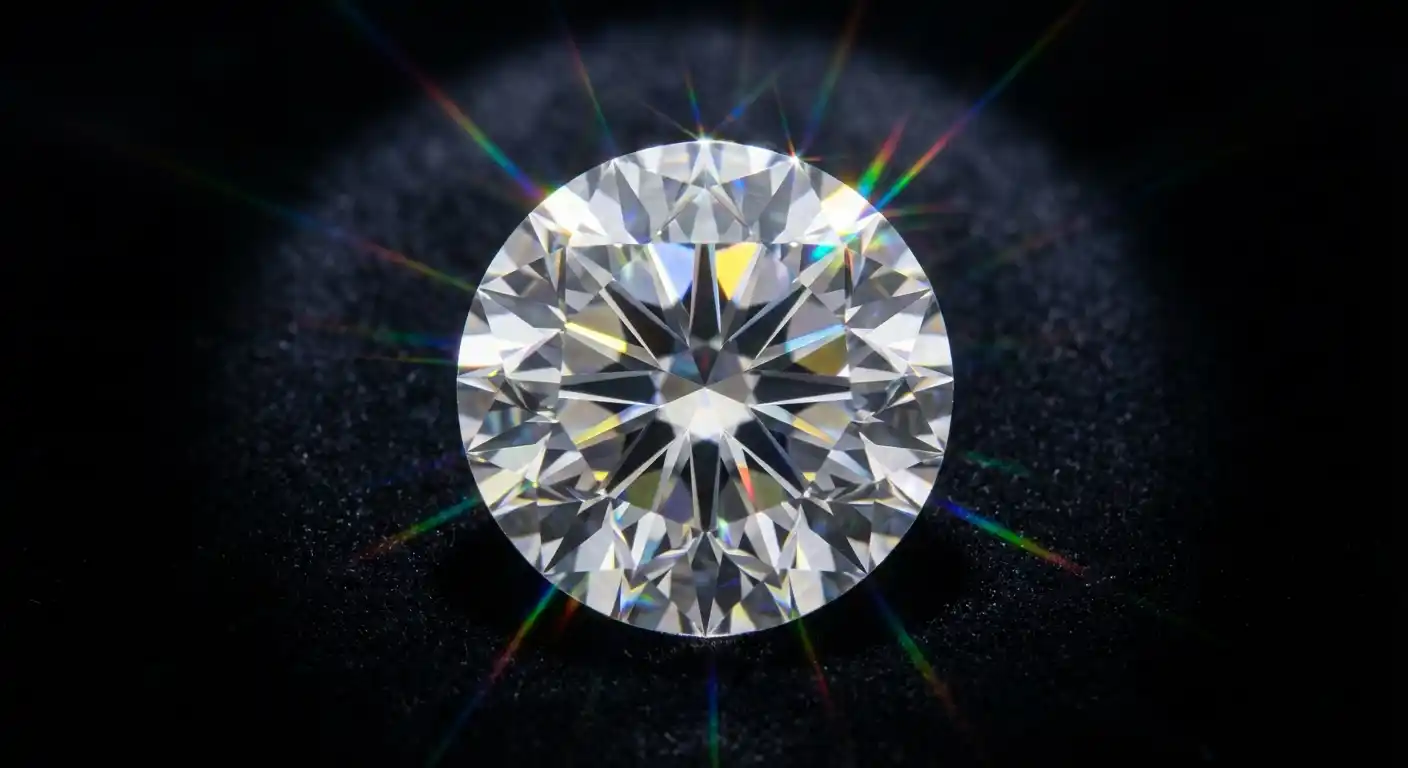
Brilliance is the total white light returned through the top of the diamond. A well-cut diamond acts like a precision mirror system, capturing light through the table, bouncing it off the pavilion facets, and returning it through the crown to your eye.
Poorly cut diamonds leak light through the bottom or sides. This makes them appear darker, smaller, and less impressive despite potentially excellent color and clarity grades.
Fire
Fire describes the rainbow colors that flash when light disperses through the diamond. Those stunning spectral flashes of red, blue, and green are fire—and they're directly controlled by crown angles and facet precision.
Scintillation
Scintillation is the sparkle pattern you see when the diamond, light source, or viewer moves. It creates that dancing, lively quality that makes diamonds captivating. Well-cut diamonds show balanced scintillation with neither too much darkness nor washed-out brightness.
Understanding Cut Grades
Major gemological laboratories grade diamond cut quality on standardized scales. However, different labs use slightly different terminology:
GIA Grading Scale
The Gemological Institute of America uses five cut grades:
| Grade | Description | Light Performance |
|---|---|---|
| Excellent | Optimal proportions and finish | Maximum brilliance and fire |
| Very Good | Minor deviations from ideal | Slight light loss, still beautiful |
| Good | Noticeable proportion issues | Visible light leakage |
| Fair | Significant cutting problems | Reduced brilliance |
| Poor | Major proportion failures | Dull, lifeless appearance |
Important note: GIA only assigns cut grades to round brilliant diamonds. Fancy shapes (princess, cushion, oval, etc.) don't receive official cut grades, making them harder to evaluate.
IGI Grading Scale
The International Gemological Institute uses a similar scale with an additional top grade:
| Grade | Description |
|---|---|
| Ideal | Absolute top-tier light performance |
| Excellent | Outstanding proportions and polish |
| Very Good | Minor deviations from optimal |
| Good | Noticeable light performance issues |
| Fair | Significant quality concerns |
AGS Grading Scale
The American Gem Society uses a numerical scale from 0 (Ideal) to 10 (Poor), with particular emphasis on light performance measurement.
Excellent vs Very Good: Is There a Difference?
The most common question shoppers ask is whether Very Good cut is sufficient or if Excellent is worth the premium. The answer depends on several factors.
When Excellent Cut Matters
Optimal light performance: Excellent-cut diamonds show the best possible brilliance, fire, and scintillation. If maximum sparkle is your priority, Excellent is the only choice.
Larger diamonds: As carat weight increases, cut quality becomes more visible. In diamonds over 1.5 carats, the difference between Excellent and Very Good becomes more noticeable.
Critical comparison shopping: When comparing diamonds side by side, Excellent cuts outperform Very Good cuts consistently.
When Very Good Cut Works Well
Value-focused shopping: Very Good cut diamonds typically cost 10-15% less than Excellent cuts with only minor light performance differences.
Smaller diamonds: In stones under 0.75 carats, the difference between Excellent and Very Good is minimal to most observers.
When other factors matter more: If you'd rather put the savings toward a larger diamond or better setting, Very Good cut can be a smart compromise.
The Bottom Line on Cut Grades
For most buyers, Excellent cut provides the best combination of beauty and value. The premium over Very Good is relatively small compared to the guaranteed optimal performance. However, Very Good cut remains an excellent choice—far better than Good or below—and can make sense for budget-conscious shoppers.
Ideal Cut Proportions
For round brilliant diamonds, specific proportions consistently produce the best light performance. While these ranges allow some variation, diamonds within these parameters generally display superior brilliance and fire.
Optimal Proportions for Round Brilliants
| Measurement | Ideal Range | Notes |
|---|---|---|
| Table | 54-58% | Percentage of diameter |
| Depth | 59-62.5% | Total height percentage |
| Crown Angle | 34-35° | Top angle from girdle |
| Pavilion Angle | 40.6-41° | Bottom angle from girdle |
| Star Length | 50-55% | Star facet proportion |
| Lower Half | 75-80% | Lower girdle facet length |
| Girdle | Thin to Medium | Edge thickness |
| Culet | None to Very Small | Bottom point size |
Why Proportions Matter
Table size affects the balance between brilliance and fire. Too large, and fire decreases. Too small, and brilliance suffers.
Depth controls how light travels through the diamond. Too deep means light leaks through the bottom. Too shallow means light exits through the sides before returning to the eye.
Crown and pavilion angles work together to create the critical angles that bounce light back through the top. Even small deviations from ideal can significantly impact performance.
Cut Quality in Fancy Shapes
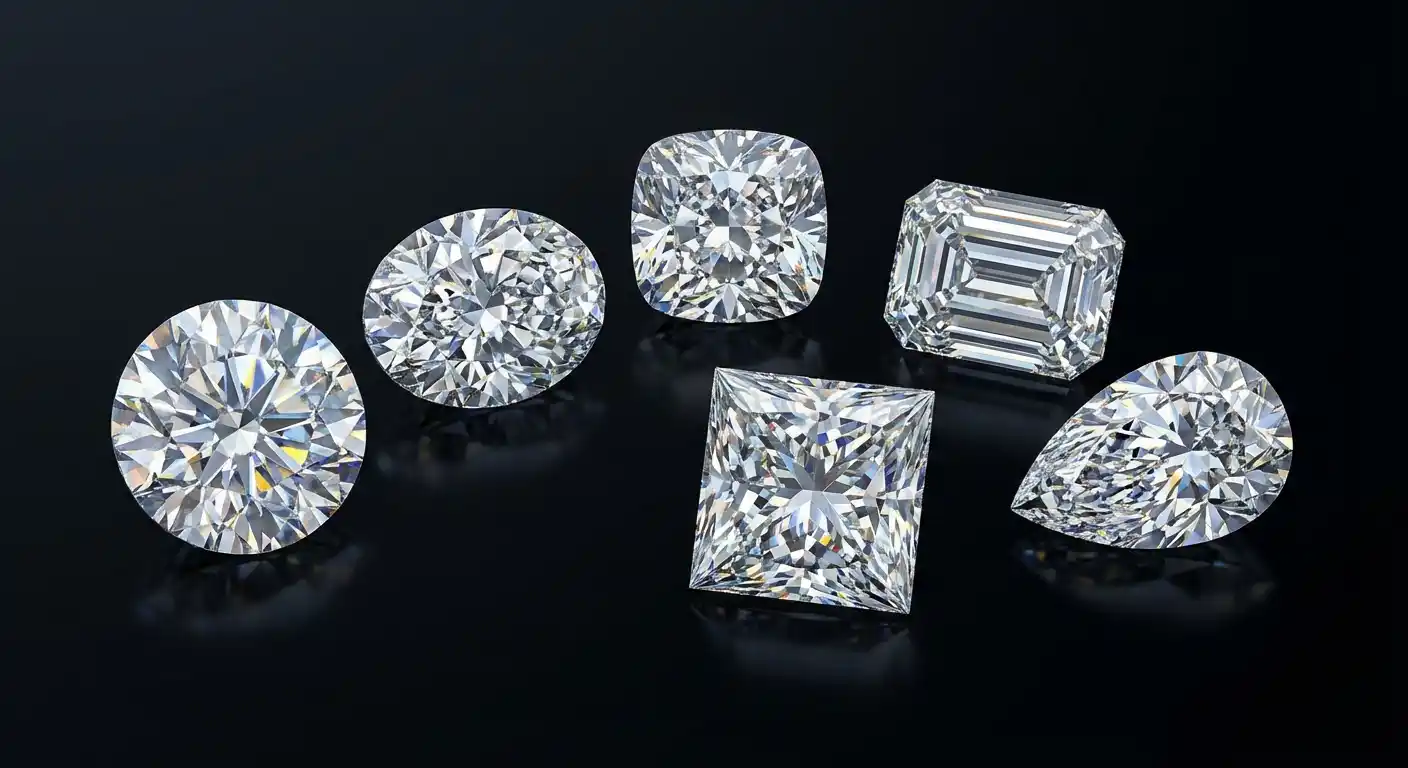
Since GIA doesn't grade cut quality for non-round diamonds, evaluating fancy shapes requires more research. Here are general guidelines for popular shapes:
Look for length-to-width ratio of 1.00-1.05 for square appearance, depth 65-75%, and table 67-75%.
Cushion Cut
Look for length-to-width ratio of 1.00-1.10 for square (1.15-1.25 for rectangular), depth 61-68%, and table 61-68%.
Oval Cut
Look for length-to-width ratio of 1.35-1.50 for classic proportions, depth 58-65%, and table 53-63%.
Cut
Look for length-to-width ratio of 1.30-1.50 for classic proportions, depth 61-68%, and table 61-69%.
For complete shape recommendations, see our diamond shapes guide.
Polish and Symmetry
Beyond overall cut grade, two additional factors affect diamond appearance:
Polish
Polish grades describe the smoothness of facet surfaces. Microscopic polishing marks can affect light reflection. Grades range from Excellent to Poor.
Recommendation: Look for Excellent or Very Good polish. Good polish is acceptable for budget purchases but may show slight surface imperfections under magnification.
Symmetry
Symmetry grades measure facet alignment, shape uniformity, and overall proportional balance. Misaligned facets can misdirect light.
Recommendation: Look for Excellent or Very Good symmetry. Good symmetry is acceptable but may show minor alignment variations.
Combined Impact
A diamond with Excellent cut, Excellent polish, and Excellent symmetry is sometimes marketed as "Triple Excellent" or "Triple Ex." While this represents optimal craftsmanship, the premium over Excellent cut with Very Good polish/symmetry may not be visible to most observers.
Cut and Diamond Size Perception
Well-cut diamonds often appear larger than poorly cut stones of equal carat weight. This happens for two reasons:
Optimal proportions distribute weight across the visible face rather than hiding it in the pavilion depth. A properly proportioned 1-carat diamond measures approximately 6.4-6.5mm in diameter.
Superior brilliance creates the impression of larger size. Bright, sparkling diamonds draw the eye and appear more substantial than dull stones.
When comparing diamonds, check measurements (diameter for rounds, length x width for fancy shapes) rather than relying on carat weight alone. A 0.95-carat diamond with ideal proportions may appear larger than a 1.05-carat stone with deep, light-leaking proportions.
Evaluating Cut Quality
When shopping for diamonds, use these strategies to assess cut quality:
For Round Brilliants
- Check the GIA cut grade: Only buy Excellent or Very Good
- Verify proportions fall within ideal ranges
- View the diamond under different lighting conditions
- Look for even light distribution with no dark spots
For Fancy Shapes
- Research ideal proportions for your chosen shape
- View 360° video to assess light performance
- Look for bow-tie effects in elongated shapes (oval, marquise, pear)
- Check symmetry to ensure even appearance
Using the Diamond Screener
Our Diamond Screener automatically identifies diamonds with Excellent and Ideal cut grades, and flags stones meeting AGS Ideal specifications for round brilliants. Filter by cut quality to compare options across retailers.
Cut Grade Pricing Impact
Cut quality affects diamond pricing, though less dramatically than carat weight:
| Cut Grade | Relative Price | vs. Excellent |
|---|---|---|
| Excellent | Baseline | — |
| Very Good | 10-15% less | Save 10-15% |
| Good | 20-30% less | Save 20-30% |
The price difference between Excellent and Very Good is modest compared to the quality difference between Good and above. Never purchase Good, Fair, or Poor cut grades—the light performance issues far outweigh any savings.
Common Cut Mistakes
Sacrificing cut for other factors: A well-cut G/VS2 diamond looks more brilliant than a poorly cut D/VVS1. Never compromise on cut quality.
Ignoring fancy shape cut quality: Since GIA doesn't grade fancy cuts, some retailers sell poorly proportioned stones at premium prices. Research ideal proportions for your chosen shape.
Confusing shape with cut: "Princess cut" describes shape, not cut quality. A princess-shape diamond can have excellent or poor cut quality depending on its proportions.
Focusing only on grade, not specifics: Two Excellent-cut diamonds can look different. Check actual proportions and view imagery when possible.
Overpaying for Triple Excellent: The premium for Excellent polish and symmetry in addition to Excellent cut may not be visible. Very Good polish/symmetry with Excellent cut performs extremely well.
Frequently Asked Questions
What is the best diamond cut grade?
Excellent (GIA) or Ideal (IGI/AGS) represents the best cut quality. These diamonds display optimal brilliance, fire, and scintillation.
Is Very Good cut good enough?
Yes. Very Good cut diamonds show minor light performance reduction compared to Excellent, but the difference is subtle. Very Good is an excellent choice for value-focused buyers.
Does cut affect how big a diamond looks?
Yes. Well-cut diamonds appear larger than poorly cut stones of equal carat weight because light is distributed optimally and brilliance creates visual presence.
Why don't fancy shaped diamonds get cut grades?
GIA's cut grading system was developed for round brilliants, which have standardized proportions. Fancy shapes vary widely in acceptable proportions, making a single grading system impractical.
Is cut more important than color or clarity?
For visible beauty, yes. A well-cut diamond with lower color and clarity grades looks more impressive than a poorly cut diamond with top color and clarity grades.
What is a Triple Excellent diamond?
A round brilliant diamond with Excellent grades for cut, polish, and symmetry. While this represents top craftsmanship, the premium over Excellent cut with Very Good polish/symmetry is often not visible.
The Bottom Line
Cut quality has more impact on a diamond's beauty than any other factor. The difference between a well-cut and poorly cut diamond is immediately visible—the well-cut stone sparkles brilliantly while the poor cut looks dull and lifeless.
For round brilliant diamonds, always choose Excellent or Very Good cut. The premium for Excellent is modest, and the guaranteed performance makes it the safest choice. For fancy shapes, research ideal proportions and view detailed imagery before purchasing.
Remember: you can go lower on color and clarity without visible impact, but cut quality shows immediately. Never compromise on cut.
Ready to find perfectly cut diamonds? Our Diamond Screener highlights Excellent and Ideal cut diamonds from trusted retailers, making it easy to compare the best-cut options at your budget.
For more diamond education, explore our complete diamond buying guide, learn about color grades, or understand clarity grades.
About the Author
Alfreda Borror
Alfreda Borror is the founding editor of Opulent Opal, writing research-based buying guides on diamonds, birthstones, and fine jewelry.