How to Read a Diamond Certificate: GIA vs IGI Reports Explained

This post may contain affiliate links. Read our affiliate policy
This article contains affiliate links. We may earn a commission if you make a purchase through our links, at no extra cost to you.
A diamond certificate isn't just paperwork—it's your guarantee that the diamond you're buying matches what the seller claims. Without independent certification, you're trusting the seller's word on quality. With it, you have objective, third-party verification of every characteristic that affects value.
Understanding how to read these reports empowers you to make informed decisions, compare diamonds accurately, and avoid overpaying for misrepresented stones. Whether you're looking at a GIA report, IGI certificate, or another lab's documentation, this guide explains exactly what each section means and how to use that information.
For a complete overview of diamond quality factors, see our comprehensive diamond buying guide.
Table of Contents
- What Is a Diamond Certificate?
- Why Certification Matters
- Major Certification Laboratories
- Reading a GIA Report
- Reading an IGI Report
- GIA vs IGI: Which Is Better?
- How to Verify a Certificate
- Red Flags to Watch For
- Using Certificates When Shopping
- Frequently Asked Questions
What Is a Diamond Certificate?
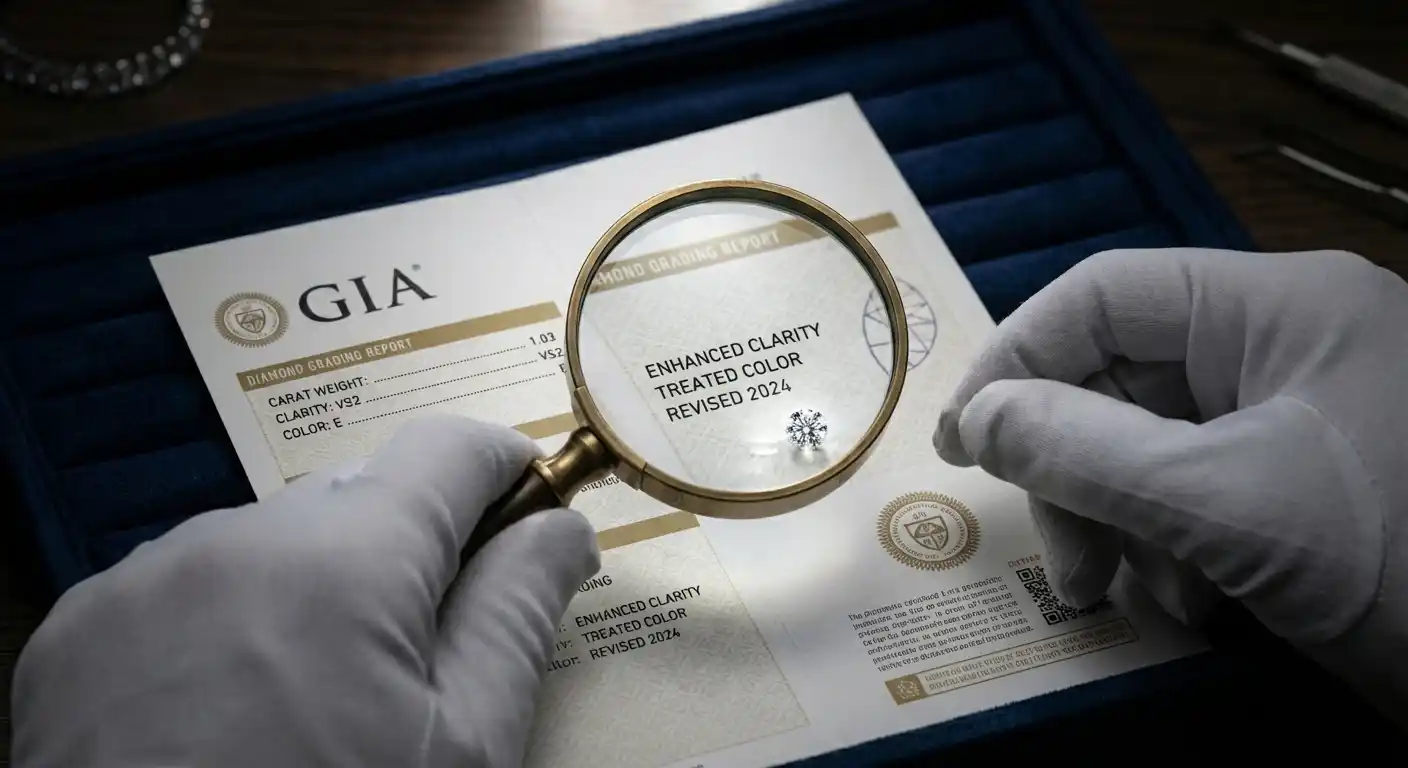
A diamond certificate (also called a grading report) is an independent, third-party evaluation of a diamond's characteristics. Issued by gemological laboratories like GIA or IGI, these documents provide unbiased assessments of the 4Cs and other quality factors.
Certificate vs. Appraisal
These terms are often confused but mean different things:
Certificate/Grading Report: Technical evaluation of diamond characteristics. Does not assign monetary value. Used for quality comparison.
Appraisal: Dollar value assessment for insurance purposes. Based on retail replacement cost. Often inflated for insurance coverage.
Always request a certificate from a reputable lab. Appraisals alone don't verify diamond quality.
Why Certification Matters
Protection from Misrepresentation
Without independent certification, a seller could claim any grade they choose. A "colorless, flawless" diamond could actually be I-color with visible inclusions. Certification provides objective verification.
Accurate Comparison Shopping
Certified diamonds can be compared apples-to-apples. When two diamonds both carry GIA Excellent cut, G color, VS2 clarity grades, you know they meet identical standards regardless of which retailer sells them.
Verification Capability
Every certificate includes a unique report number that can be verified online. You can confirm the report is genuine and hasn't been altered. Unfortunately, fake diamond certificates do exist—always verify reports directly with the issuing laboratory.
Resale and Insurance
Certified diamonds retain value better and are easier to sell. Insurance companies prefer certified stones because quality is documented.
Major Certification Laboratories
GIA (Gemological Institute of America)
GIA is considered the gold standard in diamond grading worldwide. Founded in 1931, GIA created the 4Cs grading system that became the industry standard.
Strengths:
- Most consistent and conservative grading
- Universally recognized and trusted
- Excellent for natural diamonds
- Required by most high-end jewelers
Consider GIA when:
- Buying natural diamonds
- Maximum resale value matters
- You want the most trusted certification
IGI (International Gemological Institute)
IGI is the largest independent gemological organization and a leader in lab-grown diamond certification. Founded in 1975, they've grown to become a major force in diamond grading.
Strengths:
- Leading certifier for lab-grown diamonds
- ISO 17025 laboratory accreditation
- More accessible pricing than GIA
- Strong international presence
Consider IGI when:
- Buying lab-grown diamonds
- Budget is a significant factor
- The retailer you're using provides IGI certification
AGS (American Gem Society)
AGS is known for rigorous cut grading, particularly their proprietary light performance measurements. Their "Ideal" cut grade is highly respected.
Strengths:
- Excellent cut grading standards
- Light performance emphasis
- Numeric grading scale (0-10)
Other Laboratories
EGL (European Gemological Laboratory): Generally considered less consistent; grades often looser than GIA. Proceed with caution.
In-house certificates: Some retailers issue their own certificates. These lack independent verification and should not be trusted as objective assessments.
Reading a GIA Report: Section by Section
Header Information
Report Number: Unique identifier for this specific diamond. Use this to verify the report at gia.edu.
Date: When the diamond was examined and graded. Diamonds don't change, but this confirms when the evaluation occurred.
Report Type: GIA offers several report types; the "Diamond Grading Report" is the most comprehensive.
Shape and Cutting Style
Describes the diamond's outline (round, princess, oval, etc.) and faceting pattern (brilliant, step-cut, etc.). This is not the same as cut quality grade.
Measurements
Precise dimensions measured in millimeters:
Round diamonds: Minimum diameter × Maximum diameter × Depth Fancy shapes: Length × Width × Depth
Use measurements to verify the diamond matches the report and to calculate proportions.
Carat Weight
The diamond's weight, measured to the hundredth of a carat (0.01 ct). One carat equals 200 milligrams.
See our carat weight and budget guide for strategic shopping advice.
Cut Grade (Round Brilliants Only)
GIA grades cut quality for round brilliant diamonds only:
| Grade | Meaning |
|---|---|
| Excellent | Optimal light performance |
| Very Good | Minor deviations from ideal |
| Good | Noticeable performance issues |
| Fair | Significant cutting problems |
| Poor | Major quality concerns |
Learn more about cut grades and proportions.
Color Grade
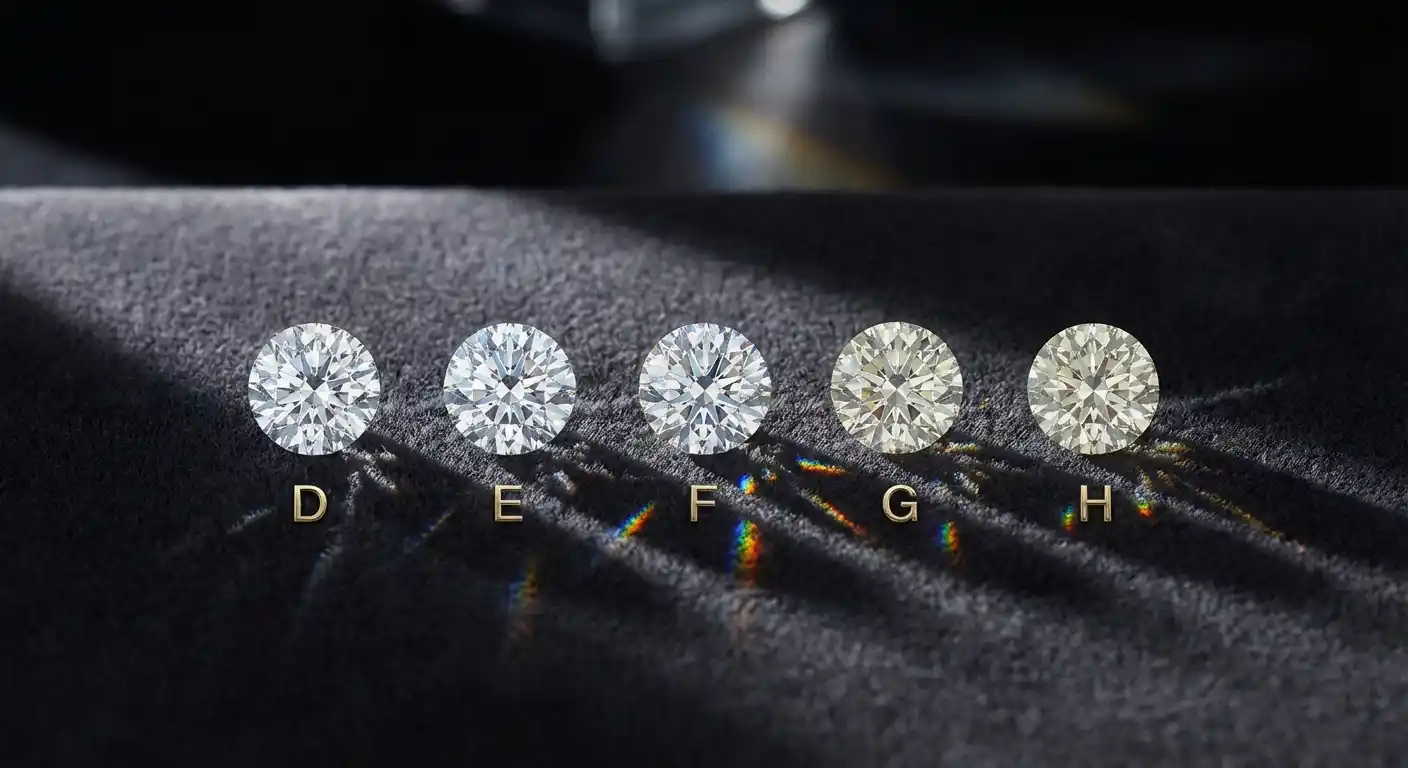
Rates the absence of color on a D-to-Z scale:
| Range | Category |
|---|---|
| D-F | Colorless |
| G-J | Near-colorless |
| K-M | Faint yellow |
| N-Z | Light yellow/brown |
See our diamond color comparison guide for value recommendations.
Clarity Grade
Rates inclusions and blemishes visible under 10x magnification:
| Grade | Description |
|---|---|
| FL | Flawless |
| IF | Internally Flawless |
| VVS1-VVS2 | Very Very Slightly Included |
| VS1-VS2 | Very Slightly Included |
| SI1-SI2 | Slightly Included |
| I1-I3 | Included |
See our clarity comparison guide for value recommendations.
Proportions
This section includes specific measurements that determine cut quality:
Table %: Width of the table facet as a percentage of diameter Depth %: Total depth as a percentage of diameter Crown Angle: Angle of the crown facets from horizontal Pavilion Angle: Angle of the pavilion facets from horizontal Star Length: Length of star facets relative to half the table width Lower Half: Length of lower girdle facets relative to pavilion length Girdle: Thickness description (Thin, Medium, Slightly Thick, etc.) Culet: Size of the bottom facet (None, Small, Medium, etc.)
Polish and Symmetry
Quality of the diamond's surface finish and facet alignment:
| Grade | Description |
|---|---|
| Excellent | No visible issues at 10x |
| Very Good | Minor polish lines or alignment issues |
| Good | Noticeable but minor issues |
| Fair/Poor | Visible quality concerns |
For optimal appearance, seek Excellent or Very Good in both categories.
Fluorescence
The diamond's reaction to UV light:
| Grade | Visibility |
|---|---|
| None | No reaction |
| Faint | Very weak glow |
| Medium | Moderate blue glow |
| Strong | Pronounced blue glow |
| Very Strong | Intense glow |
Medium or faint fluorescence rarely affects appearance and can save 5-15%. Strong fluorescence in high-color diamonds (D-F) occasionally causes haziness.
Clarity Characteristics (Inclusion Plot)
A diagram showing the location and type of inclusions. Symbols indicate different inclusion types:
- Small circles: Crystals
- Feather lines: Feathers (internal fractures)
- Clouds: Hazy areas of tiny inclusions
- Needles: Long, thin inclusions
The plot helps identify the specific diamond and understand where inclusions are located.
Comments
Additional notes about the diamond, including:
- "Laser inscription: [report number]"
- Treatment disclosures if applicable
- Additional characteristics not shown in the plot
Reading an IGI Report
IGI reports contain similar information to GIA reports with some formatting differences:
Key Sections
Report Number: Verify at igi.org Shape and Cut: Same as GIA Measurements and Weight: Same as GIA Color and Clarity: Same scale as GIA
Cut Grade Terminology
IGI uses slightly different cut terminology:
| IGI Grade | Equivalent |
|---|---|
| Ideal | Top tier (similar to GIA Excellent) |
| Excellent | Second tier |
| Very Good | Third tier |
Lab-Grown Diamond Reports
IGI clearly identifies lab-grown diamonds and specifies the growth method (CVD or HPHT). These reports include:
- "Laboratory Grown Diamond" prominently displayed
- Growth method identification
- Same 4Cs grading as natural diamonds
GIA vs IGI: Which Is Better?
Grading Consistency
GIA is generally considered more conservative and consistent. Some industry professionals note that IGI grades may be slightly more lenient—potentially by one grade in color or clarity. However, this gap has narrowed significantly since 2015.
Pricing Impact
IGI-certified diamonds typically sell for 5-15% less than GIA-certified equivalents with identical specifications. This reflects market perception rather than actual quality differences.
Recommendations
Choose GIA for:
- Natural diamonds
- Maximum resale value
- Traditional engagement rings
- When you want the most trusted certification
Choose IGI for:
- Lab-grown diamonds
- Value-focused purchases
- When the price difference matters
- International purchases (strong global presence)
How to Verify a Certificate
Online Verification
Every major lab offers online report verification:
GIA: gia.edu/report-check IGI: igi.org/verify-your-report
Enter the report number to confirm:
- The report exists in the database
- All grades match the paper report
- The report hasn't been altered
Physical Verification
Laser Inscription: Most certified diamonds have the report number laser-inscribed on the girdle. A jeweler with a loupe or microscope can verify this matches the certificate.
Security Features: GIA and IGI reports include holograms, QR codes, and other security features to prevent counterfeiting.
Red Flags to Watch For
Warning Signs
No certification: Never buy an uncertified diamond of significant value.
Unknown laboratory: Avoid certificates from obscure labs you cannot verify.
In-house certificates: Retailer-issued certificates lack independence.
Appraisal instead of certificate: Appraisals don't verify quality.
Missing report number: Cannot be verified online.
Vague origin statement: For lab-grown diamonds, origin should be clearly stated.
Questions to Ask
- Which laboratory certified this diamond?
- Can I verify the certificate online?
- Does the diamond have a laser inscription matching the report?
- Is this a natural or lab-grown diamond?
- Are there any treatments or enhancements?
Using Certificates When Shopping
With the Diamond Screener
Our Diamond Screener only includes diamonds with GIA or IGI certification. Each listing links to the certificate details, allowing you to:
- View all graded specifications
- Verify the report online
- Compare certified diamonds accurately
- Make informed purchasing decisions
Comparing Diamonds
When comparing diamonds across retailers, use certificate information for accurate assessment:
- Same lab (compare GIA to GIA, IGI to IGI)
- Same grades (cut, color, clarity)
- Similar proportions
- Price comparison
Frequently Asked Questions
Do all diamonds come with certificates?
No. Smaller diamonds (under 0.30 carats) are often sold uncertified. For engagement rings and significant purchases, always require GIA or IGI certification.
Is GIA better than IGI?
GIA is considered the gold standard for natural diamonds due to consistent, conservative grading. IGI is excellent for lab-grown diamonds. Both are reputable; the "better" choice depends on your specific purchase.
Can a certificate be faked?
Fake certificates exist, which is why online verification is essential. Always check the report number against the lab's official database and verify laser inscriptions when possible.
How much does certification cost?
Labs charge the seller for certification (typically $50-200 depending on diamond size and report type). This cost is usually included in the diamond's price.
Should I buy a diamond without a certificate?
For significant purchases (over $1,000), no. Certification provides essential protection and verification. For small accent diamonds or costume jewelry, certification is less critical.
What if the grades seem too good for the price?
This could indicate an inflated certificate from a less reputable lab, or a legitimate bargain. Verify the certificate online and compare prices for similar specifications from trusted retailers.
The Bottom Line
A diamond certificate from a reputable laboratory (GIA or IGI) is essential for any significant diamond purchase. It provides independent verification of quality, enables accurate comparison shopping, and protects you from misrepresentation.
When shopping for diamonds, always:
- Require GIA or IGI certification
- Verify the certificate online before purchasing
- Check that laser inscription matches the report number
- Use certificate information to compare diamonds accurately
Ready to find certified diamonds? Our Diamond Screener includes only GIA and IGI certified diamonds, with easy access to report details for every stone.
For more diamond education, explore our complete diamond buying guide, learn about cut grades, or compare clarity grades.
About the Author
Alfreda Borror
Alfreda Borror is the founding editor of Opulent Opal, writing research-based buying guides on diamonds, birthstones, and fine jewelry.