The Complete Diamond Buying Guide: How to Find the Best Value in 2026

This post may contain affiliate links. Read our affiliate policy
This article contains affiliate links. We may earn a commission if you make a purchase through our links, at no extra cost to you.
Most diamond shoppers overpay by 20-40% simply because they don't understand what actually matters. The diamond industry has conditioned buyers to chase perfection in categories that make no visible difference, while overlooking the factors that truly determine beauty and value.
According to The Knot's 2024 study, the average engagement ring costs $5,200—but that number means nothing without context. Some couples get stunning, eye-catching diamonds for under $3,000, while others spend $10,000 on stones that look identical to the naked eye. The difference isn't luck. It's knowledge.
This guide distills decades of gemological expertise into practical advice you can use today. Whether you're shopping for an engagement ring or a special anniversary gift, you'll learn exactly which specifications matter, which don't, and how to find diamonds that offer exceptional beauty at fair prices.
Ready to apply what you learn? Our Diamond Screener lets you compare thousands of certified diamonds from top retailers, instantly highlighting the best-value options based on price, quality, and the efficiency frontier.
Table of Contents
- What Makes a Diamond Valuable?
- Cut: The Most Important C
- Color: What Grade Should You Buy?
- Clarity: Finding Eye-Clean Value
- Carat: Maximizing Size for Budget
- Lab-Grown vs Natural Diamonds
- How to Compare Diamonds Online
- Red Flags and What to Avoid
- Frequently Asked Questions
What Makes a Diamond Valuable?
The Gemological Institute of America (GIA) created the 4Cs grading system to standardize diamond quality assessment worldwide. These four characteristics—Cut, Color, Clarity, and Carat—work together to determine a diamond's beauty and price.
But here's what the industry rarely tells you: these factors don't contribute equally to what you actually see. A well-cut diamond with lower color and clarity grades often outperforms a poorly cut stone with "perfect" specifications on paper.
The Hierarchy of Visual Impact:
| Factor | Visual Impact | Price Impact | Value Strategy |
|---|---|---|---|
| Cut | Highest | Moderate | Never compromise |
| Carat | High | Very High | Buy just under magic numbers |
| Color | Moderate | High | G-H looks colorless |
| Clarity | Lowest | High | VS2-SI1 typically eye-clean |
Understanding this hierarchy is the key to getting more beauty for your money. Let's examine each factor in detail.
Put this knowledge to work: Use our Diamond Screener to filter by quality factors and see exactly how specifications affect pricing across major retailers.
Cut: The Most Important C
Cut is the single most important factor in a diamond's beauty—and it's the only one entirely controlled by human craftsmanship. While nature determines color and clarity, a skilled diamond cutter transforms rough stone into a masterpiece of light performance.
Why Cut Matters Most
A diamond's cut determines three critical optical properties:
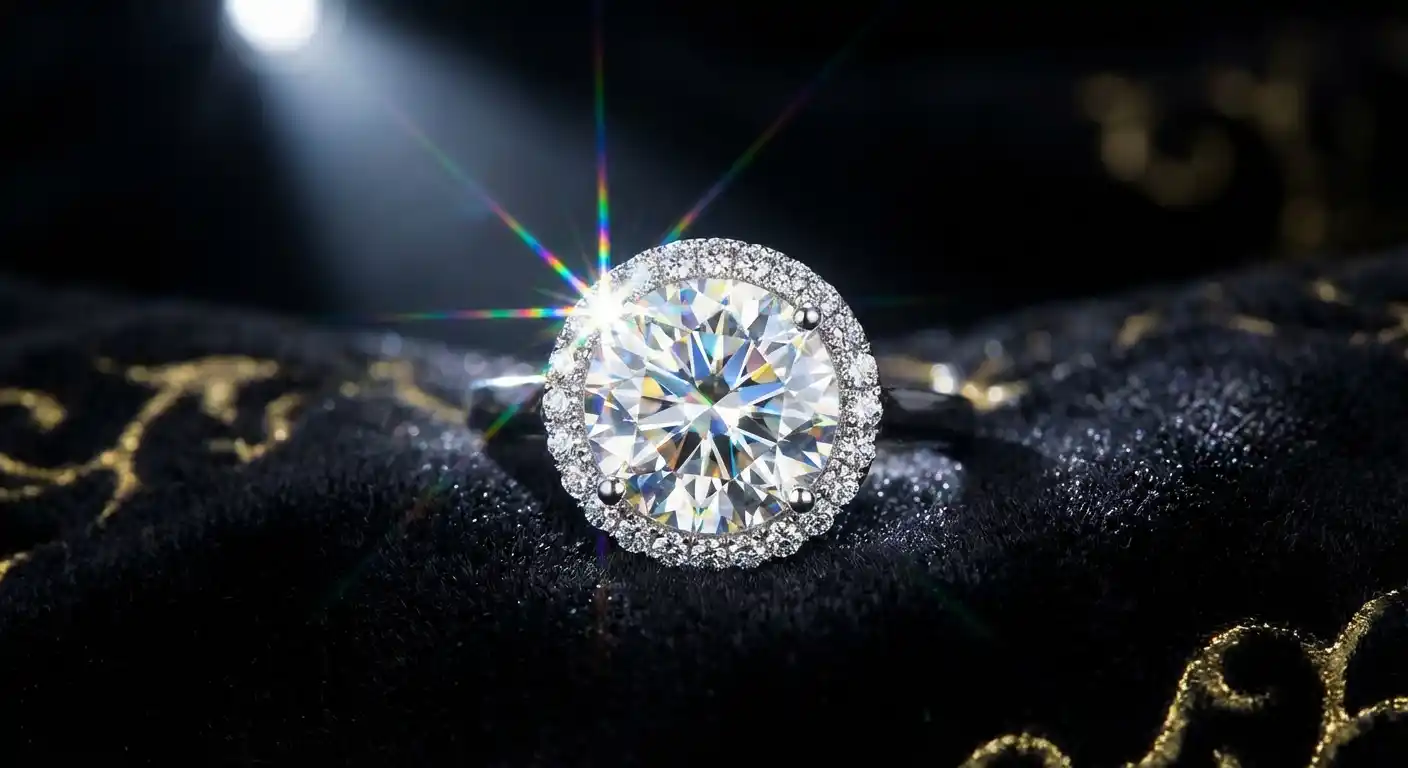
Brilliance is the total light returned to your eye, creating that bright white sparkle diamonds are famous for. Well-cut diamonds act like precision mirrors, bouncing light back through the top of the stone rather than leaking it out the sides or bottom.
Fire refers to the spectral colors that flash when light disperses through the diamond. Those rainbow flashes you see in a beautiful diamond? That's fire, and it's directly controlled by precise cutting angles.
Scintillation is the pattern of light and dark areas when the diamond or light source moves. It's what makes diamonds appear to dance with life rather than sitting static.
Understanding Cut Grades
GIA grades cut quality on a five-point scale for round brilliant diamonds:
| Grade | Description | Recommendation |
|---|---|---|
| Excellent | Optimal light performance | Best choice |
| Very Good | Slightly less precision | Great value alternative |
| Good | Noticeable light leakage | Avoid if possible |
| Fair | Significant performance loss | Not recommended |
| Poor | Major cutting issues | Never buy |
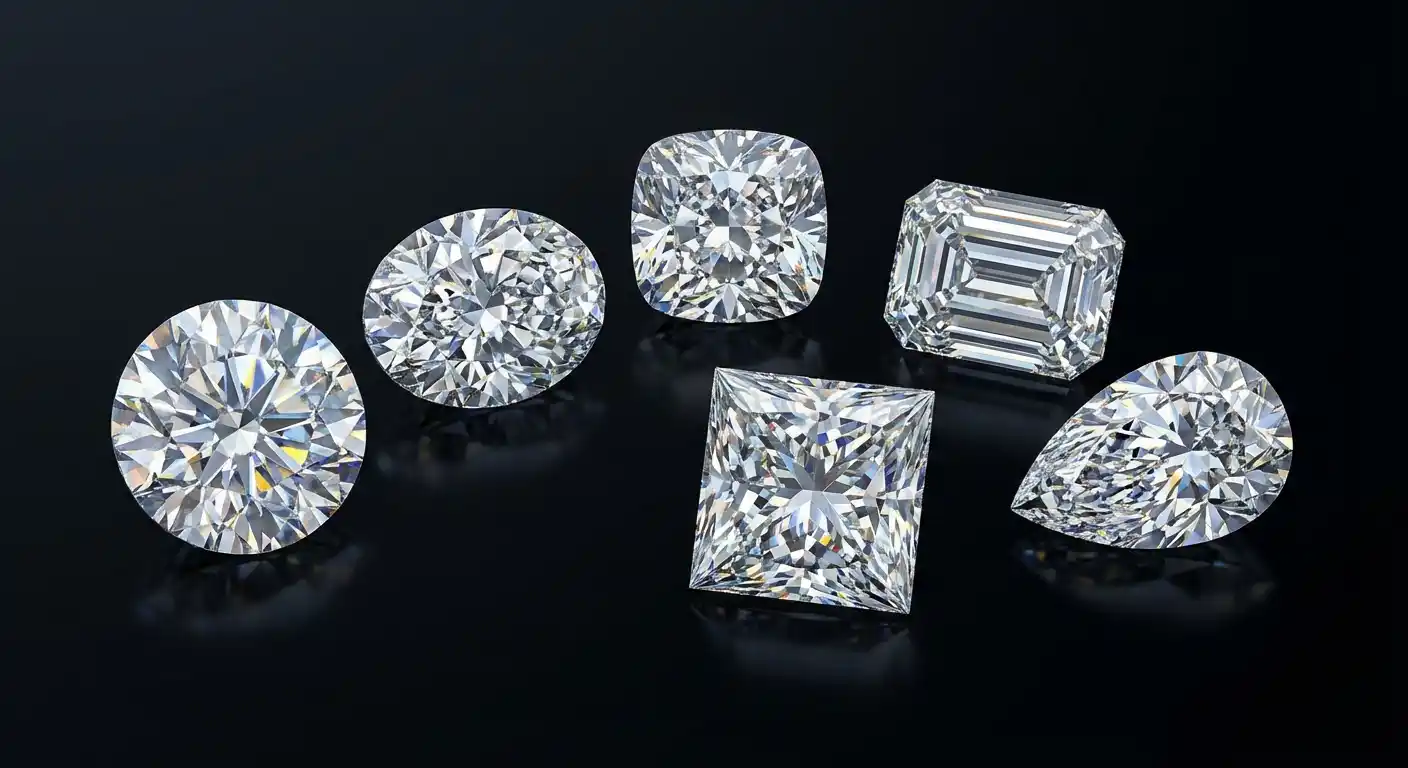
Important note: GIA only provides cut grades for round brilliant diamonds. Fancy shapes like princess, cushion, oval, and other diamond shapes don't receive official cut grades, making them trickier to evaluate.
The Ideal Cut Sweet Spot
For round diamonds, specific proportions consistently produce the best light performance:
- Table: 54-58%
- Depth: 59-62.5%
- Crown Angle: 34-35°
- Pavilion Angle: 40.6-41°
Diamonds falling within these ranges typically display superior brilliance and fire. Our Diamond Screener automatically identifies diamonds meeting AGS Ideal specifications, helping you find optimal performers quickly.
Cut and Price
Here's where strategic shopping pays off: the price jump from Very Good to Excellent cut is typically 10-15%, while the visual difference in well-lit environments is minimal. For budget-conscious buyers, a Very Good cut can offer excellent value.
However, we generally recommend prioritizing Excellent cut when possible. You can save money on color and clarity (as we'll explain below) while maintaining the cut quality that makes diamonds sparkle.
Quick Verdict: Always choose Excellent or Very Good cut. This is the one C where compromising truly shows.
Color: What Grade Should You Buy?
Diamond color grades measure the absence of color, with D being completely colorless and Z showing noticeable yellow or brown tint. The GIA color scale has 23 grades grouped into categories:
| Grade Range | Category | Typical Price Premium |
|---|---|---|
| D-F | Colorless | Highest (40-60% over G) |
| G-J | Near-Colorless | Moderate |
| K-M | Faint Yellow | Lower |
| N-Z | Noticeable Tint | Budget |
The Great Color Secret
Here's what jewelers often don't mention: most people cannot distinguish D-F colorless diamonds from G-H near-colorless diamonds without side-by-side comparison in controlled lighting.
When a diamond is set in a ring and worn in normal conditions, the color difference between a $5,000 D-color diamond and a $3,500 G-color diamond is virtually invisible. The premium you pay for D-F grades primarily buys you bragging rights, not visual superiority.
Optimal Color Recommendations
For white gold or platinum settings: G or H color offers the best value. These diamonds face up white in cooler-toned metals and save 15-25% compared to D-F grades.
For yellow or rose gold settings: Consider I or J color. The warm metal tones actually complement slight warmth in the diamond, making higher color grades unnecessary.
For maximum sparkle: Prioritize cut over color. A G-color diamond with Excellent cut will look brighter and more impressive than a D-color diamond with Good cut.
Color and
Different shapes show color differently. Brilliant cuts (round, princess, cushion) hide color well due to their complex faceting patterns. Step cuts (emerald, Asscher) reveal color more readily due to their large, open facets.
If you're choosing a step-cut shape, consider going one color grade higher than you would for a brilliant cut.
Quick Verdict: G-H color is the sweet spot for most buyers. You save significantly without sacrificing visible quality.
Compare color grades in action: Our Diamond Screener lets you filter by color grade and see how it affects pricing across different carat weights and shapes.
Clarity: Finding Eye-Clean Value
Clarity measures the absence of internal characteristics (inclusions) and surface blemishes. GIA uses 11 clarity grades:
| Grade | Description | Eye-Clean? |
|---|---|---|
| FL | Flawless | Yes |
| IF | Internally Flawless | Yes |
| VVS1-VVS2 | Very Very Slightly Included | Yes |
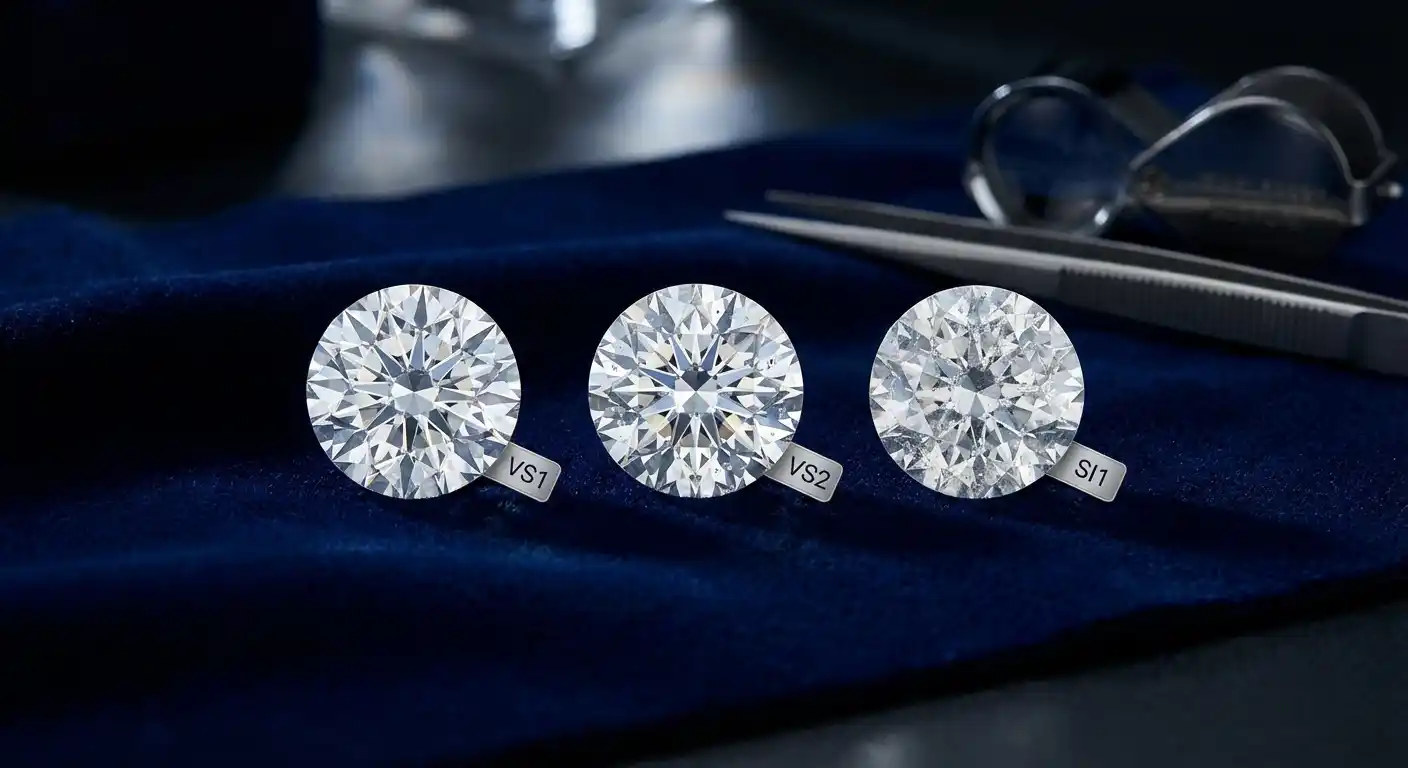
| VS1-VS2 | Very Slightly Included | Yes |
| SI1-SI2 | Slightly Included | Usually (inspect first) |
| I1-I3 | Included | No |
What "Eye-Clean" Really Means
An eye-clean diamond shows no visible inclusions when viewed face-up at normal viewing distance (about 6-12 inches) without magnification. This is the threshold that matters for jewelry—not what you see under 10x magnification.
The diamond grading process uses 10x magnification to detect tiny characteristics that are completely invisible in real-world viewing. This creates an opportunity for savvy buyers: diamonds graded SI1 or VS2 often look identical to VVS grades once mounted and worn.
The Value Opportunity in Clarity
Clarity grades create some of the largest price differentials in diamond buying:
| Comparison | Typical Savings |
|---|---|
| VS2 vs VVS2 | 15-25% |
| SI1 vs VS2 | 10-20% |
| SI1 vs VVS2 | 25-40% |
A flawless D-color diamond represents only one-tenth of one percent of all comparable mined white diamonds. You're paying exponentially for rarity that provides no visual benefit.
Smart Clarity Shopping
For brilliant cuts (round, cushion, princess): SI1 or VS2 clarity is typically eye-clean and offers excellent value.
For step cuts (emerald, Asscher): The large, open facets reveal inclusions more easily. Consider VS2 or higher.
For larger diamonds (2+ carats): Inclusions become easier to see as size increases. Consider VS2 or higher for stones over 2 carats.
Always inspect SI1 diamonds: While most SI1 diamonds are eye-clean, some have centrally located or dark inclusions that are visible. High-resolution images or 360° videos are essential when buying SI1 grades online.
Quick Verdict: VS2 and SI1 offer the best clarity value for most buyers. Save your money for cut and carat instead.
Find eye-clean diamonds: Our Diamond Screener helps you identify SI1 and VS2 diamonds from trusted retailers that provide high-resolution imagery for inspection.
Carat: Maximizing Size for Budget
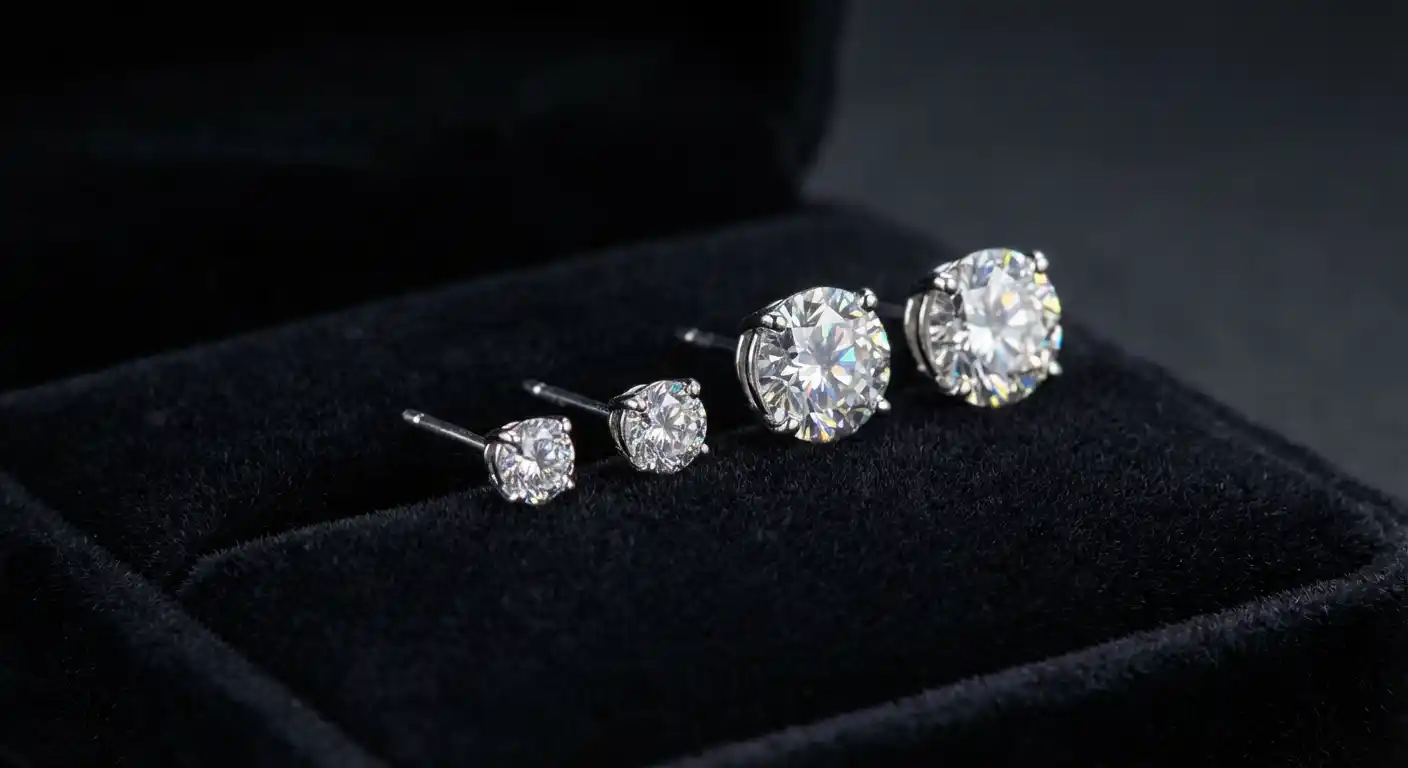
Carat weight measures a diamond's physical weight, with one carat equaling 200 milligrams. It's the most visible specification—larger diamonds are undeniably more impressive—but it's also where smart shopping strategies yield the biggest savings.
The Magic Number Trap
Diamond prices jump dramatically at certain "magic numbers": 0.50, 1.00, 1.50, and 2.00 carats. A 1.00-carat diamond typically costs 15-25% more than a 0.95-carat diamond of identical quality, even though the size difference is imperceptible to the naked eye.
| Carat Weight | vs. Round Number |
|---|---|
| 0.90-0.99 | 10-20% less than 1.00 |
| 1.40-1.49 | 10-15% less than 1.50 |
| 1.90-1.99 | 10-20% less than 2.00 |
This pricing quirk exists because many buyers specifically search for round numbers, creating artificial demand premiums. By shopping just under these thresholds, you get essentially the same visual impact at significantly lower cost.
Carat Weight vs. Visual Size
Two diamonds of equal carat weight can appear quite different in size depending on their proportions. A well-cut diamond optimizes light return, not maximum weight retention. Poorly cut diamonds may carry extra weight in the pavilion (bottom) where it adds nothing to visual size.
When comparing diamonds, pay attention to measurements (length x width for fancy shapes, or diameter for rounds) rather than carat weight alone. A 1.00-carat round diamond should measure approximately 6.4-6.5mm in diameter—significantly smaller or larger indicates non-ideal proportions.
Budget Allocation Strategy
According to The Knot, 33% of Americans spend less than $3,000 on engagement rings, while 64% spend less than $6,000. Here's how to maximize beauty at various budgets:
Under $3,000:
- 0.70-0.90 carat
- Excellent cut
- G-H color
- VS2-SI1 clarity
- Lab-grown option significantly expands choices
$3,000-$6,000:
- 0.90-1.30 carats
- Excellent cut
- G-H color
- VS2 clarity
- Natural or lab-grown depending on preference
$6,000-$10,000:
- 1.30-1.80 carats
- Excellent cut
- F-G color
- VS1-VS2 clarity
- Flexibility in all specifications
Quick Verdict: Buy just under magic numbers (0.95 instead of 1.00) and prioritize cut quality over maximum carat weight.
Maximize your carat budget: Our Diamond Screener shows the price-per-carat efficiency of different diamonds, helping you find the largest stones that don't sacrifice quality.
Diamonds
The diamond market has transformed dramatically in recent years. Lab-grown diamonds now represent approximately 50% of engagement ring center stones—a remarkable shift from just a decade ago when they barely registered in the market.
Understanding Lab-Grown Diamonds
Lab-grown diamonds are chemically, physically, and optically identical to mined diamonds. They're real diamonds, not simulants like cubic zirconia or moissanite. The only difference is their origin: laboratory versus earth.
Two primary methods create lab-grown diamonds:
HPHT (High Pressure High Temperature) replicates the natural diamond-forming process using massive presses that generate approximately 1.5 million pounds per square inch of pressure at temperatures over 2,700°F.
CVD (Chemical Vapor Deposition) grows diamonds from a hydrocarbon gas mixture in a plasma reactor, building the crystal layer by layer.
Price Comparison
Lab-grown diamonds typically cost 50-70% less than comparable natural diamonds. Here's a realistic comparison:
| Specifications | Natural Price | Lab-Grown Price |
|---|---|---|
| 1.00ct, G, VS2, Excellent | $4,500-6,000 | $1,200-2,000 |
| 1.50ct, G, VS2, Excellent | $9,000-12,000 | $2,000-3,500 |
| 2.00ct, G, VS2, Excellent | $18,000-25,000 | $3,500-6,000 |
This price difference means lab-grown buyers can afford significantly larger or higher-quality stones within the same budget.
Making the Choice
The natural vs. lab-grown decision is personal and neither choice is wrong. Consider these factors:
Choose natural if:
- Long-term resale value matters to you
- You value the romance of natural origin
- Tradition and heritage are important
- You're buying as an investment piece
Choose lab-grown if:
- You want maximum size/quality for budget
- Environmental considerations matter to you
- You're focused purely on visual beauty
- You plan to upgrade later
Important pricing note: Lab-grown diamond prices have dropped significantly over the past five years and may continue declining as production scales up. Natural diamond prices have remained more stable historically.
For a deeper comparison, read our complete guide on lab-grown vs natural diamonds.
Compare both options: Our Diamond Screener includes both natural and lab-grown diamonds, letting you see exactly how much more diamond you can get with each option.
How to Compare Diamonds Online
Online diamond retailers typically offer 30-50% lower prices than traditional brick-and-mortar jewelers. Blue Nile, for example, operates on approximately 19% gross margins compared to 50%+ for traditional jewelers. This efficiency translates directly into savings for buyers.
What to Look for in Online Retailers
Essential features:
- GIA or IGI certified diamonds
- High-resolution photos (not stock images)
- 360° rotating video
- Complete specifications visible
- Transparent return policies (minimum 30 days)
- Independent authentication
Red flags:
- No certification
- Stock photos only
- Vague specifications
- Short or restrictive returns
- Pressure tactics or "limited time" deals
Using Our Diamond Screener
We built our Diamond Screener specifically to help buyers compare diamonds across multiple retailers using consistent criteria. Here's how to use it effectively:
Step 1: Set Your Parameters Start with your budget and desired carat range. The screener will show all available options meeting your criteria.
Step 2: Filter by Quality Apply cut, color, and clarity filters based on the recommendations in this guide. Focus on Excellent cut, G-H color, and VS2-SI1 clarity for optimal value.
Step 3: Review the Efficiency Frontier The screener highlights diamonds offering the best value—stones that deliver superior quality relative to price. These efficiency frontier diamonds represent the sweet spots in the market.
Step 4: Compare Specifics Click through to retailer sites to view detailed images, videos, and certification reports for diamonds that interest you.
Certification Matters
Always buy certified diamonds from reputable grading laboratories:
GIA (Gemological Institute of America) is the gold standard, known for consistent and conservative grading. A GIA-certified diamond gives you confidence in its stated specifications.
IGI (International Gemological Institute) is widely used for lab-grown diamonds and is generally reliable, though some consider their grading slightly more lenient than GIA.
AGS (American Gem Society) is known for rigorous cut grading, particularly for round brilliant diamonds.
Avoid diamonds certified only by the seller or by lesser-known labs, which may use inflated grades to justify higher prices.
Start comparing now: Our Diamond Screener aggregates certified diamonds from trusted retailers like Ritani, James Allen, Blue Nile, and Brilliant Earth, making comparison shopping simple.
Red Flags and What to Avoid
Pricing Pitfalls
"Too good to be true" deals: If a diamond is priced 40-50% below market for its specifications, something is wrong. Common issues include inflated certification, undisclosed treatments, or simply fake listings. Learn to verify if a gem is real before making significant purchases.
Uncertified diamonds: Sellers who can't provide independent certification are asking you to trust their grading. Without GIA, IGI, or AGS certification, you have no reliable way to verify quality.
Clarity enhanced diamonds: Some diamonds are laser-drilled or fracture-filled to improve apparent clarity. These treatments are not permanent and significantly reduce value. Always confirm a diamond is untreated.
High-pressure sales tactics: Legitimate retailers don't pressure you into immediate decisions. Phrases like "this won't last" or "special price today only" are warning signs.
Specification Traps
Prioritizing the wrong factors: Don't pay premiums for D color or VVS clarity when that money could go toward better cut or larger size. Focus on what you'll actually see.
Ignoring cut quality for fancy shapes: Since GIA doesn't grade cut for non-round diamonds, many retailers sell poorly proportioned fancy shapes at premium prices. Research ideal proportions for your chosen shape.
Fluorescence fears: Many buyers avoid fluorescence entirely, but medium or faint fluorescence rarely affects appearance and can save 5-15%. Strong fluorescence in higher-color diamonds (D-F) occasionally causes haziness, but this is rare.
What to Do Instead
- Set a realistic budget before shopping
- Prioritize cut quality above all other factors
- Buy certified from GIA, IGI, or AGS
- Compare across retailers using consistent specifications
- Request high-resolution imagery for any diamond you're considering
- Read return policies before purchasing
Frequently Asked Questions
How much should I spend on a ?
There's no correct answer—spend what you're comfortable with. The old "two months' salary" rule was invented by De Beers for marketing purposes. According to The Knot, 33% of Americans spend under $3,000 and 64% spend under $6,000. Focus on finding a beautiful diamond within your budget rather than hitting an arbitrary spending target.
What's the best diamond shape for my budget?
Round brilliant diamonds typically cost 25-35% more than fancy shapes of equal carat weight because rough diamonds yield less weight when cut into rounds. If you want maximum size for your budget, consider cushion, oval, or pear shapes. If brilliance is your priority, round remains the best performer.
Should I buy a lab-grown or natural diamond?
This depends on your priorities. Lab-grown diamonds cost 50-70% less, letting you buy significantly larger or higher-quality stones. Natural diamonds hold value better over time and appeal to those who value their natural origin. Neither choice is wrong—it's a matter of personal values and budget priorities.
What clarity grade is best for value?
VS2 and SI1 offer the best value for most buyers. Both grades typically appear eye-clean (no visible inclusions without magnification) while costing significantly less than VVS or IF grades. Always view high-resolution images of SI1 diamonds before purchasing to confirm inclusions aren't visible.
Does diamond color matter in engagement rings?
Color matters less than most buyers think. G and H color diamonds appear colorless to the naked eye, especially once set in a ring. Reserve D-F grades for those who specifically want documentation of colorlessness. For yellow or rose gold settings, I or J color often works perfectly fine.
What's the most important of the 4Cs?
Cut is the most important factor for visual beauty. A well-cut diamond sparkles brilliantly regardless of color or clarity grade. An Excellent-cut G VS2 diamond will look better than a Fair-cut D VVS1 diamond. Never compromise on cut quality.
How do I know if an online diamond retailer is legitimate?
Look for: GIA or IGI certified diamonds, high-resolution photos and 360° video, transparent pricing, minimum 30-day return policies, secure payment options, and established reputation. Our Diamond Screener features diamonds from vetted retailers with proven track records.
Can I negotiate diamond prices?
Online retailers typically have fixed pricing but sometimes offer promotions. Local jewelers often have more flexibility, particularly on custom work or if paying cash. Focus on finding the best value rather than negotiating—a well-researched purchase at fair market price beats a "discount" on an overpriced stone.
What's the best carat weight to buy?
Buy just under "magic numbers" (0.90-0.99 instead of 1.00, 1.40-1.49 instead of 1.50) to save 10-20% with imperceptible size difference. The "best" size depends on your budget, the recipient's hand size, and personal preferences. Most buyers find 0.80-1.30 carats creates a beautiful, proportional look.
How long does it take to receive an online diamond purchase?
Most retailers ship within 1-2 weeks for in-stock diamonds. Custom settings or special requests may take 3-4 weeks. Always confirm shipping timelines before purchasing, especially if you're buying for a specific occasion.
Start Your Diamond Search
Armed with this knowledge, you're ready to find a diamond that offers exceptional beauty at a fair price. Remember the key principles:
- Cut first: Never compromise on Excellent or Very Good cut
- Color: G-H offers the best value for most buyers
- Clarity: VS2-SI1 is typically eye-clean and much less expensive
- Carat: Buy just under magic numbers to save significantly
- Always certified: GIA or IGI certification is non-negotiable
Find your perfect diamond: Our Diamond Screener compares thousands of certified diamonds from trusted retailers, highlighting the best-value options based on the efficiency frontier. Start your search now and see exactly what's available at your budget.
For more guidance on your jewelry purchase journey, explore our complete engagement ring guide, learn about different diamond shapes, or compare lab-grown vs natural diamonds in detail.
About the Author
Alfreda Borror
Alfreda Borror is the founding editor of Opulent Opal, writing research-based buying guides on diamonds, birthstones, and fine jewelry.