How to Clean Diamonds, Gemstones & Pearls Safely

This post may contain affiliate links. Read our affiliate policy
The sparkling diamond that caught your eye deserves different care than a delicate opal or lustrous pearl. Each gemstone has unique properties—hardness, porosity, treatments—that determine safe cleaning methods. Using the wrong approach can dull, damage, or destroy precious stones.
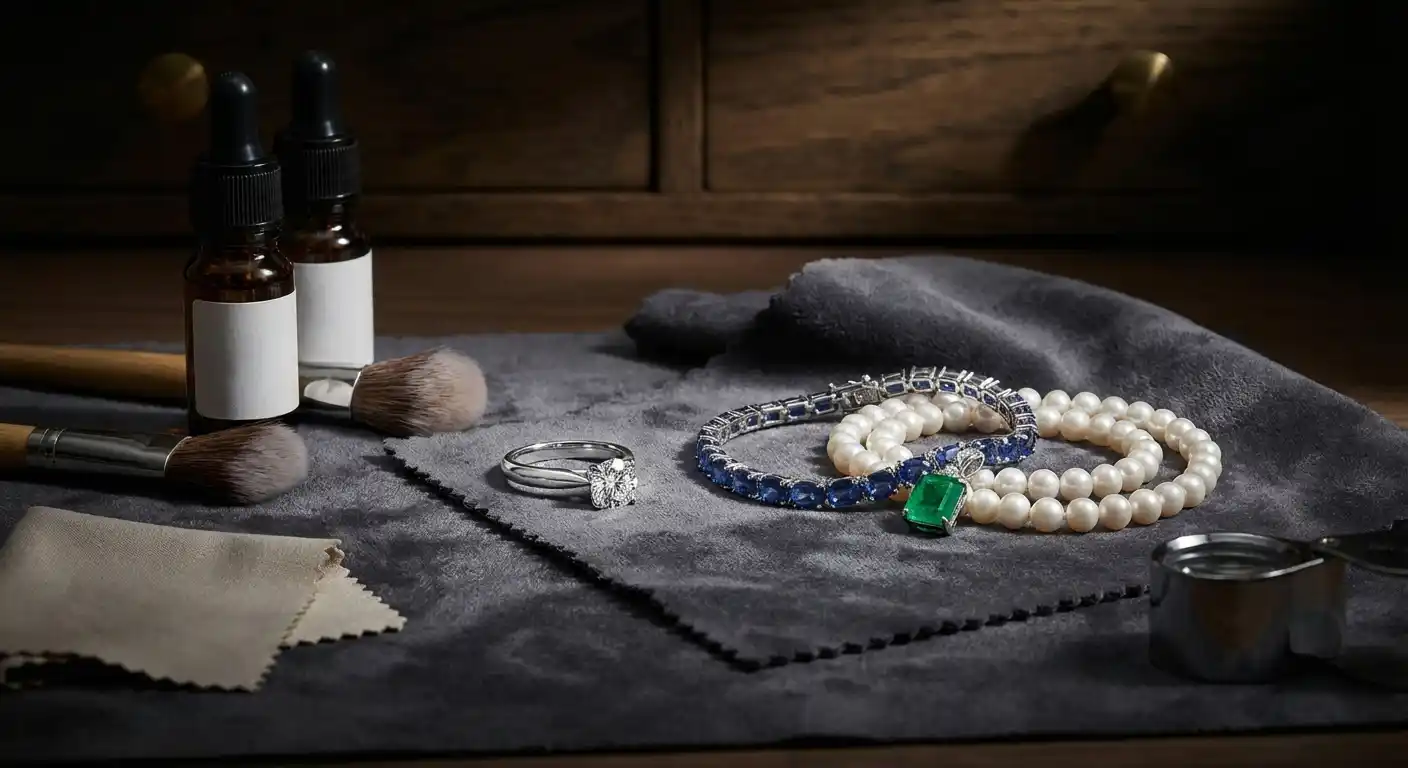
This guide covers proper cleaning for every major gemstone category, from hardy diamonds to delicate pearls, helping you maintain brilliance safely. For comprehensive care including metal cleaning and maintenance schedules, see our complete ring care guide.
Table of Contents
- Understanding Gemstone Durability
- Cleaning Diamonds
- Cleaning Sapphires & Rubies
- Cleaning Emeralds
- Cleaning Opals
- Cleaning Pearls
- Other Popular Gemstones
- Cleaning Methods by Safety Level
- FAQ
Understanding Gemstone Durability
Gemstone durability depends on three factors:
Hardness (Mohs Scale)
The Mohs scale measures scratch resistance from 1 (talc) to 10 (diamond):
| Hardness | Gemstones | Scratch Resistance |
|---|---|---|
| 10 | Diamond | Scratched only by diamond |
| 9 | Sapphire, Ruby | Excellent |
| 7.5-8 | Emerald, Aquamarine | Good |
| 7 | Quartz, Amethyst | Fair |
| 6-7 | Opal, Tanzanite | Moderate |
| 2.5-4.5 | Pearls | Poor |
Toughness
Toughness measures resistance to breaking or chipping. Diamond is the hardest material but can chip along cleavage planes. Jade, while softer, is extremely tough.
Stability
Some gems react to light, heat, or chemicals:
- Heat sensitive: Opal, tanzanite, emerald
- Light sensitive: Amethyst (can fade), kunzite
- Chemical sensitive: Pearls, turquoise, coral
Treatments
Many gemstones receive treatments that affect cleaning options:
- Heat treatment (sapphires, rubies): Usually stable
- Oil filling (emeralds): Sensitive to solvents
- Fracture filling (diamonds, emeralds): Sensitive to heat and chemicals
- Coating (tanzanite, some diamonds): Can wear or dissolve
Cleaning Diamonds
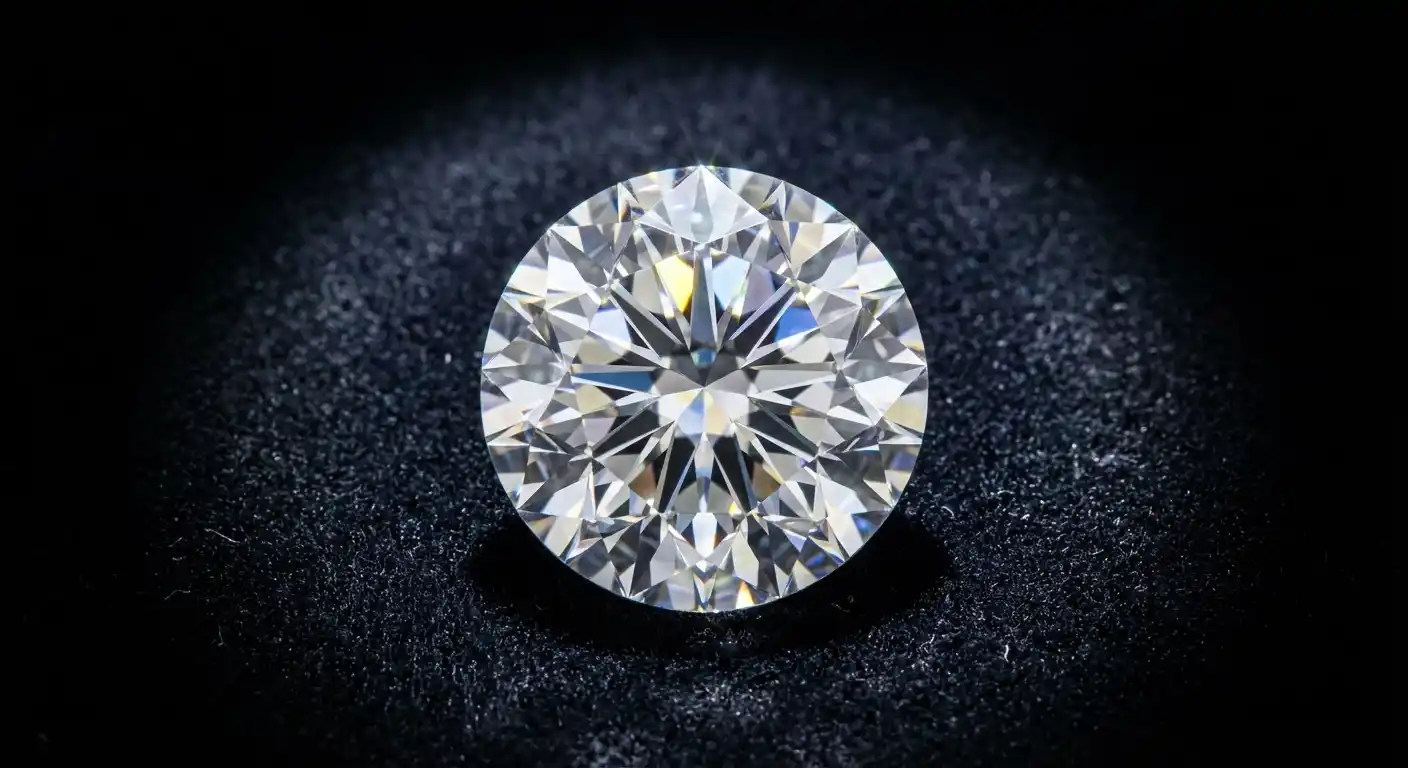
Diamonds are the hardest gemstone, making them highly tolerant of most cleaning methods. The challenge isn't protecting the stone—it's reaching buildup underneath.
Why Diamonds Get Dirty
Diamonds naturally attract grease and oil. The pavilion (bottom) and prongs collect:
- Skin oils and lotions
- Soap residue
- Cooking oils
- Hair products
- Hand cream
This buildup blocks light from entering and exiting the stone, reducing sparkle by up to 40%.
Best Cleaning Methods for Diamonds
Weekly maintenance:
- Mix warm water with a few drops of dish soap
- Soak for 20-30 minutes
- Brush underneath and around prongs with soft toothbrush
- Rinse thoroughly
- Dry with lint-free cloth
Deep cleaning:
- Ultrasonic cleaners: Highly effective; safe for solid diamonds
- Steam cleaning: Excellent results; avoid if diamond has fracture filling
- Ammonia solution: 1 part ammonia to 6 parts water; soak 20 minutes (well-ventilated area)
For travel and touch-ups, a portable diamond cleaning pen provides quick sparkle refresh without water.
Diamond Cleaning Cautions
Avoid ultrasonic and steam cleaning if:
- Diamond has clarity-enhanced fracture filling
- Diamond has significant inclusions that reach the surface
- Setting is antique or delicate
- You're unsure of diamond treatments
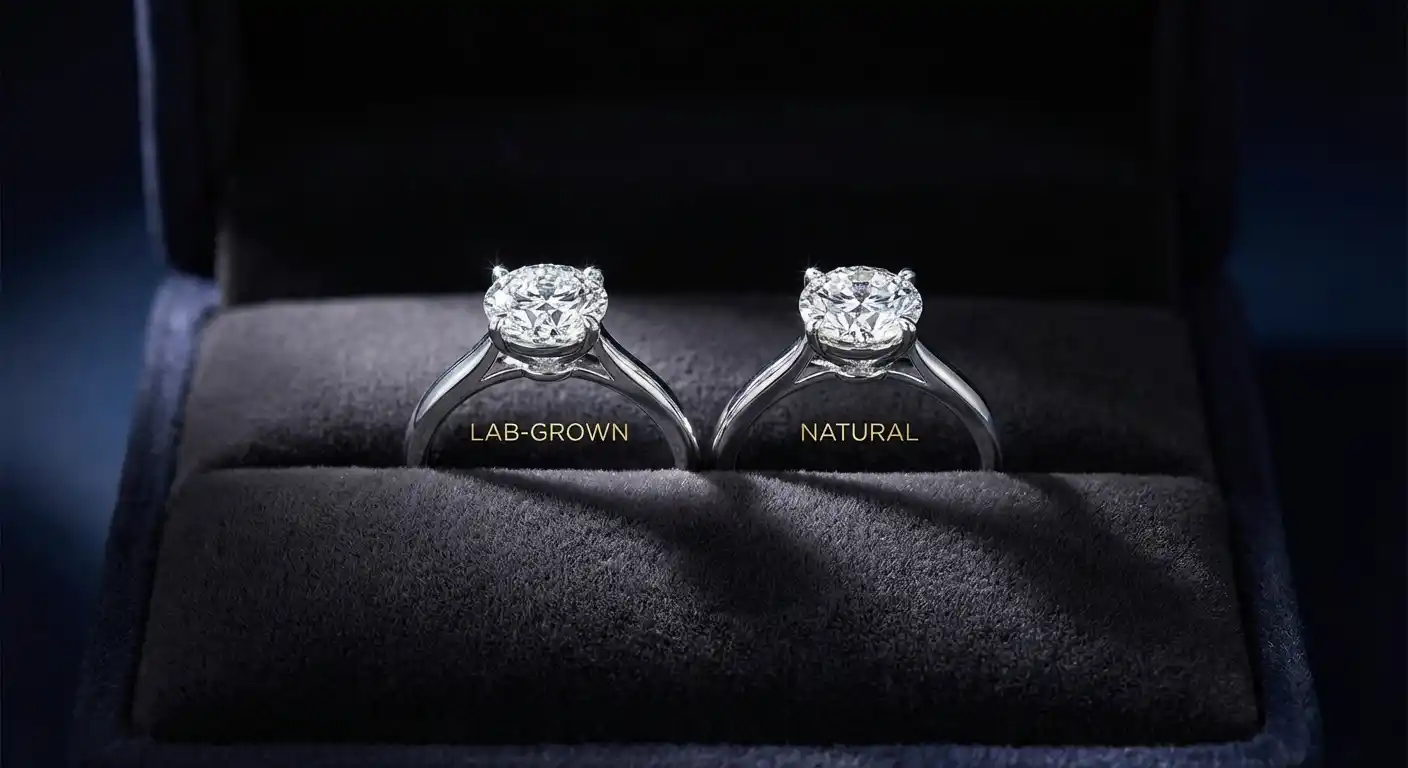
Note for lab-grown diamonds: Same care as natural diamonds—they're chemically identical. To understand the differences between these options, see our lab-grown vs natural diamonds guide.
For more on diamond quality and selection, see our diamond buying guide.
Cleaning Sapphires & Rubies
Sapphires and rubies are both corundum (9 on Mohs scale), making them highly durable and tolerant of most cleaning methods.
Safe Cleaning Methods
All methods work well:
- Warm soapy water with soft brush
- Ultrasonic cleaners
- Steam cleaners
- A non-toxic gem cleaner formulated for colored gemstones
Special Considerations
Heat-treated sapphires and rubies (most on the market): Generally stable and safe for all methods.
Fracture-filled or flux-healed stones: Avoid ultrasonic and steam; use only warm soapy water.
Star sapphires and rubies (cabochon cut): Handle more carefully as the domed surface can scratch despite hardness. Avoid abrasives.
Diffusion-treated sapphires: Safe for cleaning but the color treatment exists only in a thin surface layer—avoid heavy polishing.
Frequency
Clean weekly for daily-wear rings. Sapphires' hardness means they don't scratch easily but still collect oils.
For more about these beautiful stones, see our sapphire birthstone guide and ruby birthstone guide.
Cleaning Emeralds
Emeralds require the most cautious approach of the "precious" gemstones. Their characteristic inclusions (called "jardin" or garden) and routine oil treatment demand gentle care.
Why Emeralds Need Special Care
Almost all emeralds are treated with oil (typically cedar or synthetic) to fill natural inclusions and improve clarity. This treatment:
- Improves appearance significantly
- Is industry standard and accepted
- Can be damaged by heat, ultrasonic vibration, or solvents
Safe Emerald Cleaning
Only use this method:
- Use barely warm (room temperature) water
- Add tiny amount of mild soap
- Soak briefly (5 minutes maximum)
- Wipe gently with soft cloth
- Dry immediately with soft cloth
Never use on emeralds:
- Ultrasonic cleaners (can remove oil and crack stone)
- Steam cleaners (heat damages oil treatment)
- Hot water (thermal shock)
- Any solvent or ammonia (dissolves oil)
- Prolonged soaking
Re-oiling Emeralds
If your emerald loses its luster despite cleaning, it may need professional re-oiling. This is normal maintenance for emeralds and costs $50-$150.
For more about emeralds, see our emerald birthstone guide.
Cleaning Opals
Opals are among the most delicate gemstones, requiring careful handling to preserve their unique play of color.
Understanding Opal Sensitivity
- Hardness: 5.5-6.5 (scratches easily)
- Water content: 3-21% (can dry out or absorb water)
- Heat sensitivity: Extreme temperature changes cause cracking ("crazing")
- Porosity: Can absorb chemicals and liquids
Safe Opal Cleaning
The only recommended method:
- Dampen a soft, lint-free cloth with plain water
- Wipe gently
- Dry immediately with another soft cloth
- Store properly
Never use on opals:
- Any cleaning solution or soap
- Soaking of any kind
- Ultrasonic or steam cleaners
- Excessive water exposure
- Rapid temperature changes
Types of Opals
Solid opals (white, black, boulder, fire): Most stable; use method above
Doublets and triplets (thin opal layer with backing/cap): Even more water-sensitive—moisture can infiltrate layers. Wipe only with slightly damp cloth; never submerge.
Opal Storage
- Avoid dry environments (can cause crazing)
- Keep away from direct heat sources
- Don't store in airtight containers (needs some humidity)
- Never leave in direct sunlight
For more about opals, see our October birthstone guide.
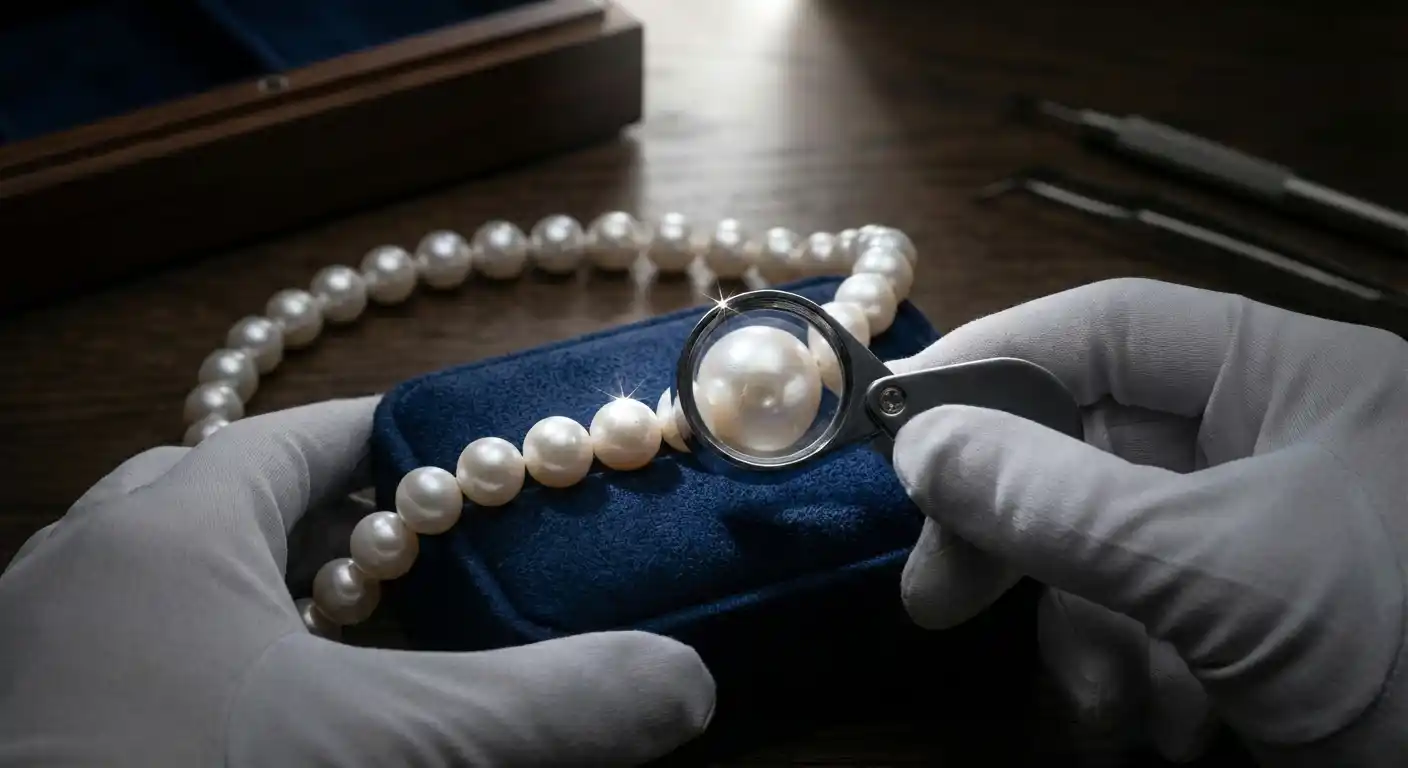
Cleaning Pearls
Pearls are organic gems—created by living mollusks—requiring the gentlest care of all jewelry.
Understanding Pearl Sensitivity
- Hardness: 2.5-4.5 (extremely soft)
- Composition: Layers of nacre (aragonite) and protein
- Sensitivity: Damaged by acids, chemicals, perfumes, cosmetics
- Porosity: Absorbs substances that contact them
The Pearl Cleaning Rule
After every wearing:
- Wipe with soft, damp cloth
- Allow to dry completely before storing
This removes body oils, perfume residue, and acids from perspiration that can damage nacre over time.
Deep Cleaning Pearls (Rare)
Only when visibly soiled:
- Dampen soft cloth with plain water
- Add tiny drop of very mild soap if needed
- Wipe each pearl individually
- Wipe again with clean damp cloth to remove soap
- Dry thoroughly on soft towel before storing
What Damages Pearls
Never expose pearls to:
- Perfume, hairspray, cosmetics (apply before putting on pearls)
- Household chemicals
- Vinegar or acidic foods
- Ultrasonic or steam cleaners
- Jewelry cleaning solutions
- Extended water exposure
Pearl Maintenance
- Store separately (away from harder gems that scratch)
- Restring annually if worn frequently
- Use a specialized pearl cleaning solution when deeper cleaning is needed
- Wear often—body oils keep pearls hydrated
- Put pearls on last, take off first
For more about pearls, see our June birthstone guide.
Other Popular Gemstones
Aquamarine (7.5-8 hardness)
Safe methods: Warm soapy water, ultrasonic (with caution), steam Avoid: Sudden temperature changes Notes: Generally durable; some specimens have liquid inclusions that can fracture with ultrasonic. Learn more in our March birthstone guide.
Amethyst (7 hardness)
Safe methods: Warm soapy water, ultrasonic Avoid: Prolonged light exposure (can fade), steam cleaning Notes: Some specimens are heat-sensitive. See our February birthstone guide for more details.
Topaz (8 hardness)
Safe methods: Warm soapy water Avoid: Ultrasonic (perfect cleavage makes topaz vulnerable), steam, sudden temperature changes Notes: Despite high hardness, topaz chips easily due to cleavage. Blue topaz is featured in our December birthstone guide.
Tanzanite (6-7 hardness)
Safe methods: Warm soapy water only Avoid: Ultrasonic, steam, chemicals, extreme temperatures Notes: Relatively fragile; requires careful handling. Learn more in our December birthstone guide.
Garnet (6.5-7.5 hardness)
Safe methods: Warm soapy water, ultrasonic usually safe Avoid: Steam cleaning, sudden temperature changes Notes: Demantoid garnet requires extra care due to inclusions. See our January birthstone guide for more about garnets.
Peridot (6.5-7 hardness)
Safe methods: Warm soapy water only Avoid: Ultrasonic, steam, acids (even mild acids damage peridot) Notes: Sensitive to chemicals; clean gently. Learn more in our August birthstone guide.
Tourmaline (7-7.5 hardness)
Safe methods: Warm soapy water Avoid: Ultrasonic (can damage filled fractures), sudden temperature changes Notes: Many tourmalines are fracture-filled; treat gently
Turquoise (5-6 hardness)
Safe methods: Dry soft cloth; barely damp cloth if needed Avoid: Water, chemicals, ultrasonic, steam, cosmetics Notes: Porous; absorbs liquids; polishes and oils change color
Cleaning Methods by Safety Level
Safe for Most Gemstones
Warm soapy water with soft brush:
- Diamond ✓
- Sapphire ✓
- Ruby ✓
- Aquamarine ✓
- Amethyst ✓
- Garnet ✓
- Quartz varieties ✓
Use With Caution
Ultrasonic cleaning (check stone condition first):
- Diamond (avoid if fracture-filled)
- Sapphire (avoid if heavily included)
- Ruby (avoid if heavily included)
- Aquamarine (avoid if has visible inclusions)
Avoid Entirely
For emeralds, opals, pearls, and treated stones:
- ❌ Ultrasonic cleaning
- ❌ Steam cleaning
- ❌ Ammonia
- ❌ Solvents
- ❌ Hot water
- ❌ Prolonged soaking
Frequently Asked Questions
Can I clean all my rings together?
No. Different gemstones have different care requirements. A cleaning method safe for diamonds might damage emeralds or pearls. Clean each piece according to its most delicate component.
How do I know if my gemstone is treated?
Most colored gemstones receive some form of treatment. Assume treatment unless you have documentation stating otherwise. When uncertain, use the gentlest cleaning method.
Why does my diamond look cloudy after cleaning?
Residual soap film or water deposits can cause cloudiness. Rinse more thoroughly and use distilled water for the final rinse. Dry immediately with lint-free cloth.
Can I use jewelry cleaner on all gemstones?
Commercial jewelry cleaners are typically formulated for diamonds and hard gemstones. Always check the label—many explicitly warn against use on pearls, opals, and soft stones.
My gemstone looks dull even after cleaning. What's wrong?
Several possibilities:
- Surface scratches (especially on softer stones)
- Internal damage
- Treatment degradation (especially emeralds)
- Need for professional cleaning/polishing
Visit a jeweler for evaluation.
How often should gemstone jewelry be professionally cleaned?
Every 6-12 months for regularly worn pieces. Professional cleaning includes inspection that may catch problems before they become serious. See our guide on professional vs DIY cleaning for more details.
Quick Reference Card
| Gemstone | Soap & Water | Ultrasonic | Steam | Chemicals |
|---|---|---|---|---|
| Diamond | ✓ | ✓* | ✓* | ✓ |
| Sapphire | ✓ | ✓ | ✓ | ✓ |
| Ruby | ✓ | ✓ | ✓ | ✓ |
| Emerald | Gentle only | ❌ | ❌ | ❌ |
| Opal | Damp cloth | ❌ | ❌ | ❌ |
| Pearl | Damp cloth | ❌ | ❌ | ❌ |
| Aquamarine | ✓ | Caution | Caution | ✓ |
| Amethyst | ✓ | ✓ | ❌ | ✓ |
| Topaz | ✓ | ❌ | ❌ | ✓ |
*Unless fracture-filled or heavily included
For cleaning guidance based on your ring's metal, see our guide to cleaning gold, platinum, and silver rings.
Connoisseurs Diamond Dazzle Stik Portable Cleaner

Portable twist-pen cleaner with brush tip. Perfect for quick touch-ups and travel. Professional formula safe for diamonds.
"I keep one in my purse and one at my desk. Perfect for a quick sparkle refresh before meetings.
Blitz Gem and Jewelry Cleaner Concentrate

Blitz Gem and Jewelry Cleaner Concentrate
Non-toxic formula safe for most colored gemstones.
Non-toxic formula safe for most colored gemstones. Ammonia-free and gentle on treated stones.
"Finally a cleaner I can use on my sapphire and ruby rings without worrying about damage.
Town Talk Perfect Pearl Jewelry Care Kit - Polishing Cloth & 4 Sachets

Town Talk Perfect Pearl Jewelry Care Kit Polishing Cloth 4 Sachets
Pearl-specific care kit with polishing cloth and four cleaning sachets.
Pearl-specific care kit with polishing cloth and four cleaning sachets. Gentle on nacre while removing the skin oils and perfume residue pearls are most sensitive to.
"My grandmother's pearls hadn't been cleaned in years. This brought them back beautifully without any harsh effects.
Review of What We Liked
Connoisseurs Portable Cleaner
Portable twist-pen cleaner with brush tip.
Blitz Gem and Jewelry Cleaner Concentrate
Non-toxic formula safe for most colored gemstones.
Town Talk Perfect Pearl Jewelry Care Kit Polishing Cloth 4 Sachets
Pearl-specific care kit with polishing cloth and four cleaning sachets.
About the Author
Alfreda Borror
Alfreda Borror is the founding editor of Opulent Opal, writing research-based buying guides on diamonds, birthstones, and fine jewelry.