Are Fake Diamond Certificates Real? How to Spot Fraudulent Reports

This post may contain affiliate links. Read our affiliate policy
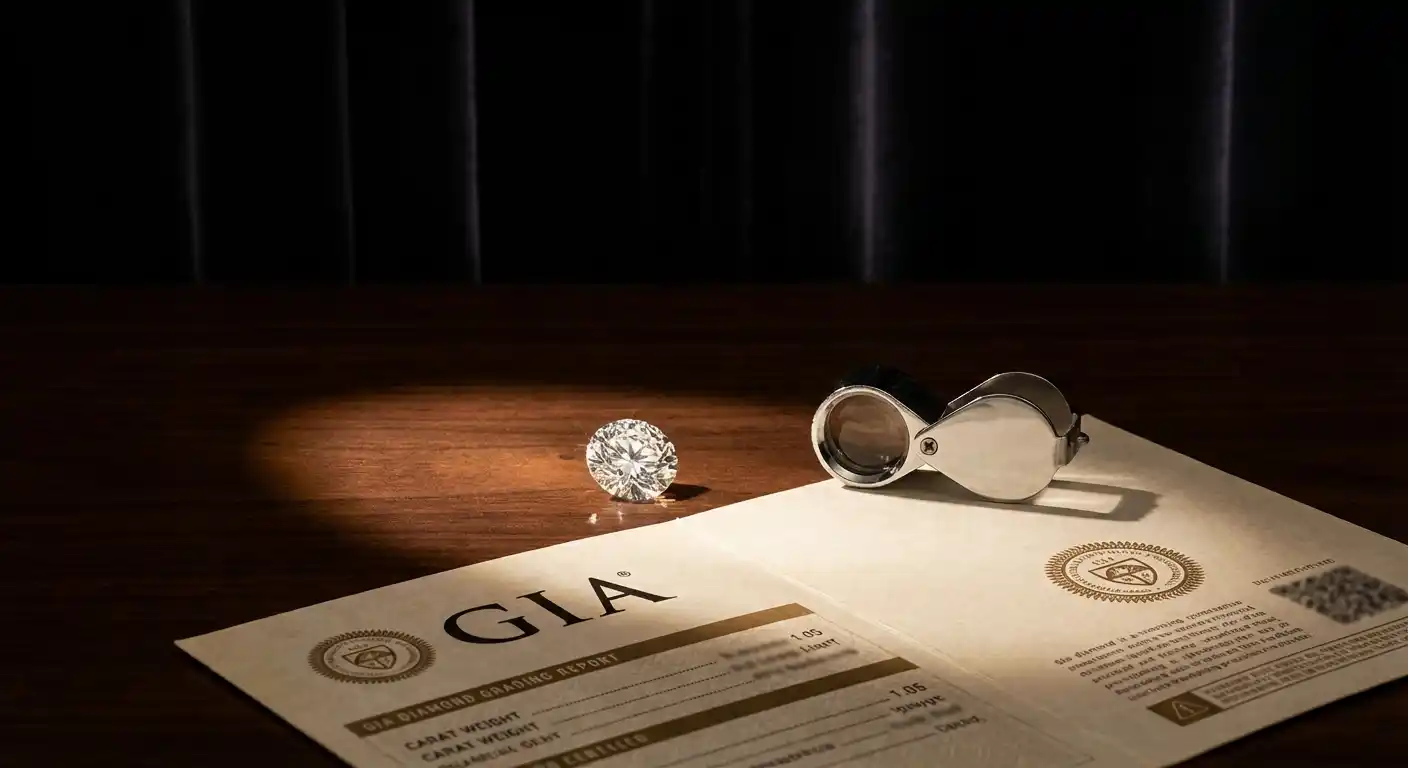
The GIA certificate looks perfect. The hologram catches the light. The grades promise a stunning F-color, VS1 diamond worth $9,000.
There's just one problem: the certificate belongs to a different diamond. The stone in front of you is actually K-color, I1—worth maybe $2,500.
Certificate fraud costs buyers millions annually. A forged piece of paper can add $5,000+ to an inferior diamond's price tag. This guide shows you exactly how to verify any certificate in under five minutes—before you hand over your money.
Table of Contents
- Why Certificate Fraud Exists
- Types of Certificate Fraud
- How to Verify GIA Certificates
- Verifying Other Laboratory Reports
- Red Flags to Watch For
- What If You've Been Scammed
- FAQ
Why Certificate Fraud Exists
Diamond certificates from reputable laboratories significantly affect value. A diamond graded G color, VS2 clarity commands a higher price than one graded J color, SI2 clarity—potentially thousands of dollars more for a 1-carat stone. This creates powerful incentives for fraud:
The Financial Incentive
Consider this scenario: A seller has a legitimate 1-carat diamond that would grade K color, I1 clarity—worth approximately $2,000-$3,000. By pairing it with a fake certificate claiming F color, VS1 clarity, they could attempt to sell it for $6,000-$8,000. That's $4,000+ profit from a forged piece of paper.
Common Fraud Scenarios
Mismatched certificates: A real certificate from a better diamond is paired with an inferior stone Completely fabricated reports: The certificate is entirely fake, printed on quality paper Altered legitimate certificates: Real certificates with digitally modified grades Certificates from fake laboratories: Reports from non-existent or disreputable labs
Understanding these schemes helps you protect yourself.
Types of Certificate Fraud
Mismatched Certificates (Certificate Switching)
The most sophisticated fraud involves real certificates from legitimate laboratories—just not for the diamond being sold. The scammer obtains a legitimate GIA certificate for a high-quality diamond, then pairs it with a different, lower-quality stone. The certificate is 100% authentic; it just doesn't belong to that diamond.
How it works:
- Fraudster buys a certified high-quality diamond
- Removes and keeps the certificate
- Returns or sells the certified diamond (now "lost" its certificate)
- Pairs the certificate with an inferior stone
- Sells inferior stone at premium price based on certificate
This fraud is detectable because GIA inscribes report numbers on diamond girdles and includes detailed measurements in certificates.
Completely Fabricated Certificates
Less sophisticated fraudsters simply create fake certificates from scratch. They might:
- Copy the format of legitimate GIA/AGS reports
- Use fake laboratory names
- Create impressive-looking documents without any real verification
These are detectable through online verification systems maintained by legitimate laboratories.
Digitally Altered Certificates
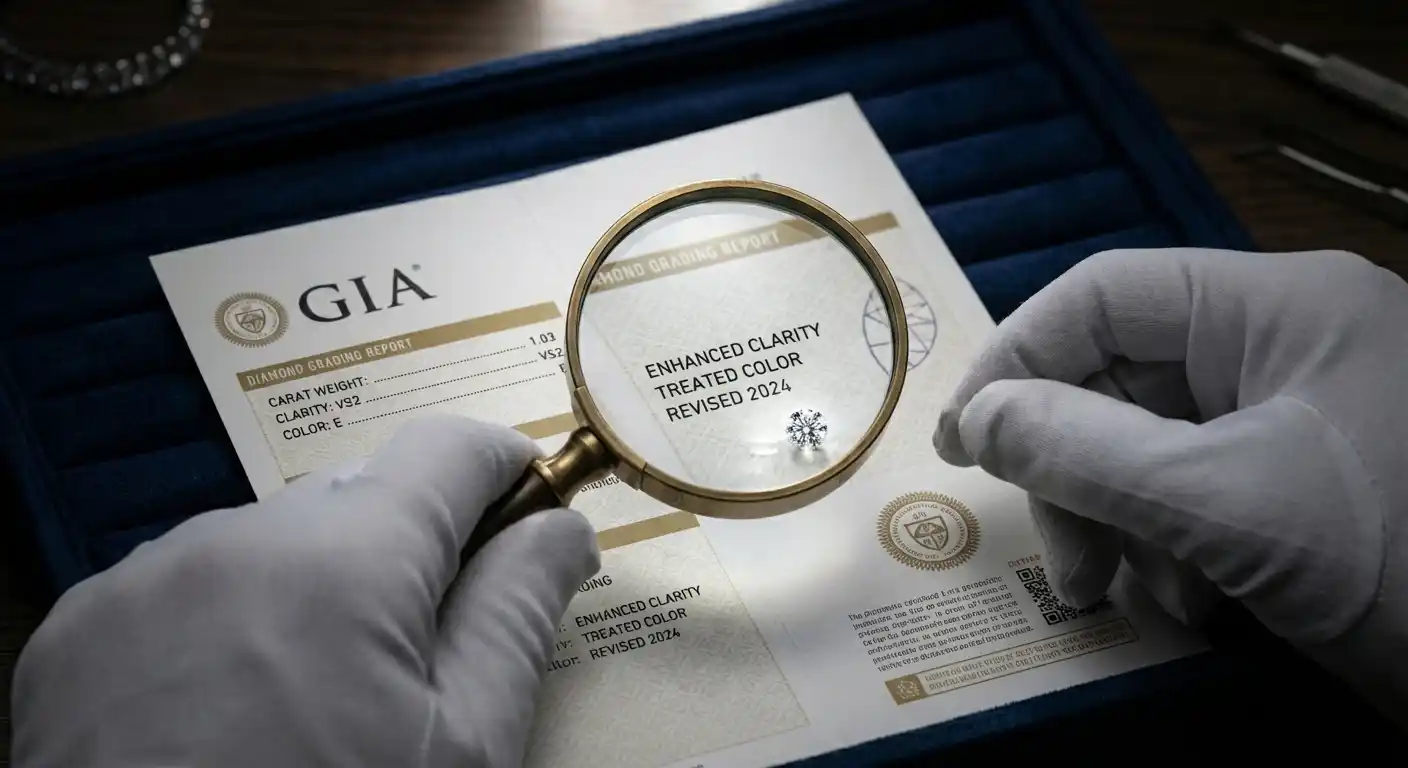
Real certificates are scanned, edited to improve grades, then printed on similar paper. The report number remains real, but the grades have been changed. Verification catches this because the online record shows different grades.
Certificates from Questionable Sources
Some fraudulent "laboratories" exist primarily to provide generous grades that make inferior diamonds appear better. These certificates are technically "real" but essentially worthless for determining actual quality.
How to Verify GIA Certificates
GIA (Gemological Institute of America) is the most widely recognized gemological laboratory. Fortunately, they make verification straightforward.
Online Verification (Report Check)
- Visit gia.edu/report-check (the official GIA verification page)
- Enter the report number from the certificate
- Enter the carat weight from the certificate
- View the verified report details
If the certificate is legitimate, you'll see:
- All grading information matching the physical certificate
- Diamond measurements
- Plot diagram (for many report types)
- Issue date
If the certificate is fake or altered, you'll see:
- No results found (fabricated report number)
- Different grades than shown on physical certificate (altered document)
- Different measurements (certificate switching)
Laser Inscription Verification
Most GIA-certified diamonds have the report number laser-inscribed on the girdle (the edge between crown and pavilion). This inscription is visible under 10x magnification.
To verify:
- Examine the diamond's girdle with a 10x jeweler's loupe
- Look for microscopic inscription (usually "GIA" followed by report number)
- Compare inscription number to certificate report number
- Numbers must match exactly
If there's no inscription, or the inscription doesn't match the certificate, be extremely cautious.
Measurement Verification
GIA certificates include precise measurements (length x width x depth in millimeters). Compare these to the actual stone:
- Use a millimeter gauge or caliper
- Measurements should match within 0.01-0.02mm tolerance
- Significant discrepancies indicate certificate switching
Verifying Other Laboratory Reports
AGS (American Gem Society)
- Visit agslab.com and use their report verification tool
- Enter report number to view verified grades
- AGS also laser-inscribes report numbers on diamond girdles
IGI (International Gemological Institute)
- Visit igi.org for online verification
- Enter report number to access verified information
- IGI inscriptions also appear on certified diamond girdles
EGL (European Gemological Laboratory)
EGL has a complicated history with multiple independent operations globally. Their grading standards are generally considered less stringent than GIA or AGS. While EGL certificates can be verified through respective regional offices, many industry professionals consider EGL grades less reliable regardless of certificate authenticity.
Unknown or Obscure Laboratories
Be extremely cautious with certificates from laboratories you don't recognize. Warning signs include:
- No online verification system
- No physical address or contact information
- Unable to find independent information about the laboratory
- Grades significantly better than expected for the price
If you cannot verify a certificate independently, treat the diamond as uncertified for valuation purposes.
Red Flags to Watch For
Certificate Red Flags
Poor print quality: Legitimate certificates have high-quality printing. Blurry text, fuzzy logos, or inconsistent fonts suggest counterfeits.
Missing security features: GIA certificates include holograms and microprinting. Hold the certificate under bright light and look for these features.
Outdated formats: Laboratory certificate formats change over time. If a 2026 certificate uses a format from 2018, be suspicious.
Unusual paper: Legitimate certificates use specific paper stock. If the paper feels wrong or different from other certificates from that laboratory, investigate further.
No report number: All legitimate certificates include unique report numbers. No number means no way to verify.
Transaction Red Flags
Seller discourages verification: Legitimate sellers welcome verification because it proves their claims. Reluctance suggests problems.
Pressure to decide quickly: "Another buyer is interested" or "price only good today" pressure often accompanies fraudulent sales.
Price too good to be true: If a "GIA certified E, VVS1 diamond" costs less than typical H, SI1 diamonds, something is wrong.
No return policy: Reputable sellers offer examination periods. Refusal suggests fear of verification.
Online-only transactions: While many legitimate sales occur online, in-person examination allows verification before purchase.
Physical Diamond Red Flags
Quality doesn't match certificate: If the certificate claims VS1 clarity but you can see inclusions easily, the certificate doesn't belong to that diamond.
No inscription despite certificate claiming one: GIA diamonds with "Laser inscription" noted on certificates should have visible inscriptions under a quality loupe.
Measurements don't match: Use calipers to verify dimensions match certificate specifications.
What If You've Been Scammed
Immediate Steps
- Document everything: Keep all receipts, communications, certificates, and photographs
- Don't return the diamond yet: You need the evidence
- Get independent verification: Have the diamond evaluated by an unaffiliated gemologist
- Contact the issuing laboratory: Report suspected fraudulent use of their certificates
Legal Options
Credit card chargeback: If you paid by credit card, dispute the charge with your card issuer. "Item not as described" is valid grounds for chargeback.
Small claims court: For amounts below your jurisdiction's limit (often $5,000-$10,000), small claims court offers accessible recourse without attorney costs.
Police report: Certificate fraud is a crime. File a police report, especially if you purchased in-person from a physical business.
FTC complaint: File a complaint with the Federal Trade Commission at ftc.gov. While they may not pursue individual cases, complaints help identify patterns.
Prevention for the Future
- Always verify certificates before purchase
- Buy from established, reputable sellers
- Get independent appraisals for significant purchases
- Trust your instincts—if something seems wrong, walk away
For comprehensive diamond authentication beyond certificates, see our guide: How to Tell If a Diamond Is Real.
FAQ
Can I trust the certificate if it verifies online?
Online verification proves the certificate is genuine and hasn't been altered—but it doesn't prove that certificate belongs to the diamond you're examining. Always compare measurements and check for laser inscriptions to confirm the certificate matches the specific stone.
Do all GIA-certified diamonds have laser inscriptions?
No. Laser inscription is optional and depends on the service selected. The certificate will indicate "Laser Inscription Registry" if the diamond was inscribed. Some older certificates and some service levels don't include inscription.
Are EGL certificates fake?
EGL certificates from established EGL operations are authentic certificates—they're just graded to different (generally more lenient) standards than GIA or AGS. An "EGL F color" diamond might grade "H color" by GIA standards. This isn't fraud if the EGL certificate is real, but it affects value comparisons.
How much do fraudulent certificates cost sellers?
If caught, certificate fraud carries serious consequences: criminal charges for fraud, civil liability for damages, permanent reputation damage, and potential FTC enforcement actions. Despite this, the potential profit margin continues to motivate fraudsters.
Should I buy a diamond without a certificate?
Uncertified diamonds can be legitimate—they simply haven't been submitted to a laboratory. However, buying uncertified means trusting the seller's representation entirely. For significant purchases, either obtain certification before buying or pay prices appropriate for unknown quality.
Can a jeweler verify a certificate for me?
Reputable jewelers can assist with verification, including measurement comparison and inscription checking. However, for full verification, check the laboratory's online database yourself—don't rely solely on verbal assurances.
Conclusion
Before you buy any certified diamond, do these three things:
-
Verify online — Go to gia.edu/report-check (or the lab's verification page) and enter the report number. Takes 60 seconds.
-
Check the inscription — Use a 10x loupe to find the laser-inscribed number on the girdle. It must match the certificate exactly.
-
Compare measurements — The certificate lists precise dimensions. Measure the stone. Discrepancies mean certificate switching.
A certificate only has value if it belongs to the diamond you're examining. Five minutes of verification can save you $5,000.
Still uncertain? Get an independent appraisal before purchase. A $100 evaluation protects a $10,000 investment.
Want to test the diamond itself? See How to Tell If a Diamond Is Real: 12 Tests That Work.
Authenticating other gemstones? See our complete guide: How to Tell If a Gem Is Real.
About the Author
Alfreda Borror
Alfreda Borror is the founding editor of Opulent Opal, writing research-based buying guides on diamonds, birthstones, and fine jewelry.