How to Tell If a Gem Is Real: Complete Authentication Guide

This post may contain affiliate links. Read our affiliate policy
That ruby ring your grandmother treasured for 40 years could be worth $15,000—or $15. The difference? Whether it's natural, synthetic, or glass.
One in four colored gemstones sold online is either synthetic, heavily treated, or an outright fake. The global market for imitation stones has exploded, and even experienced collectors get fooled. This guide arms you with the fundamental principles of gem authentication—from quick visual checks to professional-grade testing methods.
Table of Contents
- Why Gem Authentication Matters
- Understanding the Difference: Natural, Synthetic, and Simulant
- Universal Authentication Methods
- Testing by Gem Type
- Tools Every Collector Should Own
- Professional Certification
- Red Flags When Buying
- When to Seek Professional Help
- FAQ
Why Gem Authentication Matters
The stakes in gem authentication are higher than most people realize. According to industry reports, approximately 1 in 4 colored gemstones sold online are either synthetic, treated beyond disclosure, or outright simulants. For diamonds, the ratio is better but still concerning—especially with the rise of lab-grown diamonds that require specialized equipment to distinguish from natural stones.
Financial Protection
A natural 1-carat ruby might cost $5,000-$15,000, while a synthetic ruby of identical appearance costs $50-$200. Without proper authentication, you could overpay by 10,000% or more. Conversely, you might sell a genuine heirloom for a fraction of its value if you don't know what you have.
Insurance and Estate Planning
Insurance companies require professional appraisals that include authentication. If your "diamond" ring turns out to be cubic zirconia after a loss, your claim will be denied. Estate planning similarly requires accurate authentication to ensure fair distribution among heirs.
Emotional Value
Beyond money, authentic gems carry history and meaning that synthetics cannot replicate. A genuine antique piece connects you to the past in ways that modern reproductions simply don't.
Understanding the Difference: Natural, Synthetic, and Simulant
Before diving into testing methods, you must understand the three categories of gem materials. This distinction is fundamental to all authentication work.
Natural Gemstones
Natural gems formed in the earth over millions of years through geological processes. They contain unique inclusion patterns, trace elements, and growth characteristics that identify their origin. Natural gems are the most valuable category, especially those with documented provenance.
Synthetic Gemstones
Synthetic gems have the same chemical composition and crystal structure as their natural counterparts—they're real rubies, sapphires, or emeralds, just made in a laboratory rather than the earth.
Modern synthetics can be extremely difficult to distinguish from natural stones without specialized equipment. The key identifiers are usually growth patterns and inclusion types that differ from natural formation.
For a detailed comparison of these categories, see our guide on synthetic vs simulant gems.
Simulants
Simulants merely look like a gem without sharing its properties. Cubic zirconia simulates diamond; red glass simulates ruby. Simulants are usually the easiest to identify because they have completely different optical and physical properties from the gems they imitate.
Universal Authentication Methods
Several testing approaches work across multiple gem types. Master these fundamentals before moving to gem-specific tests.
Visual Inspection
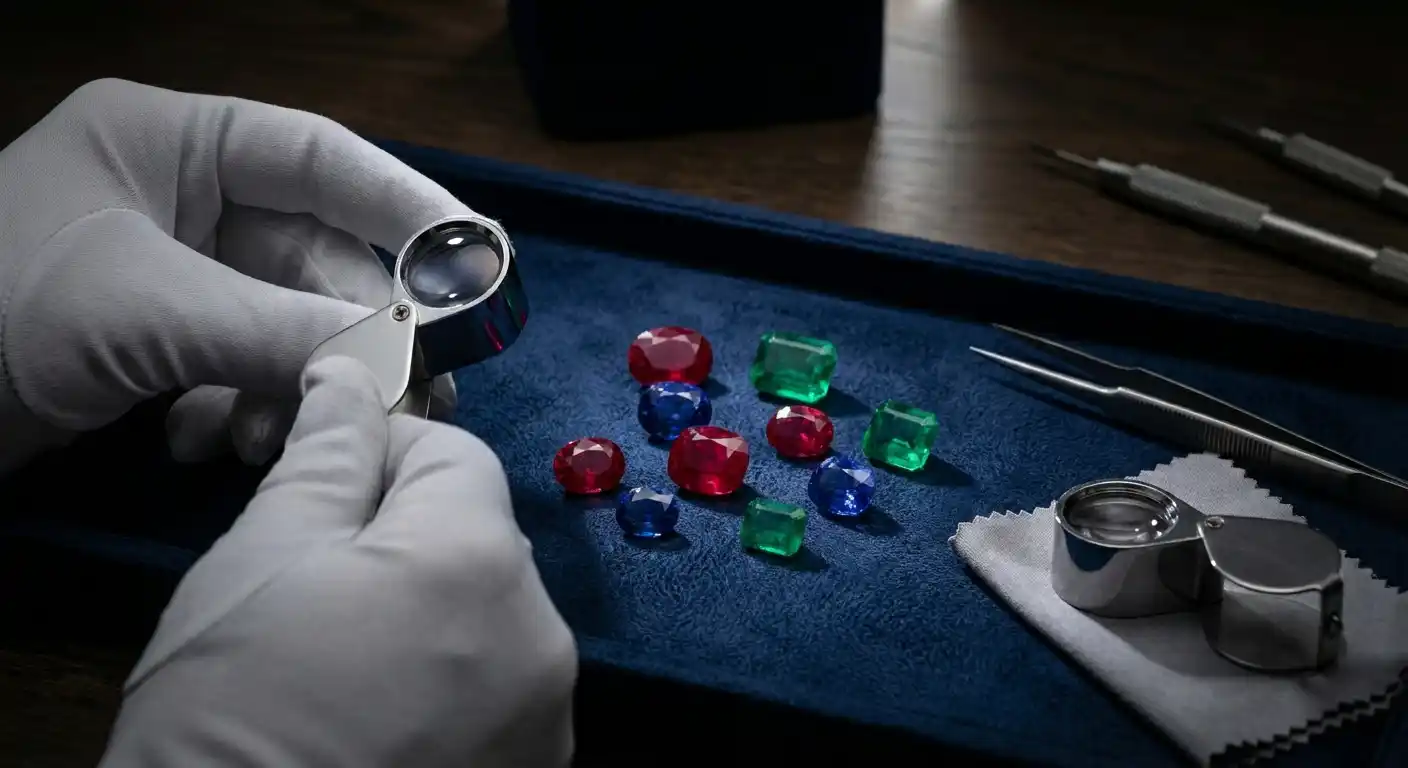
The first step in any authentication is careful visual examination, preferably with a 10x loupe. Look for:
Inclusions: Natural gems typically contain inclusions—tiny crystals, gas bubbles, or growth features trapped during formation. Flawless stones are extremely rare and warrant extra scrutiny.
The type of inclusion matters more than its presence. Natural inclusions look different from those in synthetics.
Surface Characteristics: Examine how light interacts with the surface. Natural gems often show subtle surface features that synthetics lack. Glass simulants may have rounded facet edges (from the molding process) rather than the sharp edges of cut stones.
Color Zoning: Many natural gems show uneven color distribution that follows crystal growth patterns. Synthetics often have more uniform color or show curved growth bands instead of angular zones.
Thermal Conductivity
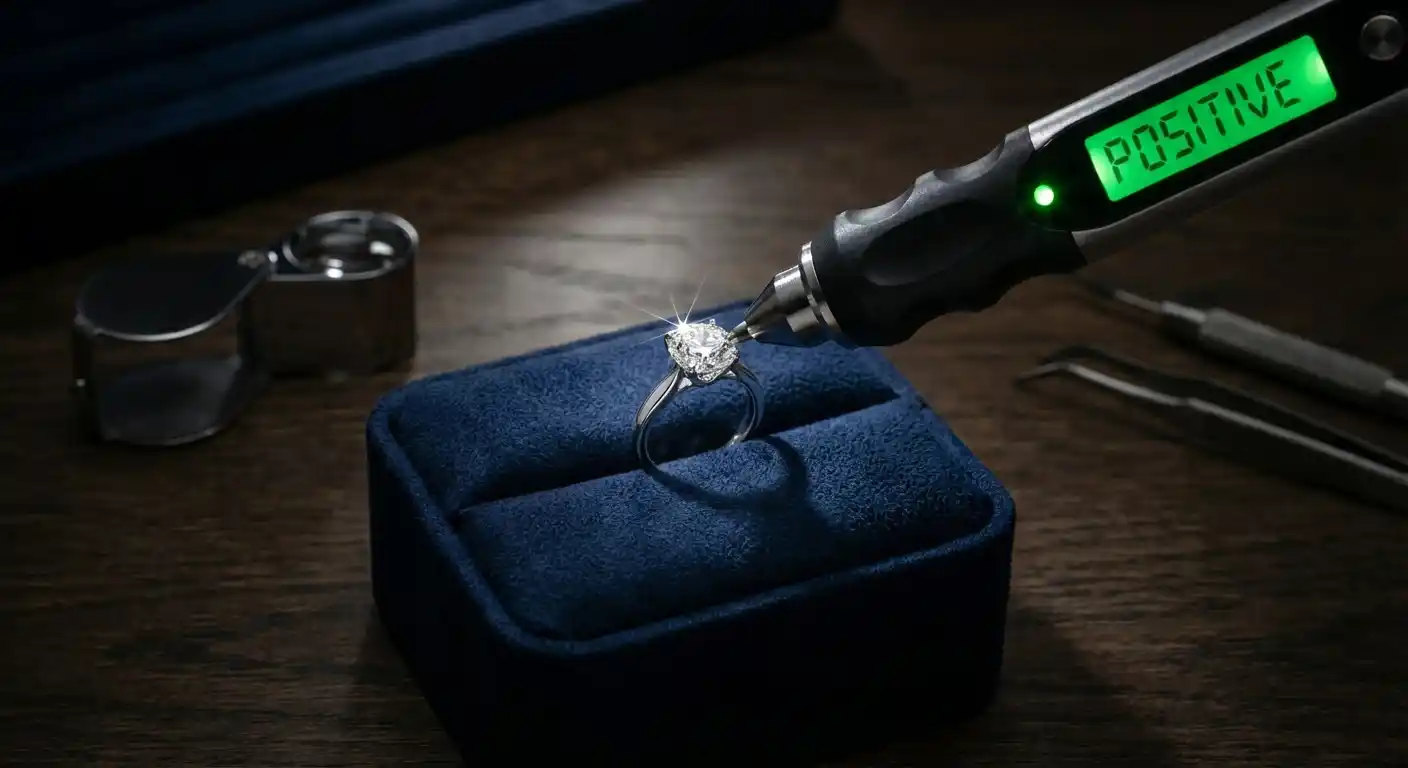
Gems conduct heat at different rates. This principle underlies the popular "diamond tester"—a device that measures how quickly a stone transfers heat. Real diamonds are exceptional heat conductors, while glass and cubic zirconia conduct heat poorly.
A professional gem tester can distinguish between many gem types based on thermal properties. However, be aware that moissanite also conducts heat well and will often read as "diamond" on basic thermal testers.
Specific Gravity
Specific gravity (SG) measures a stone's density compared to water. Each gem type has a characteristic SG range:
| Gem | Specific Gravity |
|---|---|
| Diamond | 3.52 |
| Ruby/Sapphire | 3.95-4.10 |
| Emerald | 2.67-2.78 |
| Cubic Zirconia | 5.65-5.95 |
| Moissanite | 3.21 |
| Glass | 2.30-4.50 |
Professional gemologists use hydrostatic weighing, but you can get approximate readings with a precise scale and water. If a "diamond" has SG near 5.7, it's almost certainly cubic zirconia.
Refractive Index
The refractive index (RI) measures how much light bends when entering a stone. Gemologists use a refractometer to measure RI precisely. Each gem has a characteristic range:
| Gem | Refractive Index |
|---|---|
| Diamond | 2.417 |
| Ruby/Sapphire | 1.762-1.770 |
| Emerald | 1.565-1.602 |
| Cubic Zirconia | 2.15-2.18 |
| Moissanite | 2.65-2.69 |
The extremely high RI of diamond and moissanite creates their characteristic brilliance. The even higher RI of moissanite is one way gemologists distinguish it from diamond.
UV Fluorescence
Many gems fluoresce under ultraviolet light, and the color and intensity of fluorescence helps identify them. Approximately 25-35% of natural diamonds fluoresce blue under long-wave UV, while synthetic diamonds rarely fluoresce or show different colors.
A loupe with built-in UV light allows you to check fluorescence during visual inspection—a valuable combination for initial screening.
Testing by Gem Type
While universal methods provide a foundation, each gem type has specific authentication challenges and techniques.
Diamonds
Diamonds are among the most frequently tested gems due to their high value and the existence of excellent simulants and lab-grown alternatives. Key tests include:
- Thermal conductivity: Real diamonds conduct heat rapidly
- Doubling test: Diamonds are singly refractive; moissanite shows doubling
- Newspaper test: Real diamonds refract light so strongly you can't read through them
- Fog test: Breath fog dissipates instantly on real diamonds
For complete diamond testing protocols, see our detailed guide: How to Tell If a Diamond Is Real: 12 Tests That Work.
Rubies and Sapphires
Corundum (ruby and sapphire) faces challenges from flame-fusion synthetics, flux-grown synthetics, and glass-filled treatments. Authentication focuses on:
- Inclusion examination: Natural corundum has characteristic "silk" and crystal inclusions
- Growth patterns: Curved striae indicate flame-fusion synthesis
- Lead glass filling: UV light and magnification reveal glass-filled fractures
Emeralds
Emeralds are almost always treated (oil or resin filling is standard), so authentication focuses on distinguishing natural-treated from synthetic and simulant:
- Jardín inclusions: Natural emeralds have characteristic "garden" of inclusions
- Three-phase inclusions: Liquid, gas, and crystal together indicate natural origin
- Synthetic indicators: Flux or hydrothermal growth patterns differ from natural
Learn the specific tests in our guide: How to Tell If Colored Gems Are Real.
Pearls
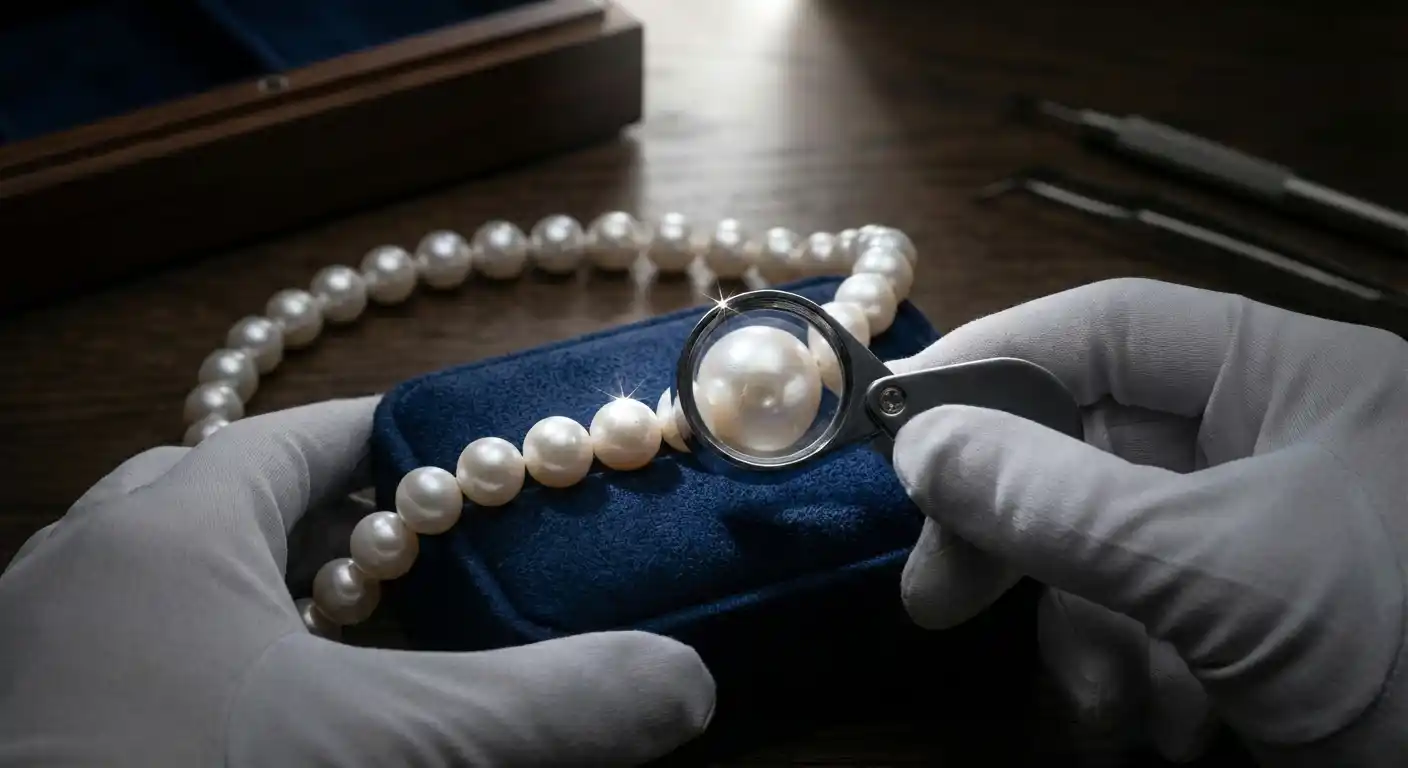
Pearl authentication differs from crystalline gems because pearls are organic. Key methods include:
- Tooth test: Real pearls feel slightly gritty; fakes feel smooth
- Surface examination: Real pearls have textured surfaces visible under magnification
- Drill hole inspection: Inside of hole reveals whether nacre is solid or coating
- Temperature: Real pearls feel cool initially, then warm to body temperature
For comprehensive pearl testing, see: How to Tell If Pearls Are Real.
Tools Every Collector Should Own
Building a basic gem testing kit doesn't require thousands of dollars. Start with these essentials:
Entry Level (~$50)
- 10x jeweler's loupe: The single most important tool. Get one with LED and UV illumination.
- Strong LED flashlight: For examining transparency and inclusions
- Ceramic streak plate: For identifying certain colored stones
Intermediate Level (~$150-300)
- Thermal diamond tester: Distinguishes diamond from most simulants
- Dual diamond/moissanite tester: Addresses the moissanite limitation of basic testers
- Digital scale (0.01g precision): For specific gravity testing
- UV flashlight (365nm): Better fluorescence examination than loupe UV
Professional Level (~$500+)
- Multi-gem thermal tester: Identifies 20+ gem types
- Refractometer: Precise RI measurement
- Polariscope: Determines single/double refraction and detects strain
- Spectroscope: Absorption spectrum analysis
For our complete recommendations, see: Best Gem Testing Tools for Home Use.
Professional Certification
Sometimes authentication requires professional expertise. Understanding certification helps you know when to seek it and what to expect.
Major Gem Laboratories
GIA (Gemological Institute of America): The gold standard for diamond grading. GIA reports are globally recognized and include detailed analysis of cut, clarity, color, and carat weight, plus identification of treatments and origin.
AGS (American Gem Society): Known for stringent cut grading. AGS Ideal cut grades are highly sought after.
IGI (International Gemological Institute): Strong presence in Asia and Europe. Generally considered slightly less stringent than GIA.
Gübelin and SSEF: Premier laboratories for colored stone origin determination, particularly important for Burmese ruby and Kashmir sapphire authentication.
Verifying Certificates
Unfortunately, fake certificates exist. Always verify reports directly with the issuing laboratory using the report number. GIA offers free online verification at their website. Be wary of certificates from unknown laboratories or those that cannot be verified.
For detailed guidance on certificate verification, see: Are Fake Diamond Certificates Real? How to Spot Fraudulent Reports.
When to Get Professional Certification
Consider professional certification for:
- Any stone valued over $1,000
- Jewelry you plan to insure
- Estate pieces with uncertain provenance
- Stones you intend to sell
- Any situation where authentication affects significant decisions
Red Flags When Buying
Certain warning signs should trigger extra caution:
Price Too Good to Be True
If a "natural ruby" is priced like a synthetic, it probably is synthetic. Genuine gems have established market values that sellers rarely undercut significantly.
Vague or Missing Documentation
Reputable sellers provide detailed information about treatments, origin, and grading. Vague descriptions like "natural-type" or "gem quality" without specifics warrant suspicion.
Pressure Tactics
"One day only" or "last one available" pressure often accompanies fraudulent sales. Genuine gems don't expire, and reputable sellers don't use high-pressure tactics.
Certificate Without Verification
A certificate means nothing if it can't be verified with the issuing laboratory. Always check.
Unusual Purchase Venues
While legitimate gems occasionally appear at estate sales and pawn shops, these venues also concentrate fraud. Extra caution is warranted.
When to Seek Professional Help
Some authentication questions require professional expertise:
Beyond Home Testing
- High-value stones: Professional certification protects significant investments
- Suspected HPHT or CVD diamonds: Lab-grown diamonds require advanced equipment to detect
- Colored stone origin: Determining whether a ruby is Burmese requires spectroscopic analysis
- Treatment detection: Some treatments are invisible without specialized equipment
- Antique pieces: Age authentication requires expertise in period manufacturing techniques
For guidance on authenticating older pieces, see: How to Authenticate Antique and Estate Jewelry.
Finding Qualified Professionals
Look for appraisers with:
- GG (Graduate Gemologist) credential from GIA
- CGA (Certified Gemologist Appraiser) from AGS
- FGA (Fellow of the Gemmological Association) from Gem-A
- Membership in professional organizations like the National Association of Jewelry Appraisers
Independent appraisers (not affiliated with sellers) provide more reliable assessments than in-store appraisals.
FAQ
Can I authenticate gems with my smartphone?
Smartphone apps claiming to authenticate gems are unreliable. The camera and processing capabilities of phones cannot replicate professional gemological equipment. Use apps for reference information, not authentication decisions.
How accurate are at-home diamond testers?
Basic thermal diamond testers correctly identify approximately 95% of diamonds vs. common simulants like cubic zirconia and glass. However, they cannot distinguish diamonds from moissanite (which also conducts heat well) or identify lab-grown vs. natural diamonds. For these distinctions, you need advanced equipment or professional testing.
Do all natural gems have inclusions?
Most natural gems have inclusions, but some occur in very clean grades where inclusions require magnification to see. However, completely flawless natural gems are rare and valuable. If a large, clean stone is offered at a low price, be suspicious.
Can lab-grown gems be authenticated as such?
Yes. Lab-grown gems have distinctive growth patterns, inclusion types, and sometimes trace elements that differ from natural stones. Professional laboratories can reliably distinguish lab-grown from natural with proper equipment.
Is it legal to sell synthetic gems as natural?
Absolutely not. Misrepresenting synthetic gems as natural is fraud and illegal in most jurisdictions. However, enforcement varies, making buyer education essential.
How much does professional authentication cost?
Basic identification services typically cost $50-$100. Full grading reports from major laboratories range from $100-$300 for diamonds and $75-$250 for colored stones, depending on size and service level.
Conclusion
Gem authentication combines scientific principles with practical observation skills. While professional certification remains the gold standard for valuable stones, educated collectors can identify many fakes and treatments using basic tools and techniques.
Your next step: Start with a 10x loupe and practice examining stones you already own. Learn what natural inclusions look like. Then add a thermal tester to screen diamonds and colored stones quickly.
Remember: authentication is about managing risk, not achieving certainty. Even professionals occasionally encounter sophisticated fakes. The goal is knowing enough to avoid obvious frauds, recognize when professional help is needed, and make informed decisions before money changes hands.
Have a specific stone to authenticate? Start with our detailed guides:
- How to Tell If a Diamond Is Real — 12 proven tests
- How to Tell If Colored Gems Are Real — Ruby, sapphire, emerald
- How to Tell If Pearls Are Real — Natural vs. cultured vs. fake
Presidium Gem Tester II - Professional Gemstone Identification
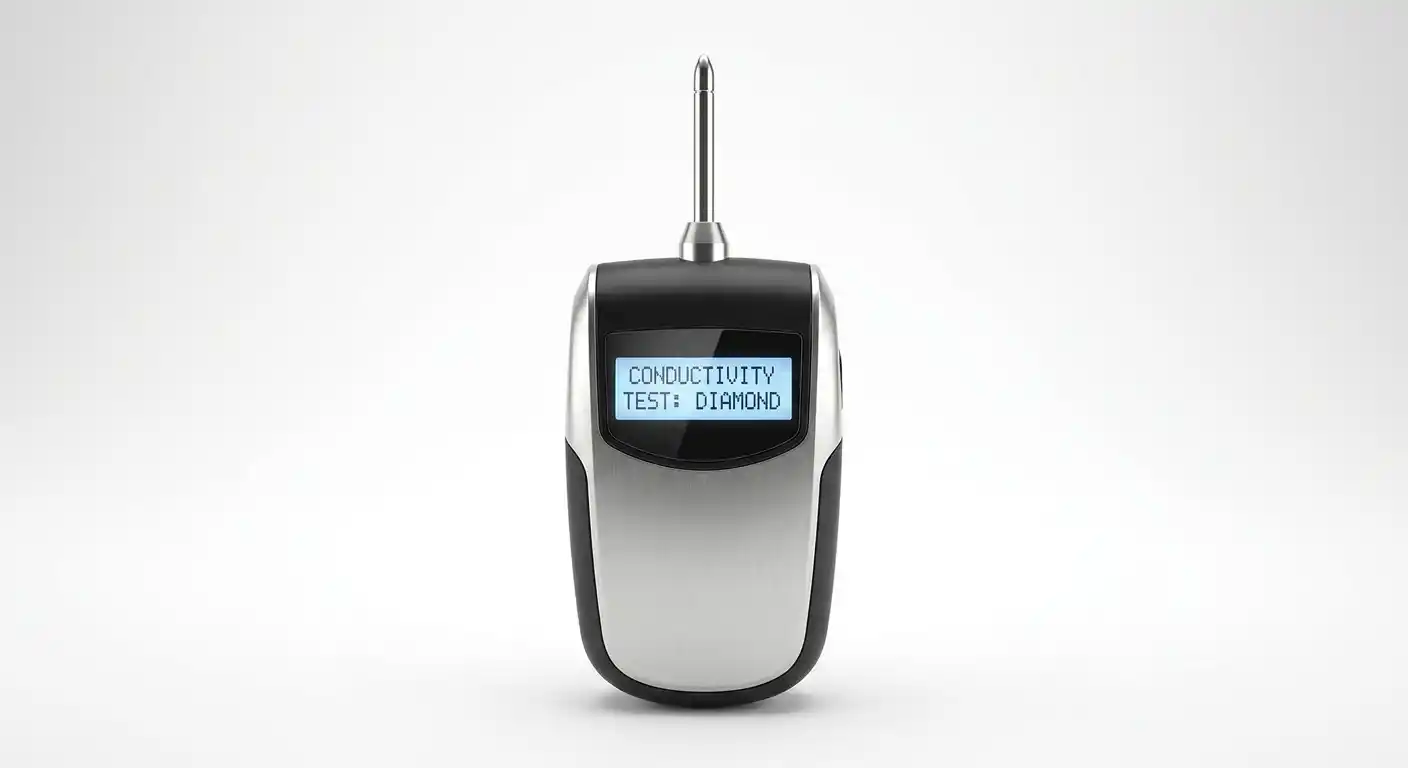
Professional Gemstone Identification
Industry-standard thermal conductivity tester that identifies over 20 gemstone types.
Industry-standard thermal conductivity tester that identifies over 20 gemstone types. Used by jewelers and appraisers worldwide for reliable authentication.
"The gold standard in gem testing. Accurate readings every time and built to last for years of professional use.
Dreamer Jewelers Loupe 60X-100X with LED/UV Light
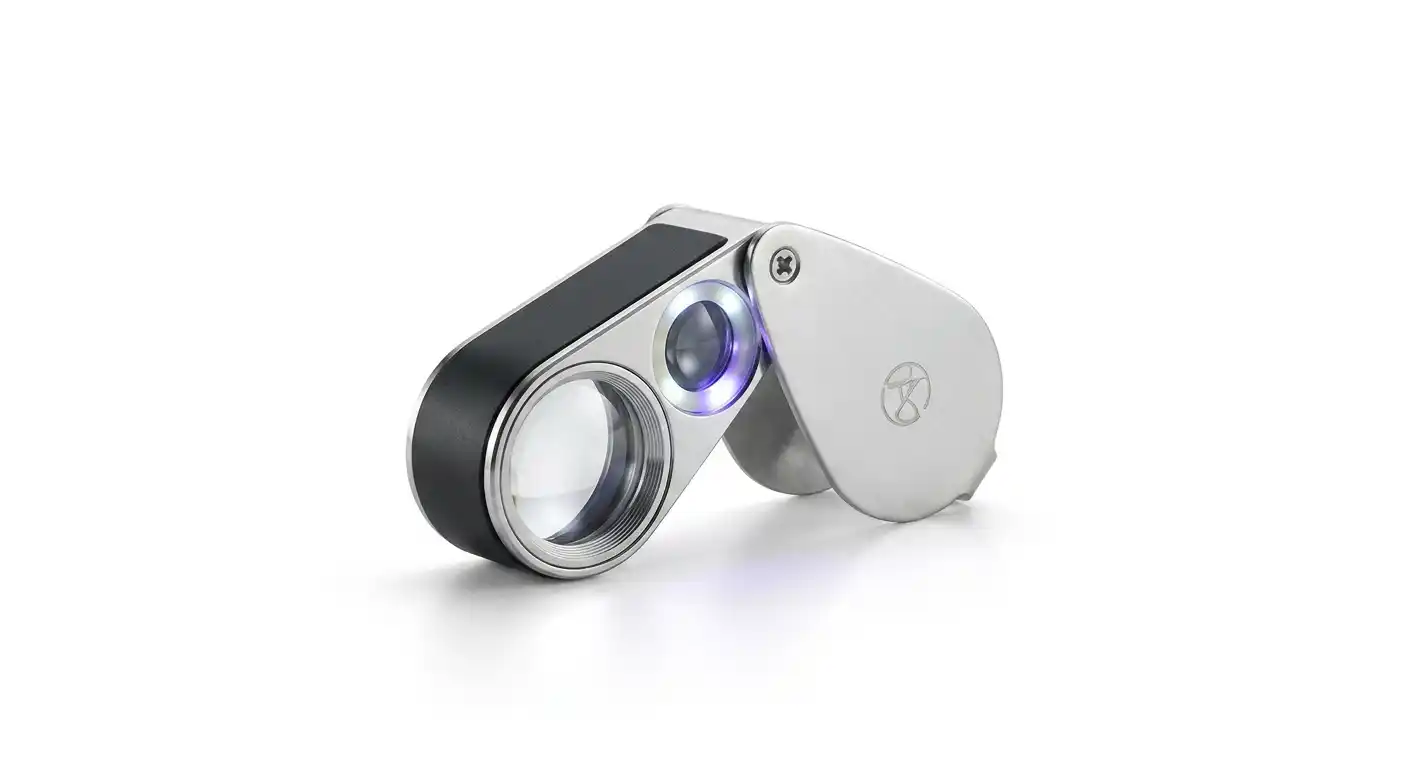
Dreamer Jewelers Loupe 60X 100X with LED UV Light
Dual magnification loupe with built-in LED and UV light.
Dual magnification loupe with built-in LED and UV light. Perfect for examining inclusions, surface characteristics, and fluorescence.
"Incredible value for the quality. The UV light reveals treatments and synthetics that regular loupes miss.
Gold Silver Platinum Diamond Jewelry Tester Appraisal Kit 10K-24K
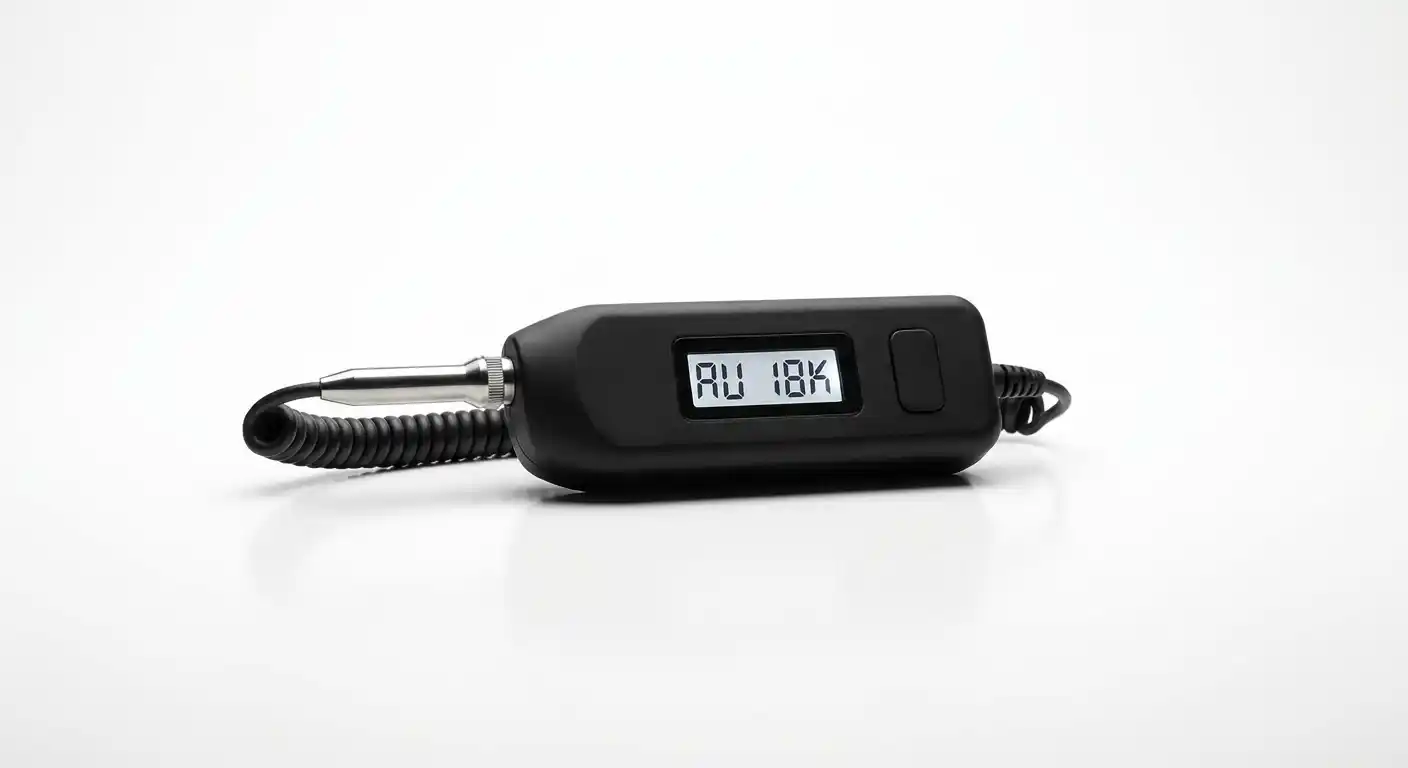
Gold Silver Platinum Diamond Jewelry Tester Appraisal Kit 10K 24K
Complete electronic tester kit for gold (10K-24K), platinum, silver, and diamond verification.
Complete electronic tester kit for gold (10K-24K), platinum, silver, and diamond verification. Essential for authenticating antique and estate jewelry metals.
"Pays for itself with one good purchase. No more guessing about gold purity or plated pieces.
Review of What We Liked
Professional Gemstone Identification
Industry-standard thermal conductivity tester that identifies over 20 gemstone types.
Dreamer Jewelers Loupe 60X 100X with LED UV Light
Dual magnification loupe with built-in LED and UV light.
Gold Silver Platinum Diamond Jewelry Tester Appraisal Kit 10K 24K
Complete electronic tester kit for gold (10K-24K), platinum, silver, and diamond verification.
About the Author
Alfreda Borror
Alfreda Borror is the founding editor of Opulent Opal, writing research-based buying guides on diamonds, birthstones, and fine jewelry.