Synthetic vs Simulant Gems: What's the Difference?

This post may contain affiliate links. Read our affiliate policy
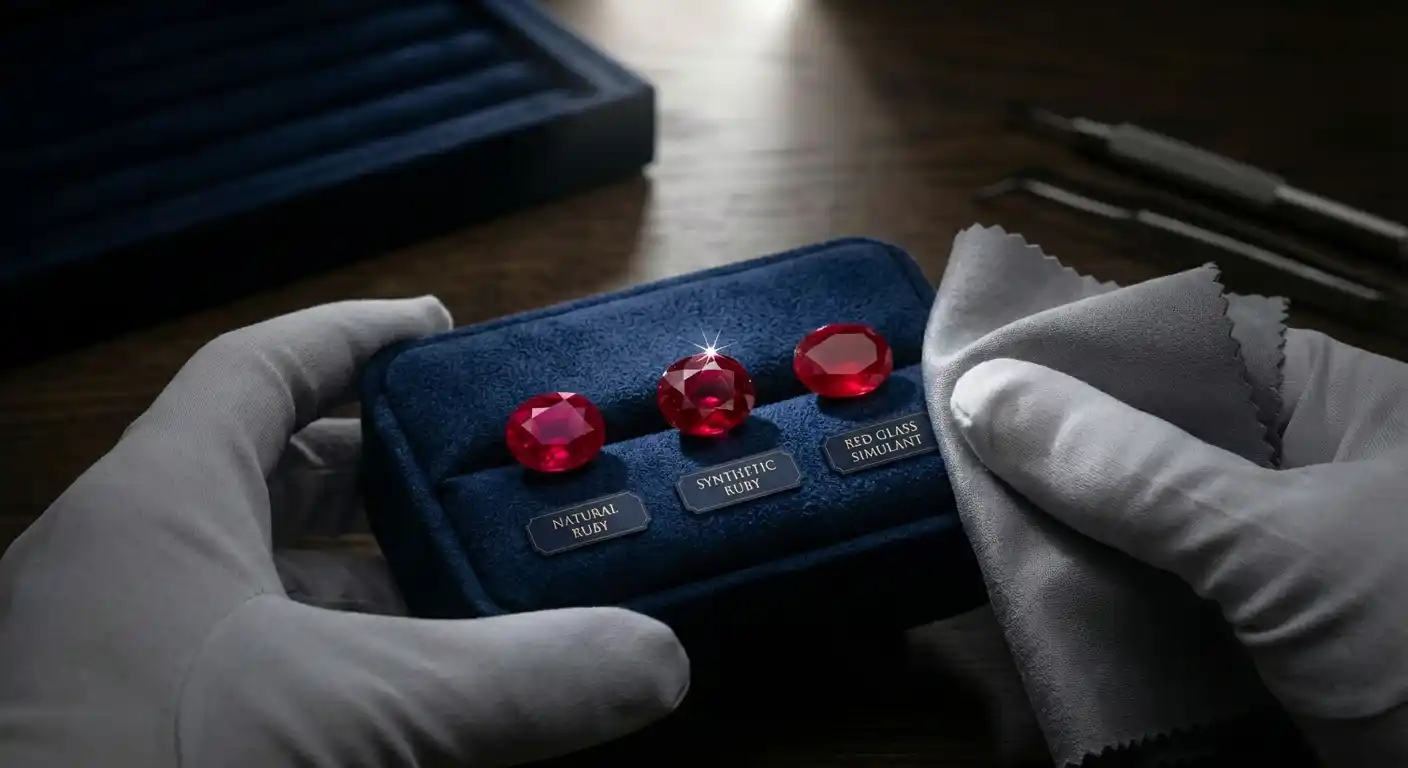
A "synthetic ruby" and a "ruby simulant" sound similar. One is worth $200. The other is worth $2.
This single terminology confusion costs jewelry buyers thousands of dollars every year. Sellers—some honest, some not—use terms like "lab-created," "man-made," and "imitation" interchangeably. But these words have precise meanings that dramatically affect value. Master this distinction in the next five minutes, and you'll never overpay again.
Table of Contents
- The Fundamental Distinction
- What Are Synthetic Gems?
- What Are Simulant Gems?
- Why the Distinction Matters
- Common Examples
- How to Tell Them Apart
- Disclosure Requirements
- FAQ
The Fundamental Distinction
The difference between synthetic and simulant comes down to one question: Is it chemically and structurally the same as the natural gem?
- Synthetic gems ARE the real material—just made in a laboratory instead of the earth
- Simulant gems only LOOK LIKE the real material—they're something else entirely
This distinction affects value, durability, authentication, and legal disclosure requirements.
What Are Synthetic Gems?
Synthetic gems have the same chemical composition, crystal structure, and physical properties as their natural counterparts. A synthetic ruby is real ruby (aluminum oxide with chromium impurities creating red color)—it simply formed in a laboratory over weeks rather than in the earth over millions of years.
Key Characteristics of Synthetics
Chemically identical: A synthetic sapphire has the same Al₂O₃ formula as natural sapphire. A synthetic diamond has the same carbon crystal structure as natural diamond.
Same physical properties: Hardness, refractive index, specific gravity, and thermal conductivity match natural stones. A synthetic ruby is just as hard as a natural ruby (9 on Mohs scale).
Different formation: Natural gems form through geological processes over millions of years. Synthetics form in controlled laboratory conditions over days to weeks.
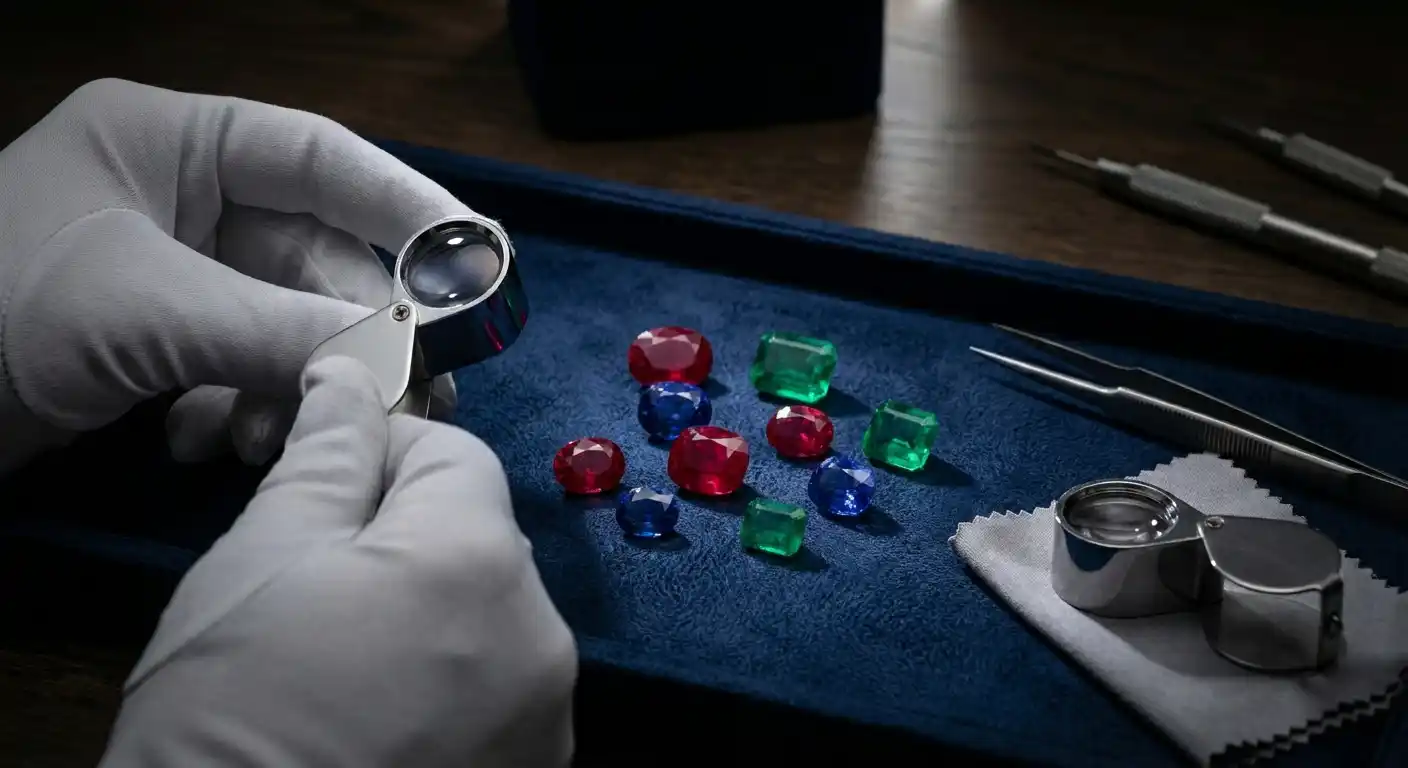
Detectable differences: Despite identical composition, synthetics have distinctive growth patterns, inclusion types, and sometimes trace element differences that gemologists can identify. A quality jeweler's loupe reveals many of these differences under magnification.
Common Synthetic Production Methods
Flame Fusion (Verneuil Process): The oldest method, developed in 1902. Powdered ingredients are melted in a flame and crystallize as they cool. Used for ruby, sapphire, and spinel. Creates curved growth lines visible under magnification.
Flux Growth: Gem material dissolves in a molten flux, then crystallizes slowly as the mixture cools. Produces high-quality synthetics with natural-looking inclusions. Used for emerald, ruby, alexandrite.
Hydrothermal Growth: Mimics natural formation by crystallizing material from mineral-rich water under high pressure and temperature. Used for emerald, quartz, and beryl. Can take months to produce large crystals.
CVD and HPHT (Diamonds): Chemical Vapor Deposition and High Pressure High Temperature methods create synthetic diamonds. Both produce gem-quality stones increasingly difficult to distinguish from natural diamonds without specialized equipment.
Are Synthetics "Fake"?
This is where confusion arises. Synthetics are NOT fake in the sense of being misrepresented material. A synthetic ruby is genuinely ruby—just laboratory-created ruby. However, synthetics are worth far less than natural gems because:
- Natural gems are rare; synthetics can be produced in quantity
- Natural gems have geological history and story
- Market preferences favor natural origin
- Natural gems hold value better as investments
A 1-carat natural ruby might cost $5,000-$15,000. A 1-carat synthetic ruby of similar appearance costs $50-$200. Both are "real" ruby, but the market values them differently.
What Are Simulant Gems?
Simulants merely imitate a gem's appearance without sharing its composition. They're made of completely different materials that happen to look similar. A cubic zirconia "diamond" isn't diamond at all—it's zirconium dioxide, a completely different substance.
Key Characteristics of Simulants
Different composition: Simulants share no chemical or structural relationship with the gems they imitate. CZ (zirconium dioxide) bears no relation to diamond (carbon).
Different properties: Hardness, refractive index, density, and other physical properties differ from the genuine gem. These differences enable identification.
Appearance-focused: Simulants are engineered to look like valuable gems at first glance. Advanced simulants like moissanite achieve remarkable visual similarity.
Much lower value: Simulants typically cost 1-5% of genuine gem prices, regardless of how convincing they appear.
Common Simulant Materials
Cubic Zirconia (CZ): The most common diamond simulant. Softer than diamond (8.5 vs. 10), heavier, and poor heat conductor. Easily detected by thermal testing.
Moissanite: A more sophisticated diamond simulant (actually silicon carbide). Nearly as hard as diamond (9.25), excellent brilliance, and good thermal conductivity. Requires specialized testing to distinguish from diamond.
Glass: Used to simulate many gems. Very soft (5-6), no characteristic brilliance, often contains bubbles. Easy to identify with basic examination.
Synthetic Spinel: Used to simulate aquamarine, blue zircon, and other stones. It's synthetic spinel (real spinel made in a lab) but simulating something else.
Assembled Stones: Layers of different materials bonded together. For example, a garnet top fused to glass bottom creates a "doublet" simulating more expensive gems.
Why the Distinction Matters
Value Implications
The financial difference is enormous:
| Stone Type | 1-Carat Price Range |
|---|---|
| Natural Diamond | $3,000-$15,000+ |
| Lab-Grown Diamond (Synthetic) | $500-$2,000 |
| Moissanite (Simulant) | $200-$600 |
| CZ (Simulant) | $5-$20 |
| Stone Type | 1-Carat Price Range |
|---|---|
| Natural Ruby | $5,000-$15,000+ |
| Synthetic Ruby | $50-$200 |
| Red Glass (Simulant) | $1-$10 |
Confusing these categories could mean overpaying by 10,000% or more.
Durability Differences
Synthetics match natural stone durability—a synthetic sapphire is just as hard and suitable for daily wear as natural sapphire. Simulants vary widely:
- Moissanite: excellent durability, suitable for engagement rings
- CZ: moderate durability, scratches relatively easily
- Glass: poor durability, scratches and chips readily
Authentication Approach
Identifying synthetics vs. naturals requires examining growth patterns and inclusion types—sophisticated analysis often needing professional equipment. Identifying simulants is usually easier because physical properties differ dramatically.
For comprehensive authentication methods, see our guide: How to Tell If a Gem Is Real.
Legal and Ethical Requirements
FTC guidelines require disclosure of synthetic and simulant status. Calling a synthetic ruby "natural" is fraud. Calling CZ a "diamond" without qualifier is fraud. The distinction determines disclosure obligations.
Common Examples
Diamond
- Synthetic: Lab-grown diamond (CVD, HPHT)—same carbon crystal structure
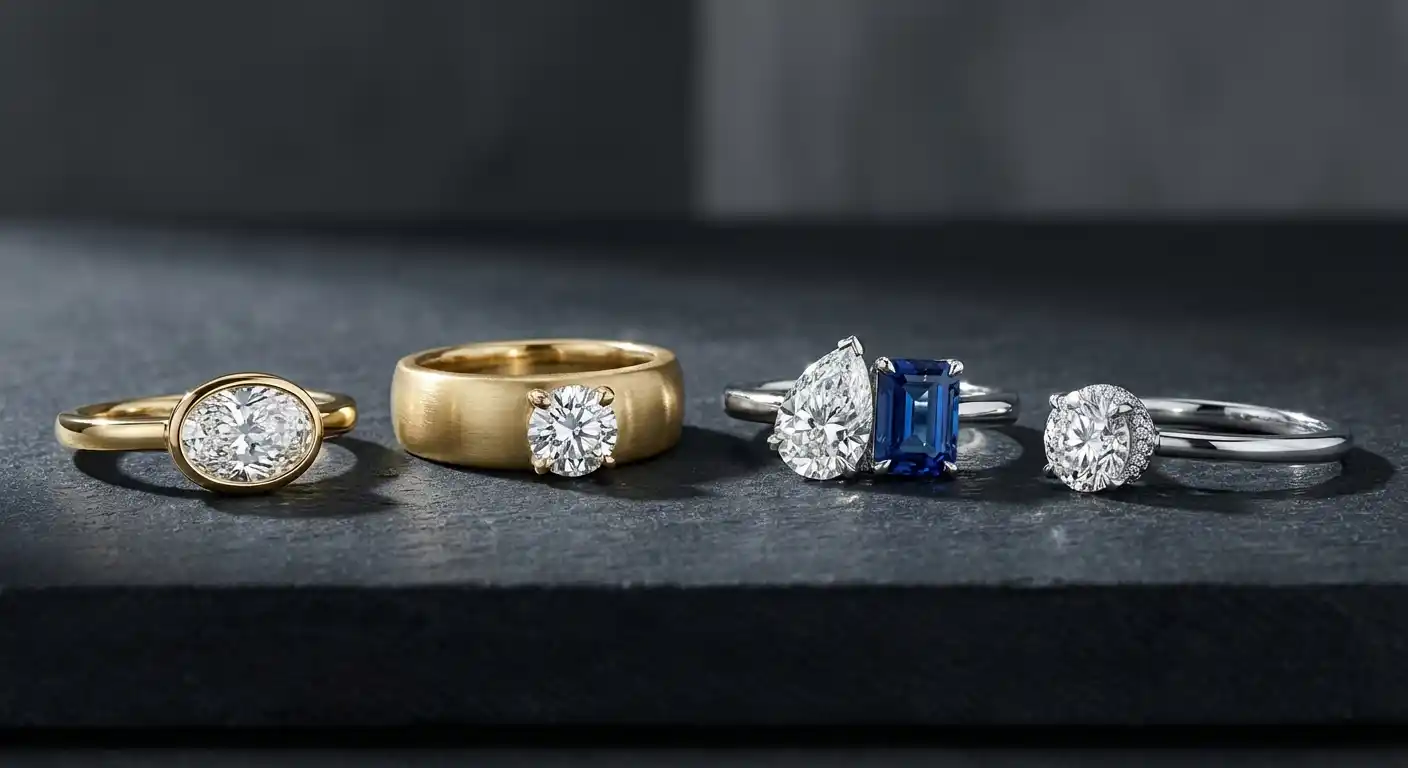
- Simulant: CZ, moissanite, white sapphire, glass—different materials
Ruby
- Synthetic: Flame-fusion ruby, flux-grown ruby—same Al₂O₃ + Cr composition
- Simulant: Red glass, red garnet, red spinel sold as ruby—different materials
Emerald
- Synthetic: Hydrothermal emerald, flux-grown emerald—same Be₃Al₂Si₆O₁₈ composition
- Simulant: Green glass, green tourmaline sold as emerald, doublets—different materials
Sapphire
- Synthetic: Flame-fusion sapphire, Czochralski sapphire—same Al₂O₃ composition
- Simulant: Blue glass, synthetic blue spinel sold as sapphire, blue CZ—different materials
How to Tell Them Apart
Distinguishing Natural from Synthetic
Both are "real" gemstone material, so physical tests often fail. Focus on:
Growth patterns: Natural gems show angular color zoning following crystal growth. Flame-fusion synthetics show curved growth bands. Flux synthetics may show "fingerprint" inclusions.
Inclusion types: Natural inclusions (crystals, feathers, silk) differ from synthetic inclusions (gas bubbles, flux residue, platinum inclusions).
Fluorescence: Synthetic gems may fluoresce differently than natural counterparts under UV light.
Price: Suspiciously low prices for high-quality stones suggest synthetic origin.
Distinguishing Gems from Simulants
Simulants have different physical properties, making identification easier:
Thermal testing: Diamond conducts heat rapidly; CZ doesn't. A basic diamond tester detects this difference instantly.
Hardness: Different hardness means different scratch resistance. (Don't deliberately scratch gems—examine existing wear patterns.)
Refractive index: Measurable with a refractometer, RI identifies gem species regardless of appearance.
Specific gravity: Density differs between genuine gems and simulants.
For detailed testing methods, see our guide: How to Tell If a Diamond Is Real.
Disclosure Requirements
The FTC requires clear disclosure of synthetic and simulant status:
Acceptable Terms for Synthetics
- "Laboratory-created [gem name]"
- "Laboratory-grown [gem name]"
- "Synthetic [gem name]"
- "[Manufacturer name]-created [gem name]"
Unacceptable Practices
- Calling synthetics "natural"
- Using "real" without qualification (synthetics are real gems but require disclosure)
- Omitting synthetic status when price implies natural origin
- Using confusing terms like "cultured" (only appropriate for pearls)
Simulant Disclosure
Simulants must be clearly identified as different materials:
- "CZ" or "cubic zirconia" (not "CZ diamond")
- "Moissanite" (not "moissanite diamond")
- "Imitation [gem name]" or "simulated [gem name]"
Selling a simulant as the genuine gem—or as a synthetic of that gem—is fraud.
FAQ
Is a lab-grown diamond a synthetic or simulant?
A lab-grown diamond is synthetic—it's real diamond made in a laboratory. It has the same carbon composition and crystal structure as natural diamond. Moissanite and CZ are simulants because they're different materials.
Are synthetic gems worth anything?
Yes, but much less than natural equivalents. A high-quality 1-carat synthetic ruby might cost $100-$200. The same stone natural might cost $10,000+. Synthetics have value for jewelry use but limited investment value.
Can jewelers tell the difference?
Experienced gemologists can usually distinguish naturals from synthetics through inclusion examination and growth pattern analysis, though some high-quality synthetics require laboratory equipment. Simulants are generally easier to identify through basic testing.
Is moissanite synthetic or simulant?
When used as a diamond alternative, moissanite is a diamond simulant—it's silicon carbide, not carbon. However, naturally occurring moissanite exists (extremely rare), so laboratory moissanite could also be called "synthetic moissanite." Context matters: as a diamond substitute, it's a simulant.
Which is better: synthetic or simulant?
For durability and authenticity as a gem material, synthetics are superior—they ARE the genuine material. For pure affordability when appearance is all that matters, simulants cost less. The best choice depends on priorities: budget, values, intended use, and personal preference.
Do synthetic gems hold value?
Generally no. Unlike natural gems, synthetics can be produced indefinitely, preventing scarcity-driven value. Prices for lab-grown diamonds have dropped consistently as production scales. Natural gems, with finite supply, maintain value better.
Conclusion
Here's the distinction that matters:
| Type | What It Is | Example | Typical Value |
|---|---|---|---|
| Natural | Formed in earth | Natural ruby | $5,000-$15,000/ct |
| Synthetic | Same material, made in lab | Lab ruby | $50-$200/ct |
| Simulant | Different material, looks similar | Red glass | $1-$10/ct |
When evaluating any gem, ask one question: Is this chemically the same material as the natural gem, or does it just look similar?
If the seller can't answer clearly—or uses vague terms like "genuine type" or "created natural"—walk away.
Ready to test your gems? See our complete guide: How to Tell If a Gem Is Real.
About the Author
Alfreda Borror
Alfreda Borror is the founding editor of Opulent Opal, writing research-based buying guides on diamonds, birthstones, and fine jewelry.