How to Tell If Colored Gems Are Real: Ruby, Sapphire, Emerald

This post may contain affiliate links. Read our affiliate policy
A fine untreated Burmese ruby: $20,000 per carat. A synthetic ruby that looks identical: $50 per carat.
That's a 40,000% price difference—and without proper testing, you can't tell them apart by eye. Both are real ruby (aluminum oxide with chromium). The synthetic just grew in a laboratory instead of the earth.
Colored gems face challenges diamonds don't: not just imitation by glass and garnet, but sophisticated synthetics that have existed since 1902 and share the exact chemical composition of natural stones. This guide covers authentication methods for rubies, sapphires, and emeralds—from quick visual checks to techniques that separate naturals from synthetics.
Table of Contents
- Why Colored Gem Authentication Is Complex
- Authenticating Rubies
- Authenticating Sapphires
- Authenticating Emeralds
- Universal Techniques
- Common Treatments to Know
- When to Seek Professional Help
- FAQ
Why Colored Is Complex
Colored stone authentication involves three levels of questions:
- Is it the gem it claims to be? (Ruby vs. red glass vs. red garnet)
- Is it natural or synthetic? (Natural ruby vs. lab-grown ruby)
- What treatments has it undergone? (Heated vs. unheated vs. filled)
Each question affects value dramatically. A fine untreated Burmese ruby might cost $20,000 per carat. The same-appearing synthetic ruby costs $50 per carat. A heat-treated natural ruby falls somewhere between.
Unlike diamonds—where synthetics were rare until recently—synthetic colored stones have existed for over a century. Flame-fusion synthetic ruby was developed in 1902 and has flooded the market ever since.
Authenticating Rubies
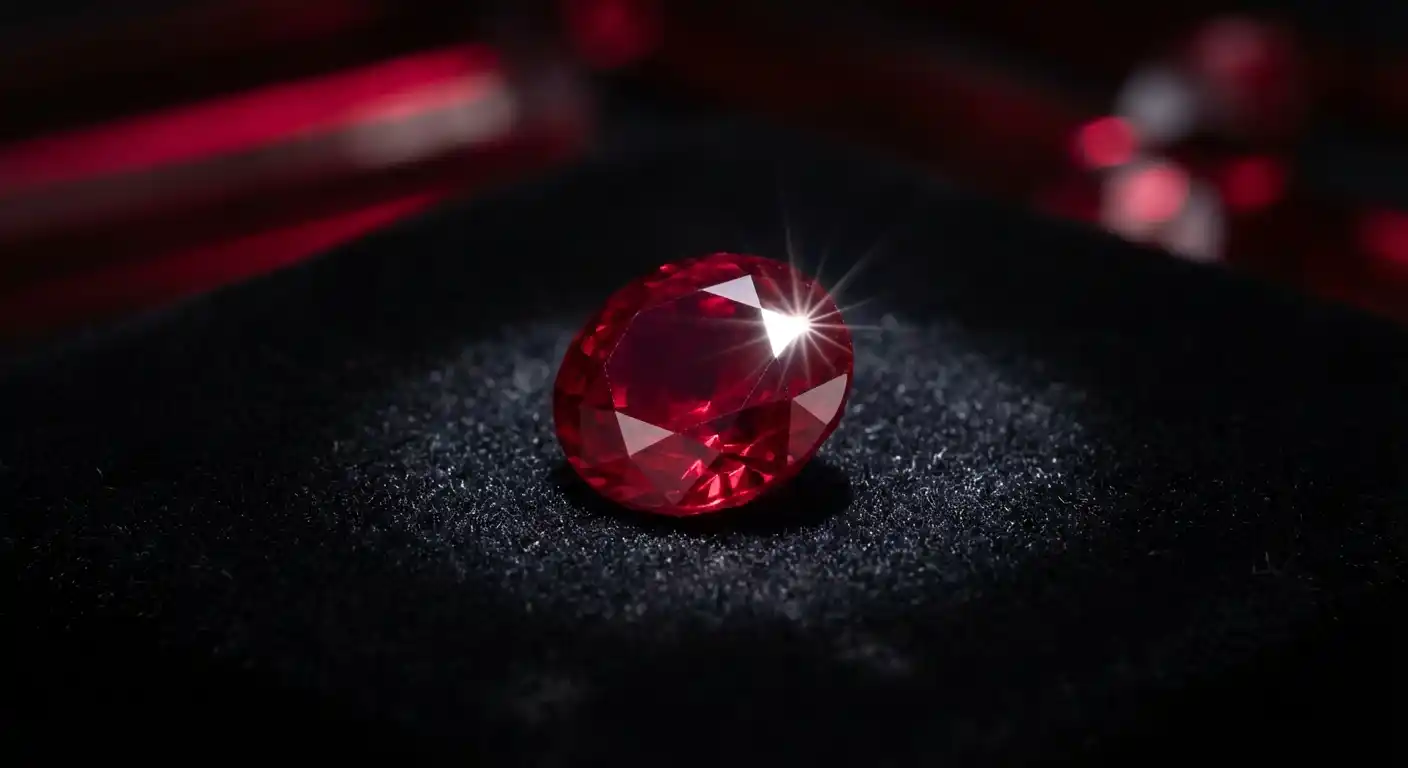
Ruby is the red variety of corundum (aluminum oxide). Its value depends heavily on origin, treatment status, and—most fundamentally—whether it's natural, synthetic, or a simulant.
Ruby vs. Simulants
Several materials simulate ruby's red color:
Red Garnet: Natural red garnets are often sold as "ruby" in tourist markets. Key differences:
- Garnet has lower hardness (7-7.5 vs. ruby's 9)
- Garnet is singly refractive; ruby is doubly refractive
- Garnet shows different inclusions (rounded crystals vs. silk)
Red Spinel: Historically confused with ruby (the "Black Prince's Ruby" in the British Crown Jewels is actually spinel). Spinel is singly refractive with distinct fluorescence and inclusion patterns.
Red Glass: Common in costume jewelry. Glass shows:
- Gas bubbles (spherical or elongated)
- Swirl marks
- Lower hardness (5-6)
- Conchoidal fracture if chipped
Composite Ruby: Glass-filled natural ruby with large fractures. Dramatically improves appearance but significantly reduces value. Identifiable under magnification by seeing glass in fractures with different luster than ruby.
Natural Ruby vs. Synthetic Ruby
This is the challenging distinction. Both are genuine corundum with identical chemical composition and physical properties. Focus on:
Inclusions: Natural rubies contain characteristic inclusions:
- "Silk"—fine rutile needle inclusions
- Crystal inclusions (often other minerals trapped during formation)
- Fingerprint inclusions (partially healed fractures)
- Zoning following hexagonal crystal growth
Flame-fusion synthetics show:
- Curved growth lines (striae)—the key diagnostic feature
- Gas bubbles (spherical)
- Unnatural clarity (too clean)
Flux-grown synthetics show:
- Flux inclusions (wispy, veil-like)
- Platinum or gold metal inclusions (from crucible)
- Different fluorescence than natural
Fluorescence: Under UV light, natural rubies typically fluoresce strong red. Some synthetics fluoresce differently or more intensely.
The Loupe Test
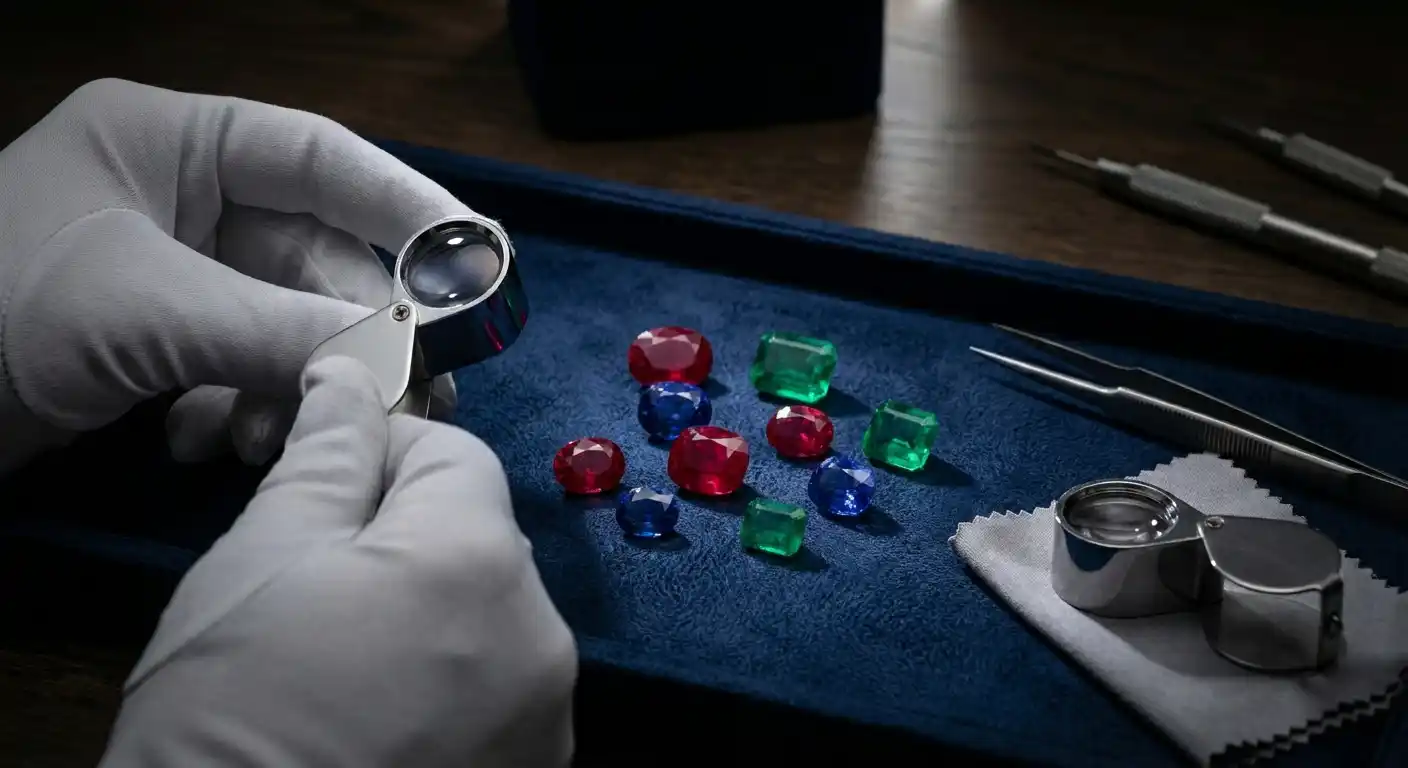
Under magnification with a quality loupe:
- Look for curved lines (synthetic) vs. angular zoning (natural)
- Examine inclusion shapes and distributions
- Check for "silk" patterns characteristic of natural corundum
Authenticating Sapphires
Sapphire is all non-red corundum—though blue sapphire is most famous, sapphires occur in pink, yellow, green, orange, purple, and colorless varieties.
Sapphire vs. Simulants
Blue Glass: The most common imitation. Shows gas bubbles, swirl marks, and low hardness.
Synthetic Spinel: Often created in "sapphire blue" color. Singly refractive (sapphire is doubly refractive) and shows different fluorescence.
Blue Topaz: Natural topaz treated to blue color. Lower refractive index and distinct crystal structure from sapphire.
Tanzanite: Natural blue zoisite sometimes passed as sapphire. Distinctly different optical properties and strong pleochroism (different colors viewed from different angles).
Natural Sapphire vs. Synthetic Sapphire
The same principles as ruby apply (both are corundum):
Flame-Fusion Synthetic Sapphires (most common):
- Curved growth striae—the key identifier
- Spherical gas bubbles
- Unusually high clarity
- Often very saturated, "perfect" color
Flux-Grown Synthetic Sapphires:
- Flux inclusions appearing as wispy veils
- Metal inclusions from crucible material
- More natural-looking than flame-fusion
Hydrothermal Synthetic Sapphires:
- May show growth patterns similar to natural
- Seed crystal remnants possible
- Require experienced examination
Natural Sapphire Characteristics:
- Angular color zoning following hexagonal crystal growth
- Natural silk (rutile needles)
- Mineral crystal inclusions
- Fingerprint inclusions
Color-Change and Fancy Sapphires
Star sapphires (showing asterism) and color-change sapphires require additional authentication—both can be synthesized. Natural star sapphires typically have more diffuse, silkier stars; synthetic stars are often sharper and more centered.
Authenticating Emeralds
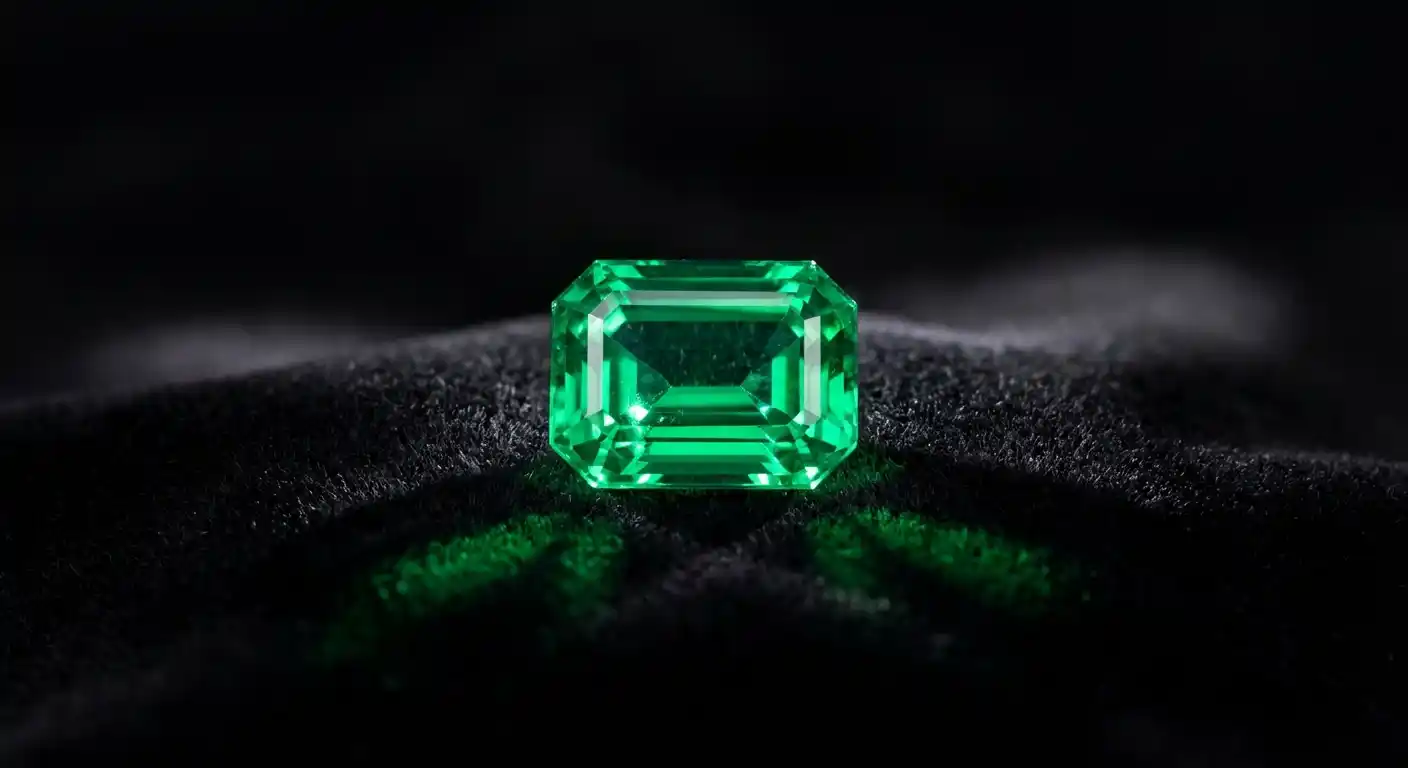
Emerald (green beryl) presents unique challenges because nearly all natural emeralds contain eye-visible inclusions—"clean" emeralds are extremely suspicious.
Emerald vs. Simulants
Green Glass: The simplest simulant. Shows bubbles, swirl marks, and wrong RI.
Green Tourmaline: Natural gem sometimes sold as emerald. Different crystal structure, optical properties, and inclusion types.
Chrome Diopside: Green mineral occasionally substituted for emerald. Lower hardness, different RI, and distinct inclusions.
Synthetic Green Spinel or YAG: Laboratory materials in emerald colors. Different optical properties from beryl.
Natural Emerald vs. Synthetic Emerald
Natural Emerald Characteristics:
The "jardín" (garden): Natural emeralds contain characteristic inclusions including:
- Three-phase inclusions (liquid, gas, and crystal together)—strong evidence of natural origin
- Jagged, irregular fractures
- Mineral crystal inclusions (pyrite, calcite, mica)
- Growth tubes and channels
- Color zoning following hexagonal crystal structure
Flux-Grown Synthetic Emeralds (Chatham, Gilson):
- Flux inclusions (wispy veils)
- Metal inclusions
- Sometimes roiled appearance
- May contain flux "fingerprints"
Hydrothermal Synthetic Emeralds (Biron, Russian):
- Seed plate visible in some specimens
- Chevron or zigzag growth patterns
- "Nail-head" inclusions
- Natural-looking but lack three-phase inclusions
The Treatment Question
Unlike ruby and sapphire (where heat treatment is accepted), emerald treatment raises complex disclosure issues:
Oil/Resin Treatment: Nearly universal. Cedar oil or Opticon fills surface-reaching fractures to improve appearance. Accepted with disclosure but affects value based on degree.
Significant Filling: Heavy treatment with polymer resins (like lead glass in ruby) dramatically changes the stone. May be unstable.
Detection methods:
- UV fluorescence may reveal filler materials
- Magnification shows filler in fractures with different luster
- Professional laboratories use infrared spectroscopy for definitive assessment
Universal Techniques
Several tests work across all colored gems:
Thermal Conductivity Testing
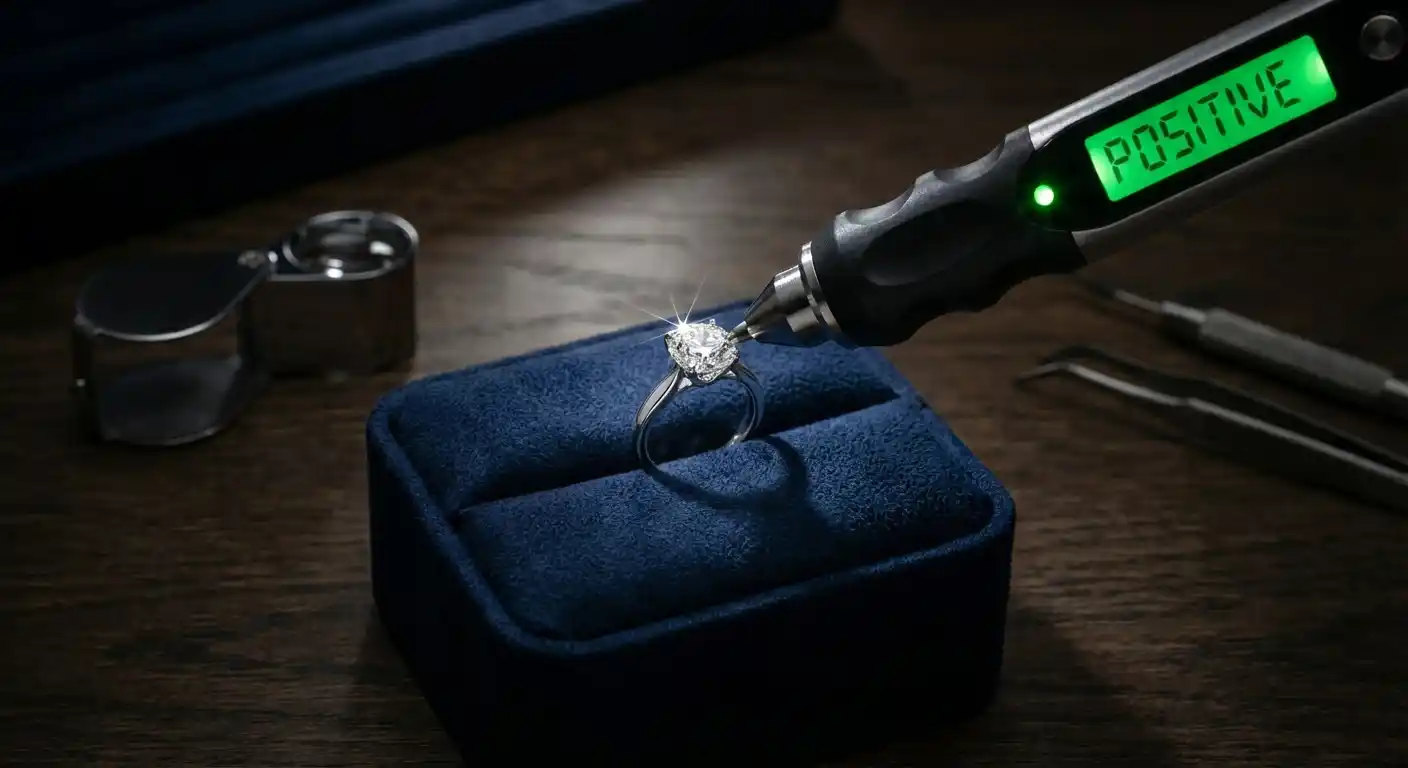
A multi-gem thermal tester identifies gem species by measuring heat conductivity. Different gems have characteristic thermal signatures that distinguish:
- Ruby/sapphire from garnet, spinel, glass
- Emerald from tourmaline, glass, synthetics
- Genuine gems from plastic imitations
Note: Thermal testing cannot distinguish natural from synthetic versions of the same gem—both have identical thermal properties.
Refractive Index
Each gem species has a characteristic refractive index range:
| Gem | Refractive Index |
|---|---|
| Ruby/Sapphire | 1.762-1.778 |
| Emerald | 1.565-1.602 |
| Spinel | 1.712-1.736 |
| Garnet (varies) | 1.73-1.89 |
| Tourmaline | 1.624-1.644 |
| Glass | 1.45-1.70 |
A refractometer provides definitive gem species identification regardless of color.
Specific Gravity
Density measurements help distinguish gems with similar appearance:
| Gem | Specific Gravity |
|---|---|
| Ruby/Sapphire | 3.95-4.10 |
| Emerald | 2.67-2.78 |
| Spinel | 3.58-3.64 |
| Garnet (varies) | 3.5-4.3 |
| Glass | 2.30-4.50 |
UV Fluorescence Patterns
Fluorescence behavior helps authenticate:
- Ruby typically fluoresces strong red under long-wave UV
- Some sapphires fluoresce (varies by origin)
- Emeralds typically show little fluorescence
- Synthetic gems may show different fluorescence than natural equivalents
Common Treatments to Know
Heat Treatment
Applied to ruby and sapphire to improve color and clarity. Standard industry practice when disclosed. Heat treatment:
- Dissolves silk for improved clarity
- Improves color saturation
- Is permanent and stable
- Requires sophisticated laboratory detection
Unheated gems command premium prices—certification of "unheated" status is valuable.
Filling Treatments
Lead Glass Filling (Ruby): Fills fractures with high-lead-content glass. Dramatically improves appearance but creates durability concerns. Must be disclosed; significantly reduces value.
Oil/Resin Filling (Emerald): Standard practice. Degree of treatment (minor to significant) affects value.
Surface Coating
Some gems receive thin coatings to enhance color. These wear off over time and must be disclosed. Detection: examine with loupe for coating edges or wear patterns.
Diffusion Treatment
Chemicals diffused into gem surface create or enhance color. Beryllium diffusion in sapphire can penetrate deeply. Detection requires professional laboratory analysis.
When to Seek Professional Help
Consider professional certification for:
- Any colored stone valued over $500
- Stones where origin affects value (Burmese ruby, Kashmir sapphire, Colombian emerald)
- Treatment status questions on valuable pieces
- Estate or antique pieces with uncertain history
- Any situation where authentication affects significant decisions
Professional laboratories can:
- Definitively distinguish natural from synthetic
- Identify treatments with advanced spectroscopy
- Determine geographic origin (affects value significantly)
- Provide documentation for insurance and sale
For comprehensive gem authentication strategies, see our guide: How to Tell If a Gem Is Real.
FAQ
Can thermal testers distinguish natural from synthetic rubies?
No. Natural and synthetic rubies have identical chemical composition and therefore identical thermal properties. Thermal testers identify gem species (ruby vs. garnet), not origin (natural vs. synthetic). For natural vs. synthetic determination, you need inclusion examination, UV analysis, or professional laboratory testing.
Are all "ruby" birthstone jewelry pieces genuine ruby?
Many inexpensive birthstone jewelry pieces use synthetic ruby, lab-created ruby, or simulants like garnet or glass. The term "ruby" should only apply to corundum (natural or synthetic), but enforcement varies. Check descriptions carefully and expect synthetics in budget-priced jewelry.
How common are treated colored gems?
Extremely common. The vast majority of rubies and sapphires on the market are heat-treated. Essentially all emeralds have some degree of oil or resin filling. Untreated gems are premium rarities commanding significantly higher prices.
What makes Kashmir sapphires so valuable?
Kashmir sapphires (from Kashmir region, Pakistan/India) have a unique "velvety" appearance from microscopic inclusions. Combined with exceptional blue color and extreme rarity (mines largely exhausted), Kashmir sapphires command prices up to $100,000+ per carat. Origin determination requires professional laboratory certification.
Can I tell a synthetic emerald from natural with a loupe?
Often, yes. Look for:
- Three-phase inclusions (natural only)
- Flux inclusions or metal flecks (synthetic indicators)
- Growth pattern differences
- Inclusion type and distribution
However, some high-quality synthetics require professional analysis. When significant value is at stake, get laboratory certification.
Is it wrong to buy synthetic colored gems?
Not at all. Synthetic ruby, sapphire, and emerald are beautiful, durable, and affordable. They're real gems—just laboratory-created. The issue is disclosure and appropriate pricing. Synthetics sold as synthetics at synthetic prices are legitimate products. Synthetics sold as natural at natural prices are fraud.
Conclusion
Colored gem authentication answers three questions:
- Is it the gem it claims to be? (Ruby vs. garnet vs. glass)
- Is it natural or synthetic? (Earth-formed vs. laboratory-grown)
- What treatments has it undergone? (Heated, filled, diffused)
Your testing approach:
| Value | Testing Level |
|---|---|
| Under $200 | Visual + thermal screening |
| $200-$1,000 | Add loupe exam for inclusions |
| Over $1,000 | Professional laboratory certification |
Remember: most colored gems are treated, and many affordable ones are synthetic. This isn't fraud when properly disclosed—it's the reality of the market. The problem is only when synthetics are sold as natural at natural prices.
For the right testing equipment, see our guide: Best Gem Testing Tools for Home Use.
For overall gem authentication principles, see: How to Tell If a Gem Is Real.
Presidium Gem Tester II - Multi-Gem Identification
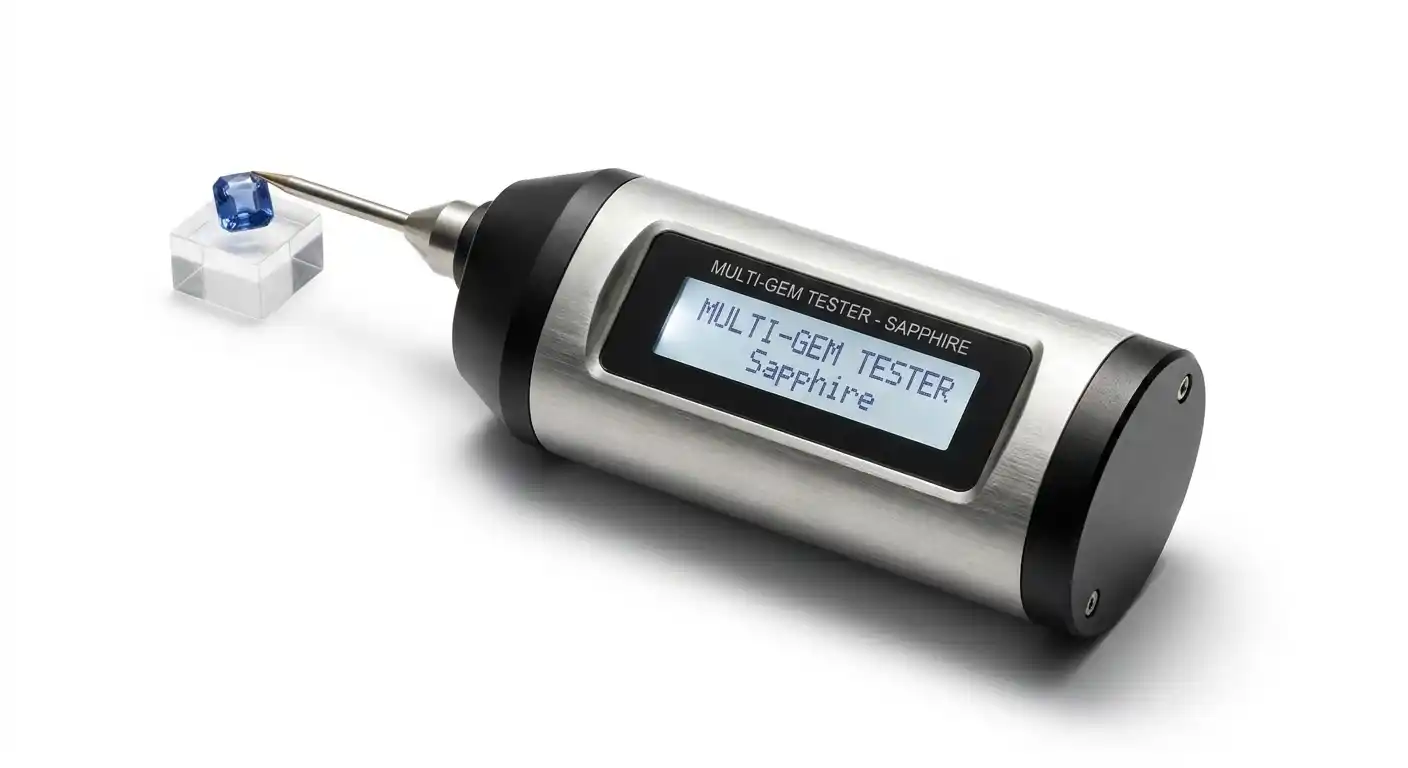
Multi Gem Identification
Professional-grade thermal tester identifying 20+ gem species.
Professional-grade thermal tester identifying 20+ gem species. Essential for distinguishing ruby from garnet, sapphire from glass, and more.
"Game changer for colored stone authentication. Correctly identified a synthetic sapphire that looked completely natural.
Dreamer Jewelers Loupe 60X-100X with LED and UV Light
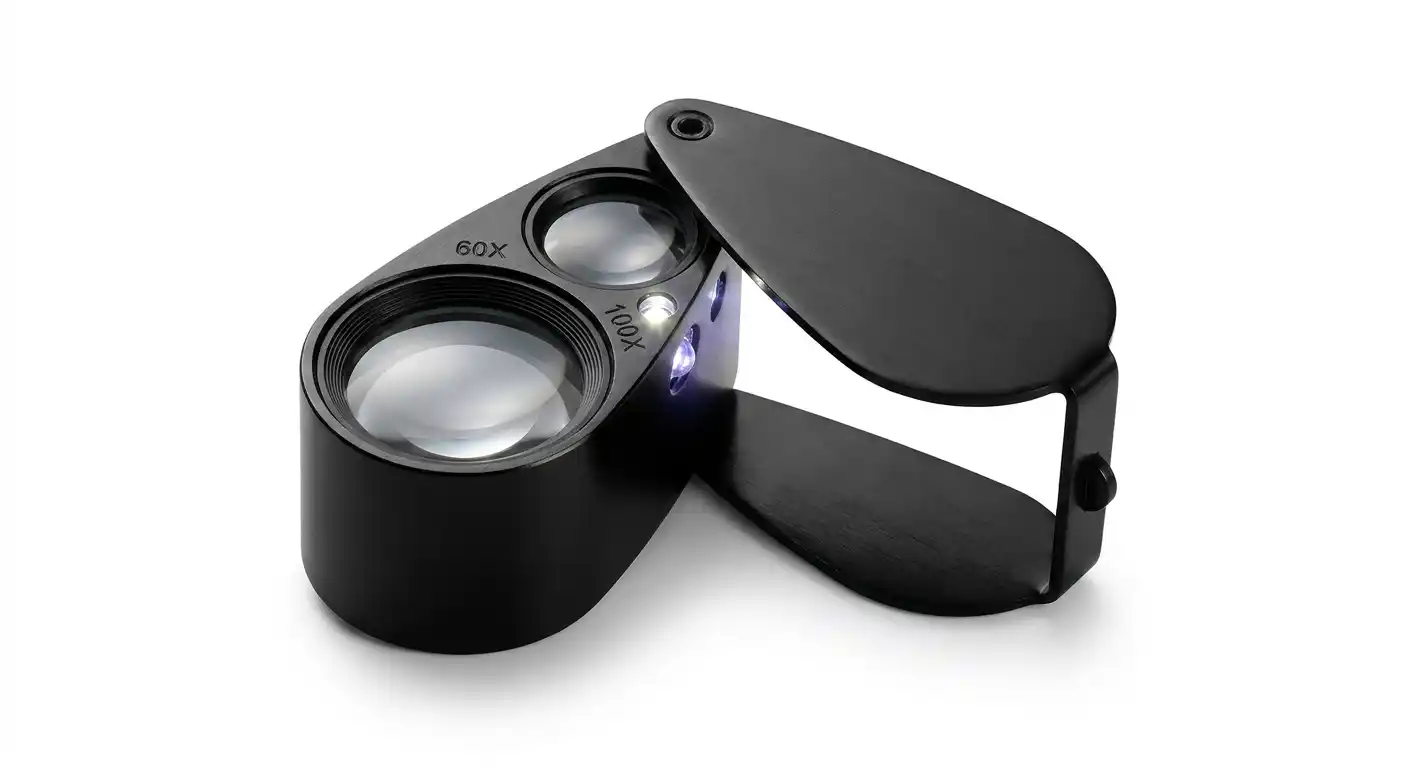
Dreamer Jewelers Loupe 60X 100X with LED and UV Light
Multi-function loupe for examining inclusions, silk, and growth patterns.
Multi-function loupe for examining inclusions, silk, and growth patterns. The integrated UV helps spot treatments and synthetics.
"The curved growth lines in a synthetic ruby were unmistakable under this loupe. Essential tool.
Review of What We Liked
Multi Gem Identification
Professional-grade thermal tester identifying 20+ gem species.
Dreamer Jewelers Loupe 60X 100X with LED and UV Light
Multi-function loupe for examining inclusions, silk, and growth patterns.
About the Author
Alfreda Borror
Alfreda Borror is the founding editor of Opulent Opal, writing research-based buying guides on diamonds, birthstones, and fine jewelry.