How to Tell If a Diamond Is Real: 12 Tests That Work

This post may contain affiliate links. Read our affiliate policy
You paid $8,000 for that engagement ring. But is the diamond real—or a $50 cubic zirconia?
Every year, thousands of buyers discover their "certified diamond" is actually moissanite, CZ, or worse. The good news: you can test any diamond in minutes with the right techniques. This guide covers 12 proven methods, from free at-home checks to equipment-based tests that approach professional accuracy.
Table of Contents
- Why Diamond Authentication Matters
- What Diamonds Are Compared Against
- At-Home Tests (No Equipment)
- Equipment-Based Tests
- Professional-Level Tests
- Test Accuracy Comparison
- Common Mistakes to Avoid
- FAQ
Why Diamond Authentication Matters
A 1-carat diamond might cost $5,000-$15,000 depending on quality. A 1-carat cubic zirconia costs $5-$20. A lab-grown diamond falls in between. These stones can look virtually identical to untrained eyes, making authentication essential for:
- Purchase protection: Verify authenticity before paying
- Insurance accuracy: Insurers deny claims for misidentified stones
- Resale value: Buyers demand proof of authenticity
- Estate evaluation: Inherited pieces need accurate assessment
- Peace of mind: Know what you're wearing
What Diamonds Are Compared Against
Understanding what might be substituted for diamond helps you choose appropriate tests.
Cubic Zirconia (CZ)
The most common diamond simulant. CZ is zirconium dioxide—chemically unrelated to diamond. It's softer (8-8.5 vs. diamond's 10), heavier, and conducts heat poorly. Most basic tests easily distinguish CZ from diamond.
Moissanite
A much more challenging simulant. Moissanite (silicon carbide) has brilliance and fire exceeding diamond, plus excellent heat conductivity. Basic thermal testers often misidentify moissanite as diamond. You need specific tests to distinguish them.
White Sapphire
Colorless corundum occasionally substitutes for diamond. It lacks diamond's characteristic brilliance and fire but can fool casual observers. Thermal testing easily identifies sapphire.
Lab-Grown Diamond
Here's the complexity: lab-grown diamonds ARE real diamonds—same carbon crystal structure, same physical properties. They're not "fake" but are generally valued lower than natural diamonds. Distinguishing them requires advanced equipment examining growth patterns and trace elements. For more on this distinction, see our guide on synthetic vs simulant gems.
Glass and Crystal
Low-quality imitations that rarely fool anyone examining closely. Extremely soft, no fire, and easily scratched.
At-Home Tests (No Equipment)
These tests require nothing but the stone and common household items. They're useful for initial screening but have limitations.
Test 1: The Fog Test
How it works: Breathe on the stone like you're fogging a mirror. Real diamonds dissipate fog almost instantly (within 1-2 seconds) due to their exceptional thermal conductivity. Simulants hold fog longer.
Accuracy: Good for eliminating glass and CZ. Does NOT distinguish diamond from moissanite, which also dissipates fog quickly.
How to perform:
- Clean the stone thoroughly
- Hold it close to your mouth
- Exhale gently to create fog
- Watch how quickly fog disappears
- Real diamond: fog disappears in 1-2 seconds
- Simulant: fog lingers 3-5+ seconds
Test 2: The Newspaper/Read-Through Test
How it works: Place a loose diamond (table-down) on printed text. Diamond's high refractive index (2.42) bends light so dramatically that you cannot read text through it—the letters appear scattered or invisible. Lower RI stones let you read through them.
Accuracy: Effective for eliminating glass and many simulants. Not reliable for moissanite (even higher RI) or for mounted stones.
How to perform:
- Place loose stone table-down on newspaper
- Look directly through the pavilion (bottom)
- Real diamond: text completely unreadable
- Glass/CZ: text visible (may be distorted but readable)
Test 3: The Sparkle Test
How it works: Examine how the stone reflects light. Diamonds produce strong white light reflection (brilliance) and spectral colors (fire) in characteristic patterns. The balance between these effects differs from simulants.
Accuracy: Requires experience but helps identify obvious fakes. Moissanite actually shows more fire (rainbow flashes) than diamond.
What to look for:
- Diamond: balanced white and rainbow reflections
- CZ: excessive rainbow fire, less brilliance
- Moissanite: intense rainbow fire, often "disco ball" effect
- Glass: dull, minimal sparkle
Test 4: The Water Test
How it works: Drop the loose stone in a glass of water. Due to its high density (specific gravity 3.52), a real diamond sinks immediately. Lighter simulants may sink slowly or even float briefly.
Accuracy: Limited usefulness—most simulants also sink. CZ actually sinks faster (higher SG of 5.65). Better as a supporting test than primary identification.
Test 5: The UV Light Test
How it works: Examine the stone under long-wave UV light (365nm). Approximately 25-35% of natural diamonds fluoresce blue. Synthetic diamonds rarely fluoresce, or show different colors like orange or yellow.
Accuracy: Not definitive—many real diamonds don't fluoresce, and some simulants do. But strong blue fluorescence is a positive indicator.
What to look for:
- Blue glow: suggests natural diamond
- No fluorescence: inconclusive
- Yellow/orange glow: may indicate lab-grown or synthetic
Equipment-Based Tests
These tests require purchasing equipment but provide much better accuracy than at-home methods.
Test 6: Thermal Conductivity Testing
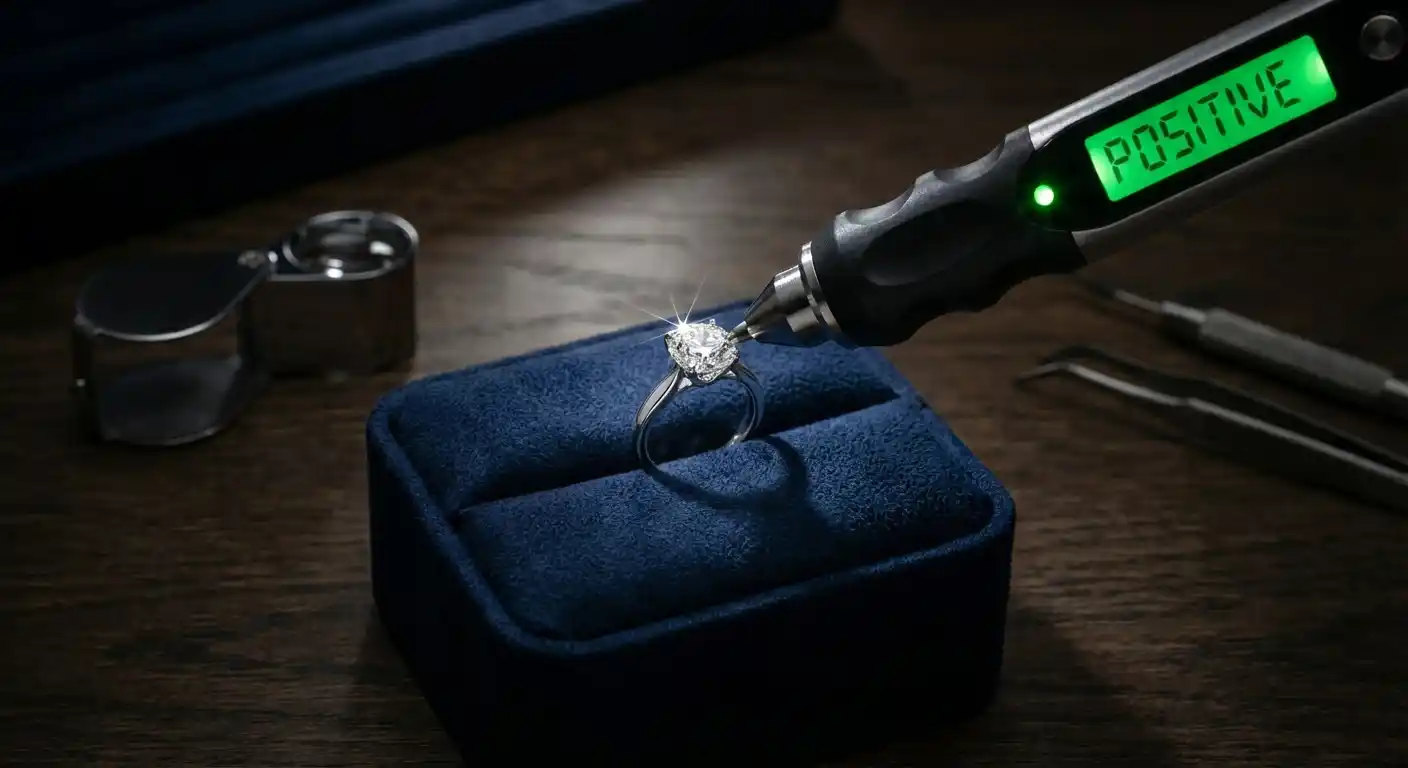
How it works: Diamond conducts heat faster than almost any other material. Electronic thermal diamond testers measure how quickly heat transfers through the stone.
Accuracy: Excellent for distinguishing diamond from glass, CZ, white sapphire, and most simulants (95%+ accuracy). FAILS to distinguish diamond from moissanite—both conduct heat well.
Equipment cost: $15-$50 for basic testers; $150-$300 for professional grade
How to use:
- Ensure stone is clean and dry
- Touch probe tip to stone surface
- Wait for reading (usually 2-3 seconds)
- "Diamond" reading indicates high thermal conductivity
- "Metal" or "Simulant" reading indicates likely fake
Test 7: Electrical Conductivity Testing
How it works: This test distinguishes diamond from moissanite. Moissanite conducts electricity; diamond doesn't. Dual testers combine thermal and electrical testing for comprehensive screening.
Accuracy: Very high when combined with thermal testing. Together, these two methods correctly identify 99%+ of mounted stones.
Equipment cost: $100-$300 for quality dual testers
Test 8: Loupe Examination
How it works: A 10x jeweler's loupe reveals internal characteristics invisible to naked eyes. Examining inclusions, facet edges, and surface features provides valuable authentication clues.
What to look for:
Real diamonds typically show:
- Natural inclusions (crystals, feathers, clouds)
- Sharp facet edges
- Possible laser drill holes or inscriptions
- GIA/AGS numbers on girdle (under magnification)
CZ typically shows:
- No inclusions (perfectly clean)
- Slightly rounded facet edges
- Sometimes bubbles (gas trapped during manufacturing)
Moissanite typically shows:
- Doubling of back facets (double refraction)
- "Silk-like" inclusions
- Sometimes needle-like formations
Test 9: The Doubling Test
How it works: Diamond is singly refractive—light rays don't split. Moissanite is doubly refractive—it splits light rays, causing facet edges to appear doubled when viewed through the stone at certain angles.
Accuracy: Highly accurate for distinguishing diamond from moissanite, but requires practice to perform correctly.
How to perform:
- Use 10x loupe
- Look through the crown at back facet edges
- Rotate stone slowly
- If facet edges appear doubled/blurry: likely moissanite
- If facet edges appear single and sharp: likely diamond
Professional-Level Tests
These methods approach laboratory accuracy but require significant equipment investment or professional assistance.
Test 10: Specific Gravity Testing
How it works: Measure the stone's density using hydrostatic weighing. Diamond has SG of 3.52; CZ is 5.65; moissanite is 3.21. Precise measurement identifies stone type.
Accuracy: Very high for loose stones. Impractical for mounted pieces.
Requirements: Precision scale (0.01g or better), distilled water, specific gravity kit
Test 11: Refractometer Testing
How it works: Measure the stone's refractive index precisely. Diamond has RI of 2.42, which is above most refractometer limits—that "over the limit" reading itself indicates diamond. Other stones give readable values that identify them.
Accuracy: Very high, but requires training and expensive equipment.
Limitations: Requires loose stones; high-RI stones like diamond exceed refractometer range
Test 12: UV-Vis-NIR Spectroscopy
How it works: Analyzes how the stone absorbs and transmits light across wavelengths. Natural and lab-grown diamonds have different absorption patterns due to different trace elements and growth conditions.
Accuracy: The gold standard for distinguishing natural vs. lab-grown diamonds. Only available through professional laboratories.
When to use: For high-value stones where natural vs. lab-grown determination affects value significantly.
Test Accuracy Comparison
| Test | CZ Detection | Moissanite Detection | Lab-Grown Detection | Equipment Cost |
|---|---|---|---|---|
| Fog Test | Good | Poor | None | Free |
| Newspaper Test | Good | Poor | None | Free |
| Sparkle Test | Fair | Fair | None | Free |
| Water Test | Poor | Poor | None | Free |
| UV Test | Fair | Fair | Limited | $15-30 |
| Thermal Tester | Excellent | Poor | None | $15-50 |
| Dual Tester | Excellent | Excellent | None | $100-300 |
| Loupe Exam | Good | Good | Limited | $15-40 |
| Specific Gravity | Excellent | Excellent | None | $50-100 |
| Lab Spectroscopy | Excellent | Excellent | Excellent | $100-300 per test |
Common Mistakes to Avoid
Relying on Single Tests
No single test is foolproof. Sophisticated fakes may pass one or two tests. Always use multiple methods before reaching conclusions.
Testing Dirty Stones
Oil, lotion, and dirt affect test results. Clean stones thoroughly before any testing. The fog test especially requires a clean surface.
Ignoring Moissanite
Basic thermal testers—the most common type—cannot distinguish moissanite from diamond. If you're only using thermal testing, you're missing the most common "upgraded" simulant in the market.
Trusting Visual Inspection Alone
Even experienced jewelers cannot reliably distinguish diamond from high-quality moissanite or lab-grown diamonds by visual inspection alone. Equipment testing is essential.
Assuming Certificates Are Genuine
Fake certificates exist. Always verify certificates directly with the issuing laboratory. See our guide on spotting fake diamond certificates for verification steps.
FAQ
Can a jeweler tell if a diamond is real just by looking?
Experienced jewelers can identify obvious fakes and recognize certain characteristics of natural diamonds. However, no jeweler can reliably distinguish diamond from high-quality moissanite or lab-grown diamonds by visual inspection alone. Professional testing equipment is essential for definitive identification.
Do real diamonds scratch glass?
Yes, diamonds scratch glass easily (hardness 10 vs. glass's 5.5). However, this test is problematic: moissanite (9.25), sapphire (9), and even CZ (8.5) also scratch glass. Plus, you risk damaging both the glass and the stone. We don't recommend this test.
Will a real diamond sink in water?
Yes, but so will most simulants. The water test has limited usefulness for diamond authentication. CZ actually sinks faster than diamond due to higher density.
How can I test a mounted diamond?
Thermal and electrical testing work on mounted stones. Position the probe on exposed facets. Loupe examination and UV fluorescence testing also work. Specific gravity testing requires unmounted stones.
Are lab-grown diamonds fake?
No. Lab-grown diamonds have identical chemical composition and physical properties to natural diamonds—they ARE diamonds. The distinction matters for value and disclosure, but lab-grown diamonds are not "fake" in the sense that CZ or moissanite are fake. They simply weren't formed naturally in the earth.
How accurate are diamond testers from Amazon?
Basic thermal testers correctly identify 95%+ of diamonds vs. CZ and glass. However, they typically fail to distinguish diamond from moissanite. Dual testers (thermal + electrical) from reputable brands achieve 99%+ accuracy across all common simulants.
Should I get professional testing?
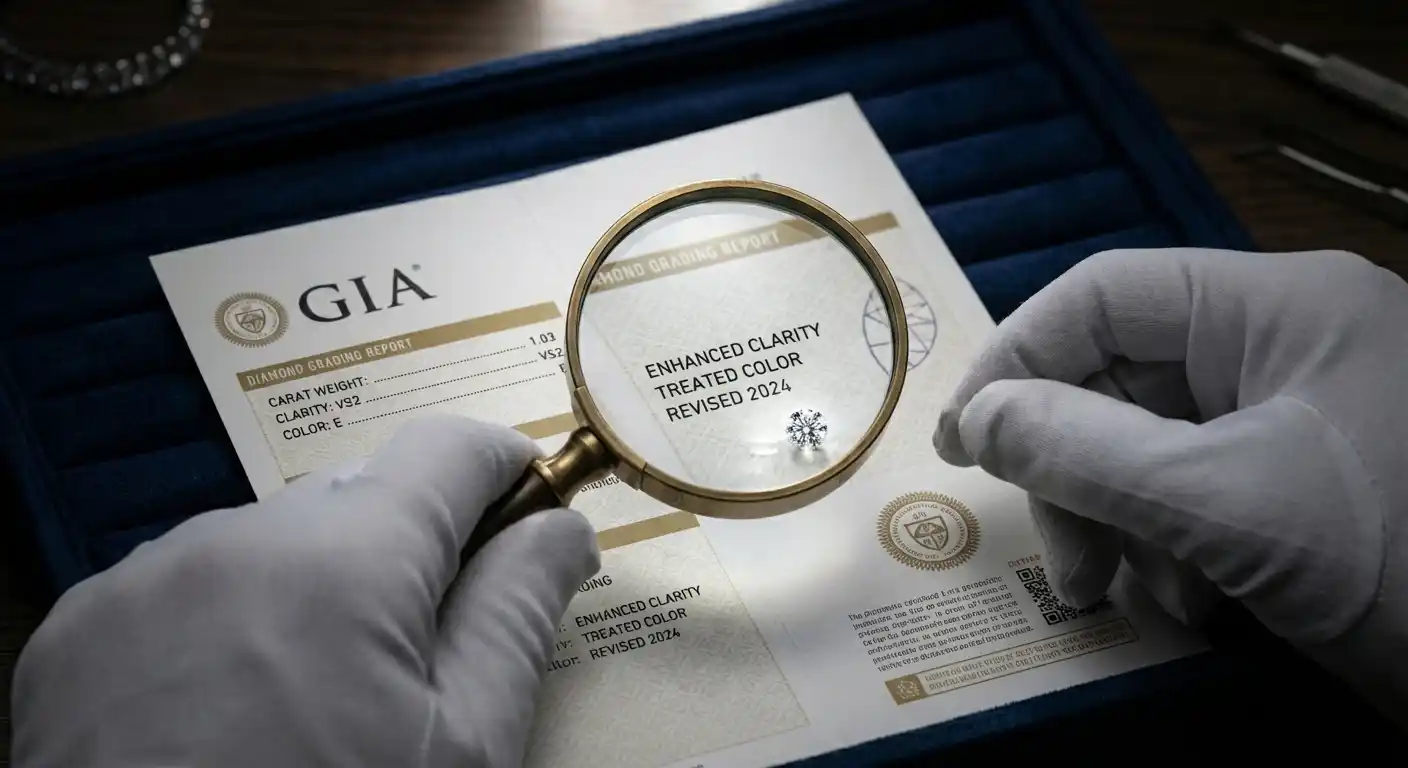
Professional testing is recommended for stones valued over $1,000, any stone you plan to insure, and any situation where the natural vs. lab-grown distinction matters. Laboratory reports from GIA or AGS provide definitive identification and documentation.
Conclusion
You now have 12 ways to test any diamond. Here's your action plan:
For quick screening (free): Use the fog test and newspaper test to eliminate obvious glass and CZ fakes in seconds.
For reliable home testing ($20-250): A thermal tester catches 95% of simulants. A dual tester adds moissanite detection for near-complete coverage.
For valuable stones ($100-300): Get GIA or AGS certification. It's the only way to distinguish natural from lab-grown and provides documentation for insurance and resale.
The goal isn't 100% certainty with home testing—it's catching fakes before money changes hands and knowing when to call in professionals.
Concerned about your certificate's authenticity? Read How to Spot Fake Diamond Certificates before your next purchase.
Want to test other gemstones? See our complete guide: How to Tell If a Gem Is Real.
Presidium Diamond Mate - Professional Diamond & Moissanite Tester
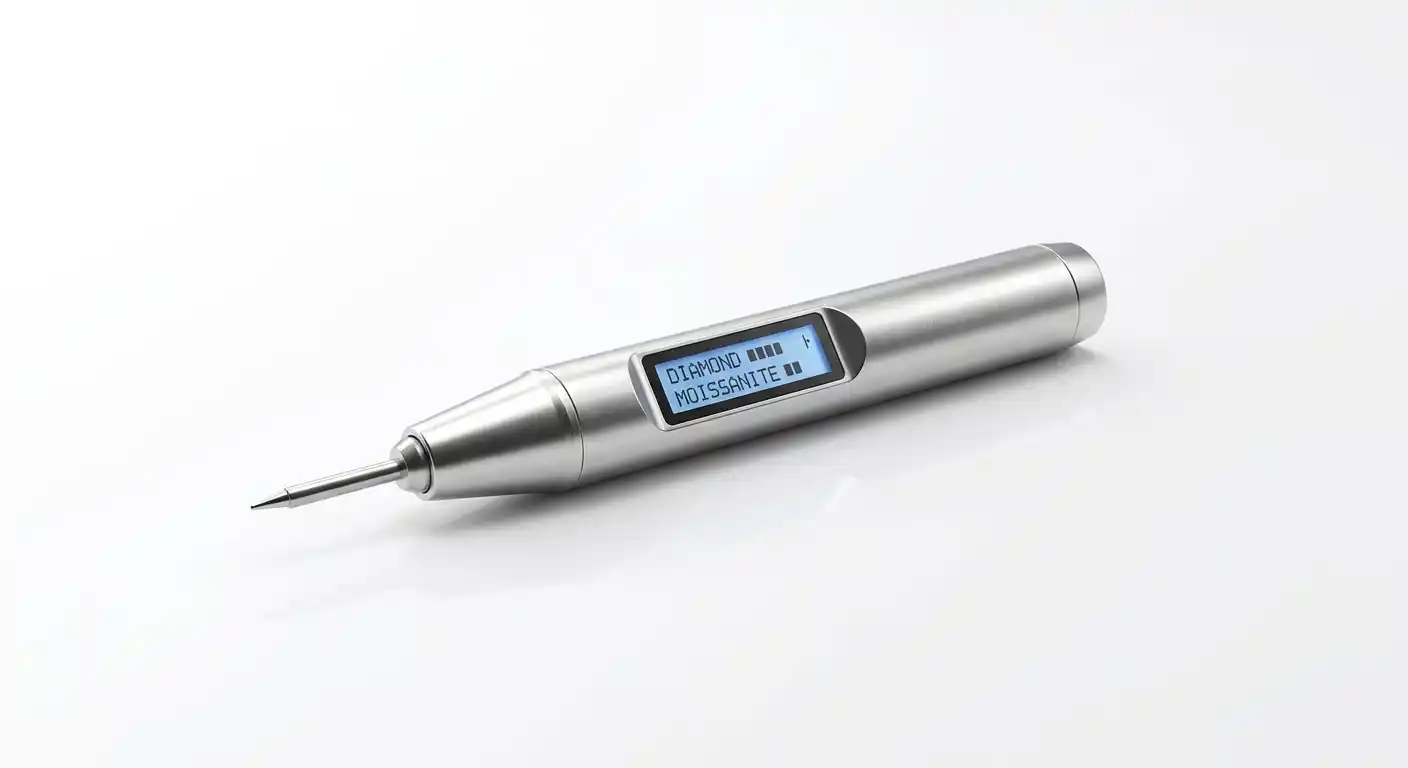
Presidium Diamond Mate Professional Diamond Moissanite Tester
Professional-grade tester that distinguishes diamonds from moissanite and all simulants.
Professional-grade tester that distinguishes diamonds from moissanite and all simulants. The industry-trusted choice for jewelers and collectors.
"Worth every penny. Instantly identifies moissanite when basic testers fail. Essential for serious collectors.
Presidium Duo Tester (PDT II) Diamond and Colored Gemstone Tester
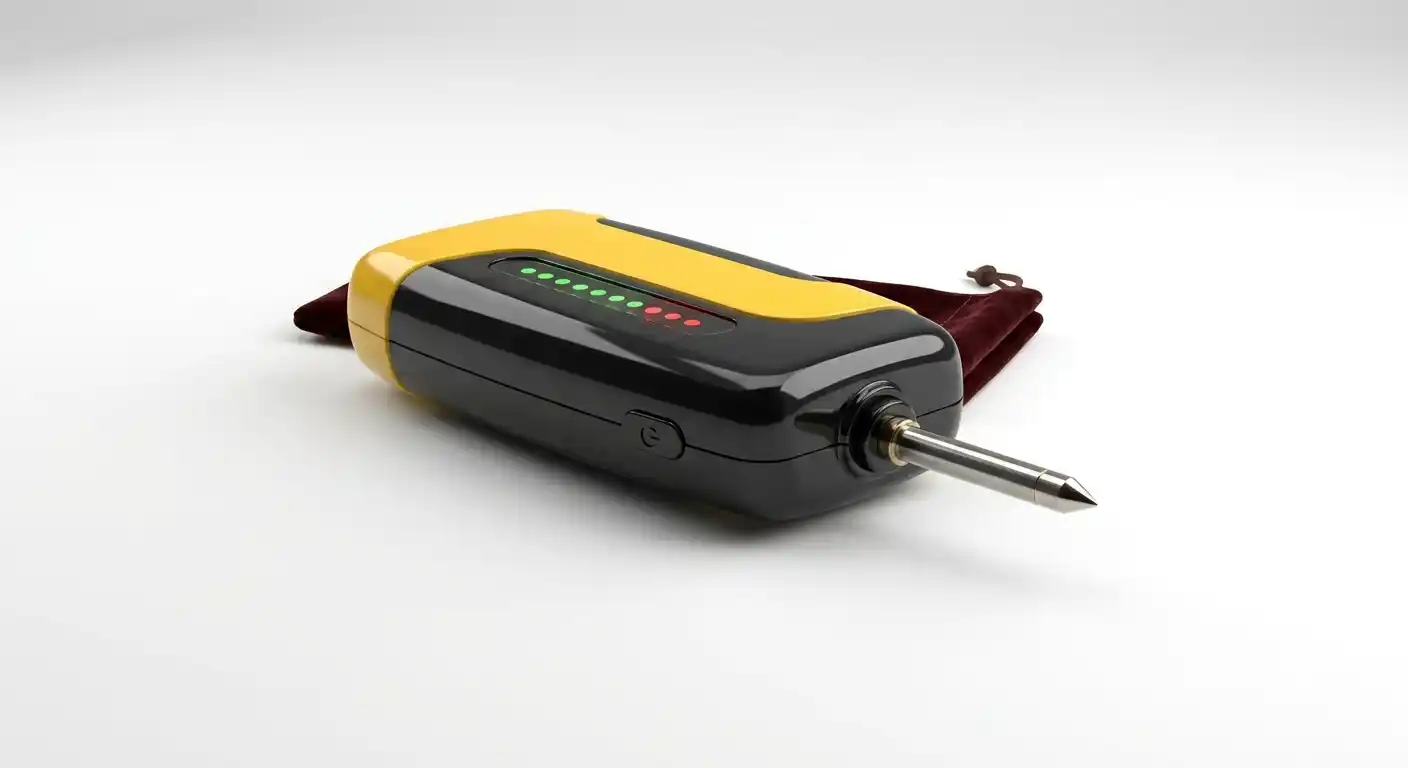
PDT II Diamond and Colored Gemstone Tester
Professional dual thermal-and-electrical conductivity tester that distinguishes diamonds from simulants and colored gems.
Professional dual thermal-and-electrical conductivity tester that distinguishes diamonds from simulants and colored gems. A step up from single-function testers.
"Catches stones that single-function testers miss. Essential if you're evaluating colored gems alongside diamonds.
Gain Express Jewelers Loupe 10x Magnifier with LED Light
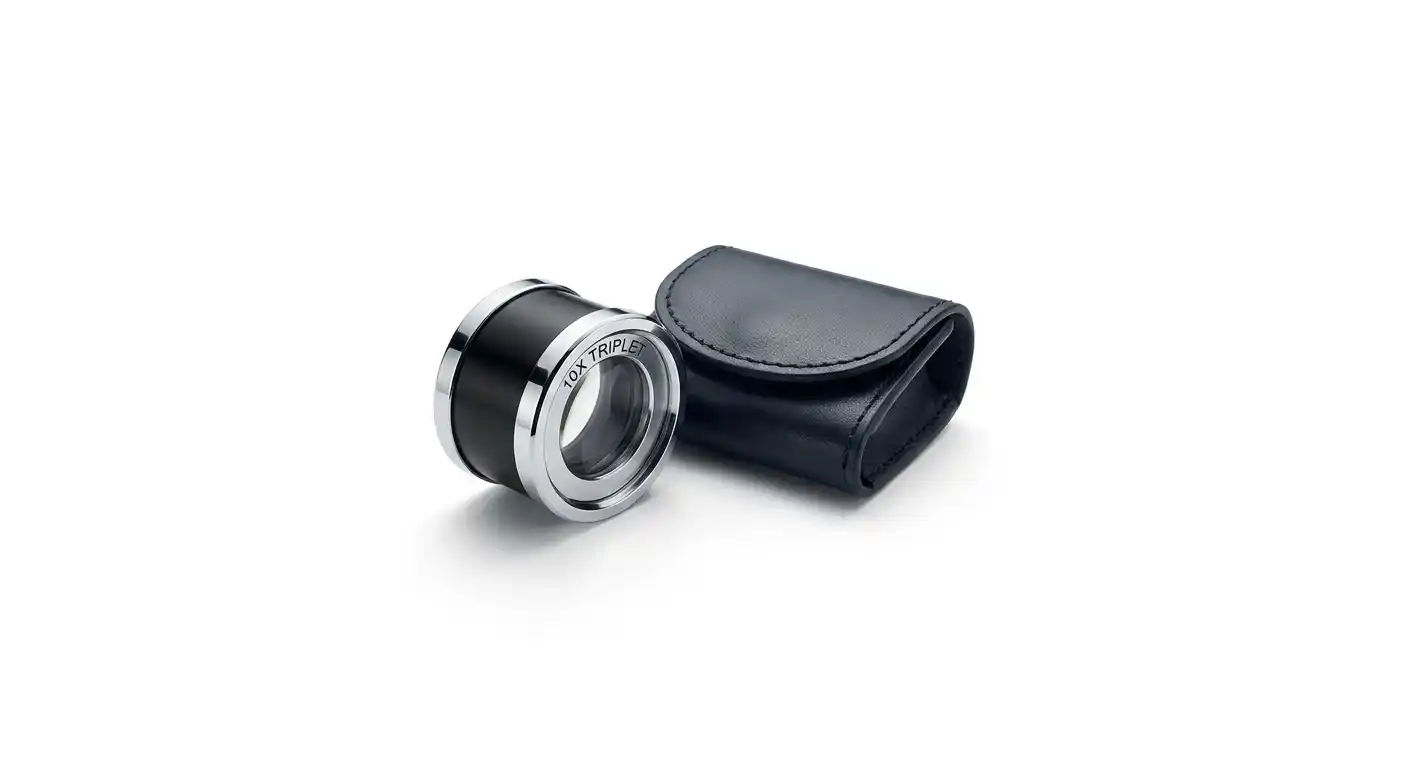
Gain Express Jewelers Loupe 10x Magnifier with LED Light
Industry-standard 10x magnification with color-corrected triplet lens and built-in LED.
Industry-standard 10x magnification with color-corrected triplet lens and built-in LED. The same specification GIA uses for diamond grading.
"Crystal clear optics with zero distortion. Finally seeing what the professionals see.
Review of What We Liked
Presidium Diamond Mate Professional Diamond Moissanite Tester
Professional-grade tester that distinguishes diamonds from moissanite and all simulants.
PDT II Diamond and Colored Gemstone Tester
Professional dual thermal-and-electrical conductivity tester that distinguishes diamonds from simulants and colored gems.
Gain Express Jewelers Loupe 10x Magnifier with LED Light
Industry-standard 10x magnification with color-corrected triplet lens and built-in LED.
About the Author
Alfreda Borror
Alfreda Borror is the founding editor of Opulent Opal, writing research-based buying guides on diamonds, birthstones, and fine jewelry.