How to Authenticate Antique and Estate Jewelry

This post may contain affiliate links. Read our affiliate policy
The seller says it's a Victorian mourning brooch from 1875. The jet is black, the goldwork looks old, the price is $2,500.
But one detail gives it away: a lobster clasp. Those weren't invented until the 1970s. The "antique" is a reproduction worth maybe $150.
Authenticating antique jewelry requires spotting details like this—construction methods, clasp types, hallmarks, and manufacturing techniques that changed over time. A genuine Victorian piece might be worth ten times a modern reproduction. This guide teaches you to tell the difference.
Table of Contents
- Defining Antique vs. Vintage vs. Estate
- Period Identification
- Reading Hallmarks
- Construction and Manufacturing Clues
- Evaluating Gemstones in Antique Settings
- Spotting Reproductions
- Documentation and Provenance
- FAQ
Defining Antique vs. Vintage vs. Estate
These terms have specific meanings in the jewelry trade:
Antique Jewelry
Generally defined as 100+ years old (pre-1926 as of 2026). Antique pieces come from distinct historical periods with characteristic styles, materials, and manufacturing techniques. True antiques command premiums based on age, rarity, and historical significance.
Vintage Jewelry
Typically 20-100 years old. Vintage encompasses mid-20th century pieces including Retro (1935-1950) and Mid-Century Modern eras. Less rare than antiques but collectible based on style, designer, and condition.
Estate Jewelry
Simply means previously owned—no age requirement. An estate piece might be antique, vintage, or recent. "Estate" indicates secondhand status, not historical significance.
Period Jewelry
Authentic pieces from specific historical eras: Georgian, Victorian, Edwardian, Art Nouveau, Art Deco, Retro. Period pieces must originate from the correct era—not modern reproductions of period styles.
Period Identification
Understanding period characteristics helps authenticate age claims.
Georgian Era (1714-1837)
The oldest commonly encountered antique jewelry. Characteristics:
- Handmade entirely—no machine components
- Closed-back settings (gems backed with foil to enhance appearance)
- Silver settings with gold backs (to protect skin from tarnish)
- Rose-cut and old mine cut diamonds
- Nature motifs: flowers, leaves, bows, crescents
- Cannetille work (intricate gold wire designs)
Victorian Era (1837-1901)
Named for Queen Victoria's reign. Three sub-periods:
Early Victorian/Romantic (1837-1860):
- Romantic motifs: hearts, flowers, snakes (symbolizing eternal love)
- Intricate goldwork
- Colored gemstones popular
Mid-Victorian/Grand (1860-1885):
- Darker themes after Prince Albert's death (1861)
- Mourning jewelry: jet, black onyx, hair jewelry
- Cameos, lockets, heavy gold pieces
Late Victorian/Aesthetic (1885-1901):
- Lighter, more feminine designs
- Japanese influence
- Star and crescent moon motifs
- Increased diamond use
Edwardian Era (1901-1915)
Named for King Edward VII. Characteristics:
- Platinum dominated (newly workable due to oxyacetylene torch)
- Delicate, lacy designs (platinum's strength enabled finer work)
- Diamonds and pearls dominant
- Garland style: bows, swags, wreaths
- Milgrain edging
- Old European cut diamonds
Art Nouveau (1890-1915)
Overlapping with late Victorian and Edwardian. Characteristics:
- Organic, flowing lines
- Natural motifs: flowers, insects, women's forms
- Enameling techniques
- Unusual colored gems
- Asymmetrical designs
- Signed pieces from notable artists (Lalique, Tiffany)
Art Deco (1920-1935)
Geometric modernism. Characteristics:
- Strong geometric shapes: triangles, circles, rectangles
- Bold color contrasts
- White metals (platinum, white gold)
- Calibré-cut gems creating geometric patterns
- Onyx, coral, jade, lapis accents
- Old European and transitional cut diamonds
Retro (1935-1950)
Wartime and post-war jewelry. Characteristics:
- Yellow and rose gold (platinum restricted for war)
- Bold, sculptural designs
- Oversized pieces
- Mechanical themes (war influence)
- Synthetic rubies common (natural stones scarce)
- Less emphasis on fine gemstones
Reading Hallmarks
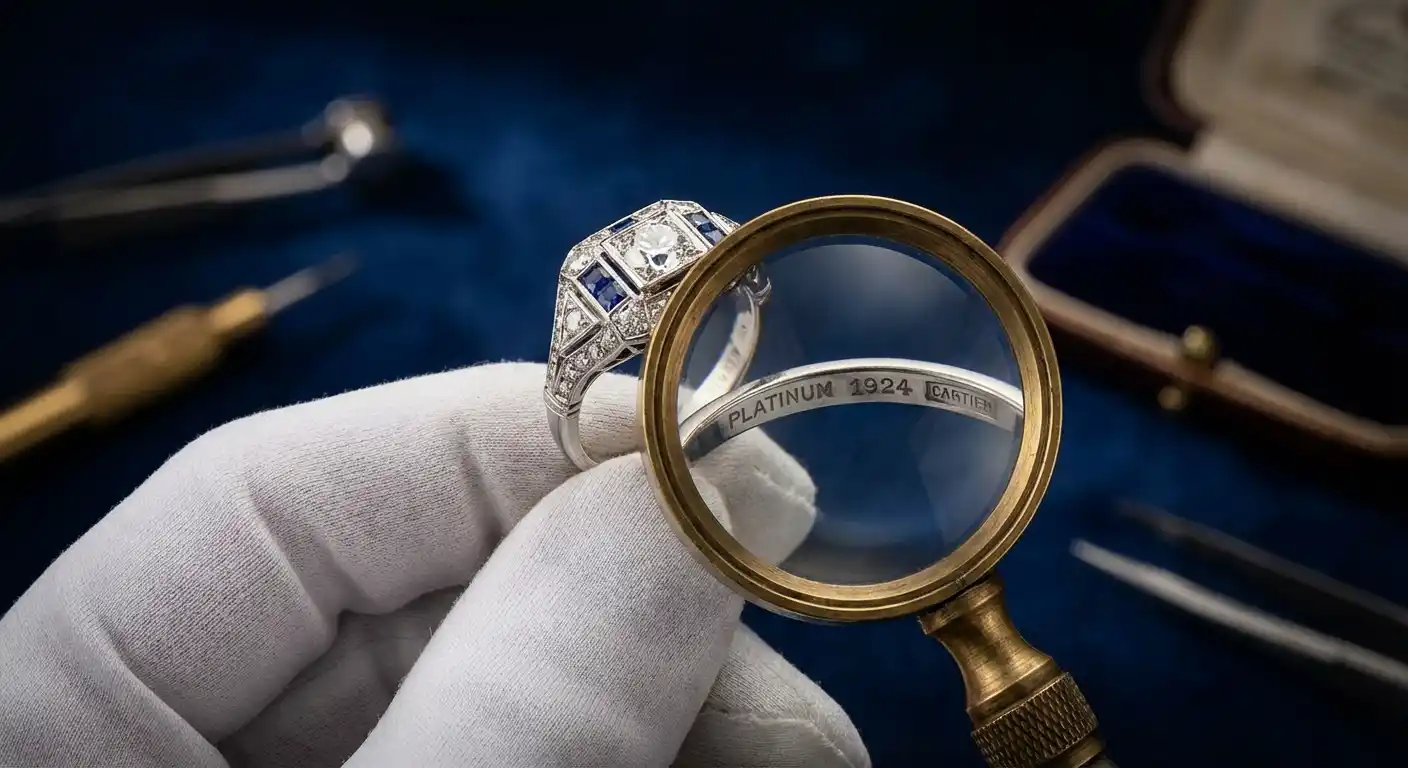
Hallmarks are official stamps indicating metal content, maker, origin, and sometimes date. A quality magnifier is essential for reading these tiny marks.
British Hallmarks
British hallmarking has been required since 1300, making it especially useful for dating. Look for:
Assay Office Mark: Lion (London), anchor (Birmingham), rose (Sheffield), castle (Edinburgh)
Standard Mark: Indicates gold/silver purity (lion passant for sterling, crown for gold)
Date Letter: Annual letter changes allow precise dating via hallmark reference guides
Maker's Mark: Individual maker identification
French Hallmarks
Eagle Head: 18k gold Horse Head: Export gold Owl: Watch cases and small items Rhinoceros Head: Platinum
French date letters existed but are complex; consult specialized references.
American Marks
The US has never required hallmarks, but common marks include:
- "STERLING" or "925" for silver
- Karat marks (10K, 14K, 18K) for gold
- "PLAT" or "PT" for platinum
- Maker's marks varying by company
Important Caution
Hallmarks can be faked. Forgers stamp reproductions with copied hallmarks. Authentication requires examining the mark's wear consistency with the piece overall, correct style for claimed period, and appropriate construction techniques.
An electronic gold tester confirms metal content independent of stamped claims.
Construction and Manufacturing Clues
Manufacturing techniques evolved over time. Examine construction for period-appropriate methods.
Hand vs. Machine
Pre-1880s pieces are entirely handmade:
- Slightly irregular shapes and dimensions
- File marks from hand finishing
- Individually crafted components
- Stone settings made specifically for each stone
Post-1880s pieces may show machine elements:
- More uniform dimensions
- Stamped components (repeated patterns)
- Machine-made chains and findings
- Mass-produced settings
Setting Styles
Closed-back settings: Pre-Victorian. Gems backed with foil, not visible from behind.
Open-back settings: Post-1850s. Light passes through gems.
Prong settings: Common from Victorian era forward.
Bezel settings: All eras but style varies.
Channel and pave settings: Primarily 20th century.
Clasp Evolution
Clasps reveal manufacturing era:
- C-clasps: Simple C-shaped catches (pre-1900)
- Trombone clasps: Extended tube closures (1890s-1910s)
- Safety catches: Added roll-over locks (post-1910s)
- Lobster clasps: Modern (post-1970s)—if you see these on "antique" pieces, be suspicious
Findings and Components
Modern findings on "antique" pieces indicate reproduction or significant repair:
- Modern jump rings
- Machine-made chains
- Contemporary ear wires
- Rubber or plastic components
Evaluating Gemstones in Antique Settings
The stones themselves provide authentication clues—but also require separate verification.
Diamond Cuts by Era
Rose Cut: Flat bottom, domed top with triangular facets. Pre-1900s primarily.
Old Mine Cut: Cushion-shaped, small table, high crown, large culet. Early 1800s-early 1900s.
Old European Cut: Round predecessor of modern brilliant. 1890-1930s.
Transitional Cut: Between old European and modern brilliant. 1920s-1940s.
Modern Brilliant: Post-1940s. Finding modern brilliant cuts in "Victorian" pieces suggests recuts or reproduction.
Stone Replacement
Antique settings may contain replaced stones. Signs include:
- Stone too perfect (modern cut in antique setting)
- Settings modified to accommodate different stone sizes
- Modern cuts inconsistent with piece age
- Repair evidence around settings
Stone replacement doesn't necessarily mean fraud—damage repair is legitimate—but affects value and should be disclosed.
Natural vs. Synthetic in Antique Pieces
Synthetic gems have existed since 1902, when Verneuil's flame-fusion process made commercial ruby and sapphire production possible. Their presence in early 20th-century pieces isn't necessarily fraud—synthetics were legitimately used—but affects value and should be identified.
For detailed gem authentication, see our guide: How to Tell If a Gem Is Real.
Spotting Reproductions
Modern reproductions copy antique styles but reveal themselves through:
Manufacturing Inconsistencies
- Modern machine marks on "handmade" pieces
- Contemporary findings (lobster clasps, butterfly backs)
- Cast rather than fabricated construction
- Uniform dimensions lacking handmade variation
Metal Composition
- Modern alloys (white gold in "Georgian" pieces, which predates white gold)
- Incorrect karat for claimed period (10K uncommon in genuine antiques)
- Modern rhodium plating on "platinum" pieces
Gemstone Anachronisms
- Modern brilliant cut diamonds in Victorian settings
- Synthetic gems in pre-1900 claimed pieces
- Calibré cuts (Art Deco technique) in Victorian-claimed pieces
Artificial Aging
Reproductions are often artificially aged:
- Uneven patina (natural patina is consistent)
- Obvious scratching or distressing
- Chemically induced tarnish
- Wear patterns inconsistent with actual use
Price and Provenance
Be suspicious when:
- Price seems too low for the claimed age and quality
- No provenance documentation exists
- Seller reluctant to provide authentication examination
- Too many "similar" pieces available
Documentation and Provenance
Provenance—ownership history—adds value and confidence to antique pieces.
Valuable Documentation
- Original purchase receipts
- Insurance appraisals with dates
- Family photographs showing the jewelry
- Letters or documents mentioning the piece
- Previous auction records
- Expert authentication certificates
Creating Documentation
For pieces lacking provenance:
- Obtain professional appraisal documenting current condition
- Photograph extensively including hallmarks
- Commission authentication from qualified experts
- Document any repairs or modifications
Insurance Considerations
Insuring antique jewelry requires:
- Appraisal from qualified antique jewelry specialist
- Documentation of period and authenticity claims
- Replacement value (antique pieces may cost more to replace than new equivalents)
- Agreed-value policies when replacement is impossible
For pieces of significant value, see vintage jewelry specialists rather than general jewelers for appraisal.
FAQ
How can I tell if my grandmother's ring is genuinely antique?
Examine construction techniques (hand vs. machine), diamond cuts (old cuts vs. modern), setting styles (appropriate for claimed era), and any hallmarks. Compare details against period characteristics. For definitive authentication, consult an antique jewelry specialist.
Do hallmarks guarantee authenticity?
No. Hallmarks can be faked, and legitimate hallmarks can be transferred from one piece to another (illegally). Hallmarks are valuable evidence but must be considered alongside construction details, wear patterns, and other authentication factors.
Is it worth less if stones have been replaced?
Generally, yes. Original stones in antique settings command premiums. However, well-done period-appropriate replacements affect value less than obvious modern replacements. Full disclosure is essential when selling.
Can I date jewelry precisely from hallmarks?
British hallmarks with date letters allow precise dating (within a year). Other countries' hallmarks provide less specific dating. Construction techniques and style narrow the date range when hallmarks are absent or inconclusive.
What's the difference between an antique jeweler and a regular jeweler?
Antique jewelry specialists have expertise in period identification, hallmark reading, historical manufacturing techniques, and appropriate restoration methods. General jewelers may lack this specialized knowledge. For authentication and valuation of potentially significant antique pieces, seek specialists.
Are Art Deco pieces considered antique?
Art Deco pieces (1920-1935) are approaching or have reached the 100-year antique threshold. Earlier Art Deco pieces qualify as antiques; later pieces are vintage but becoming antique. The distinction matters less than the piece's quality and significance.
Should I clean antique jewelry?
Carefully. Aggressive cleaning can damage patina that contributes to antique value and appearance. Gentle cleaning to remove dirt is appropriate; polishing away age character is not. When in doubt, consult a conservator rather than a regular jeweler.
Conclusion
Quick authentication checklist for antique jewelry:
| Check | Reproduction Red Flags |
|---|---|
| Clasps | Lobster clasps (post-1970s), modern safety catches |
| Construction | Machine-perfect uniformity, cast vs. fabricated |
| Hallmarks | Inconsistent wear, wrong format for claimed date |
| Gems | Modern brilliant cuts in "Victorian" settings |
| Patina | Artificial aging, inconsistent wear patterns |
No single factor is conclusive—skilled reproductions can copy any individual element. But the combination of authentic details is difficult to fake. When multiple elements align with the claimed period, authenticity becomes more likely.
For pieces valued over $1,000: Get professional authentication from an antique jewelry specialist (not a general jeweler). The $100-$300 evaluation fee protects a much larger investment.
Need to verify the gems themselves? See our guides:
Carson LumiLoupe 10x LED Illuminated Magnifier

10x LED Illuminated Magnifier
Powerful magnification with bright LED for reading tiny hallmarks and maker's marks.
Powerful magnification with bright LED for reading tiny hallmarks and maker's marks. Essential for antique jewelry examination.
"Finally able to read those tiny Victorian hallmarks clearly. The LED makes all the difference.
GemOro Auracle AGT3 Electronic Gold Tester
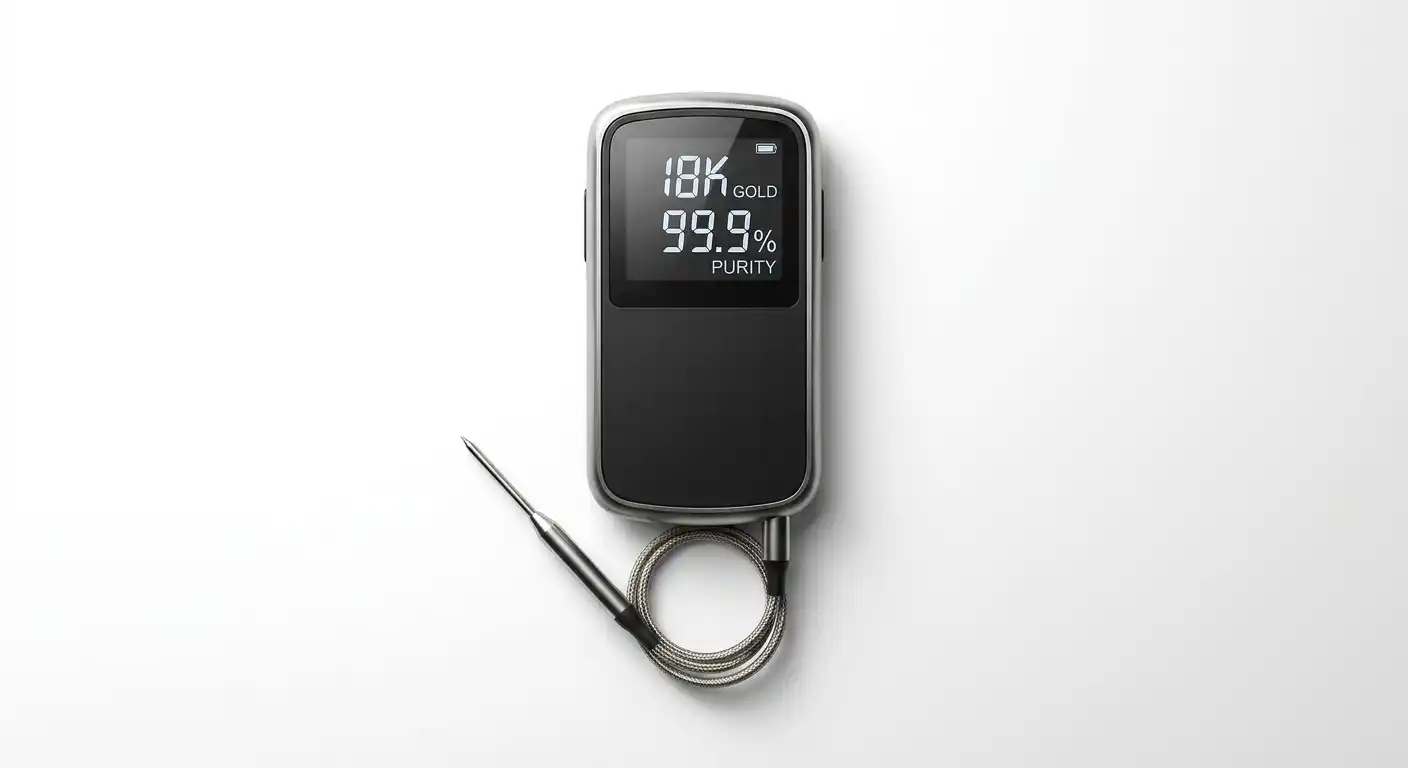
Electronic Gold Tester
Verifies gold karat purity and identifies silver, platinum, and plated pieces.
Verifies gold karat purity and identifies silver, platinum, and plated pieces. Essential for authenticating precious metal jewelry.
"Confirmed an 'antique gold' piece was actually gold-filled. Saved me from a major mistake.
Review of What We Liked
10x LED Illuminated Magnifier
Powerful magnification with bright LED for reading tiny hallmarks and maker's marks.
Electronic Gold Tester
Verifies gold karat purity and identifies silver, platinum, and plated pieces.
About the Author
Alfreda Borror
Alfreda Borror is the founding editor of Opulent Opal, writing research-based buying guides on diamonds, birthstones, and fine jewelry.