How to Choose a Chain for a Pendant: Style, Width & Weight

This post may contain affiliate links. Read our affiliate policy
- Jewlpire 925 Sterling Silver Chain Necklace for Women, 1.1mm Cable Chains Silver Chain for Women Shiny & Sturdy Women's Chains Necklace, 16 Inches
- Amazon Essentials Sterling Silver 1.2mm Box Chain 20", Sterling Silver
- 14kt Rose Gold Plated Sterling Silver 1.3mm Diamond-Cut Rope Chain Necklace – Nickel-Free – Made in Italy – 18 Inch
- Miabella Italian 925 Sterling Silver, 18K Gold Plated 3mm Diamond-Cut Figaro Link Chain Necklace for Women Men, Made in Italy (sterling silver, 18 Inches)
- WORLYBEL Solid 14K Yellow Gold 1.6mm Rope Chain Necklace, Lobster Claw Clasp, Jewelry Gift, 18 inch
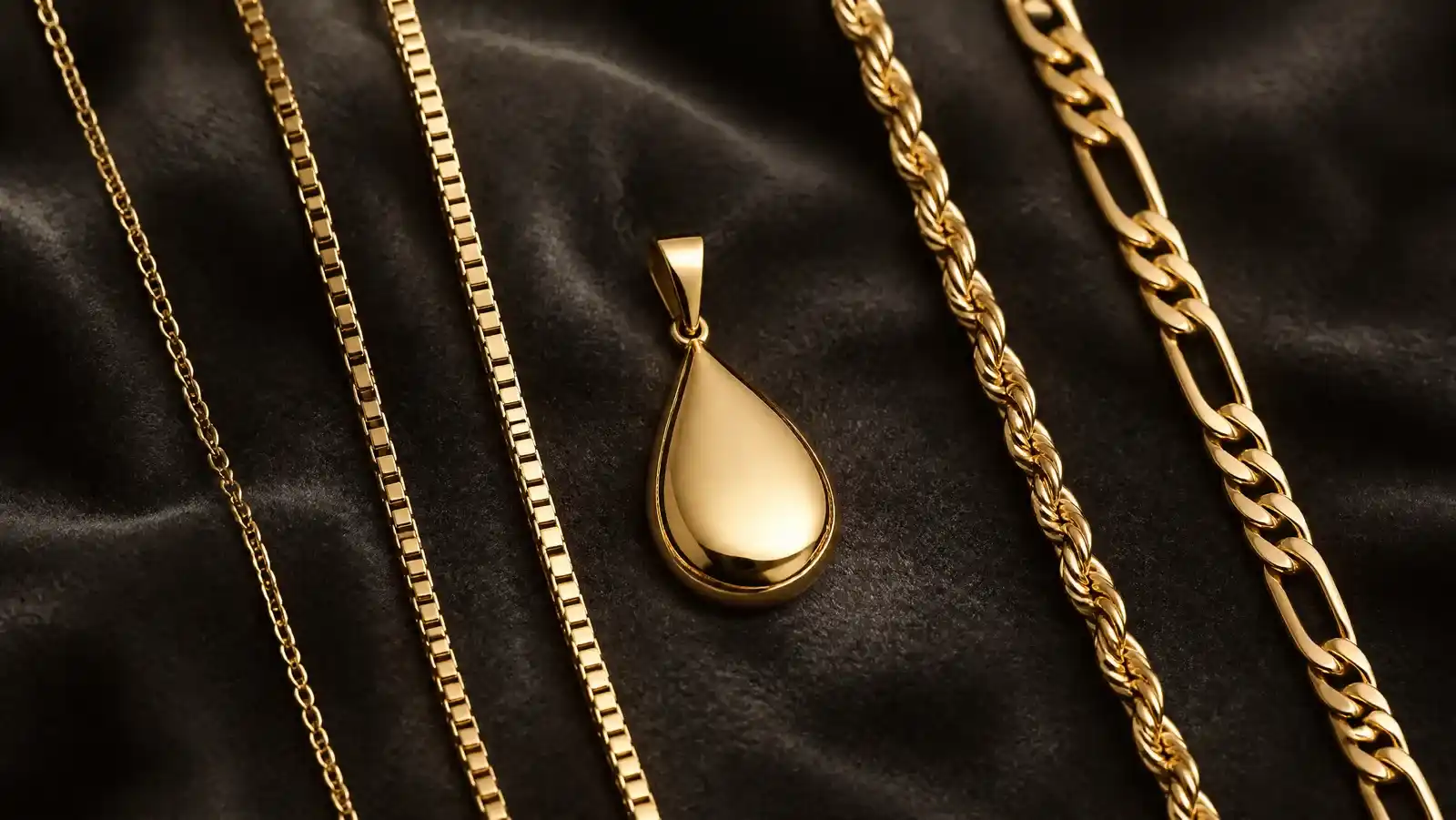
A pendant and a chain are a system. Buy them separately and it is easy to end up with a chain that will not thread through the bail, a chain too fine to carry the weight, or one that lets the pendant spin backward by lunchtime. The best chain for a pendant is the one that clears four checks — bail fit, strength, twist resistance and drop — before anyone starts talking about style.
This article contains affiliate links. We may earn a commission if you make a purchase through our links, at no extra cost to you.
This guide is written for the reader who already owns the pendant. If you are shopping for a chain to wear on its own, start with how to choose a necklace chain instead. Here, the pendant sets the rules and the chain has to obey them.
Table of Contents
- The Four Checks Before You Buy
- Measuring the Bail
- Matching Chain Width to Pendant Weight
- Which Chain Constructions Suit Pendants
- Our Chain Picks: The Best Chain for a Pendant by Job
- Metal and Karat Choices
- Mistakes That Ruin a Good Pendant
- The Bottom Line
- FAQ
The Four Checks Before You Buy
Run these four in order. Each one can disqualify a chain on its own, and there is no point falling in love with a link style that fails check one.
1. Does it fit the bail? The bail is the loop, tube or hinged fitting at the top of the pendant that the chain passes through. If the chain is thicker than the bail's opening, nothing else matters.
2. Can it carry the weight? Chain width is measured in millimeters and correlates with how much metal is in each link. A pendant that outweighs its chain will stretch links, wear a groove at the back of the neck, or snap at the weakest solder joint.
3. Does it resist twisting? Some link styles roll over on themselves under a hanging weight, which turns the pendant to face your collar instead of the room. Others hold their orientation.
4. Where does it land? Chain length plus the pendant's own drop equals where the piece actually sits. A 2-inch pendant on an 18-inch chain does not sit where an 18-inch chain sits empty.
Measuring the Bail
The bail is the connector, and it is the single most common reason a chain gets returned. Bail openings are quoted in millimeters, and according to Fire Mountain Gems and Beads, the figure that governs whether a chain will pass is the loop size or hole size — the inner diameter of the top loop the chain runs through. That is a separate number from the bail's length, its side-to-side width, and its inside depth, which is the measurement that tells you how thick a pendant the bail can hold.
Bails come in a few forms, and the form changes what you can do:
- Fixed bail — a soldered loop or tube that is part of the pendant. The chain has to thread through it, so the chain's clasp must also pass through the bail unless you are willing to have a jeweler open a link.
- Hinged bail — opens and closes like a small gate, so the pendant clips onto a chain that is already fastened. Handy for chains with oversized clasps.
- Slider bail — a wide, flat tube the chain runs through. These usually demand a specific chain profile, often an omega or a flat collar, so measure before assuming a round chain will pass.
- Enhancer bail — a hinged fitting sold as its own component, also called an interchangeable hinged bail or pearl enhancer. Fire Mountain Gems and Beads describes these as opening and closing with a snap or magnetic closure, with the centerpiece hung from a loop, hole or jump ring at the bottom for easy transfer from one necklace to another.
Two practical rules follow. First, leave clearance rather than aiming for an exact match, so the pendant swings freely instead of binding. We could not find a single agreed-upon margin published by jewelers — the guidance is qualitative rather than numeric — so the working test is whether the chain passes comfortably, not whether it can be forced through.
Second, if the bail is a closed loop, the clasp has to fit through it too — or you thread the chain before fastening, every time. A lobster clasp on a 3mm chain is considerably bulkier than the chain itself, and that is where most "it doesn't fit" surprises come from.
Matching Chain Width to Pendant Weight
Width is the closest thing to a strength dial on a chain. More millimeters means more metal in each link, more surface to spread the load, and less tendency to flip. It also changes the look, which is why this is a balance rather than a maximization problem. Our dedicated guide to chain thickness goes deeper on how millimeters read on the body.
According to Robinson's Jewelers' chain-thickness guides, the rough mapping runs like this:
| Pendant | Suggested chain width | Typical example |
|---|---|---|
| Light / delicate | 1mm – 2mm | Tiny solitaire, floating gemstone, subtle charm |
| Standard | 1.5mm – 3mm | Heart pendant, single-stone solitaire |
| Larger / statement | 3mm – 5mm | Locket, medium cross, sizeable gemstone |
| Bold statement | 6mm and up | Heavy medallion, chunky pendant |
The same jeweler notes that a 3mm to 5mm chain has enough weight to feel substantial without flipping the pendant around. Borsheims makes a similar point from the other direction, calling a 4mm to 5mm figaro chain sturdy enough to support just about any pendant.
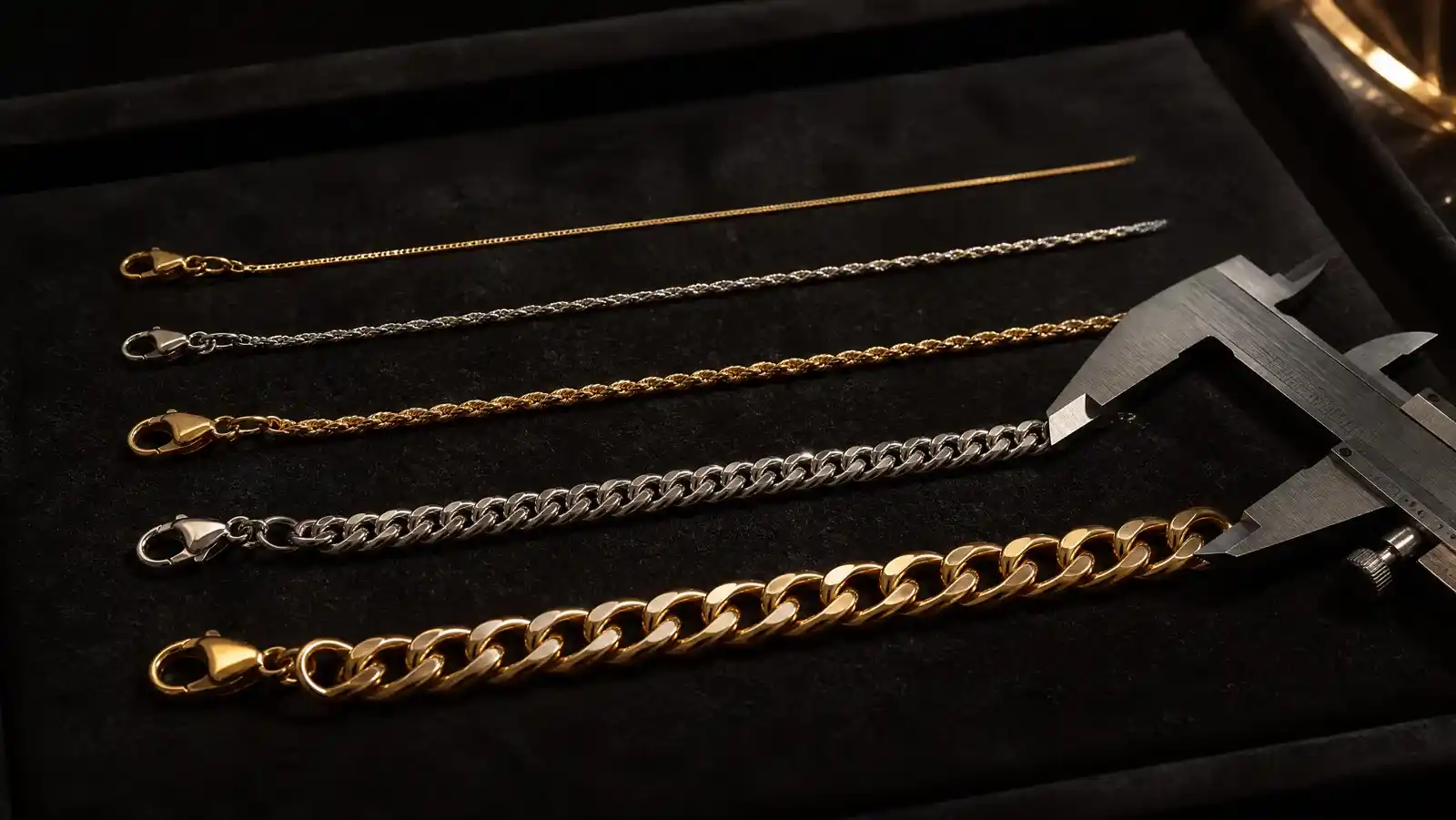
Solid versus hollow is the other half of this. Hollow chains are built to look wide for less money, and jewelers are blunt about the trade. Westover Jewelers describes each hollow link as a tube of gold with very thin walls, leaving so little surface area where links join that the chain will come apart at the slightest tug — and warns that once a broken link is replaced, the remaining links have already been stressed and will break again under very little pressure. The same jeweler notes hollow links wear through quickly, leaving a sharp edge that snags. Quick Jewelry Repairs adds that hollow rope chains cannot withstand significant weight and are never the same once they snap. If a pendant has real mass, a narrower solid chain is generally the safer buy than a wider hollow one.
Which Chain Constructions Suit Pendants
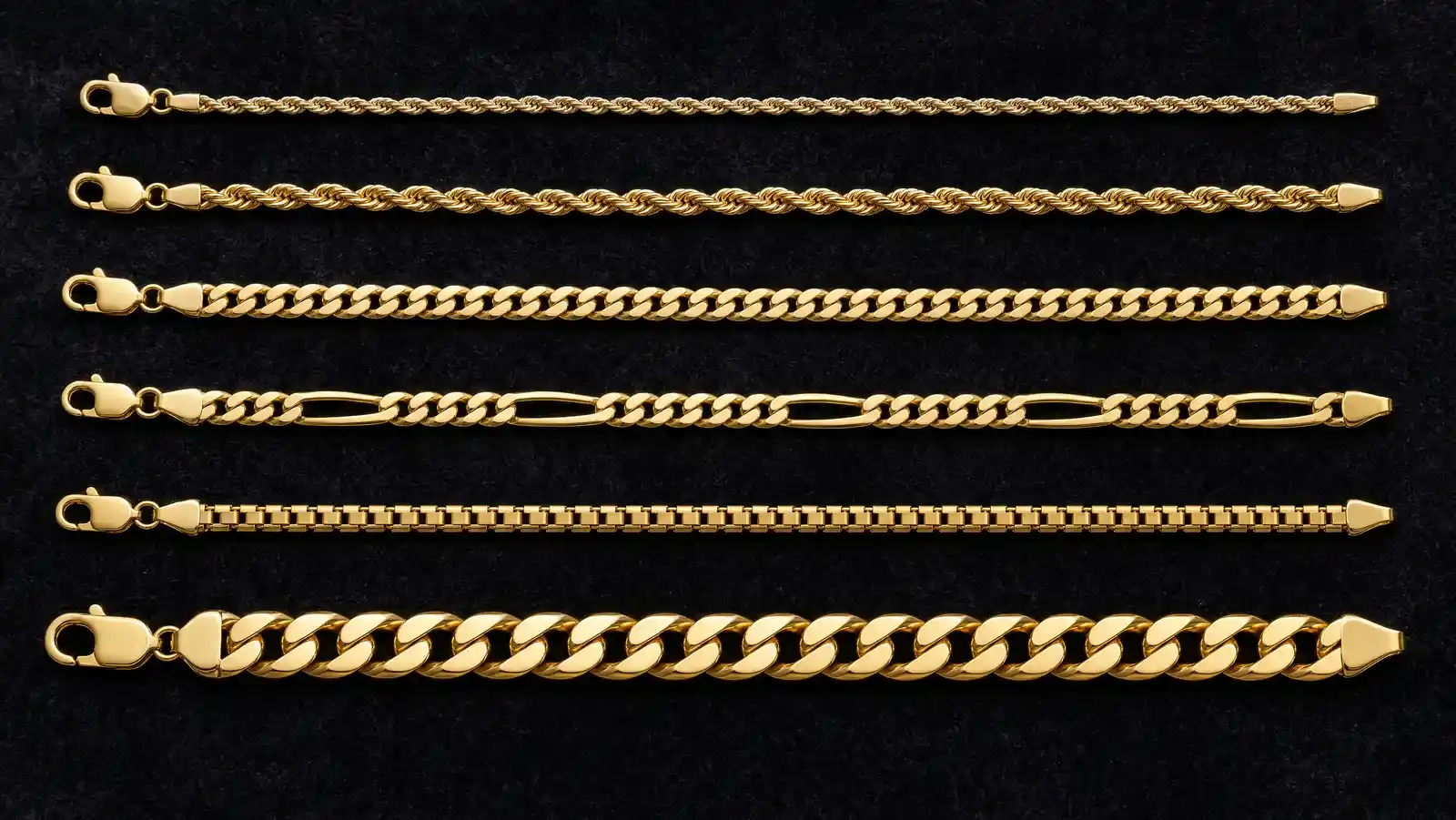
Not every link style is built to hang something from the middle. The workhorses are cable, box, curb and figaro, and wheat — Quick Jewelry Repairs lists exactly that set as great styles to consider for pendants. If you want a full tour of link styles, we cover the types of necklace chains separately.
A diamond-cut finish, which several of our picks carry, simply means the links are faceted so they bounce more light. It is a surface treatment, and it is not a substitute for width or solid construction when you are judging what a chain can carry.
| Chain style | Pendant weight it suits | Twist resistance | Repair notes |
|---|---|---|---|
| Cable | Light to medium | Moderate | Simple links, straightforward to solder |
| Box | Light to medium | High — square links resist rolling | Interlocking, so repairs take longer |
| Wheat | Medium to heavy | High | Braided structure, best left to a jeweler |
| Rope (solid) | Medium to heavy | High | Solid rope repairs cleanly; hollow rope is fragile |
| Curb / figaro | Medium to heavy | High — flat links lie flat | Quick and inexpensive to repair |
| Snake | Light only | Low | Kinks are weak points afterward |
| Herringbone | Not recommended | Very low | Crimps are often permanent |
Borsheims rates the wheat chain as the strongest style in fine jewelry with rope a close second, noting that neither kinks readily. The same guide warns that snake chains are prone to kinking and will eventually snap, and that herringbone chains are notorious for crimping and cannot support vertical weight well. Quick Jewelry Repairs puts it more broadly: patterned or woven chains — herringbone, rope, ball and snake — are not ideal for pendant wearing, and a snake chain that handles a light charm will stretch and break under a heavier one. The two sources disagree on rope: Quick Jewelry Repairs groups it with the woven chains to avoid but pins the weight problem specifically on hollow rope, while Borsheims rates rope second only to wheat. Our reading is that solid rope works and hollow rope does not.
Fine twisted chains — the very thin, spiraled styles sold as delicate everyday necklaces — belong in the same caution bracket. They read beautifully with nothing on them and tend to corkscrew once a weight hangs at the center.
One more repair note worth knowing before you buy: Van Adams Jewelers explains that a jeweler can straighten simple kinks with precision tools, but that severe kinks may mean cutting out the damaged section and adding new links, and that a kinked herringbone in particular is challenging to repair without leaving a weak spot. The same jeweler warns against straightening a kink yourself, which can stretch, thin or break the metal.
Our Chain Picks: The Best Chain for a Pendant by Job
Five chains, each matched to a different pendant problem. Prices are as of July 2026 and move often.
Best for Light Pendants: Jewlpire 1.1mm Sterling Cable Chain
At 1.1mm this sits in the light-pendant band, and the cable link is the most forgiving construction to repair if it ever parts. Jewlpire describes the chain as built from multiple sturdy rings with compact links, and the listing calls the spring-ring clasp an upgraded, easier-opening design. Bear in mind that spring rings are the smaller, lighter closure — fine here, less so on anything with mass. At $17.99 as of July 2026, it is the sensible chain for a slim charm rather than a statement piece.
Best Anti-Twist Chain: Amazon Essentials 1.2mm Sterling Box Chain
Box links have four flat faces and a squared profile, which is why they hold their orientation better than a round or twisted link of similar width. This is solid 925 sterling in a 1.2mm box at 20 inches, high polished. The Amazon Essentials 1.2mm Sterling Box Chain is $22.30 as of July 2026, and the extra length is useful when a pendant has a long drop of its own.
Best Rope Chain: Hawaiian Silver 1.3mm Diamond-Cut Rope Chain
Rope construction scores well for strength and twist resistance, but width still governs capacity — at 1.3mm (030 gauge) this is a light-to-medium chain, not a heavy-pendant chain. It is 14kt rose gold plate over 925 sterling, 18 inches, made in Italy, and the listing states it is nickel-free and closes with a lobster clasp. Priced at $39.99 as of July 2026.
Best for Heavy Pendants: Miabella 3mm Figaro Chain
Three millimeters of solid sterling puts this at the bottom of the range jewelers recommend for lockets and larger gemstone pendants, and figaro's flat links lie flat against the skin rather than rolling. Miabella describes the chain as strong, durable and thick enough to endure daily wear, and lists it as hypoallergenic, nickel-free and lead-free, marked 925 Italy. The Miabella 3mm Figaro Chain is $27.90 as of July 2026 and comes in sterling or 18K gold plate over sterling.
Best Solid Gold Upgrade: WORLYBEL Solid 14K Gold 1.6mm Rope Chain
If the pendant is gold, a plated chain will eventually look wrong next to it. This is solid 14K yellow gold — not plated, not filled — in a 1.6mm rope at 18 inches with a lobster claw clasp, which WORLYBEL positions for daily wear or as an heirloom. The WORLYBEL Solid 14K Gold 1.6mm Rope Chain is $147.99 as of July 2026. For a sense of how finished pendant-and-chain pairings are put together, our roundup of gorgeous pendant necklaces is a useful reference.
Metal and Karat Choices
A chain that carries weight every day wears differently from one worn bare, because the bail rubs the same few links constantly. That is where the difference between gold terms stops being marketing and starts costing money.
- Solid gold is gold alloy throughout, so wear exposes more of the same metal. A 14K chain is 14 parts gold in 24 by weight.
- Gold filled is a legally defined term. Under the FTC's jewelry guides at 16 CFR 23.3, "gold filled" describes a surface layer of gold alloy of not less than 10 karat fineness that is mechanically bonded to the base metal and makes up at least 1/20th of the weight of the metal in the entire article. That bonded layer is far thicker than ordinary plating.
- Gold plated has thresholds too, but much lower ones. The same section allows "rolled gold plate" or "gold plate" at 1/40th of the weight of the metal in the article, and "gold electroplate" at a deposit of only 0.175 microns — roughly 7 millionths of an inch — with "heavy gold electroplate" set at 2.5 microns. Thin plating is the first thing to go at friction points, and the underside of a bail is a friction point by definition.
- Sterling silver is regulated too: the same FTC guides, at 16 CFR 23.5, reserve "sterling silver," "sterling" and "solid silver" for metal that is at least 925/1,000ths pure silver. It tarnishes, but tarnish is surface-level and polishes off.
For a pendant you intend to wear constantly, solid metal — gold or sterling — is the choice that ages predictably. Plating on a chain is not a defect, but treat it as a finish with a lifespan rather than a permanent color. Sterling in particular rewards a little upkeep; our guide to cleaning gold, platinum and silver covers the safe methods.
Mistakes That Ruin a Good Pendant
Buying the chain before measuring the bail. It is a two-minute job with a ruler and it prevents the single most common return.
Trusting a small spring ring with a heavy pendant. Robinson's Jewelers advises avoiding basic spring rings on a heavy pendant in favor of a heavy-duty lobster clasp, a chunky toggle, or a secure box clasp with a safety latch, calling the clasp the single point of failure.
Matching width to taste instead of to weight. A 1mm chain under a locket looks refined right up until the links stretch.
Assuming a wider hollow chain beats a narrower solid one. It does not, for the reasons above.
Ignoring the drop. Add your pendant's height to the chain length before you choose. According to Brilliant Earth's necklace length guidance, 18 inches typically falls at the collarbone, so a tall pendant on an 18-inch chain lands lower than you might picture. Our chain length guide has the full chart.
The Bottom Line
Measure the bail first, then pick a width that matches the pendant's weight rather than your eye, then choose a construction that will not roll — cable, box, wheat, curb, figaro or a solid rope. Solid metal beats hollow at the same price. A lobster clasp beats a small spring ring the moment weight is involved.
For light pieces, a 1.1mm sterling cable does the job. For a locket or a large gemstone, a 3mm solid figaro is the safer floor. For a gold pendant you plan to keep, solid 14K is the chain that will still look right in a decade. If you want the wider view of link styles, lengths and clasps, read our complete guide to necklace chains next.
FAQ
What is the best chain for a pendant that is heavy?
A solid, wide, flat-linked chain with a strong clasp. Robinson's Jewelers suggests 3mm to 5mm for larger statement pendants, and Borsheims rates wheat as the strongest style in fine jewelry with rope close behind. Avoid hollow construction, and pair it with a heavy-duty lobster or box clasp rather than a small spring ring.
How do I know what chain size fits my pendant's bail?
Look at the loop or hole size — the inner diameter of the top loop the chain passes through — rather than the bail's overall height or width, and measure it in millimeters. Then choose a chain narrower than that opening, with enough clearance that it passes comfortably rather than barely. If the bail is a closed loop, check that the clasp also passes through it.
Can I put a pendant on a herringbone or snake chain?
We would not. Borsheims describes herringbone chains as notorious for crimping and unable to support vertical weight well, and snake chains as prone to kinking and eventual breakage. Quick Jewelry Repairs notes that a snake chain may cope with a light charm but will stretch and snap under a heavier pendant.
Why does my pendant keep turning backward?
Usually the chain is too light for the pendant, or the link style rolls easily. Round, twisted and very fine chains rotate under a hanging weight; box and flat curb links resist it. Going up in width and switching to a squared or flat link solves most cases.
Does a diamond-cut chain hold more weight than a plain one?
Not in any way you should count on. Diamond-cut refers to faceting on the surface of the links that catches light. It changes the sparkle, not the gauge, so judge capacity by width and by whether the chain is solid or hollow.
Is gold filled strong enough for a pendant chain?
Often, yes. Because the FTC's guides require a gold-filled article to carry a bonded layer of at least 10 karat gold amounting to at least 1/20th of the weight of the metal in the article — against 1/40th for gold plate and a 0.175-micron deposit for gold electroplate — the gold layer is substantially thicker than plating. Judge the chain on its width and construction first, then on how the gold is applied.
Jewlpire 925 Sterling Silver Chain Necklace for Women, 1.1mm Cable Chains Silver Chain for Women Shiny & Sturdy Women's Chains Necklace, 16 Inches

Jewlpire 925 Sterling Silver Chain Necklace for Women 1 1mm Cable Chains Silver Chain for Women Shiny Sturdy Women s Chains Necklace 16 Inches
A 1.
A 1.1mm cable chain in 925 sterling silver, 16 inches, closed with what the listing calls an upgraded spring-ring clasp. Jewlpire describes the links as compact and sturdy, and positions the chain for wear alone or with a pendant.
"The right call for a small charm, an initial disc or a thin gemstone slide, where a heavier chain would swamp the piece. At 16 inches it sits high, so check that your pendant's drop still clears your collarbone.
Amazon Essentials Sterling Silver 1.2mm Box Chain 20", Sterling Silver

Amazon Essentials Sterling Silver 1 2mm Box Chain 20 Sterling Silver
Solid 925 sterling silver in a 1.
Solid 925 sterling silver in a 1.2mm box link, 20 inches, with a high polished finish. The square link profile is the defining feature.
"Our pick when the problem is a pendant that keeps turning backward: box links resist rolling far better than a fine twisted chain. The 20-inch length also gives a longer pendant room to hang clear.
14kt Rose Gold Plated Sterling Silver 1.3mm Diamond-Cut Rope Chain Necklace – Nickel-Free – Made in Italy – 18 Inch

14kt Rose Gold Plated Sterling Silver 1 3mm Diamond Cut Rope Chain Necklace Nickel Free Made in Italy 18 Inch
An 18-inch, 1.
An 18-inch, 1.3mm (030 gauge) rope chain in 14kt rose gold plate over 925 sterling silver, made in Italy and finished with a lobster clasp. The listing states it is nickel-free and ships with a pouch and box.
"A rope this fine is a light-to-medium pendant chain, not a heavy-pendant chain, and the lobster clasp is a meaningful upgrade over a small spring ring. Worth considering if you want warmth without paying for solid gold.
Miabella Italian 925 Sterling Silver, 18K Gold Plated 3mm Diamond-Cut Figaro Link Chain Necklace for Women Men, Made in Italy (sterling silver, 18 Inches)

Miabella Italian 925 Sterling Silver 18K Gold Plated 3mm Diamond Cut Figaro Link Chain Necklace for Women Men Made in Italy sterling silver 18 Inches
A solid 925 sterling silver figaro link at 3mm wide and 18 inches long, offered in sterling or 18K gold plate over sterling, with a lobster clasp and a 925 Italy mark.
A solid 925 sterling silver figaro link at 3mm wide and 18 inches long, offered in sterling or 18K gold plate over sterling, with a lobster clasp and a 925 Italy mark. Miabella describes it as strong, durable and made for daily wear.
"The 3mm width and flat, solid links put this in the range jewelers suggest for lockets and large gemstone pendants. The lobster clasp matters here too, because a heavy pendant is exactly what pops a small spring ring open.
WORLYBEL Solid 14K Yellow Gold 1.6mm Rope Chain Necklace, Lobster Claw Clasp, Jewelry Gift, 18 inch

WORLYBEL Solid 14K Yellow Gold 1 6mm Rope Chain Necklace Lobster Claw Clasp Jewelry Gift 18 inch
Solid 14K yellow gold, not plated or filled, in a 1.
Solid 14K yellow gold, not plated or filled, in a 1.6mm twisted rope at 18 inches with a lobster claw clasp. WORLYBEL positions it for daily wear or as an heirloom piece and includes a velvet box.
"The chain to buy when the pendant is gold and a plated chain would wear through around it. Solid metal all the way through also means a jeweler has real material to solder if it ever breaks.
Review of Our Favorite 3
Jewlpire 925 Sterling Silver Chain Necklace for Women 1 1mm Cable Chains Silver Chain for Women Shiny Sturdy Women s Chains Necklace 16 Inches
A 1.
Amazon Essentials Sterling Silver 1 2mm Box Chain 20 Sterling Silver
Solid 925 sterling silver in a 1.
14kt Rose Gold Plated Sterling Silver 1 3mm Diamond Cut Rope Chain Necklace Nickel Free Made in Italy 18 Inch
An 18-inch, 1.
About the Author
Alfreda Borror
Alfreda Borror is the founding editor of Opulent Opal, writing research-based buying guides on diamonds, birthstones, and fine jewelry.