Diamond Stud Earrings Size Guide: What Size Should You Get?

This post may contain affiliate links. Read our affiliate policy
Here's a question that stumps even seasoned jewelry buyers: "What size diamond studs should I get?" The answer matters more than you'd think. Too small and they disappear into your earlobe—an underwhelming reveal when you open that box. Too large and they can tip into costume territory or overwhelm delicate features.
The sweet spot depends on your face, your lifestyle, and whether you're buying natural or lab-grown diamonds. This guide gives you the specific measurements, price comparisons, and real-world advice to choose with confidence.
Table of Contents
- Understanding Diamond Stud Sizing
- Size Comparison Chart
- Factors Affecting Visual Size
- Size Recommendations by Use Case
- Natural vs Lab-Grown Size Considerations
- Setting Styles and Apparent Size
- Budget Considerations by Size
- FAQ
Understanding Diamond Stud Sizing
Diamond studs are measured in total carat weight (tcw), which represents the combined weight of both earrings. A pair of 1.00 tcw diamond studs means each earring contains a 0.50 carat diamond.
How Carat Translates to Size
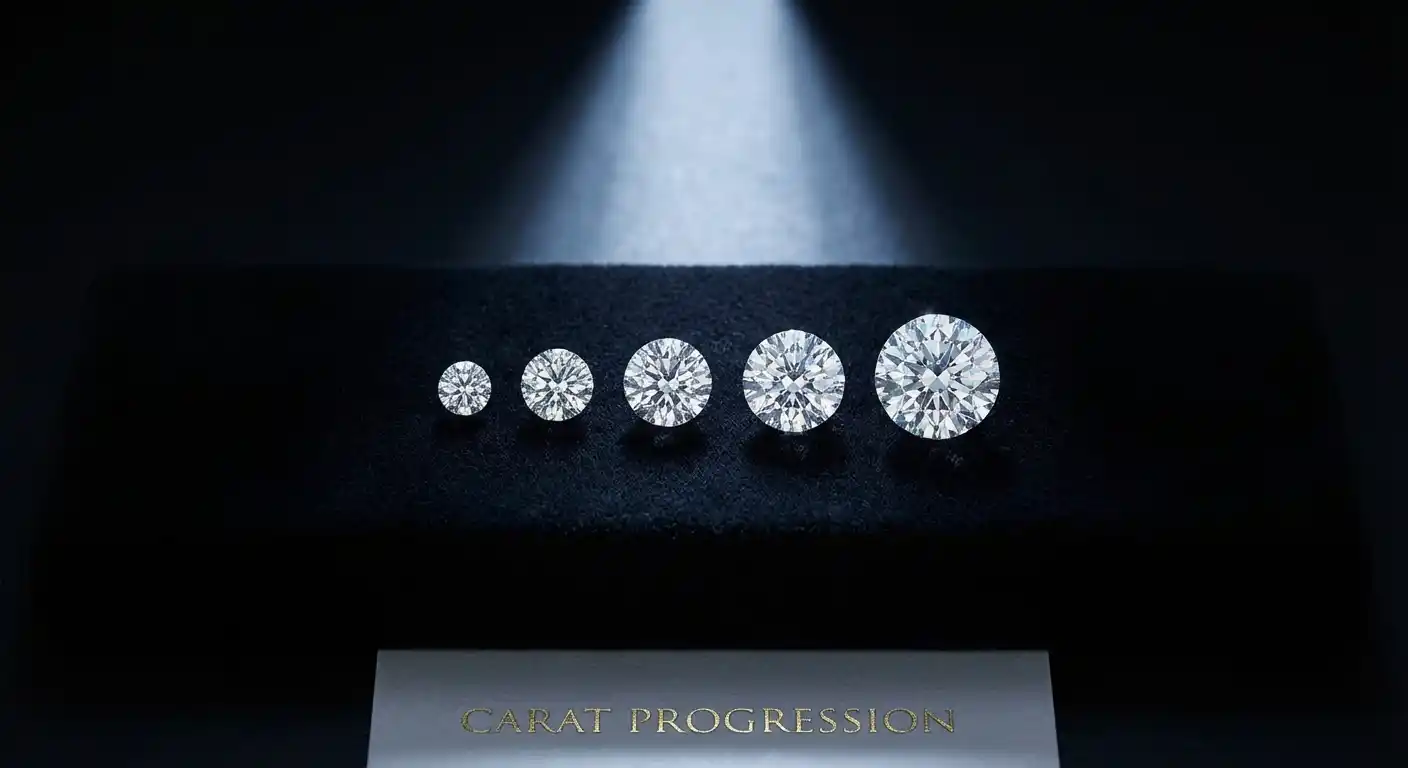
Carat measures weight, not physical dimensions. However, for round brilliant diamonds cut to ideal proportions, there's a predictable relationship between carat weight and diameter:
| Per-Earring Carat | Approximate Diameter |
|---|---|
| 0.10 ct | 3.0 mm |
| 0.15 ct | 3.4 mm |
| 0.20 ct | 3.8 mm |
| 0.25 ct | 4.1 mm |
| 0.33 ct | 4.4 mm |
| 0.40 ct | 4.8 mm |
| 0.50 ct | 5.1 mm |
| 0.75 ct | 5.8 mm |
| 1.00 ct | 6.4 mm |
| 1.25 ct | 6.9 mm |
| 1.50 ct | 7.4 mm |
Important: These measurements assume ideal-cut proportions. Shallow-cut diamonds appear larger (but lack brilliance); deep-cut diamonds appear smaller (but may have better light performance).
Total Carat Weight vs Per-Earring
When shopping, clarify whether the listed weight is total (both earrings) or per-earring:
- 1.00 tcw (total carat weight) = two 0.50 ct diamonds
- 1.00 ctw each = two 1.00 ct diamonds (2.00 tcw total)
This distinction dramatically affects both size and price. Always confirm before purchasing.
Size Comparison Chart
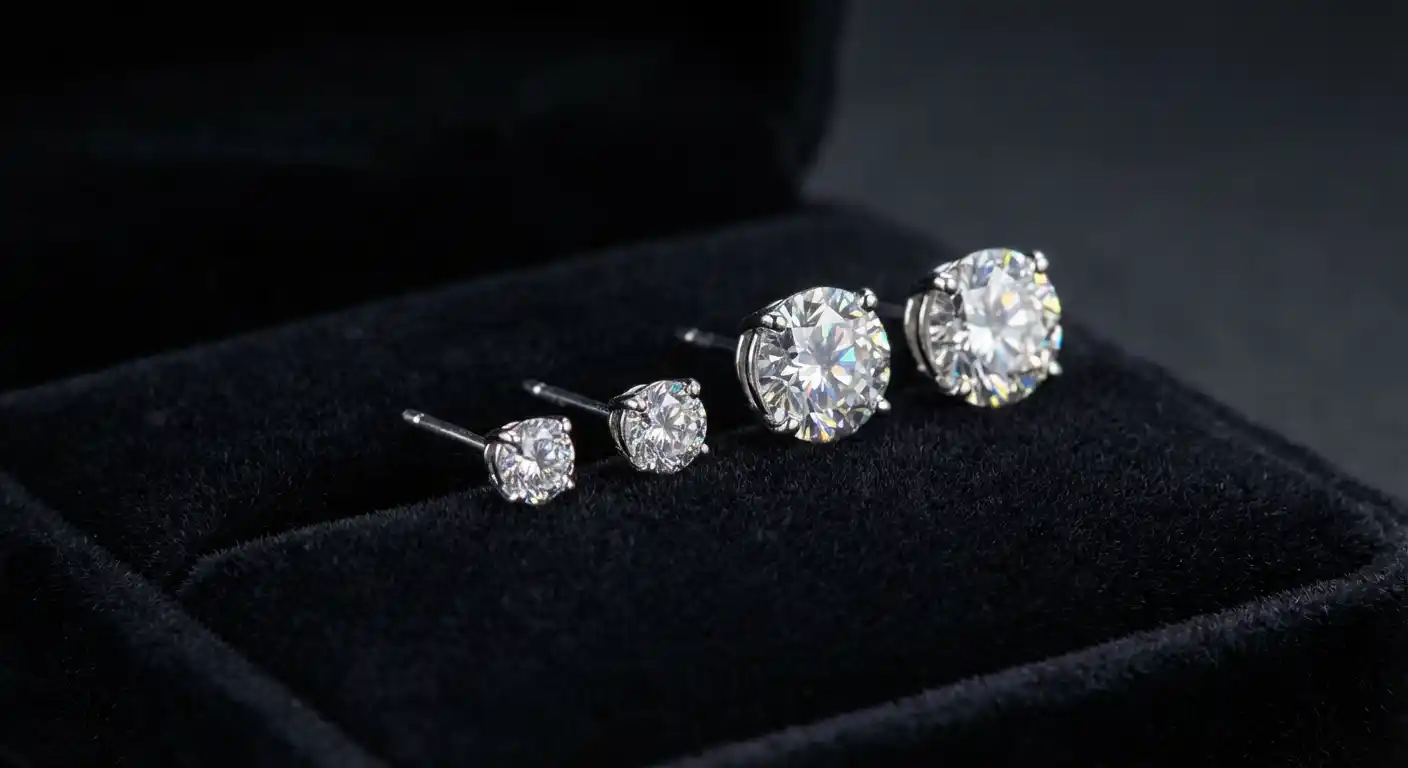
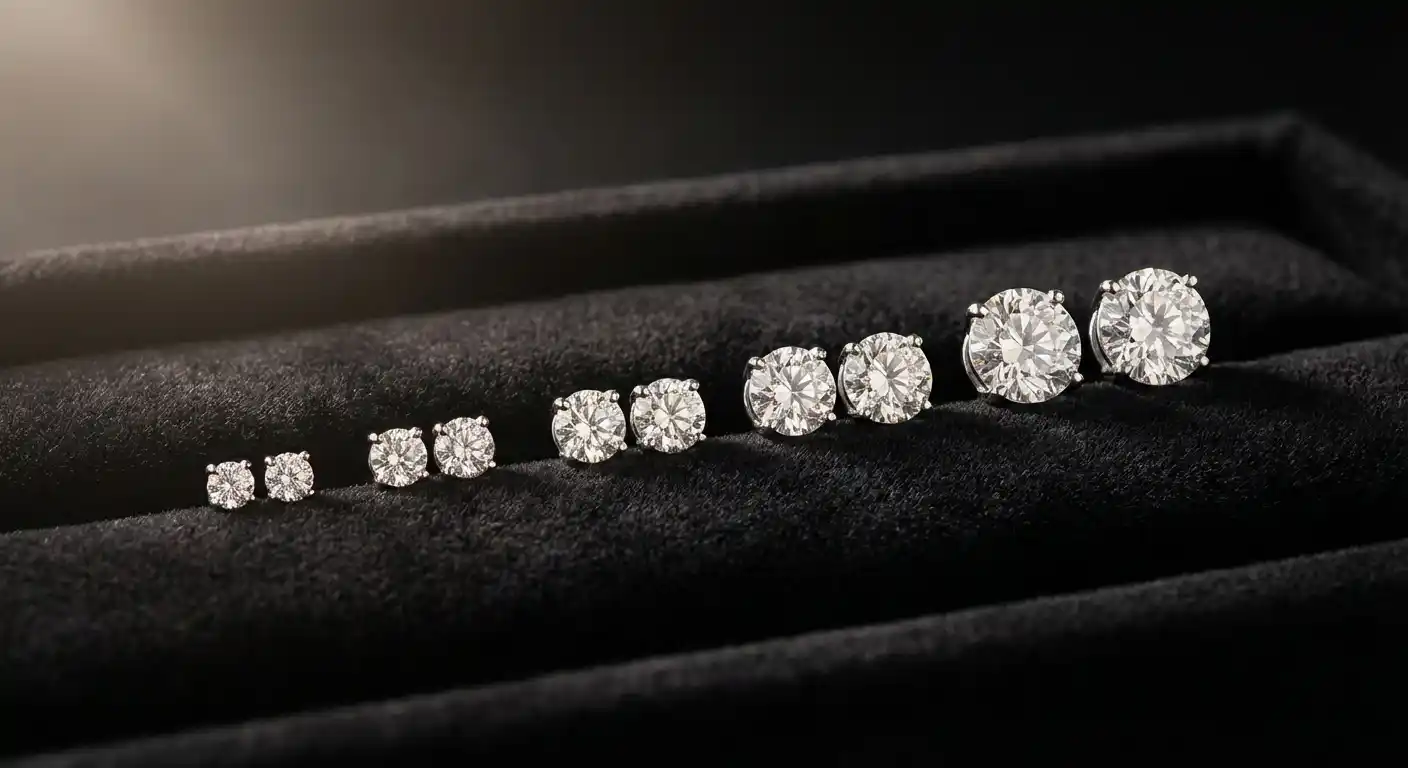
Here's how common diamond stud sizes compare in real-world terms:
0.25 tcw (0.125 ct each)
Diameter: ~3.3 mm each Visual reference: Slightly larger than a pencil eraser Impression: Subtle, delicate sparkle
Best for:
- Minimalist aesthetic
- Second or third ear piercings
- Petite frames
- Everyday understated elegance
- Those new to diamond studs
0.50 tcw (0.25 ct each)
Diameter: ~4.1 mm each Visual reference: Similar to a small pea Impression: Noticeable but refined
Best for:
- Classic everyday wear
- Professional environments
- First nice diamond studs
- Gift for young adults
- Smaller earlobes
0.75 tcw (0.375 ct each)
Diameter: ~4.6 mm each Visual reference: Between a pea and a blueberry Impression: Elegant, visible sparkle
Best for:
- Upgrading from smaller studs
- Balance of presence and subtlety
- Medium-sized earlobes
- Versatile day-to-evening wear
1.00 tcw (0.50 ct each)
Diameter: ~5.1 mm each Visual reference: Small blueberry Impression: Substantial, noticeable sparkle
Best for:
- Most popular size for classic studs
- Wedding and milestone gifts
- Medium to larger earlobes
- Those wanting visible but not overwhelming presence
- Excellent balance of impact and wearability
1.50 tcw (0.75 ct each)
Diameter: ~5.8 mm each Visual reference: Large blueberry Impression: Definitely noticed, luxurious
Best for:
- Making a statement
- Evening and special occasions
- Larger earlobes or frames
- Confident, jewelry-forward style
- Anniversary upgrades
2.00 tcw (1.00 ct each)
Diameter: ~6.4 mm each Visual reference: Slightly smaller than a dime Impression: Unmistakably substantial
Best for:
- Maximum impact without appearing costume
- High-profile occasions
- Larger frames
- Those who love bold jewelry
- Statement everyday wear
3.00+ tcw (1.50+ ct each)
Diameter: 7.4 mm+ each Visual reference: Approaching a standard pencil diameter Impression: Red carpet, serious luxury
Best for:
- Maximum impact desired
- Evening and formal occasions
- Larger frames that can balance the size
- Collectors of fine jewelry
Factors Affecting Visual Size
Carat weight is only part of the story. Several factors influence how large diamond studs actually appear on the ear.
Your Physical Features
Earlobe size: Larger earlobes make any stud appear smaller relative to the ear. If you have petite earlobes, even modest-sized studs can appear substantial.
Overall frame: Your height, build, and facial proportions affect how earring size reads. Petite individuals may find 0.75 tcw makes sufficient impact, while taller or larger-framed people might need 1.50 tcw for similar visual effect.
Face shape: Round faces may benefit from slightly smaller studs to avoid adding width, while long faces can carry larger studs comfortably.
Diamond Quality
Cut quality: An excellently cut diamond reflects more light and appears larger and more brilliant than a poorly cut diamond of equal weight. Prioritize cut grade—an excellent-cut 0.50 ct can outshine a poor-cut 0.75 ct.
Color grade: Very white diamonds (D-F) can appear slightly larger because they reflect more light. Lower color grades absorb some light, potentially appearing marginally smaller.
Clarity: Significant inclusions can interrupt light return, making a diamond appear less brilliant and potentially smaller.
Setting and Metal
Prong count: Four-prong settings show more diamond; six-prong settings add metal but provide security.
Metal color: White metals (platinum, white gold) blend with diamond edges, making stones appear larger. Yellow gold creates visible contrast that can make diamonds appear smaller but more defined.
Halo vs. solitaire: A halo setting (small diamonds surrounding the center stone) dramatically increases apparent size—a 0.50 ct center with halo can look like 1.00+ tcw solitaire.
For a deeper dive into diamond quality factors, see our diamond buying guide.
Size Recommendations by Use Case
Different situations call for different approaches to diamond stud sizing.
Everyday Wear
For daily wear, prioritize versatility and comfort over maximum impact.
Recommended: 0.50-1.00 tcw
- Large enough to see and enjoy
- Not so large as to feel overdressed
- Comfortable for extended wear
- Professional in any workplace
Professional Settings
Office environments typically favor understated elegance.
Recommended: 0.25-0.75 tcw
- Polished without being distracting
- Appropriate across industries
- Won't overshadow your expertise
- Complements rather than dominates
Industry considerations:
- Conservative fields (law, finance): 0.25-0.50 tcw
- Creative industries: More flexibility, up to 1.00 tcw
- Client-facing roles: Balance presence with approachability
Special Occasions
Events like weddings, anniversaries, and galas call for more presence.
Recommended: 1.00-2.00+ tcw
- Visible in photographs
- Matches occasion formality
- Works with updos and elegant styling
- Makes a statement
Gift Giving
Choosing diamond stud size as a gift requires balancing impact with wearability.
Milestone gifts (graduation, birthday):
- Young recipients: 0.25-0.50 tcw
- Adults: 0.50-1.00 tcw
Romantic gifts:
- Early relationship: 0.50-0.75 tcw
- Engagement/wedding: 1.00+ tcw
- Anniversary: Match or exceed existing studs
Mother's Day/significant occasions: 0.75-1.50 tcw
Upgrading Existing Studs
If you're upgrading from smaller diamonds, aim for a meaningful size increase.
Rule of thumb: Increase by at least 0.25-0.50 tcw for a noticeable upgrade
- From 0.50 tcw → minimum 0.75-1.00 tcw
- From 1.00 tcw → minimum 1.50-2.00 tcw
Natural vs Lab-Grown Size Considerations
The choice between natural and lab-grown diamonds significantly affects what size you can afford.
Price Comparison
Lab-grown diamonds typically cost 80-90% less than natural diamonds of equivalent quality. This means:
| Budget | Natural Diamond Size | Lab-Grown Diamond Size |
|---|---|---|
| $500 | ~0.25-0.30 tcw | ~0.75-1.00 tcw |
| $1,000 | ~0.50-0.60 tcw | ~1.50-2.00 tcw |
| $2,000 | ~0.75-1.00 tcw | ~2.00-3.00 tcw |
| $5,000 | ~1.50-2.00 tcw | ~4.00-5.00 tcw |
Making the Choice
Choose natural diamonds if:
- Traditional value and rarity matter to you
- Resale value is a consideration
- You're buying for generational heirloom purposes
- You prefer knowing your diamonds formed over billions of years
Choose lab-grown diamonds if:
- Size is a priority
- Budget constraints exist
- Environmental considerations matter
- You want maximum visual impact per dollar
Quality Remains Essential
Whether natural or lab-grown, prioritize:
- Cut quality: Excellent or Ideal grade
- Color: G-H or better for white appearance
- Clarity: VS2-SI1 for eye-clean appearance
Don't sacrifice quality for size. A well-cut 0.50 tcw will outshine a poorly-cut 1.00 tcw.
Setting Styles and Apparent Size
The setting you choose affects both how large diamonds appear and how they sit on your ear.
Prong Settings
Four-prong (most common):
- Maximum diamond visibility
- Classic, timeless appearance
- Diamonds may appear slightly larger
- Requires occasional prong inspection
Six-prong:
- Enhanced security
- Slightly more metal visible
- Diamonds appear marginally smaller
- Excellent for active lifestyles
Martini Settings
Three-prong settings shaped like an inverted martini glass. They:
- Maximize diamond face-up appearance
- Sit very close to the ear
- Create a modern, elegant look
- Work best with high-quality cuts
Bezel Settings
Metal rim completely surrounds the diamond. They:
- Make diamonds appear slightly smaller due to metal frame
- Provide excellent protection
- Create a sleek, modern aesthetic
- Ideal for active lifestyles
Halo Settings
Small diamonds surrounding the center stone. They:
- Dramatically increase apparent size
- A 0.50 ct center can appear like 1.00+ tcw
- Add significant sparkle
- Require more maintenance (more stones to check)
- Cost more but deliver more visual impact
Halo impact example: A 0.50 tcw center with micro-halo can appear similar to a 1.00-1.25 tcw solitaire, making this an excellent option for maximizing apparent size on a budget.
Budget Considerations by Size
Understanding price ranges helps set realistic expectations.
Natural Diamond Price Ranges (2026)
Prices for good-quality stones (G-H color, VS2-SI1 clarity, excellent cut):
| Size (tcw) | Typical Range | Sweet Spot |
|---|---|---|
| 0.25 | $300-600 | ~$400 |
| 0.50 | $800-1,500 | ~$1,000 |
| 0.75 | $1,500-2,500 | ~$1,800 |
| 1.00 | $2,500-4,500 | ~$3,500 |
| 1.50 | $5,000-8,000 | ~$6,500 |
| 2.00 | $8,000-15,000 | ~$10,000 |
Lab-Grown Diamond Price Ranges (2026)
Same quality specifications:
| Size (tcw) | Typical Range | Sweet Spot |
|---|---|---|
| 0.50 | $200-400 | ~$300 |
| 1.00 | $400-800 | ~$600 |
| 1.50 | $700-1,200 | ~$900 |
| 2.00 | $1,000-1,800 | ~$1,400 |
| 3.00 | $1,800-3,000 | ~$2,400 |
Money-Saving Strategies
- Buy "shy": A 0.45 ct earring looks nearly identical to 0.50 ct but costs less
- Consider I-J color: Still appears white in studs, saves significantly
- SI1 clarity: Inclusions invisible to naked eye
- Lab-grown: Get 2-3x the size for the same budget
- Halo settings: Maximize apparent size affordably
Frequently Asked Questions
What's the most popular diamond stud size?
The 0.50-1.00 tcw range (0.25-0.50 ct each) is most popular for everyday wear. It balances visibility with versatility and represents an accessible price point for quality diamonds.
What size diamond studs can you see?
Any diamond stud is visible up close, but for easily noticeable presence from conversational distance (3-6 feet), 0.50 tcw and above is generally recommended. Under 0.25 tcw reads as subtle sparkle rather than obvious diamonds.
Are 1 carat diamond studs too big?
Not at all—1.00 tcw (0.50 ct each) is a classic, elegant size appropriate for daily wear. Even 2.00 tcw (1.00 ct each) isn't "too big" for many people. The right size depends on your frame, style, and comfort level.
Should diamond stud size match my ?
There's no rule requiring a match. However, for coordinated looks, studs that are proportionally smaller than your engagement ring create balance. If your ring features a 2-carat diamond, 1.00-1.50 tcw studs complement without competing.
How do I know if diamond studs are too big for my ears?
If studs extend to the outer edges of your earlobe or the backing creates visible tension, they may be too large or heavy. Properly sized studs should center on your lobe with space visible around the diamond.
Can I sleep in diamond studs?
It's generally recommended to remove earrings for sleep to protect both the earrings and your ears. However, if you prefer to leave studs in, choose screw backs or La Pousette backs for security, and have prongs checked regularly.
Do diamond studs look fake if they're too big?
Very large diamonds (2+ ct each, or 4+ tcw total) can raise eyebrows, especially if the wearer is young or the setting appears inexpensive. However, what matters most is:
- Quality of the stones (well-cut diamonds sparkle distinctively)
- Quality of the setting
- Overall style coordination
- Your confidence wearing them
Make Your Decision
The "perfect" diamond stud size is personal—it depends on your style, budget, physical features, and how you plan to wear them. Use this guide as a starting point, then trust your instincts.
When in doubt, 0.75-1.00 tcw offers the ideal balance of presence, versatility, and value for most people. From there, adjust based on your preferences.
Ready to shop? Explore our recommendations:
- Best Diamond Stud Earrings
- Diamond Clarity Guide
- Lab-Grown vs Natural Diamonds
- Complete Earring Guide
About the Author
Alfreda Borror
Alfreda Borror is the founding editor of Opulent Opal, writing research-based buying guides on diamonds, birthstones, and fine jewelry.