Jewelry Storage Guide: Protecting Rings at Home & Travel

This post may contain affiliate links. Read our affiliate policy
How you store your jewelry when it's not being worn affects both its security and condition. Improper storage causes scratches, tarnish, tangled chains, lost pieces, and even structural damage. The right storage solutions—at home and during travel—protect your investment and keep your pieces ready to wear.
Table of Contents
- Home Storage Principles
- Choosing the Right Jewelry Box
- Storage by Jewelry Type
- Preventing Tarnish
- Travel Storage
- Security Considerations
- FAQ
Home Storage Principles
Several universal principles apply to all jewelry storage.
Separate Everything
The most important rule: jewelry should never touch other jewelry.
Why this matters:
- Harder stones scratch softer stones (diamond scratches everything)
- Metal scratches metal
- Chains tangle with everything
- Prongs catch on other pieces
Even pieces that seem similar in hardness can damage each other through friction over time.
Environment Matters
Store jewelry away from:
- Direct sunlight: Can fade some gemstones (amethyst, topaz, kunzite)
- Humidity extremes: High humidity promotes tarnish; low humidity can damage opals and pearls
- Temperature extremes: Rapid changes stress settings and some stones
- Bathroom storage: Steam and humidity are harmful
Ideal conditions: Cool, dry, away from windows, in a bedroom or closet.
Consistency Prevents Loss
The #1 cause of lost jewelry: placing it "somewhere" temporarily.
Always have a designated spot:
- A ring dish on your nightstand
- A specific compartment in your jewelry box
- A hook in your bathroom (only for brief removal)
Build the habit: ring goes in the same place every time you remove it.
Choosing the Right Jewelry Box
Not all jewelry boxes provide adequate protection.
Essential Features
Individual compartments:
- Each piece should have its own space
- Compartments should be sized appropriately
- Rings need different storage than necklaces
Soft lining:
- Velvet, suede, or felt protects against scratches
- Avoid hard plastic or unlined surfaces
- Replace if lining becomes worn
Secure closure:
- Prevents pieces from shifting if moved
- Protects from dust
- Adds security layer
Ring rolls or slots:
- Vertical storage keeps rings separated
- Prevents rings from touching each other
- Makes selection easy
Types of Jewelry Boxes
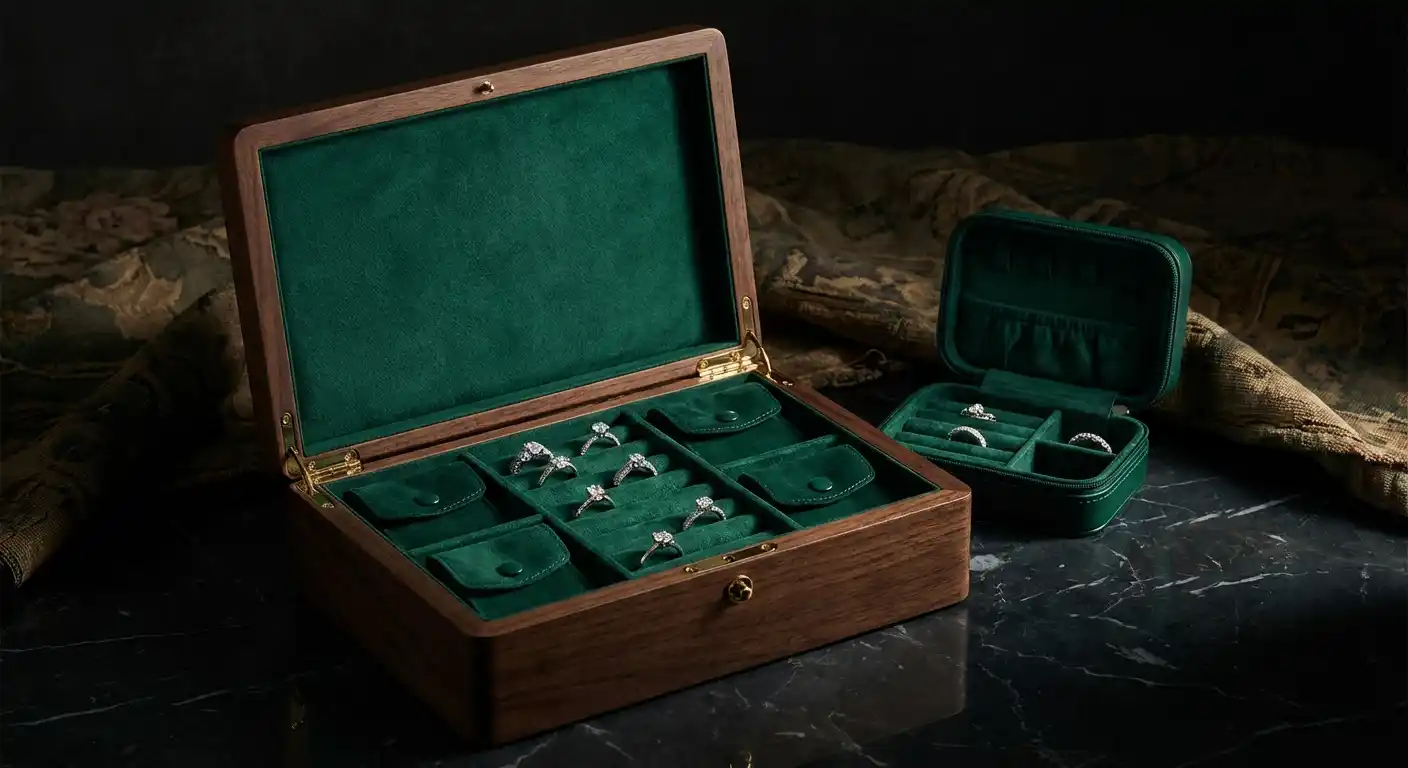
Traditional jewelry box:
- Multiple compartments in hinged box
- Good for moderate collections
- Range from $20-$200+
Jewelry armoire:
- Floor or wall-standing cabinet
- Maximum capacity
- Often includes mirror
- $100-$500+
Modular systems:
- Stackable trays and drawers
- Customize as collection grows
- A modular jewelry box with ring sections lets you expand as your collection grows
- $30-$150 per module
Drawer inserts:
- Convert dresser drawer to jewelry storage
- Space-efficient
- $15-$50
What to Avoid
- Boxes without separate compartments
- Hard surfaces without soft lining
- Clear plastic (allows light exposure)
- Boxes too large for your collection (pieces slide around)
Storage by Jewelry Type
Different pieces have different storage needs.
Rings
Best storage:
- Ring rolls (padded cylinder to slide rings onto)
- Individual slots in lined box
- Ring dishes for single pieces in daily use
Avoid:
- Stacking rings on top of each other
- Loose storage where rings can roll and scratch
- Ring trees (convenient but pieces can touch)
Necklaces and Chains
Best storage:
- Individual hooks (prevents tangling)
- Laid flat in long compartments
- Clasp closed to prevent snagging
Avoid:
- Jumbled together (tangles cause damage)
- Hanging multiple chains on one hook
- Folded or bunched storage
Tip: For delicate chains, store threaded through a drinking straw to prevent tangling.
Bracelets and Bangles
Best storage:
- Bracelet cushions or bars
- Individual compartments
- Vertical for bangles, flat for tennis bracelets
Avoid:
- Stacking metal bangles (scratches)
- Mixing materials in same compartment
Earrings
Best storage:
- Earring trays with holes for posts
- Pairs stored together
- Lever-backs hung on small hooks
Avoid:
- Loose in compartments (pairs separate)
- Backing removal (store earrings assembled)
Pearls
Special requirements:
- Store flat (prevents stretching of silk thread)
- Separate from everything (extremely soft)
- Some humidity okay (prevents drying)
- Never in airtight containers
Delicate/Antique Pieces
Special requirements:
- Extra padding
- Individual soft pouches
- Away from everyday jewelry (less handling)
- Consider separate storage box
Preventing Tarnish
Silver and some gold alloys tarnish when exposed to sulfur compounds in the air.
Anti-Tarnish Solutions
Anti-tarnish strips:
- Activated charcoal strips absorb sulfur compounds that cause tarnishing
- Place in jewelry box; replace every 6-12 months
- Inexpensive and highly effective for silver
Anti-tarnish cloth pouches:
- Pre-treated fabric pouches
- Store individual pieces inside
- Especially good for silver
Anti-tarnish jewelry boxes:
- Lined with treated fabric
- Built-in protection
- Higher price point but convenient
Silica gel packets:
- Control humidity
- Place in jewelry box
- Don't prevent tarnish directly but help overall environment
Tarnish Prevention Habits
- Wear jewelry regularly: Skin oils slow tarnish
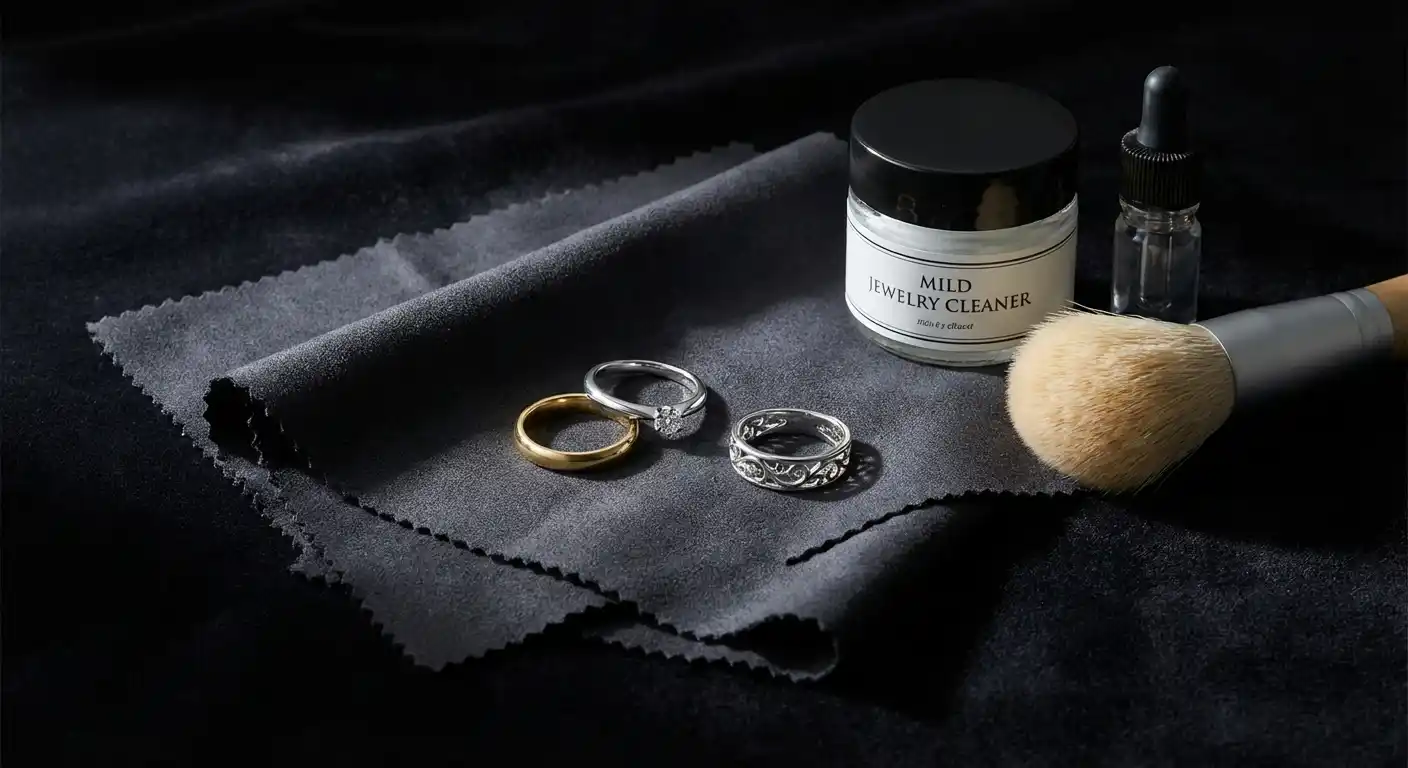
- Clean before storing: Remove lotions and oils following our metal cleaning guide
- Store silver separately: Silver tarnishes faster than gold
- Avoid rubber bands: High sulfur content accelerates tarnish
- Keep away from wool: Natural fibers can contain sulfur
Travel Storage
Traveling with jewelry requires extra precautions against loss, theft, and damage.
Essential Travel Rules
- Carry-on only: Never check valuable jewelry
- Wear your most valuable pieces: Engagement ring, wedding band
- Document what you bring: Photo inventory before traveling
- Minimize: Bring only what you'll actually wear
Travel Cases
A good travel jewelry organizer should have these features:
- Compact size (fits in carry-on or personal bag)
- Secure closure (zippered, preferably locking)
- Separate compartments
- Soft lining
- Necklace hooks or holders
Avoid:
- Hard cases that can crack
- Cases without individual compartments
- Bulky cases that won't fit in carry-on
Airport Security
- Remove jewelry before security screening
- Place in carry-on bag, never in the bin (theft risk)
- Wear engagement ring through if you prefer (metal detectors handle jewelry fine)
- Watch it go through x-ray and collect immediately
Hotel Security
- Use the room safe for valuable pieces
- Photograph contents before storing (proof if something happens)
- Take safe code receipt with you
- Don't leave jewelry on nightstand or bathroom counter
- Consider keeping most valuable pieces on your person
Travel Insurance
- Verify jewelry coverage on travel insurance
- Note any per-item limits
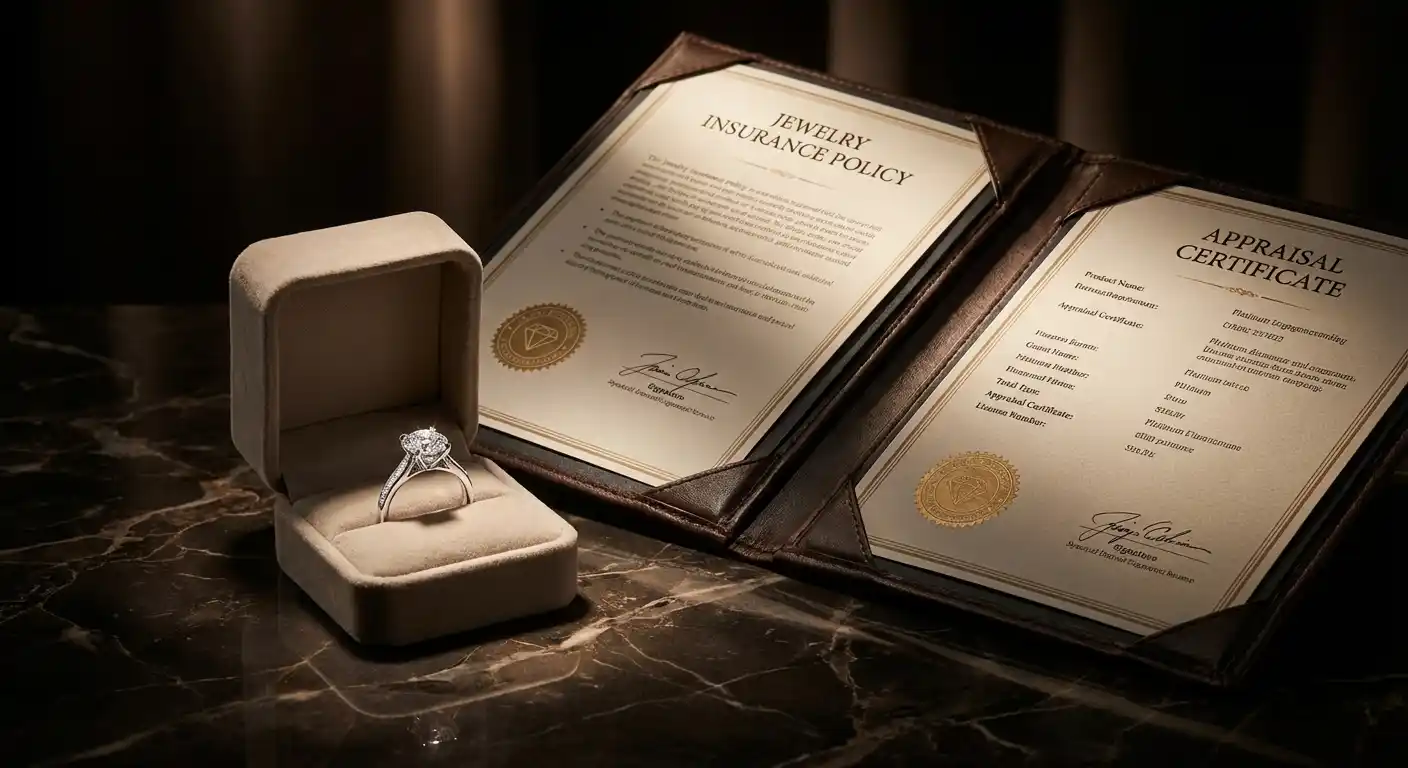
- Keep appraisals accessible (phone photos work)
- Know claim procedures before you need them
For complete insurance guidance, see our jewelry insurance guide.
Security Considerations
Beyond protection from damage, consider protection from theft.
Home Security
Basic measures:
- Store valuable pieces out of sight
- Don't display jewelry boxes prominently
- Consider concealed storage for most valuable items
Increased security:
- Locked jewelry armoire
- Home safe (fire-resistant recommended)
- Safety deposit box for rarely-worn valuable pieces
Documentation
For insurance and recovery:
- Photograph all valuable pieces
- Keep appraisals and certificates
- Document serial numbers on branded pieces
- Store documentation separately from jewelry
Digital backup:
- Cloud storage for photos and documents
- Accessible if physical copies are lost
What to Do If Jewelry Is Stolen
- File police report immediately
- Contact insurance company
- Provide documentation (photos, appraisals)
- Check pawn databases
- Alert local jewelers
Frequently Asked Questions
Can I store all my jewelry together in one box?
Only if the box has separate, lined compartments for each piece. Jewelry should never touch other jewelry during storage.
How often should I reorganize my jewelry storage?
Every 6-12 months, check for:
- Worn linings that need replacement
- Anti-tarnish strips that need changing
- Pieces that have shifted out of place
- Damage you may not have noticed
Is it bad to store jewelry in the bathroom?
Yes. Humidity from showers promotes tarnish and can damage certain stones. A bedroom closet is better.
Should I store my engagement ring differently than other rings?
The storage method is the same, but you may want your engagement ring in a more accessible spot for daily wear, like a ring dish on your nightstand.
How do I store jewelry I've inherited but don't wear?
Keep in anti-tarnish pouches within a jewelry box or safe. Even if not worn, maintain periodically—clean gently and check condition annually. Consider a professional inspection to assess any maintenance needs.
What's the best way to store opals and pearls?
Both need some humidity (unlike most jewelry):
- Opals: Store with slightly damp cloth nearby; never in airtight container
- Pearls: Store flat in soft pouch; wear regularly; keep separate from other jewelry
For cleaning these delicate stones, see our gemstone cleaning guide.
Storage Checklist
At Home:
- Each piece has individual compartment
- All compartments are soft-lined
- Anti-tarnish strips in place
- Box stored away from sunlight and humidity
- Valuable pieces secured (safe or locked storage)
- Documentation photographed and backed up
For Travel:
- Travel case with individual compartments
- Minimal pieces packed (only what you'll wear)
- Photo inventory taken
- Valuables in carry-on only
- Insurance verification complete
Proper storage is one of the simplest ways to protect your jewelry. A small investment in the right storage solutions saves countless dollars in repairs and replacements.
For complete ring care guidance, see our ring care maintenance guide.
SONGMICS 2-Layer Jewelry Box with Handle and Removable Tray

with Handle and Removable Tray
Two-layer jewelry box with a removable tray and dedicated ring slots.
Two-layer jewelry box with a removable tray and dedicated ring slots. Velvet lining protects against scratches, and the top handle makes it easy to move between drawer and nightstand.
"Finally a jewelry box that actually works. Each piece has its place and nothing touches. Love the modular design.
BAGSMART Travel Jewelry Organizer Case

Case
Compact travel case with ring holder, necklace hooks, and zippered compartments.
Compact travel case with ring holder, necklace hooks, and zippered compartments. Fits in carry-on. Water-resistant exterior.
"Took this through 6 countries. Everything stayed organized and protected. Essential for travel.
3M Anti-Tarnish Paper Strips for Jewelry Storage

3M Anti Tarnish Paper Strips for Jewelry Storage
Activated charcoal strips that absorb tarnish-causing gases.
Activated charcoal strips that absorb tarnish-causing gases. Place in jewelry boxes and bags. Each strip lasts 6-12 months.
"No more tarnished silver! I put these in all my jewelry storage and the difference is remarkable.
Review of What We Liked
with Handle and Removable Tray
Two-layer jewelry box with a removable tray and dedicated ring slots.
Case
Compact travel case with ring holder, necklace hooks, and zippered compartments.
3M Anti Tarnish Paper Strips for Jewelry Storage
Activated charcoal strips that absorb tarnish-causing gases.
About the Author
Alfreda Borror
Alfreda Borror is the founding editor of Opulent Opal, writing research-based buying guides on diamonds, birthstones, and fine jewelry.