Rhodium Plating for White Gold: When to Replate Your Ring

This post may contain affiliate links. Read our affiliate policy
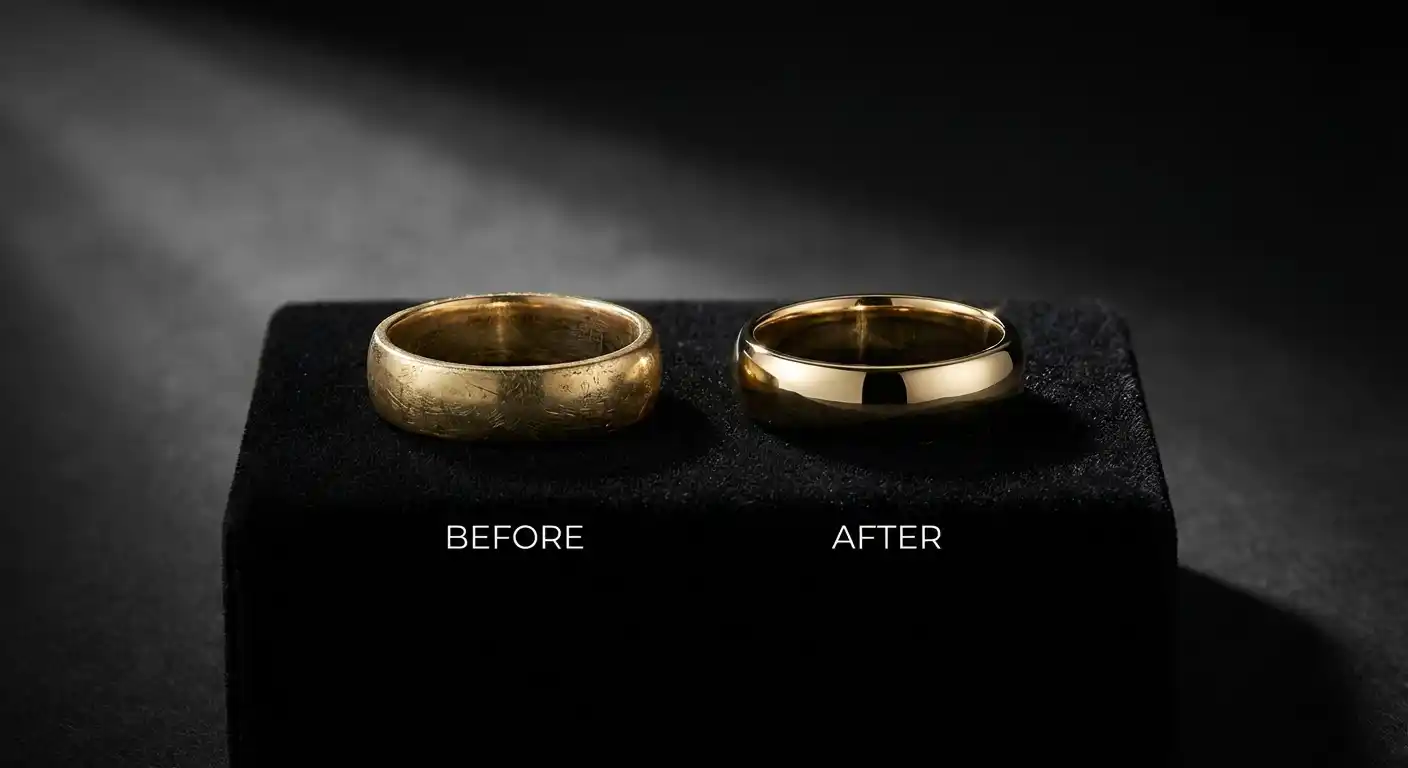
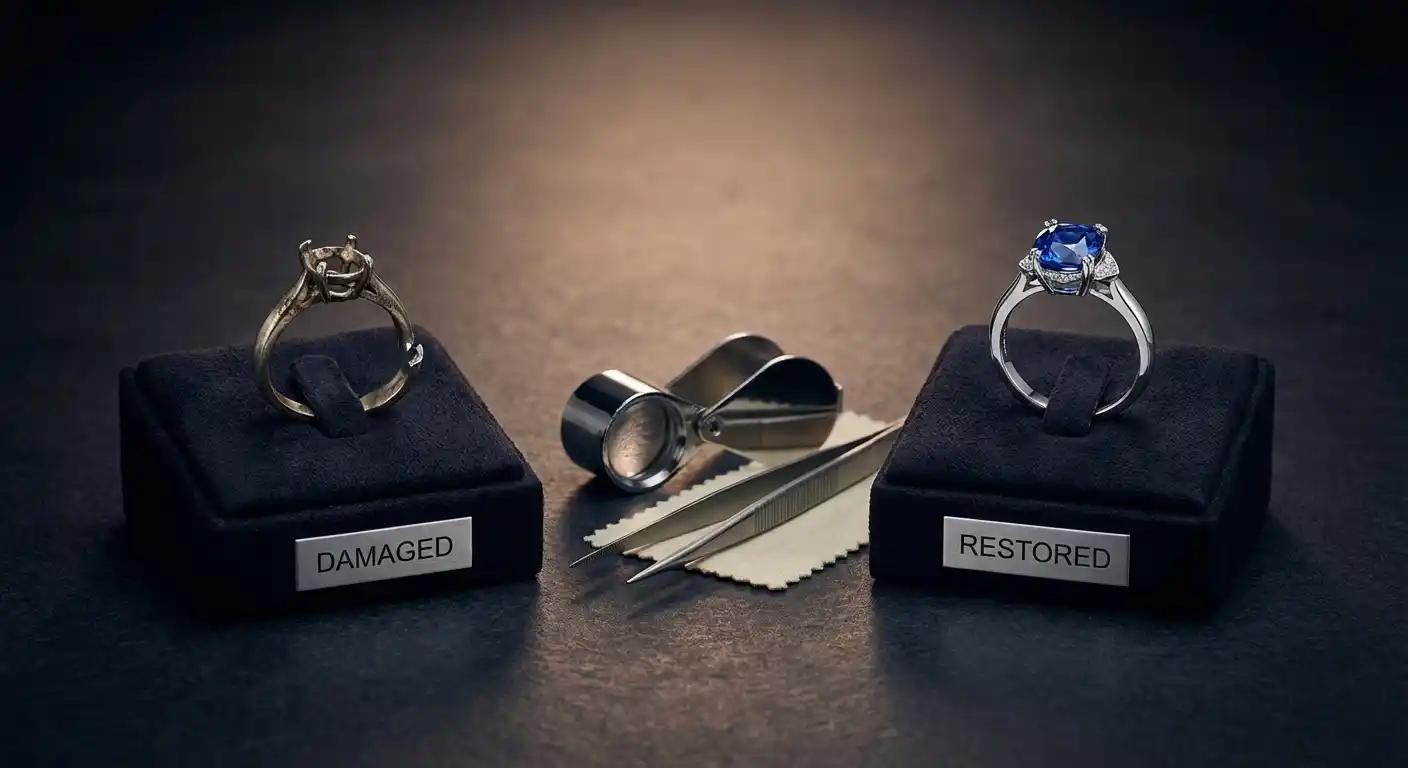
White gold's bright, silvery appearance isn't natural—it's the result of rhodium plating over gold that's actually pale yellow underneath. As this plating wears over time, your ring may develop yellow or warm undertones. Understanding when and how to replate keeps your white gold looking brilliant.
Table of Contents
- What Is Rhodium Plating?
- Why White Gold Needs Replating
- Signs Your Ring Needs Replating
- The Replating Process
- Cost and Timing
- Extending Time Between Platings
- Alternatives to Replating
- FAQ
What Is Rhodium Plating?
Rhodium is a precious metal in the platinum family—extremely hard, highly reflective, and naturally bright white. It's also rare and expensive, which is why it's used as a thin plating rather than solid metal.
Why White Gold Isn't White
"White gold" is yellow gold alloyed with white metals—typically palladium, nickel, or silver. This creates a pale metal, but not truly white. The natural color is more like light champagne or warm gray.
To achieve the brilliant white color consumers expect, jewelers apply a thin layer of rhodium through an electroplating process. This rhodium layer:
- Creates the bright white appearance
- Adds scratch resistance
- Provides hypoallergenic surface (important for nickel-alloy white gold)
- Protects underlying gold
Rhodium Thickness
Standard rhodium plating is extremely thin—typically 0.75 to 1.0 microns (about 1/1000th of a millimeter). This thin layer explains why it wears away with regular use.
Why White Gold Needs Replating
Unlike platinum (naturally white) or yellow gold (no plating), white gold requires periodic maintenance to maintain its appearance.
Normal Wear Patterns
Rhodium plating wears from friction and contact:
- Underside of band: Constant contact with finger
- Sides of band: Contact with other rings, surfaces
- Prong tips: Friction from daily contact
- High points: Any raised areas that experience rubbing
Factors That Accelerate Wear
Lifestyle:
- Manual work or frequent hand use
- Exercise and sports
- Wearing ring 24/7 (no recovery time)
Chemical exposure:
- Chlorinated pools and hot tubs
- Household cleaning products
- Beauty products (lotions, perfumes)
Cleaning practices:
- Over-polishing
- Abrasive cleaners
- Ammonia-based solutions
Signs Your Ring Needs Replating
Several indicators suggest it's time for rhodium service.
Visual Signs
Yellow undertones:
- Most obvious on the band's underside
- Visible when comparing to platinum or recently plated white gold
- Often appears as warm "champagne" tint
Uneven coloring:
- White in some areas, yellow in others
- Creates mottled or patchy appearance
- Most obvious in different lighting conditions
Dull appearance:
- Lost the bright, reflective shine
- Appears gray rather than bright white
- Light doesn't reflect as crisply
Common Wear Patterns
| Location | Appearance | Cause |
|---|---|---|
| Band underside | Yellow showing through | Finger friction |
| Band sides | Uneven coloring | Contact with surfaces |
| Prong tips | Darker or yellowed | Daily handling |
| Around stone | May still look white | Protected area |
The Comparison Test
If you're unsure:
- Hold ring next to platinum jewelry or new white gold piece
- Check appearance in different lighting
- Ask a jeweler's opinion during routine cleaning
The Replating Process
Rhodium plating is a straightforward procedure performed by most jewelers.
What Happens
- Thorough cleaning: Ring is cleaned of all oils, dirt, and residue
- Surface preparation: Light polishing prepares metal to accept plating
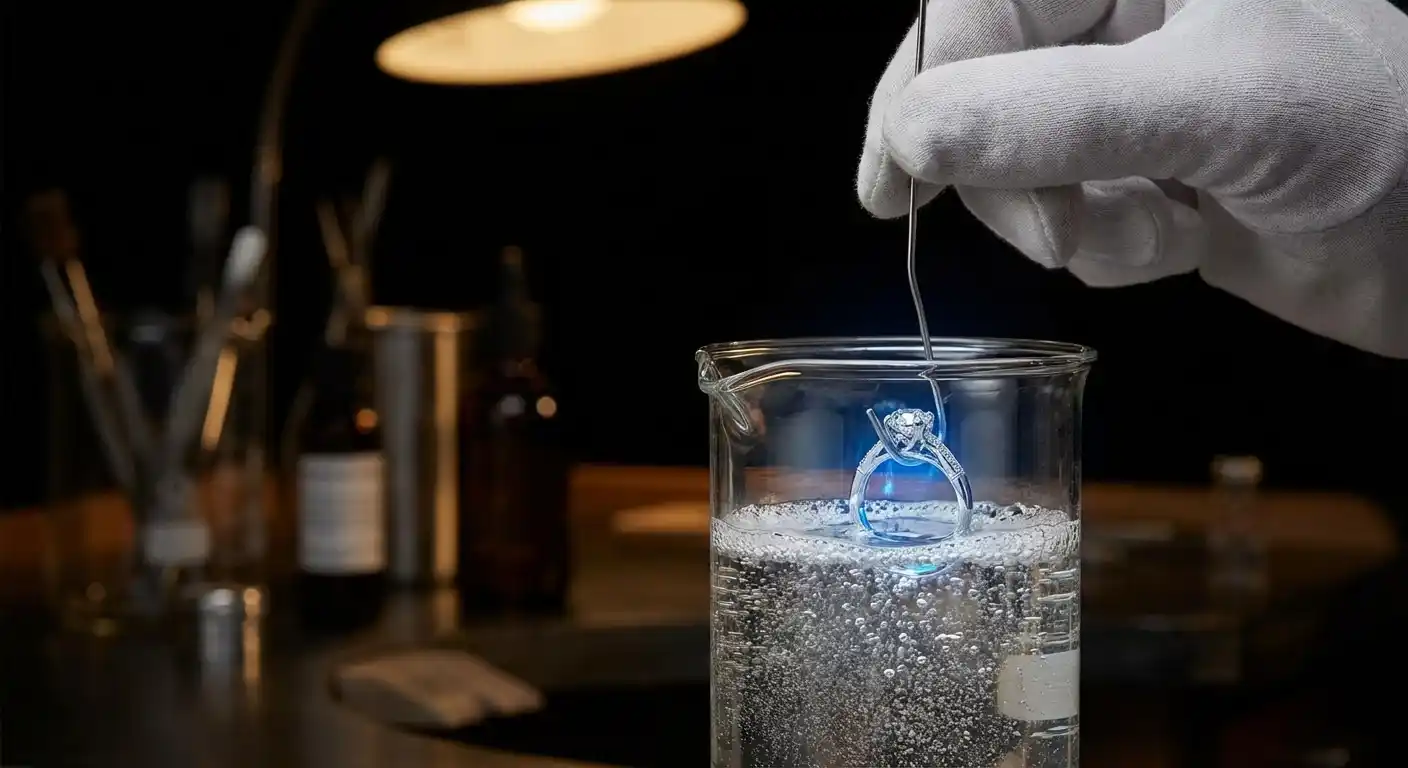
- Electroplating bath: Ring is placed in rhodium solution
- Electrical current: Passes through solution, depositing rhodium layer
- Rinsing: Excess solution removed
- Final polish: Buffing brings out full brightness
Duration
Most jewelers complete replating while you wait (15-30 minutes) or within a few hours. Complex pieces may take longer.
What to Expect After
Your ring will look brand new—bright white and reflective. The fresh plating may even look slightly "too bright" compared to its worn state, but this normalizes quickly.
Cost and Timing
Understanding typical costs helps budget for this ongoing maintenance.
Typical Costs
| Service | Price Range | Notes |
|---|---|---|
| Basic replating | $40-$60 | Standard engagement ring |
| Complex pieces | $60-$100 | Multiple rings, intricate designs |
| With polishing | $50-$100 | Includes scratch removal |
| With cleaning/inspection | $40-$80 | Often bundled |
Note: Some jewelers include free or discounted replating for rings purchased from them.
How Often to Replate
The frequency varies significantly based on:
Light wear (office work, remove often): Every 2-3 years
Moderate wear (daily wear, careful habits): Every 1-2 years
Heavy wear (never removed, active lifestyle): Every 6-12 months
Annual Maintenance Cost
Budget $20-$60 per year on average for white gold ring maintenance (replating averaged over time plus professional cleaning).
Extending Time Between Platings
Several practices help rhodium last longer.
Smart Wearing Habits
Remove ring during:
- Showering and bathing
- Swimming (especially pools/hot tubs)
- Applying lotions, perfumes, sunscreen
- Cleaning with chemicals
- Exercise and manual work
- Sleeping (reduces 24/7 friction)
The "last on, first off" rule: Put your ring on last (after getting ready) and take it off first (before activities). This minimizes chemical and friction exposure.
Proper Cleaning
Do:
- Use mild soap and water
- Use cleaners labeled safe for rhodium
- Dry thoroughly after cleaning
- Use soft polishing cloths designed for white gold
Don't:
- Use ammonia-based cleaners
- Use abrasive materials
- Over-polish (friction removes plating)
- Use ultrasonic cleaners excessively
For proper cleaning technique, see our guide to cleaning gold, platinum, and silver rings.
Storage Matters
- Store separately from other jewelry (prevents scratching)
- Use soft-lined jewelry box
- Avoid plastic bags that can contain chemicals
For complete storage solutions, see our jewelry storage guide.
Alternatives to Replating
If ongoing replating feels burdensome, consider these options.
Embrace the Natural Color
Some wearers appreciate white gold's natural color as it emerges—a warm, vintage-y tone that some call "champagne gold." This is purely aesthetic preference, not a problem to solve.
Switch to Platinum
Pros:
- Naturally white forever
- No plating needed ever
- More durable
- Hypoallergenic
Cons:
- Higher initial cost ($300-$800 more)
- Develops patina (different appearance over time)
- Heavier weight
Converting a white gold ring to platinum requires creating a new ring—the original metal can't be converted.
Replace the Setting
If your white gold setting is wearing out beyond plating concerns, you might:
- Have stones reset in new platinum setting
- Update to a new white gold setting (fresh start)
- Switch to yellow or rose gold (no plating needed)
Palladium White Gold
Some jewelers offer palladium-based white gold alloys that:
- Start whiter than nickel-based alloys
- Show less contrast when plating wears
- May need replating less frequently
- Cost slightly more
: Long-Term Comparison
| Factor | White Gold | Platinum |
|---|---|---|
| Initial cost | Lower | Higher (+$300-$800) |
| Replating needed | Every 1-3 years | Never |
| Annual maintenance cost | $20-$60 | $0 (plating) |
| 10-year maintenance cost | $200-$600 | $0 |
| Appearance over time | Requires replating for white | Develops patina |
| Durability | Good | Excellent |
| Weight | Lighter | Heavier |
Over a lifetime, platinum's higher upfront cost may equal or beat white gold's ongoing maintenance costs.
For a detailed comparison, see our gold vs platinum guide.
Frequently Asked Questions
Is rhodium plating safe?
Yes. Rhodium is hypoallergenic and safe for skin contact. In fact, rhodium plating on nickel-alloy white gold prevents nickel allergies in sensitive individuals.
Can I replate my ring myself?
Home replating kits exist but aren't recommended. Professional equipment produces superior, longer-lasting results. DIY attempts often look uneven and wear quickly.
Will replating damage my ring?
When done properly by a qualified jeweler, no. The process is gentle and standard. However, very frequent replating over many years removes microscopic metal amounts during surface prep—this is rarely a concern.
My ring has stones. Can it still be replated?
Yes. Most gemstones handle the plating process fine. Your jeweler will assess any special considerations for delicate stones.
Why does some of my ring look white while other parts look yellow?
Rhodium wears unevenly—high-friction areas (band underside, prong tips) wear first while protected areas (around stones, decorative areas) may retain plating longer.
How do I find a good jeweler for replating?
Ask where you purchased the ring first—many offer discounted replating. Otherwise, look for jewelers with good reviews mentioning repair services, not just sales. Our guide to professional vs DIY ring cleaning has tips on finding reputable jewelers.
The Bottom Line
White gold's beautiful bright finish requires ongoing care—but that maintenance is straightforward and affordable. Plan for replating every 1-3 years depending on your wear patterns, use gentle cleaning methods between services, and remove your ring during high-risk activities.
For some, the ongoing maintenance is a minor inconvenience. For others, it's reason enough to consider platinum for their next piece. Either choice is valid—what matters is understanding what your ring needs and providing that care consistently.
For complete ring care guidance, see our ring care maintenance guide.
Connoisseurs Precious Jewelry Cleaner for White Gold

Connoisseurs Precious Jewelry Cleaner for White Gold
Gentle formula safe for rhodium-plated white gold.
Gentle formula safe for rhodium-plated white gold. Ammonia-free to preserve plating longer. Includes brush and tray.
"Finally a cleaner that doesn't make my white gold look worse. Keeps the brightness between replating appointments.
Sunshine Polishing Cloth for White Gold and Platinum

for White Gold and Platinum
Professional-grade polishing cloth safe for rhodium-plated jewelry.
Professional-grade polishing cloth safe for rhodium-plated jewelry. Removes fingerprints without removing plating.
"Gentle enough for daily use. I use this after wearing my ring and it keeps the sparkle going strong.
Review of What We Liked
Connoisseurs Precious Jewelry Cleaner for White Gold
Gentle formula safe for rhodium-plated white gold.
for White Gold and Platinum
Professional-grade polishing cloth safe for rhodium-plated jewelry.
About the Author
Alfreda Borror
Alfreda Borror is the founding editor of Opulent Opal, writing research-based buying guides on diamonds, birthstones, and fine jewelry.