Earring Metals Explained: Gold, Platinum, Silver & Alternatives

This post may contain affiliate links. Read our affiliate policy
Gold, platinum, silver, titanium, surgical steel—earring metals span precious heirlooms to affordable everyday options. The metal you choose affects more than price. It determines whether your ears will tolerate extended wear, whether you'll need regular maintenance, and how the earrings will age over years of use.
This guide breaks down every common earring metal: what it costs, how it wears, who should choose it, and who should avoid it. Consider it your metal decoder ring.
Table of Contents
- Precious Metals Overview
- Gold in Depth
- Platinum
- Silver
- Alternative Metals
- Metal Comparisons
- Choosing Your Metal
- FAQ
Precious Metals Overview
Precious metals—gold, platinum, and silver—have adorned humans for millennia. They're prized for their beauty, rarity, durability, and resistance to corrosion.
What Makes a Metal "Precious"?
Precious metals are:
- Rare in nature
- Resistant to corrosion and tarnishing
- Malleable enough to craft into jewelry
- Valuable both aesthetically and monetarily
For earrings specifically, precious metals offer:
- Timeless beauty
- Long-term durability
- Better skin compatibility (generally)
- Resale and heirloom value
Purity vs. Durability Trade-off
Pure precious metals are often too soft for jewelry. Gold in its pure form bends easily; pure silver scratches with minimal pressure. For this reason, precious metal jewelry is typically alloyed (mixed) with other metals for strength. Understanding these alloys is crucial when choosing earrings.
Gold in Depth
Gold is the most popular precious metal for earrings worldwide. Its warm luster complements most skin tones, and it's available in multiple colors and purities.
Understanding Gold Purity (Karats)
Gold purity is measured in karats (K or kt), not to be confused with carats (ct), which measure gemstone weight.
| Karat | Gold Content | Other Metals | Characteristics |
|---|---|---|---|
| 24K | 99.9% | ~0% | Pure, soft, rich color, bends easily |
| 22K | 91.7% | 8.3% | Traditional in some cultures, soft |
| 18K | 75% | 25% | Excellent balance, rich color, durable |
| 14K | 58.5% | 41.5% | Most popular in US, very durable |
| 10K | 41.7% | 58.3% | Minimum to be called "gold" in US, hardest |
For earrings: 14K and 18K are most common. 14K offers superior durability; 18K provides richer color and higher value.
Gold Colors
By varying the alloy metals, gold can be produced in several colors:
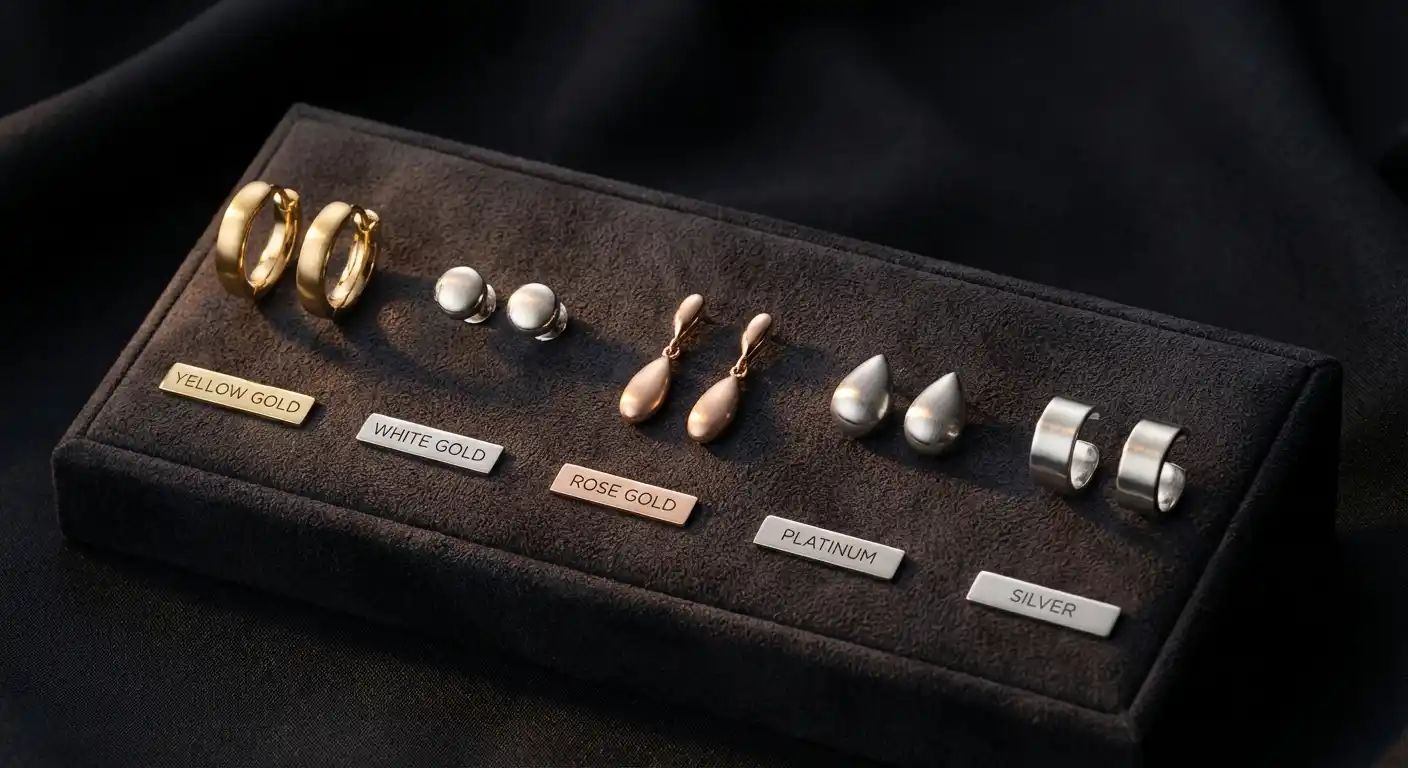
Yellow Gold The classic gold color, created by alloying with silver and copper.
- Warm, traditional appearance
- Complements warm skin tones
- Doesn't require plating
- Most hypoallergenic gold type (typically copper/silver alloy)
White Gold Created by alloying with white metals, then rhodium-plated for brightness.
- Modern, silvery appearance
- Complements cool skin tones
- Requires rhodium replating every 1-2 years
- Warning: May contain nickel (ask for palladium alloy if sensitive)
Rose Gold Alloyed with copper for a romantic pink hue.
- Romantic, vintage-inspired appearance
- Flatters most skin tones
- More durable than yellow gold (copper strengthens)
- May irritate copper-sensitive individuals (rare)
Green Gold Alloyed primarily with silver.
- Subtle greenish-yellow tint
- Rare and unusual
- Sometimes called "electrum"
Gold Quality Indicators
When shopping for gold earrings:
- Look for karat stamps (14K, 18K, etc.)
- "GF" means gold-filled (not solid gold)
- "GP" or "plated" means thin gold layer over base metal
- "Vermeil" means gold-plated sterling silver
- Request nickel-free white gold specifically
Gold Earring Price Ranges (2026)
For reference, simple stud settings:
- 10K: $50-150
- 14K: $100-300
- 18K: $200-500
Prices increase significantly with diamonds or gemstones.
Platinum
Platinum is the most prestigious and rarest precious metal commonly used in jewelry.
Platinum Characteristics
Purity: Jewelry-grade platinum is typically 950 or 900 (95% or 90% pure)
Color: Naturally white—never yellows or requires plating
Weight: Significantly heavier than gold (about 60% denser)
Durability: Extremely durable and scratch-resistant
Hypoallergenic: Excellent for sensitive skin
Platinum Pros and Cons
Advantages:
- Naturally white forever (no replating)
- Most hypoallergenic precious metal
- Extremely durable
- Prestigious and rare
- Maintains value well
Disadvantages:
- Highest price point
- Heavy (some earring styles may not be comfortable)
- Develops patina over time (some like this; it can be polished off)
- Limited availability in some earring styles
Who Should Choose Platinum?
Platinum earrings are ideal for:
- Those with metal sensitivities
- People wanting a white metal without maintenance
- Heirloom-quality investment pieces
- Those who prioritize purity and prestige
For more on choosing between gold and platinum, see our gold vs platinum engagement rings guide, which covers similar considerations.
Silver
Silver offers precious metal beauty at accessible prices, making it popular for everyday earrings and fashion pieces.
Types of Silver
Fine Silver (999)
- 99.9% pure silver
- Too soft for most jewelry
- Used for plating or wire wrapping
Sterling Silver (925)
- 92.5% silver, 7.5% alloy (usually copper)
- Standard for silver jewelry worldwide
- Stamps: "925," "SS," or "Sterling"
Argentium Silver (935 or 960)
- 93.5% or 96% silver with germanium
- More tarnish-resistant than sterling
- Newer alternative gaining popularity
Silver-Plated
- Thin silver layer over base metal
- Least expensive
- Plating wears off; not recommended for piercings
Silver Characteristics
Color: Bright white when polished; darkens with tarnish
Weight: Lighter than gold or platinum
Durability: Softer than gold; scratches more easily
Tarnishing: Oxidizes over time (turns dark)
Skin Compatibility: Generally good, but some sterling contains trace nickel
Caring for Silver Earrings
Silver requires more maintenance than gold:
- Store in anti-tarnish cloth or bags
- Wear regularly (body oils slow tarnishing)
- Polish with silver cloth periodically
- Avoid exposure to chlorine, sulfur, and cosmetics
Silver Price Point
Sterling silver is significantly more affordable:
- Simple studs: $15-50
- Quality designs: $50-150
- Designer pieces: $100-500
Alternative Metals
Beyond precious metals, several alternatives offer unique benefits including affordability, durability, and hypoallergenic properties.
Titanium
What it is: A strong, lightweight metal used in aerospace and medical applications
Characteristics:
- Extremely lightweight (40% lighter than steel)
- Very strong and scratch-resistant
- Completely hypoallergenic
- Can be anodized for colors (blue, purple, green)
- Gray when not anodized
Best for: Sensitive ears, active lifestyles, bold colors, lightweight comfort
Limitations: Gray base color, limited design complexity, can't be resized
Surgical Stainless Steel
What it is: Medical-grade steel alloy designed for body contact
Characteristics:
- Very affordable
- Extremely durable
- Low-nickel grades are hypoallergenic
- Bright, chrome-like appearance
Grades to look for:
- ASTM F138: Surgical implant grade (best)
- 316L: Generally safe
- 316LVM: Vacuum-melted, extra pure
Best for: Budget-conscious, everyday wear, new piercings
Limitations: Contains nickel (bound in alloy, but sensitive individuals may still react), industrial appearance
Niobium
What it is: A rare metal prized for its biocompatibility
Characteristics:
- Virtually allergen-free
- Can be anodized to vibrant colors
- Hypoallergenic even for extreme sensitivities
- Softer than titanium
Best for: Extreme metal sensitivities, unique colors, people who react to everything
Limitations: Expensive, limited availability, few mainstream jewelers carry it
Tungsten Carbide
What it is: An extremely hard metal alloy
Characteristics:
- Incredibly scratch-resistant
- Maintains polish indefinitely
- Heavy and substantial feel
- Usually gray or black
Best for: Those wanting scratch-proof durability
Limitations: Brittle (can crack if dropped), cannot be resized, limited to simple designs, earring options are limited
Cobalt Chrome
What it is: A medical-grade alloy used in joint replacements
Characteristics:
- Naturally white
- Very hard and scratch-resistant
- Hypoallergenic
- Similar appearance to platinum
Best for: White metal look on budget, durability
Limitations: Contains cobalt (rare allergies exist), limited jewelry availability
Palladium
What it is: A platinum-group precious metal
Characteristics:
- Naturally white
- Lighter than platinum
- Hypoallergenic
- Doesn't require rhodium plating
- More affordable than platinum
Best for: White metal seekers, platinum alternative, sensitive skin
Limitations: Less common, mid-range precious metal pricing
Metal Comparisons
By Durability
From most to least scratch-resistant:
- Tungsten carbide
- Titanium
- Surgical steel
- Platinum
- Palladium
- 14K gold
- 18K gold
- Sterling silver
- 24K gold (softest)
By Skin Compatibility
From most to least hypoallergenic:
- Niobium (virtually allergen-free)
- Implant-grade titanium
- Platinum
- Surgical steel (ASTM F138)
- Palladium
- 18K yellow/rose gold (nickel-free)
- 14K yellow/rose gold (nickel-free)
- Sterling silver
- White gold (may contain nickel)
By Price (for comparable earring styles)
From least to most expensive:
- Surgical stainless steel
- Sterling silver
- Titanium
- 10K gold
- 14K gold
- 18K gold
- Palladium
- Platinum
By Maintenance Required
From lowest to highest maintenance:
- Titanium (virtually none)
- Surgical steel (minimal)
- Platinum (occasional polish)
- Yellow gold (minimal)
- Rose gold (minimal)
- Palladium (occasional polish)
- White gold (rhodium replating every 1-2 years)
- Sterling silver (regular polishing, anti-tarnish storage)
Choosing Your Metal
The best metal for your earrings depends on several personal factors.
If You Have Sensitive Skin
Best choices: Implant-grade titanium, platinum, niobium, surgical steel (ASTM F138)
Avoid: Nickel-containing white gold, unknown alloys, cheap costume jewelry
See our hypoallergenic earrings guide for detailed advice.
If You're on a Budget
Best value precious metal: Sterling silver
Best value for durability: Surgical stainless steel
Best value for sensitive skin: Titanium
If You Want Low Maintenance
Best choices: Titanium, surgical steel, yellow gold, rose gold, platinum
More maintenance: White gold (replating), sterling silver (polishing)
If You Want Investment Value
Best choices: 18K gold, platinum
Note: Jewelry typically doesn't appreciate like bullion; value is in craftsmanship and sentiment as much as metal content
By Skin Tone
While any metal can look good with proper styling:
Warm skin tones (golden, peachy undertones):
- Yellow gold
- Rose gold
- Warm-toned metals
Cool skin tones (pink, blue undertones):
- White gold
- Platinum
- Silver
- Cool-toned metals
Neutral skin tones:
- All metals work—choose based on preference
By Lifestyle
Active lifestyle:
- Titanium (lightweight, durable)
- Surgical steel (affordable, tough)
- 14K gold (good durability)
Professional environment:
- Gold (14K or 18K)
- Platinum (prestigious)
- Sterling silver (polished)
Fashion-forward/eclectic:
- Mix metals freely
- Anodized titanium (colors)
- Consider costume materials for trendy pieces
Frequently Asked Questions
Can I mix gold and silver earrings?
Absolutely. The "no mixing metals" rule is outdated. Modern styling embraces mixed metals for an intentional, curated look. Some tips:
- Have a dominant metal (more of one than the other)
- Use a bridging piece that contains both
- Commit to the mix confidently
Why do some gold earrings turn my ears green?
This typically happens with:
- Gold-plated jewelry (base metal exposed when plating wears)
- Very low karat gold (high copper content reacts with sweat)
- Allergic reaction to nickel in white gold
Solution: Choose solid 14K+ gold and avoid plated pieces.
Is surgical steel the same as stainless steel?
Not exactly. "Surgical steel" should refer to specific medical-grade alloys (ASTM F138, 316L, 316LVM) designed for body contact. "Stainless steel" is broader and may include grades not appropriate for jewelry. Always ask for the specific grade.
How can I tell what metal my earrings are?
Look for stamps/hallmarks:
- Gold: 10K, 14K, 18K, 24K, 417, 585, 750, 999
- Platinum: 950, 900, PLAT, PT
- Silver: 925, SS, STERLING
- Palladium: 500, 950, PD
If no stamp: May be plated, filled, or base metal. Consider professional testing for valuable pieces.
Do earring posts need to match the earring metal?
They should, but they don't always. The post matters most for skin contact. Some gold earrings have base metal posts (problematic for sensitive ears). When purchasing, confirm post metal matches.
What's the difference between gold-filled and gold-plated?
Gold-filled: Thick layer (5% by weight) of gold bonded to base metal. More durable, better for sensitive ears.
Gold-plated: Very thin gold layer electroplated onto base metal. Wears off relatively quickly, not ideal for piercings.
Neither is solid gold. For best results with sensitive ears, choose solid gold.
How often should I replace earrings based on metal?
With proper care:
- Platinum, titanium, surgical steel: Essentially indefinite
- 14K+ gold: Decades with care
- Sterling silver: Many years (prongs may wear)
- Gold-filled: 5-10+ years before wear shows
- Gold-plated: Replace when plating wears (months to years)
Make an Informed Choice
Understanding earring metals empowers you to choose pieces that align with your skin's needs, your aesthetic preferences, and your budget. Whether you invest in platinum heirlooms or enjoy titanium's practical benefits, knowing what you're wearing makes every purchase more satisfying.
Continue exploring:
About the Author
Alfreda Borror
Alfreda Borror is the founding editor of Opulent Opal, writing research-based buying guides on diamonds, birthstones, and fine jewelry.