Eye-Clean Diamonds: How to Find Flawless-Looking Stones at SI1 Prices

This post may contain affiliate links. Read our affiliate policy
This article contains affiliate links. We may earn a commission if you make a purchase through our links, at no extra cost to you.
A VS2 diamond costs 25-40% less than a VVS1 diamond with identical cut, color, and carat weight. To the naked eye, they look exactly the same. This is the eye-clean opportunity—paying for clarity you can actually see rather than clarity that only shows up under magnification.
The term "eye-clean" describes diamonds where inclusions aren't visible without magnification in normal viewing conditions. Once a diamond passes this threshold, higher clarity grades add cost without improving appearance. Understanding how to find eye-clean diamonds at lower clarity grades can save hundreds or thousands of dollars.
This guide shows you exactly how to identify eye-clean diamonds, which clarity grades to target, and what factors affect visibility.
For a complete overview of diamond quality, see our comprehensive diamond buying guide.
Table of Contents
- What Does Eye-Clean Mean?
- Eye-Clean Rates by Clarity Grade
- The Sweet Spots: VS2 and SI1
- Factors That Affect Visibility
- Shape Matters
- Size Matters
- How to Shop for Eye-Clean Diamonds
- Using the Diamond Screener
- Common Eye-Clean Mistakes
- Eye-Clean Value Examples
- Frequently Asked Questions
What Does Eye-Clean Mean?
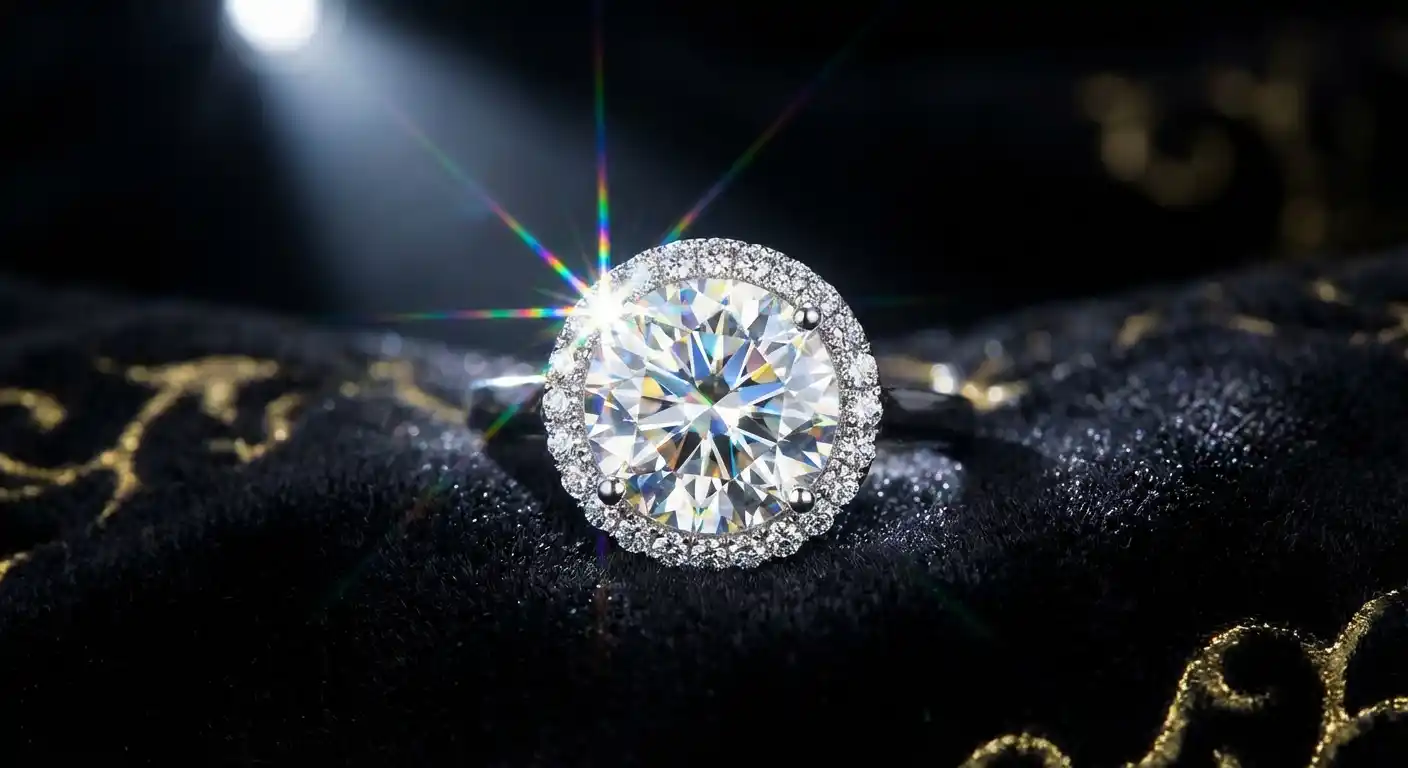
An eye-clean diamond appears flawless when viewed face-up at a normal viewing distance (about 6-12 inches) without magnification. The inclusions exist—they show up under 10x loupe—but they're invisible in everyday viewing.
The Eye-Clean Standard
Different sources define eye-clean slightly differently, but the practical test is simple:
The Viewing Test: Can you see any inclusions when looking at the diamond the way you'd actually wear it—on your hand, in normal lighting, at arm's length?
If the answer is no, the diamond is eye-clean. Whether it's graded SI1 or VVS1 becomes irrelevant to what you actually see.
Why Eye-Clean Matters
Diamond grading uses 10x magnification to evaluate clarity. This standard detects characteristics invisible to normal human vision. While this provides consistency for grading, it creates a gap between what the certificate says and what you actually see.
A carefully selected SI1 diamond can look identical to a Flawless diamond once set in jewelry. You'll pay much less while getting the same visual result.
Eye-Clean Rates by Clarity Grade
Not every diamond at a given clarity grade is eye-clean. Here's what to expect:
| Clarity Grade | Eye-Clean Rate | Notes |
|---|---|---|
| VVS1-VVS2 | 99-100% | Essentially always eye-clean |
| VS1 | 99%+ | Virtually always eye-clean |
| VS2 | 85-95% | Usually eye-clean, occasional exceptions |
| SI1 | 50-70% | Requires careful selection |
| SI2 | 10-15% | Rarely eye-clean, high risk |
| I1-I3 | <5% | Almost never eye-clean |
For detailed grade comparisons, see our VS1 vs VS2 vs SI1 clarity guide.
The Sweet Spots: VS2 and SI1
VS2: The Safe Choice
VS2 diamonds are eye-clean in the vast majority of cases. The inclusions are small enough and positioned well enough that they rarely pose visibility problems.
Best for:
- Buyers who want confidence without visual inspection
- Step-cut diamonds (emerald, Asscher)
- Larger diamonds (2+ carats)
- When you can't view high-resolution imagery
Expected eye-clean rate: 85-95%
SI1: Maximum Value
SI1 diamonds offer the best clarity value when selected carefully. About half are eye-clean, meaning you can save significantly by doing some research.
Best for:
- Value-focused buyers willing to inspect images
- Brilliant-cut diamonds (round, cushion, oval)
- Diamonds under 2 carats
- When you can view 360° video or HD images
Expected eye-clean rate: 50-70%
Factors That Affect Visibility
Three main factors determine whether an inclusion is visible without magnification:
1. Inclusion Location
Table inclusions (directly under the top facet) are most visible. Light enters through the table, and central inclusions are in direct line of sight.
Crown inclusions (in the sloped upper facets) are less visible because faceting disperses their appearance.
Pavilion inclusions (in the lower half) are often well-hidden. The complex light reflections can mask or scatter their appearance.
Edge inclusions may be hidden under prongs once the diamond is set.
Best strategy: Look for inclusions positioned near edges or in the pavilion rather than directly under the table.
2. Inclusion Color
White or colorless inclusions (crystals, clouds) are less visible because they blend with the diamond's body.
Dark inclusions (dark crystals, carbon spots) stand out against the diamond's brilliance and are more easily spotted.
Best strategy: Prioritize diamonds with white or colorless inclusion types when shopping SI1.
3. Inclusion Size
Larger inclusions are more visible, but size interacts with location and color. A medium-sized white crystal in the pavilion may be invisible, while a small dark spot under the table might be noticeable.
Best strategy: Consider all three factors together. A well-positioned larger inclusion may be less visible than a poorly positioned smaller one.
Shape Matters
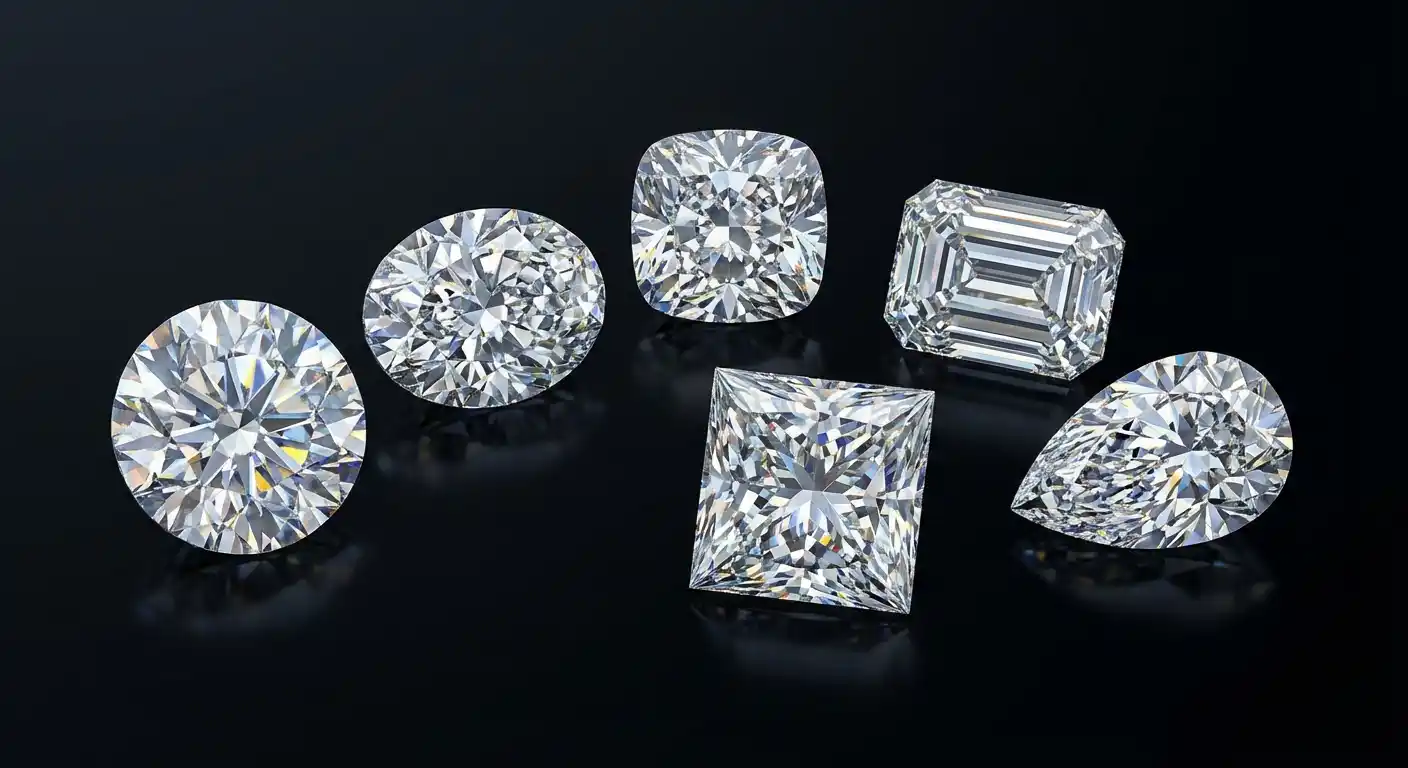
Different diamond shapes hide inclusions differently due to their faceting patterns.
Brilliant Cuts: More Forgiving
Shapes with complex faceting patterns create sparkle that masks inclusions:
| Shape | Inclusion Hiding | SI1 Eye-Clean Rate |
|---|---|---|
| Round Brilliant | Excellent | 65-75% |
| Princess | Excellent | 60-70% |
| Radiant | Very Good | 55-65% |
| Cushion | Very Good | 55-65% |
| Oval | Good | 50-60% |
| Pear | Good | 50-60% |
| Marquise | Good | 50-60% |
The intense light return in brilliant cuts camouflages minor imperfections.
Step Cuts: More Revealing
Large, flat facets act like windows, making inclusions more visible:
| Shape | Inclusion Hiding | Safe Clarity |
|---|---|---|
| Emerald | Poor | VS2 or higher |
| Asscher | Poor | VS2 or higher |
For step cuts, SI1 is riskier. Most experts recommend VS2 as the minimum for reliable eye-cleanliness.
Size Matters
As diamonds increase in carat weight, inclusions become more visible:
Size and Clarity Recommendations
| Carat Weight | Recommended Minimum | Notes |
|---|---|---|
| Under 0.75 ct | SI1 (with inspection) | Small size masks most inclusions |
| 0.75-1.25 ct | SI1 or VS2 | Sweet spot for SI1 value |
| 1.25-2.00 ct | VS2 | SI1 becomes riskier |
| 2.00-3.00 ct | VS2 or VS1 | Larger face shows more |
| 3.00+ ct | VS1 or higher | Inclusions magnified by size |
Larger diamonds effectively magnify their inclusions. A barely visible inclusion in a 1-carat stone might be obvious in a 2.5-carat version of the same diamond.
How to Shop for Eye-Clean Diamonds
Step 1: Start with the Right Clarity Grade
For brilliant cuts under 2 carats, begin with SI1. For step cuts or larger stones, start with VS2.
Step 2: Require High-Resolution Imagery
Never buy an SI1 diamond without viewing:
- 360° video showing the diamond from all angles
- High-resolution photos (at least 20x magnification imagery)
- 10x magnification and 2x magnification views to simulate real-world appearance
Our Diamond Screener links to retailers providing detailed imagery for every stone.
Step 3: Check the Clarity Plot
Review the diamond certificate to see where inclusions are located. Avoid diamonds with inclusions plotted directly under the table.
Step 4: Evaluate at Realistic Magnification
Most retailer websites show diamonds at 40x magnification, making every stone look included. Look for options to view at lower magnification (2x-5x) to approximate real-world appearance.
Step 5: Consider the Setting
If inclusions are near the edges, prongs may hide them completely once set. Factor in where the stone will be mounted.
Using the Diamond Screener
Our Diamond Screener helps you find eye-clean diamonds:
- Filter by clarity (VS2 and SI1)
- Set your other specifications (cut, color, carat)
- Compare pricing across clarity grades
- Click through to view high-resolution imagery on retailer sites
- Inspect each diamond at multiple magnification levels
The screener shows exactly how much you save by choosing VS2 or SI1 over higher grades—often $500-$2,000 for the same visible quality.
Find eye-clean value: Use our Diamond Screener to compare VS2 and SI1 diamonds and discover how much you can save on clarity.
Common Eye-Clean Mistakes
Assuming all VS2/SI1 diamonds are eye-clean: While VS2 is usually safe, SI1 requires inspection. Never assume—always verify.
Ignoring inclusion type: Dark inclusions are more visible than white ones. A "larger" white crystal may be less visible than a "smaller" dark spot.
Forgetting about diamond size: A clarity grade that works for 1 carat may not work for 2 carats. Adjust expectations as carat weight increases.
Skipping the imagery: Certificates tell you the grade but don't show you what the inclusions look like. Always view photos or video.
Overlooking shape impact: An SI1 round brilliant has a much higher eye-clean chance than an SI1 emerald cut. Match clarity to shape.
Buying SI2 to save more: The jump from SI1 to SI2 dramatically reduces eye-clean rates (from ~60% to ~15%). The extra savings usually aren't worth the risk.
Eye-Clean Value Examples
Here's what eye-clean shopping can save:
Example 1: 1-Carat Round Brilliant
| Clarity | Approximate Price | Eye-Clean? |
|---|---|---|
| VVS2 | $6,500 | Yes (guaranteed) |
| VS2 | $5,000 | Yes (95% chance) |
| SI1 | $4,200 | Yes (if selected well) |
Savings: Choosing a well-selected SI1 over VVS2 saves $2,300 with identical visible appearance.
Example 2: 1.5-Carat Cushion Cut
| Clarity | Approximate Price | Eye-Clean? |
|---|---|---|
| VS1 | $9,500 | Yes (guaranteed) |
| VS2 | $7,800 | Yes (90% chance) |
| SI1 | $6,500 | Maybe (inspect carefully) |
Savings: VS2 offers the best value—high eye-clean probability with meaningful savings.
Frequently Asked Questions
What does eye-clean actually mean?
An eye-clean diamond shows no visible inclusions when viewed face-up at normal distance (6-12 inches) without magnification. The inclusions exist under a loupe but are invisible in everyday viewing.
Are all VS2 diamonds eye-clean?
Most are (85-95%), but not all. VS2 diamonds with large or dark table inclusions may show visible imperfections. Always verify with imagery when possible.
How do I find an eye-clean SI1 diamond?
Look for: inclusions near edges rather than center, white rather than dark crystals, brilliant-cut shapes that hide imperfections, and always view high-resolution imagery before purchasing.
Is SI1 too risky for ?
Not if you select carefully. About 50-70% of SI1 brilliant-cut diamonds are eye-clean. With proper inspection, SI1 offers excellent value for engagement rings under 2 carats.
Does eye-clean affect resale value?
Slightly. Certified grade matters for resale, so a VS2 may resell better than an SI1 even if both appear identical. However, the initial savings often outweigh this concern.
Why don't retailers just sell eye-clean diamonds?
Eye-clean isn't an official grading category—it's a visual assessment. Retailers sell by certified grades, which is why buyers must evaluate eye-cleanliness themselves.
The Bottom Line
The eye-clean threshold is what matters for visible beauty. Once a diamond looks flawless without magnification, paying more for higher clarity grades buys documentation, not better appearance.
For brilliant-cut diamonds under 2 carats, a well-selected SI1 or VS2 provides the same visual quality as VVS grades at significantly lower cost. The key is careful selection—viewing imagery, checking inclusion placement, and matching clarity grade to diamond shape and size.
Ready to find your eye-clean diamond? Our Diamond Screener helps you compare VS2 and SI1 options from trusted retailers, with links to high-resolution imagery for every stone.
For more diamond education, explore our complete diamond buying guide, learn about cut grades, or compare color grades.
About the Author
Alfreda Borror
Alfreda Borror is the founding editor of Opulent Opal, writing research-based buying guides on diamonds, birthstones, and fine jewelry.