The Complete Guide to Earrings: Types, Styles & How to Choose

This post may contain affiliate links. Read our affiliate policy
A single pair of diamond studs can take you from a Tuesday meeting to a Saturday wedding. The same gold hoops that look effortless at brunch elevate a simple black dress for dinner. No other jewelry category offers this kind of versatility—or this many choices.
That range can be paralyzing. Walk into any jewelry store and you'll face dozens of styles, metals, and price points. This guide cuts through the overwhelm, covering everything from earring types and metals to face shape styling and care, so you can build a collection that works as hard as you do.
Table of Contents
- Why Earrings Matter
- Earring Types at a Glance
- Finding Your Perfect Metal
- Matching Earrings to Your Face Shape
- Earrings for Every Occasion
- Sizing Guide: From Studs to Hoops
- Caring for Your Earrings
- Building Your Earring Collection
- FAQ
Why Earrings Matter
Of all jewelry pieces, earrings have the most direct impact on how your face is perceived. They draw attention to your eyes, highlight your bone structure, and can make your complexion appear brighter or warmer depending on the metal and stones you choose.
Unlike necklaces or bracelets that compete with clothing necklines and sleeves, earrings remain visible regardless of what you wear. A single pair of statement earrings can elevate a simple white shirt, while delicate studs add polish to professional attire without distraction.
The Psychology of Earring Choice
Research in fashion psychology suggests that earring choice communicates subtle messages about personality and intention:
- Studs: Often associated with reliability, professionalism, and understated confidence
- Hoops: Signal boldness, creativity, and approachability
- Dangles: Suggest femininity, playfulness, and artistic sensibility
- Statement pieces: Communicate confidence, fashion-forward thinking, and willingness to stand out
Understanding these associations helps you choose earrings that align with how you want to present yourself in different situations.
Earring Types at a Glance
The jewelry world offers an extraordinary variety of earring styles. Here's a comprehensive overview of the most popular types.
Studs
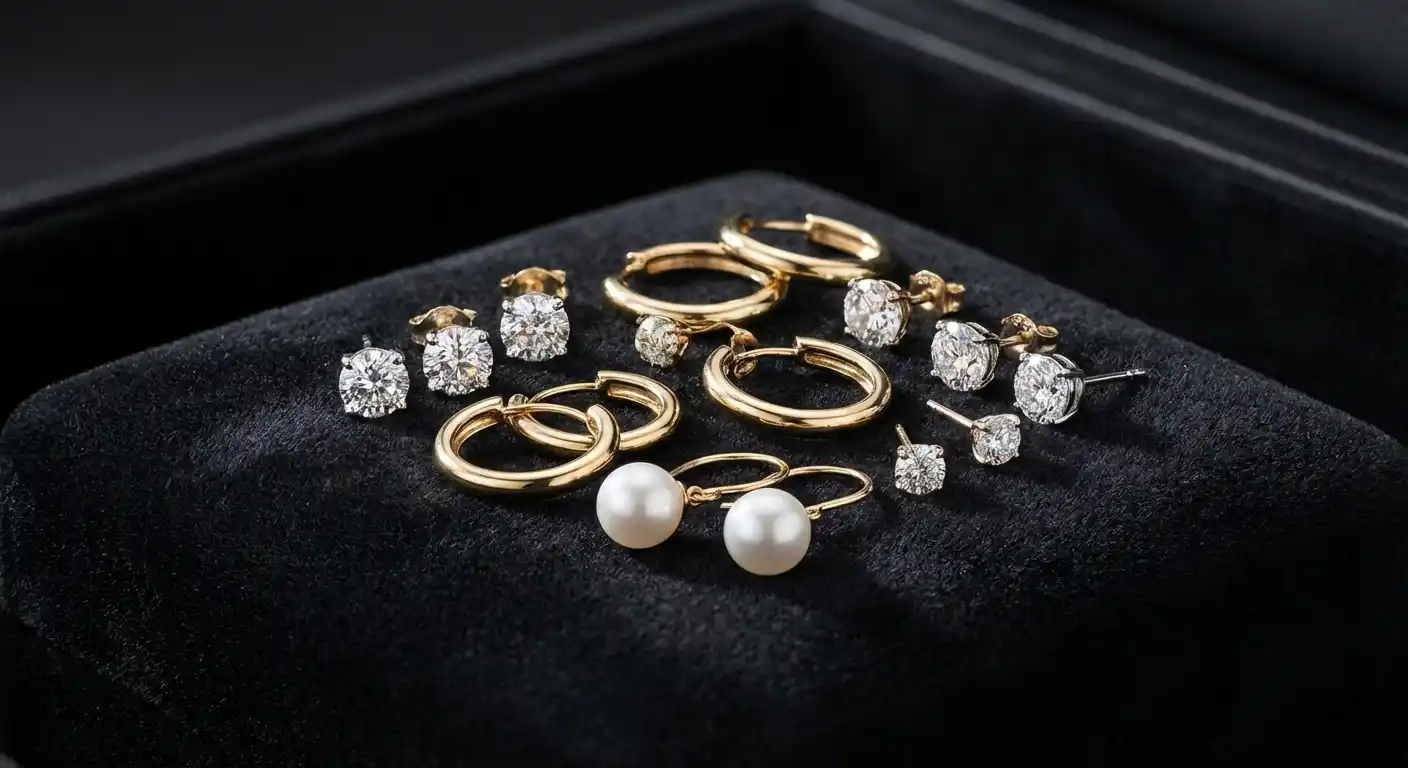
The most versatile earring style, studs sit directly on the earlobe with a post that passes through the piercing and secures with a backing. Available in every conceivable design—from classic diamond solitaires to whimsical shapes—studs work for virtually any occasion.
Best for: Everyday wear, professional settings, first earrings for new piercings
Popular styles:
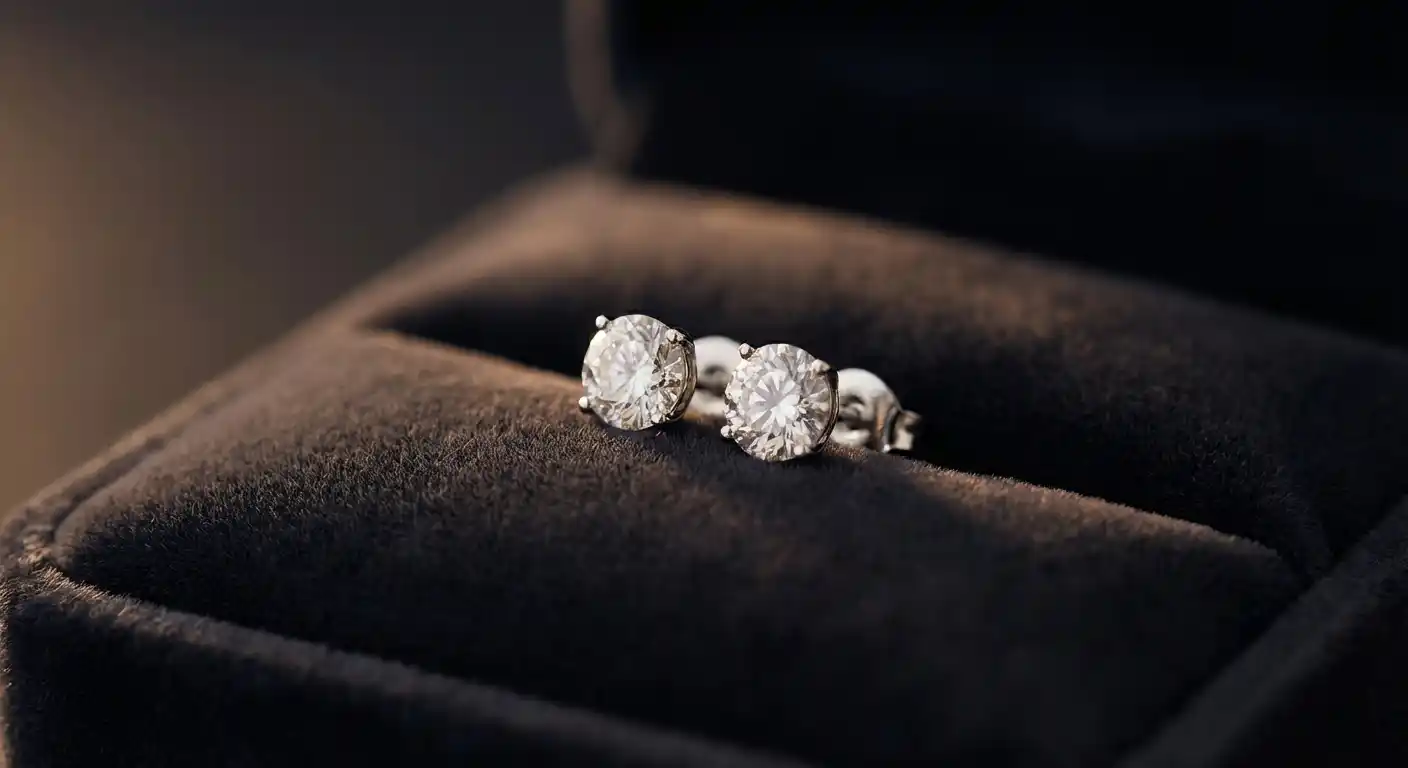
- Diamond solitaires (round, princess, or fancy shapes)
- Pearl studs (freshwater, Akoya, or South Sea)
- Colored gemstones (birthstones, sapphires, emeralds)
- Ball studs (plain or textured metal)
Hoops
Circular earrings that pass through the piercing and form a complete or partial circle. Hoops range from tiny huggies that hug the earlobe to dramatic oversized circles.
Best for: Adding dimension to any look, casual to dressy versatility
Key variations:
- Huggies: Small hoops (8-15mm) that sit close to the ear
- Classic hoops: Medium-sized (20-35mm) traditional circles
- Oversized hoops: Large statement pieces (40mm+)
- Continuous hoops: Seamless circles without visible closure
Drop Earrings
Also called dangle earrings, drops hang below the earlobe and move with your head. Length varies from subtle (just below the lobe) to dramatic (shoulder-grazing).
Best for: Evening events, adding elegance, elongating the face
Popular styles:
- Linear drops (straight vertical designs)
- Teardrop shapes
- Cascade or waterfall designs
- Articulated drops (multiple moving sections)
Elaborate multi-tiered drops that fan out like a decorative chandelier. These statement pieces typically feature multiple gemstones, crystals, or metalwork details.
Best for: Formal occasions, weddings, making a dramatic statement
Delicate chains that pass through the piercing and hang at varying lengths on both sides of the earlobe. The chain can be pulled through to adjust the length on each side.
Best for: Minimalist style, modern aesthetic, versatile length options
Ear Climbers
Also called crawlers, these innovative earrings curve upward along the outer edge of the ear, creating the illusion of multiple piercings or a climbing vine effect.
Best for: Trendy, modern look without additional piercings
Ear Cuffs
Non-pierced earrings that clip onto the ear's cartilage or wrap around the outer edge. Perfect for those who want ear decoration without commitment.
Best for: Experimenting with cartilage looks, no-piercing options
For a detailed exploration of every earring style, see our complete types of earrings guide.
Finding Your Perfect Metal
The metal you choose affects comfort (especially for sensitive skin), durability, and how the earrings complement your coloring.
Gold
Gold remains the most popular earring metal, available in several varieties:
Yellow Gold: Classic warmth that complements warm skin tones. Purity ranges from 10K (most durable, least gold) to 24K (purest, softest).
- 14K gold: Ideal balance of durability and purity for earrings
- 18K gold: Richer color, slightly softer
White Gold: Created by alloying yellow gold with white metals (palladium, nickel, or silver) and plating with rhodium. Complements cool skin tones.
- Requires rhodium replating every 1-2 years
- Some white gold contains nickel—problematic for sensitive ears
Rose Gold: Gold alloyed with copper for a romantic pink hue. Flatters most skin tones.
- The copper content provides extra durability
- Can cause reactions in copper-sensitive individuals
Platinum
The most hypoallergenic precious metal, platinum is naturally white and never needs replating. Its weight feels substantial and secure.
Pros: Hypoallergenic, durable, maintains color permanently
Cons: Highest price point, limited design availability in earrings
Sterling Silver
An affordable precious metal that works well for those without sensitivity. Sterling silver (92.5% silver) offers bright white luster.
Pros: Affordable, beautiful shine, widely available
Cons: Tarnishes over time, may cause reactions in some people
Surgical Steel
Medical-grade stainless steel designed for body contact. An excellent choice for new piercings and sensitive ears.
Pros: Very affordable, hypoallergenic, durable
Cons: Limited to simpler designs, less luxurious appearance
Titanium
Lightweight, strong, and completely hypoallergenic. Titanium is increasingly popular for those with metal sensitivities.
Pros: Featherlight, hypoallergenic, can be colored through anodization
Cons: Limited design options, not a precious metal
Niobium
A rare metal that shares titanium's hypoallergenic properties. It can be anodized to produce vibrant colors without coating or plating.
Pros: Truly hypoallergenic, colorful options, won't irritate
Cons: Expensive, limited availability
For those struggling with earring sensitivities, our hypoallergenic earrings guide provides detailed advice on finding comfortable options.
Matching Earrings to Your Face Shape
The right earrings can balance facial proportions, drawing attention to your best features. Here's how to choose based on face shape.
Round Face
Goal: Add length and angles to balance width
Best choices:
- Long drop earrings that elongate
- Angular shapes (rectangles, triangles)
- Vertical linear designs
Avoid: Round studs and circular hoops that emphasize roundness
Oval Face
Goal: Maintain natural balance (oval is considered the "ideal" face shape)
Best choices: Nearly any style works—lucky you!
- Studs, hoops, drops, and chandeliers all flatter
- Experiment freely with different lengths and shapes
Avoid: Overly long earrings that can elongate too much
Square Face
Goal: Soften angular features with curves
Best choices:
- Round hoops and curved shapes
- Teardrop and oval designs
- Dangles with soft, flowing lines
Avoid: Square or rectangular shapes that echo jaw angles
Heart Face
Goal: Add width at the jawline to balance wider forehead
Best choices:
- Teardrop shapes (wider at bottom)
- Chandelier earrings that fan out
- Triangle designs pointing downward
Avoid: Styles that widen at the top or are very short
Oblong Face
Goal: Add width and shorten the appearance of length
Best choices:
- Round studs and circular shapes
- Short drops and huggies
- Cluster designs that add horizontal dimension
Avoid: Long, narrow dangles that elongate further
Diamond Face
Goal: Balance narrow forehead and chin with wider cheekbones
Best choices:
- Styles wider at top (inverted triangles)
- Drops with detail at ear level
- Curved shapes that soften angles
For personalized recommendations with visual examples, explore our earrings for face shape guide.
Earrings for Every Occasion
Different settings call for different earring approaches. Here's how to navigate various occasions.
Everyday/Casual
For daily wear, prioritize comfort, durability, and versatility.
Recommended styles:
- Small to medium studs (5-8mm)
- Tiny huggies (10-12mm)
- Simple threaders
- Small hoops (15-20mm)
Material considerations: Choose sturdy metals and secure backings. Avoid delicate stones that could chip during activities.
Professional/Office
Balance polish with subtlety. Earrings should enhance your appearance without distracting from your expertise.
Recommended styles:
- Classic pearl studs (6-9mm)
- Small diamond or CZ studs
- Small gold or silver hoops
- Understated metal studs
Guidelines:
- Keep drops under 1 inch total length
- Avoid anything that makes noise when you move
- Choose metals that complement your other jewelry and watch
Evening/Formal
Special occasions invite more dramatic choices. This is the time for statement pieces.
Recommended styles:
- Diamond or crystal drops
- Chandelier earrings
- Bold hoops
- Colorful gemstone dangles
Tips:
- Match formality to the event (black-tie calls for more sparkle)
- Consider your hairstyle—updos showcase dangles beautifully
- Balance earring drama with neckline simplicity
Weddings
Whether you're the bride or a guest, wedding earrings require special consideration.
For brides:
- Complement your dress neckline and hairstyle
- Consider your veil or headpiece
- Pearl drops or diamond studs photograph beautifully
- Ensure comfort for a long day
For guests:
- Don't outshine the bride
- Match the wedding's dress code
- Consider outdoor conditions (wind, sun)
Active/Sports
When exercise is involved, safety and security are paramount.
Recommended styles:
- Small studs with secure backs (screw-backs or friction tight)
- Tiny huggies that won't snag
- Consider removing earrings entirely for contact sports
For detailed styling advice across occasions, see our earrings for every occasion guide.
Sizing Guide: From Studs to Hoops
Understanding earring measurements helps you choose the right scale for your style and comfort.
Stud Sizes
Stud sizes are typically measured by the gemstone or metal ball diameter:
| Size | Description | Best For |
|---|---|---|
| 3-4mm | Very small, delicate | Second/third holes, subtle accent |
| 5-6mm | Small, everyday | Work, daily wear, classic look |
| 7-8mm | Medium, noticeable | Evening, making a statement |
| 9-10mm | Large, dramatic | Special occasions, bold style |
| 11mm+ | Very large, statement | Fashion-forward, maximum impact |
Diamond stud carat reference:
- 0.25 total carat weight (tcw): ~3.5mm each
- 0.50 tcw: ~4mm each
- 1.00 tcw: ~5mm each
- 1.50 tcw: ~6mm each
- 2.00 tcw: ~6.5mm each
For detailed guidance on diamond earring sizing, see our diamond stud size guide.
Hoop Sizes
Hoop diameter determines their visual impact:
| Diameter | Name | Effect |
|---|---|---|
| 8-12mm | Tiny/Huggie | Hugs the earlobe, minimal |
| 15-20mm | Small | Subtle, professional |
| 25-35mm | Medium | Classic, versatile |
| 40-50mm | Large | Statement, noticeable |
| 55mm+ | Oversized | Dramatic, fashion-forward |
Width matters too: Thin hoops (1-2mm) appear delicate; thick hoops (4-6mm) read bolder and more substantial.
For more on choosing the right hoop size, see our hoop earrings guide.
Drop/Dangle Lengths
Drop length is measured from the bottom of the earlobe:
| Length | Effect |
|---|---|
| 1/2 inch | Just visible, subtle movement |
| 1 inch | Classic drop, elegant |
| 1.5 inches | Noticeable, evening appropriate |
| 2+ inches | Dramatic, statement |
Consider your proportions: Petite frames suit shorter drops; taller individuals can carry longer lengths.
Caring for Your Earrings
Proper care extends the life and beauty of your earring collection.
Daily Habits
- Put earrings on last (after hairspray, perfume, makeup)
- Remove before swimming, showering, or exercising
- Store in a lined jewelry box or individual pouches
- Avoid sleeping in earrings (especially hooks and posts)
Cleaning Basics
For gold and platinum:
- Soak in warm water with mild dish soap for 15-20 minutes
- Gently brush with a soft toothbrush
- Rinse thoroughly and pat dry with a soft cloth
For silver:
- Use a silver polishing cloth regularly
- Store with anti-tarnish strips
- Clean with silver-specific solutions when needed
For pearls:
- Wipe with a soft, damp cloth after wearing
- Never soak or use harsh chemicals
- Store separately to prevent scratching
For gemstones:
- Clean diamonds, sapphires, and rubies like gold
- Softer stones (emeralds, opals) require gentler care
- When in doubt, consult a professional
Post Care for Piercings
Clean earring posts regularly to prevent infection and irritation:
- Remove earrings
- Clean posts with rubbing alcohol
- Allow to dry completely
- Wipe piercing holes with alcohol-soaked cotton
- Reinsert earrings
For comprehensive maintenance advice, see our earring care and cleaning guide.
Building Your Earring Collection
A well-curated earring collection provides options for any occasion without overwhelming your jewelry storage.
Essential Starter Collection
If you're building from scratch, these five styles cover most situations:
- Classic studs: Diamond, pearl, or simple metal (4-6mm)
- Small hoops: Gold or silver (15-20mm diameter)
- Medium hoops or huggies: For slightly bolder days
- Elegant drops: Subtle dangles for evening
- Statement pair: Your personality piece
Adding Specialty Pieces
Once you have basics covered, consider adding:
- Colored gemstone studs: Your birthstone or favorite color
- Chandelier earrings: For formal occasions
- Fashion earrings: Trendy pieces in costume materials
- Convertible earrings: Styles with detachable elements
Storage Tips
- Use a jewelry box with individual compartments
- Hang dangles to prevent tangling
- Keep studs in pairs using foam or earring cards
- Store sterling silver with anti-tarnish materials
- Consider a travel case for pieces you wear often
Frequently Asked Questions
How do I know if I'm allergic to certain earring metals?
Signs of metal allergy include itching, redness, swelling, and clear discharge around the piercing within hours or days of wearing earrings. Nickel is the most common culprit—found in many white gold alloys and costume jewelry. If you react, switch to hypoallergenic options like pure platinum, titanium, niobium, or nickel-free gold.
Can I wear the same earrings every day?
Yes, but choose high-quality, durable materials (14K+ gold, platinum, or surgical steel) and keep them clean. Remove at night to let piercings breathe and prevent discomfort. Some people develop sensitivities when earrings never come out—even to metals they previously tolerated.
How do I convert clip-on earrings to pierced?
Most jewelry repair shops can convert clip-on earrings to pierced (and vice versa). The process involves removing the clip mechanism and soldering a post and clutch in place. Cost typically ranges from $20-50 per pair depending on complexity.
What's the difference between 14K and 18K gold for earrings?
14K gold contains 58.3% pure gold; 18K contains 75% pure gold. For earrings, 14K is often preferable: it's more durable, less prone to scratching, and more affordable. The color difference is subtle—14K appears slightly lighter. 18K has richer color but is softer and costs more.
How should I match earrings to my necklace?
Coordination—not exact matching—creates the most sophisticated look:
- Match metal tones (all gold or all silver)
- Choose complementary scales (statement earrings with delicate necklace, or vice versa)
- Let one piece be the focal point
- Consider your neckline when balancing the two
How often should I have earrings professionally cleaned?
For fine jewelry worn frequently, professional cleaning once or twice a year keeps pieces sparkling and allows jewelers to check settings. Costume jewelry typically doesn't need professional attention—home cleaning suffices.
Start Your Earring Journey
Whether you're drawn to timeless diamond studs, bold statement hoops, or delicate threaders, the perfect earrings enhance your natural beauty and express your unique style. Use this guide to make informed choices, and remember: the best earrings are the ones that make you feel confident.
Explore our complete earring guide collection:
- Types of Earrings: Every Style and Name
- Earrings for Your Face Shape
- Diamond Stud Size Guide
- Earrings for Every Occasion
- Hypoallergenic Earrings Guide
- Earring Metals Explained
- Earring Care and Cleaning
- Hoop Earrings Guide
- Drop and Dangle Earrings
- Best Diamond Stud Earrings
- Best Pearl Earrings
About the Author
Alfreda Borror
Alfreda Borror is the founding editor of Opulent Opal, writing research-based buying guides on diamonds, birthstones, and fine jewelry.