Ring Scratches, Patina & Polishing: When to Restore

This post may contain affiliate links. Read our affiliate policy
All rings develop signs of wear over time—it's the natural result of daily use. Light scratches, dulled finishes, and patina are normal parts of a ring's life. Understanding what's normal wear versus what requires attention helps you respond appropriately without over-polishing (which can thin metal) or ignoring issues that need repair.
Table of Contents
- Normal Wear vs Damage
- Understanding Scratches
- Platinum Patina
- When to Polish
- Professional Polishing Process
- Home Maintenance
- FAQ
Normal Wear vs Damage
Learning to distinguish between normal wear and damage saves unnecessary worry—and helps you recognize when action is needed.
Normal Wear (No Action Required)
Light surface scratches:
- Fine lines visible under bright light
- Don't catch fingernail when rubbed across
- Distributed evenly across worn surfaces
- Common on any daily-wear ring
Dulled finish:
- Loss of original high shine
- Even matte appearance developing
- Occurs gradually over months/years
- Normal on all metals
Platinum patina:
- Soft, matte finish on platinum
- Actually redistributed metal (not lost)
- Considered desirable by many
- Protective layer develops
For understanding how platinum and gold differ in wear characteristics, see our gold vs platinum guide.
Slight wear patterns:
- More visible on high points
- Consistent with wear area
- No sharp edges or gouges
Concerning Wear (Monitor or Address)
Deep scratches:
- Catch your fingernail
- Visible groove in metal
- Concentrated in one area
- Could indicate repeated impact
Gouges or dents:
- Significant depression in metal
- Changes ring shape
- May affect stone security
- Indicates impact damage
Sharp edges developing:
- Metal worn away at edges
- Potential snag hazard
- May indicate structural thinning
- Especially concerning near prongs
Uneven wear:
- One area much more worn than others
- Indicates possible structural issue
- Or unusually concentrated stress
Understanding Scratches
Not all scratches are equal—severity determines appropriate response.
Surface Scratches
Characteristics:
- Very fine lines
- Affect only top layer of metal
- Don't catch fingernail
- Often barely visible except in direct light
Cause: Normal daily friction—touching surfaces, contact with other objects
Action: Normal maintenance; polishing cloth can minimize
Light Scratches
Characteristics:
- Clearly visible lines
- May slightly catch fingernail
- Generally follow direction of movement
- Common accumulation over months of wear
Cause: Contact with harder surfaces, daily wear
Action: Can be reduced with professional polishing; monitor depth
Deep Scratches
Characteristics:
- Definitely catch fingernail
- Visible groove or channel
- May appear brighter (fresh metal exposed)
- Usually from single incident
Cause: Impact with hard object, caught on something
Action: Professional polishing recommended if bothersome; ensure no structural damage
Gouges
Characteristics:
- Significant material displacement
- Clear depression or groove
- May have raised edges
- Ring may feel different on finger
Cause: Significant impact
Action: Professional assessment; may need repair beyond polishing
Which Metals Scratch Easiest?
| Metal | Scratch Resistance | Notes |
|---|---|---|
| Tungsten | Extremely high | Almost impossible to scratch |
| Platinum | High | Scratches but metal displaces |
| Palladium | High | Similar to platinum |
| 14K Gold | Moderate | Most popular, reasonable durability |
| 18K Gold | Lower | Softer due to higher gold content |
| Silver | Low | Scratches easily |
Platinum Patina
Platinum's unique patina deserves special understanding.
What Is Patina?
When platinum scratches, the metal doesn't wear away—it displaces. Microscopic scratches redistribute metal across the surface, creating a soft, matte finish called patina.
Characteristics:
- Subtle matte appearance
- Soft, brushed look
- Develops over months to years
- Occurs on all platinum jewelry
Patina: Feature or Flaw?
The case for embracing patina:
- Sign of authentic wear (harder to fake than bright polish)
- Vintage, lived-in aesthetic
- No metal loss (unlike gold scratching)
- Low-maintenance acceptance
- Many consider it more beautiful than high polish
The case for removing patina:
- Preference for original bright finish
- Want ring to look "newer"
- Consistent appearance matters to you
- Frequent polishing is fine as long as not excessive
There's no "right" answer—it's purely aesthetic preference.
Patina Over Time
Year 1: Subtle softening of finish; many owners don't notice Years 2-3: Noticeable matte appearance develops Years 5+: Full patina; soft, worn look that many treasure
When to Polish
Knowing when polishing is appropriate prevents both neglect and over-maintenance.
Good Reasons to Polish
- Deep scratches that bother you aesthetically
- Scratches near prongs (may indicate structural concern—see our prong inspection guide)
- Significant single-incident damage
- Preparing for major event (wedding, anniversary)
- Personal preference for bright finish
Unnecessary Polishing
- Light surface scratches (normal wear)
- Platinum patina you could learn to appreciate
- Frequent "preventive" polishing
- Every time you notice any mark
Polishing Frequency Guidelines
Gold rings:
- Maximum once per year for daily wear
- Every 2-3 years is often sufficient
- Consider if scratches actually bother you
Platinum rings:
- Many owners never polish (embrace patina)
- Once every 2-5 years if preferring bright finish
- Less frequent = preserved metal
Why Not Polish Frequently?
Polishing removes metal:
- Each polishing takes away microscopic layer
- Frequent polishing thins the ring over time
- Can eventually affect structural integrity
- Prongs can be weakened by repeated polishing
Alternative: Learn to appreciate natural wear as your ring's unique character.
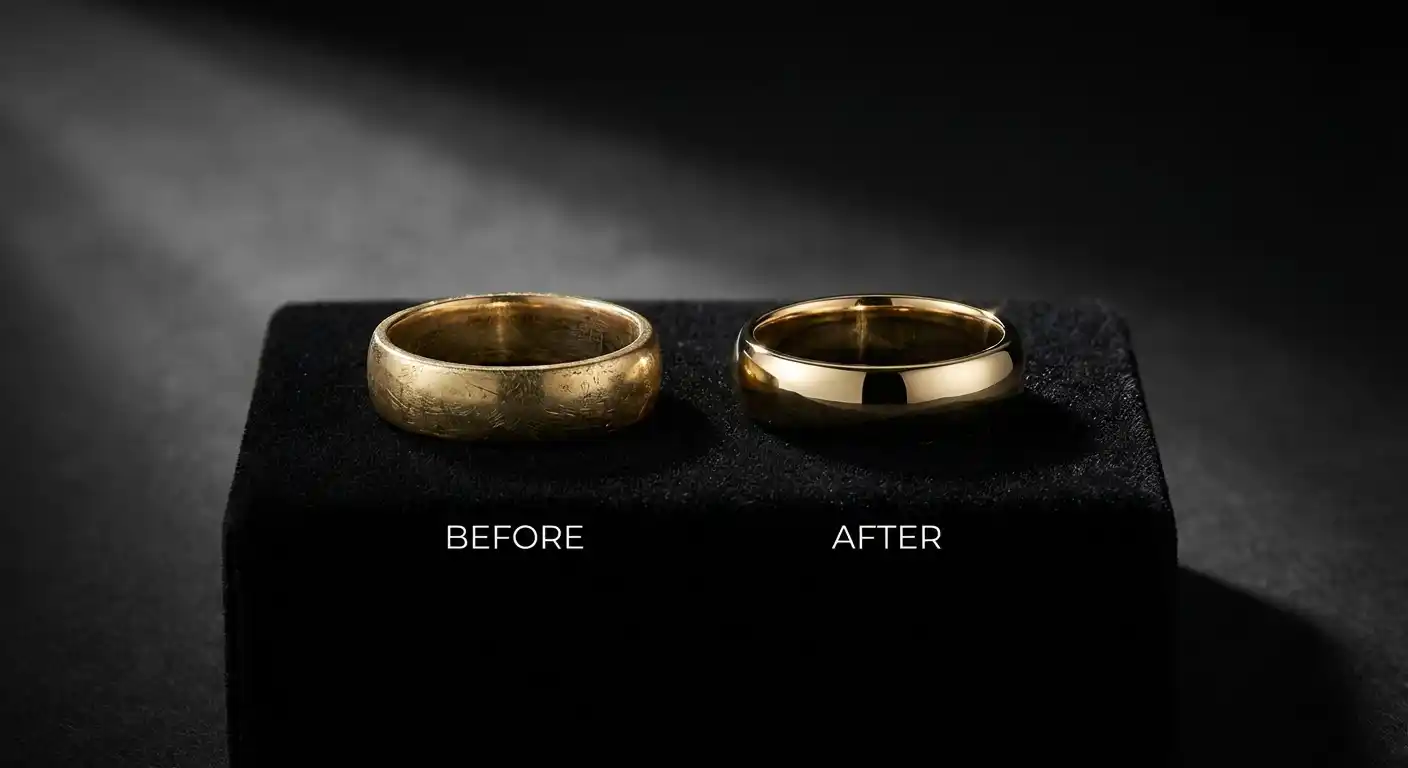
Professional Polishing Process
When polishing is appropriate, professional service ensures best results.
What Happens
- Assessment: Jeweler examines ring, discusses expectations
- Cleaning: Deep clean before polishing
- Initial polish: Removes major scratches with progressive compounds
- Fine polish: Achieves desired finish (high shine or satin)
- Inspection: Check for issues revealed by polishing
- Final clean: Remove polishing compounds
Finish Options
High polish: Mirror-like shine (original factory finish) Brushed/satin: Soft, matte finish (intentional, even texture) Hammered: Textured surface (if original design)
Duration and Cost
Time: 30 minutes to several hours depending on severity Cost: $30-$100 for standard polishing; more for severe damage. For guidance on cost-benefit decisions, see when to repair vs replace your ring.
What to Expect After
- Ring will look significantly newer
- May feel slightly thinner (imperceptible usually)
- New scratches will be more visible against fresh finish
- Patina will begin developing again immediately
Home Maintenance
Proper home care minimizes scratches and maintains appearance between professional services.
Polishing Cloths
What they do:
- Remove light surface scratches
- Buff out fingerprints and minor marks
- Restore some shine without removing metal
- Safe for regular use
How to use:
- Wipe ring gently after wearing
- Use light pressure
- Follow the ring's shape (not against the grain)
- Different cloth areas for different metals (don't mix)
What Not to Do at Home
Never:
- Use abrasive household items (toothpaste, baking soda on gold/platinum)
- Attempt to buff out deep scratches
- Use power tools or buffers
- Try to "fix" gouges or dents
- Over-polish (even with cloths, less is more)
Reducing Scratches
Wear habits:
- Remove ring during high-risk activities
- Store separately from other jewelry
- Be mindful when handling rough objects
Storage:
- Individual compartment in jewelry box
- Soft lining to prevent scratches
- Never loose with other items
For proper storage guidance, see our jewelry storage guide.
Frequently Asked Questions
My ring is only a few months old and already scratched. Is this normal?
Yes. All daily-wear rings develop scratches quickly. This is normal wear, not a defect.
Can scratches be completely removed?
Light scratches can be fully removed. Deep scratches may be minimized but not always eliminated without removing significant metal.
Does polishing weaken my ring?
Each polishing removes a tiny amount of metal. Occasional polishing (every 1-3 years) is fine. Frequent polishing can gradually thin the ring.
Should I polish my ring before having it appraised?
It doesn't matter. Appraisals assess the ring's characteristics and replacement value, not its current cosmetic condition.
Why does my gold ring scratch more than my friend's platinum ring?
They likely scratch equally, but platinum patina makes scratches less visible over time. Gold scratches remain visible because the metal wears away rather than displacing.
My platinum ring looks dull. Is something wrong?
That's patina—completely normal for platinum. Many people prefer this soft, aged appearance. If you prefer high shine, professional polishing will restore it.
How can I tell if a scratch is just cosmetic or structural?
If the scratch catches your fingernail deeply, is near a prong, or you notice other issues (loose stone, sharp edges), have a jeweler assess it. Most scratches are purely cosmetic. Our guide to professional vs DIY cleaning explains what jewelers look for during inspections.
The Bottom Line
A few scratches don't diminish your ring's meaning or value—they add character and tell the story of your life together. Learn to distinguish between normal wear you can embrace and actual damage requiring attention.
Reserve polishing for when it's truly needed, and appreciate that the most beautiful engagement rings often show signs of being well-loved and constantly worn.
For complete ring care guidance, see our ring care maintenance guide.
Sunshine Polishing Cloth for Jewelry - Professional Grade

for Jewelry Professional Grade
Professional-grade polishing cloth used by jewelers.
Professional-grade polishing cloth used by jewelers. Removes light scratches and fingerprints. Safe for gold, platinum, and silver.
"Amazing results on light surface marks. My ring looks refreshed without needing to go to the jeweler.
Hagerty Luxury Jewelry Foam Cleaner and Polish

Hagerty Luxury Jewelry Foam Cleaner and Polish
Foaming cleaner that cleans and lightly polishes in one step.
Foaming cleaner that cleans and lightly polishes in one step. Safe for precious metals and most gemstones.
"Great for routine maintenance. Cleans thoroughly and leaves a subtle polish without being abrasive.
Review of What We Liked
for Jewelry Professional Grade
Professional-grade polishing cloth used by jewelers.
Hagerty Luxury Jewelry Foam Cleaner and Polish
Foaming cleaner that cleans and lightly polishes in one step.
About the Author
Alfreda Borror
Alfreda Borror is the founding editor of Opulent Opal, writing research-based buying guides on diamonds, birthstones, and fine jewelry.