The Ultimate Guide to Birthstones: Month-by-Month Meanings, Colors & Jewelry

This post may contain affiliate links. Read our affiliate policy
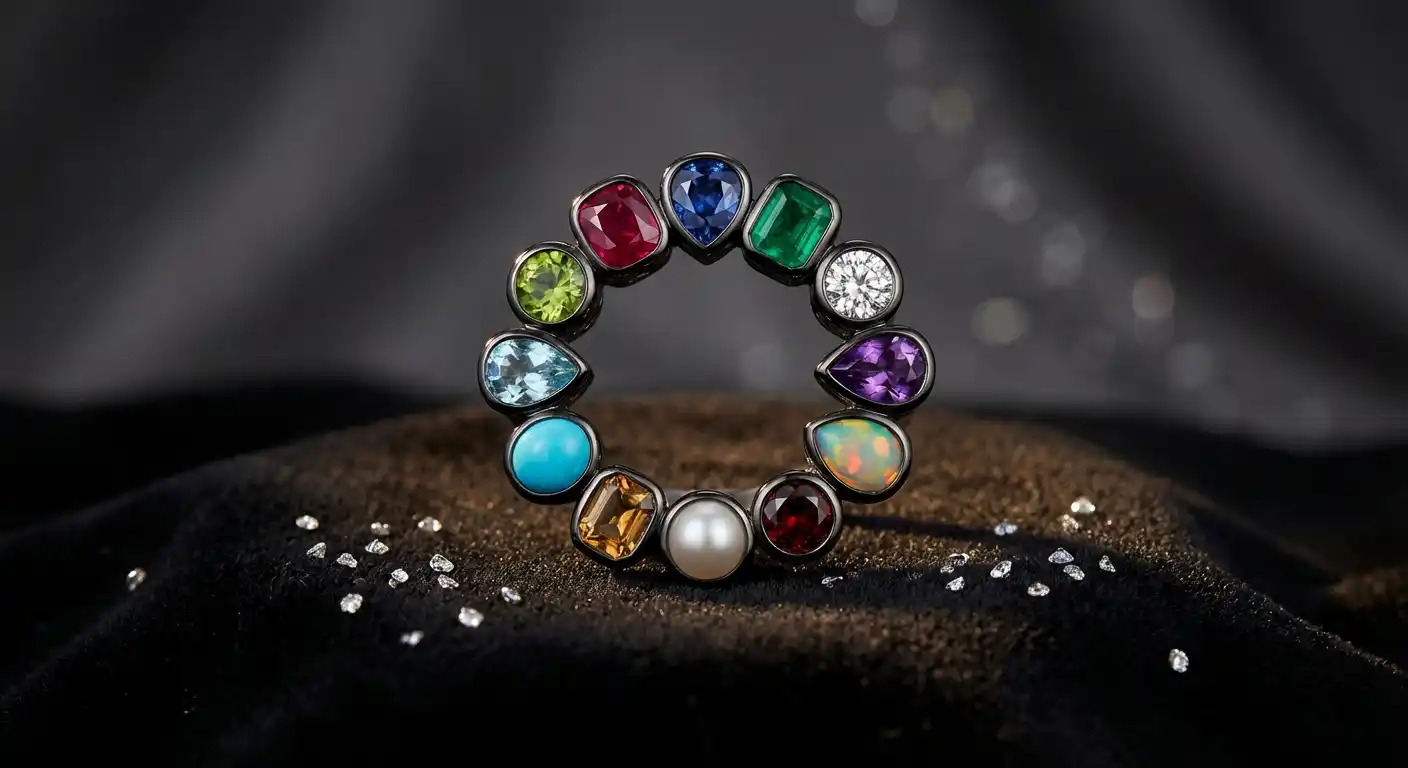
Birthstones have captivated humanity for thousands of years, with each gem carrying unique symbolism, history, and beauty. Whether celebrating a birthday, commemorating an anniversary, or simply choosing a meaningful piece of jewelry, understanding birthstones adds depth to your selection. This comprehensive guide explores all twelve birthstones, their meanings, origins, and how to select the most stunning jewelry for each month.
The History of Birthstones
The concept of birthstones traces back to ancient times. Biblical scholars connect the tradition to the breastplate of Aaron, which featured twelve stones representing the twelve tribes of Israel. Over centuries, these stones became associated with the twelve months of the year and later with zodiac signs. The first standardized modern birthstone list was established in 1912 by the National Association of Jewelers in the United States, which has been updated several times since to add alternative stones for various months.
Not sure which stone is right for you? Take our Birthstone Quiz to discover the gem that best matches your personality.
January: Garnet
Color: Deep Red (also green, orange, pink) Meaning: Protection, friendship, trust, safe travels Hardness: 6.5-7.5 Mohs
Garnet, named from the Latin "granatus" meaning pomegranate, has adorned humanity since the Bronze Age. Ancient Egyptian pharaohs wore garnet necklaces, and Roman nobles used garnet signet rings to seal important documents. The most famous variety, Bohemian garnet, sparked a jewelry industry in Victorian-era Czech Republic that remains influential today.
While most associate garnet with deep burgundy red, this gemstone family includes vibrant green tsavorite, orange spessartine, and pink rhodolite varieties. For those born in January, garnet symbolizes loyalty, unchanging affection, and success.
Read our complete January Garnet guide →
February: Amethyst
Color: Purple (pale lavender to deep violet) Meaning: Clarity, spiritual growth, peace, courage Hardness: 7 Mohs
Amethyst, the stunning purple variety of quartz, once rivaled diamonds in rarity and value. Ancient Greeks believed it prevented intoxication—the name derives from "amethystos," meaning "not drunk." Throughout history, amethyst adorned royalty, clergy, and nobility as a symbol of power and wisdom.
Today, amethyst remains beloved for its rich purple hues and accessibility. February-born individuals wearing amethyst are said to enjoy clarity of mind, protection from negative energies, and strengthened relationships.
Read our complete February Amethyst guide →
March: Aquamarine
Color: Pale Blue to Blue-Green Meaning: Courage, calm, clear communication, safe voyages Hardness: 7.5-8 Mohs
Aquamarine, meaning "water of the sea" in Latin, evokes the tranquil colors of tropical oceans. Ancient sailors carried aquamarine as talismans for protection and safe passage. The gem was believed to be the treasure of mermaids and to calm waves and keep sailors safe.
This member of the beryl family (cousin to emerald) ranges from nearly colorless to deep blue-green, with the most prized specimens displaying a pure, saturated blue. March-born individuals are said to benefit from aquamarine's calming energy and enhanced communication abilities.
Read our complete March Aquamarine guide →
April: Diamond
Color: Colorless (also yellow, pink, blue, and more) Meaning: Eternal love, strength, resilience, clarity Hardness: 10 Mohs
Diamond, the hardest natural substance on Earth, has symbolized eternal love and invincibility for centuries. The name derives from the Greek "adamas," meaning unconquerable. Ancient Hindus believed diamonds were created by lightning bolts striking rocks, while Romans thought they were splinters from falling stars.
April-born individuals wearing diamonds are said to embody confidence, authenticity, and resilience. While colorless diamonds remain most popular, fancy colored diamonds in yellow, pink, and blue offer unique alternatives for those seeking something distinctive.
Read our complete April Diamond guide →
May: Emerald
Color: Green (yellow-green to blue-green) Meaning: Renewal, wisdom, fertility, love, rebirth Hardness: 7.5-8 Mohs
Emerald, Cleopatra's favorite gemstone, has symbolized rebirth and love since ancient times. The Egyptians mined emeralds as early as 330 BC, and the queen famously claimed all emerald mines as her own. Ancient Romans dedicated emerald to Venus, goddess of love and beauty.
Colombian emeralds set the standard today, producing over 70% of the world's supply with unmatched color and clarity. May-born individuals are associated with wisdom, truth, and the renewal of spring. Emerald's lush green makes it one of the most recognizable and coveted gems.
Read our complete May Emerald guide →
June: Pearl, Alexandrite & Moonstone
Colors: White/Cream (pearl), Color-changing green/red (alexandrite), Blue sheen (moonstone) Meaning: Purity, wisdom, balance, intuition Hardness: 2.5-4.5 (pearl), 8.5 (alexandrite), 6-6.5 (moonstone)
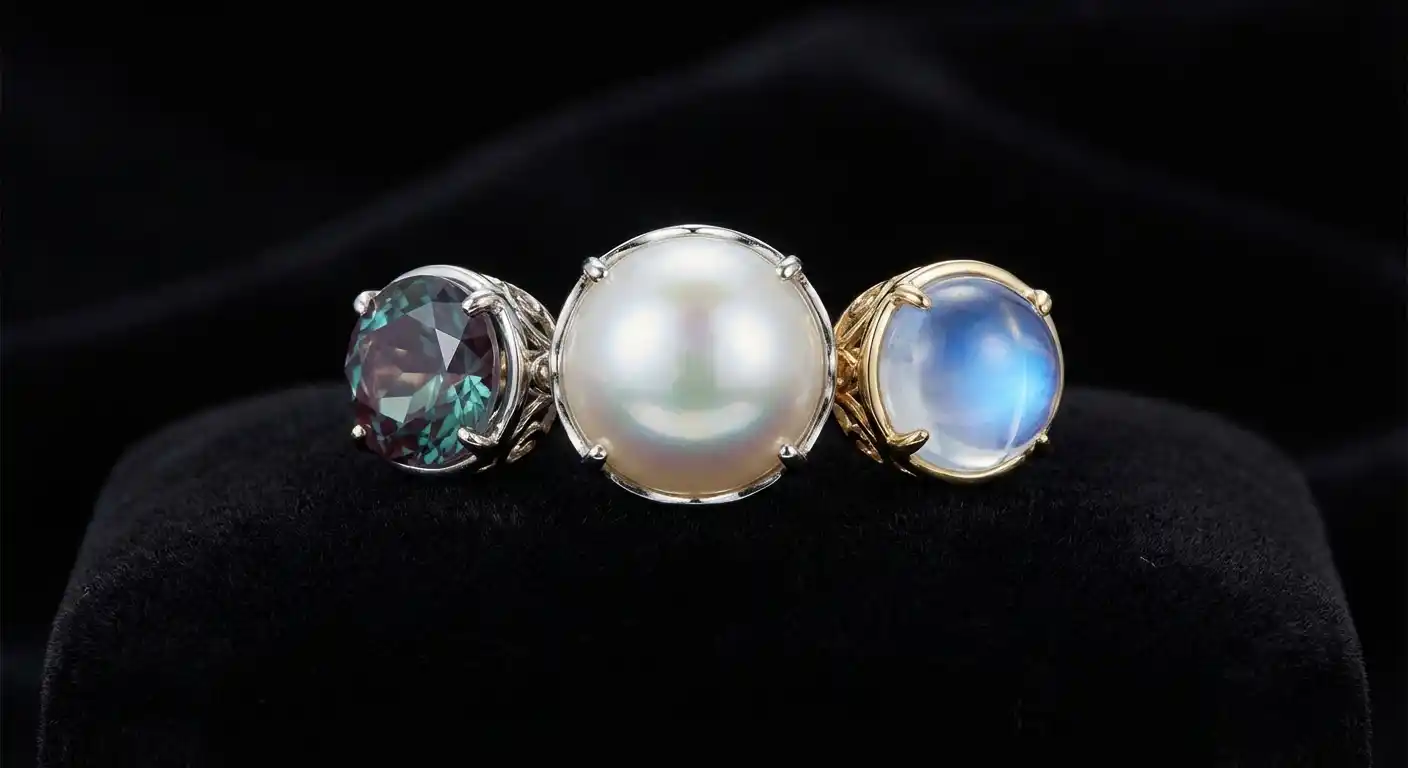
June babies are blessed with three unique birthstones. Pearl, the only gem created by living creatures, symbolizes purity and wisdom gained through experience. Alexandrite, discovered in 1830s Russia, displays a remarkable color-change from green in daylight to red under incandescent light—earning it the nickname "emerald by day, ruby by night." Moonstone captivates with its ethereal adularescence, an internal glow resembling moonlight.
These three gems offer completely different aesthetics, from pearl's classic elegance to alexandrite's rare phenomenon to moonstone's mystical shimmer.
Read our complete June Birthstone guide →
July: Ruby
Color: Red (pink-red to deep blood red) Meaning: Passion, love, courage, power, vitality Hardness: 9 Mohs
Ruby, the "king of precious stones," displays the most passionate red found in nature. Ancient Sanskrit texts called it "ratnaraj," meaning king of gems. Burmese warriors inserted rubies into their flesh believing they would make them invincible. Medieval Europeans wore rubies to guarantee health, wealth, wisdom, and success in love.
The finest rubies display a pure, vivid red called "pigeon's blood"—a color so prized that exceptional rubies can exceed diamonds in value per carat. July-born individuals wearing ruby are said to embody passion, courage, and vitality.
Read our complete July Ruby guide →
August: Peridot & Spinel
Colors: Lime green (peridot), Full spectrum (spinel) Meaning: Strength, protection, good health, peace Hardness: 6.5-7 (peridot), 8 (spinel)
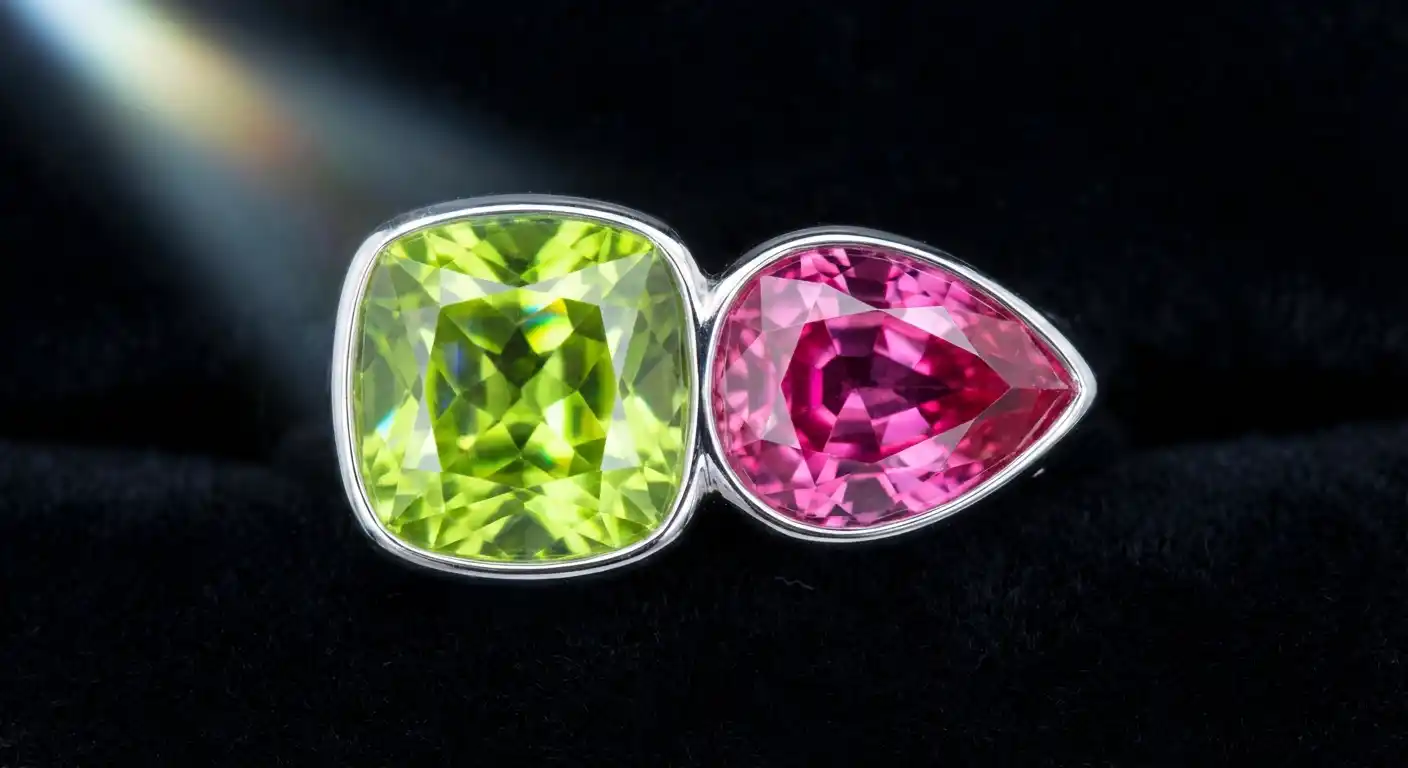
August offers two distinctive birthstones. Peridot, the "gem of the sun," forms deep in Earth's mantle and reaches the surface through volcanic activity—it's even been found in meteorites from space. Hawaiian legends call it the tears of the volcano goddess Pele. Spinel, added to August's birthstone lineup in 2016, was historically mistaken for ruby and sapphire—famous "rubies" in royal crown jewels have proven to be spinels.
Peridot offers a unique yellow-green found in no other gem, while spinel provides an extraordinary range of colors from vivid red to cobalt blue.
Read our complete August Birthstone guide →
September: Sapphire
Color: Blue (also pink, yellow, green, orange, and more) Meaning: Wisdom, loyalty, serenity, faith, purity Hardness: 9 Mohs
Sapphire, the gem of royalty, has adorned kings and queens for centuries. The most famous sapphire today may be the engagement ring worn by Princess Diana and later Catherine, Princess of Wales. Ancient Persians believed the sky was painted blue by the reflection of sapphires.
While blue sapphires are most traditional, "fancy" sapphires occur in every color except red (red corundum is ruby). Pink, yellow, and padparadscha (pink-orange) sapphires offer alternatives for those seeking uniqueness. September-born individuals are associated with wisdom, loyalty, and nobility.
Read our complete September Sapphire guide →
October: Opal & Tourmaline
Colors: Iridescent rainbow (opal), Full spectrum (tourmaline) Meaning: Creativity, hope, faithfulness, protection Hardness: 5-6.5 (opal), 7-7.5 (tourmaline)
October celebrates two remarkably colorful stones. Opal, called the "Queen of Gems," displays a kaleidoscope of colors that shift and dance with movement—a phenomenon called play-of-color. Ancient Romans considered opals the most precious of all gems. Tourmaline occurs in virtually every color, including the unique "watermelon" variety with pink center and green rim.
Black opals from Australia are the rarest and most valuable, while pink tourmaline is particularly associated with October birthdays. Both stones symbolize creativity, imagination, and hope.
Read our complete October Birthstone guide →
November: Topaz & Citrine
Colors: Blue, golden, pink (topaz), Yellow to orange (citrine) Meaning: Love, affection, strength, abundance Hardness: 8 (topaz), 7 (citrine)
November's birthstones bring warmth to autumn. Topaz, while occurring in many colors, is most beloved in blue—from pale sky to deep London blue. The rare Imperial topaz displays coveted peachy-gold to pinkish-orange hues once reserved for Russian royalty. Citrine, called the "Merchant's Stone," is believed to attract prosperity and success. Its sunny yellow to deep honey tones evoke captured sunshine.
Both stones are known for their calming energies and associations with good fortune, making them perfect for the thanksgiving season.
Read our complete November Birthstone guide →
December: Turquoise, Tanzanite & Zircon
Colors: Blue-green (turquoise), Violet-blue (tanzanite), Various blues (zircon) Meaning: Good fortune, protection, transformation, clarity Hardness: 5-6 (turquoise), 6-7 (tanzanite), 6.5-7.5 (zircon)
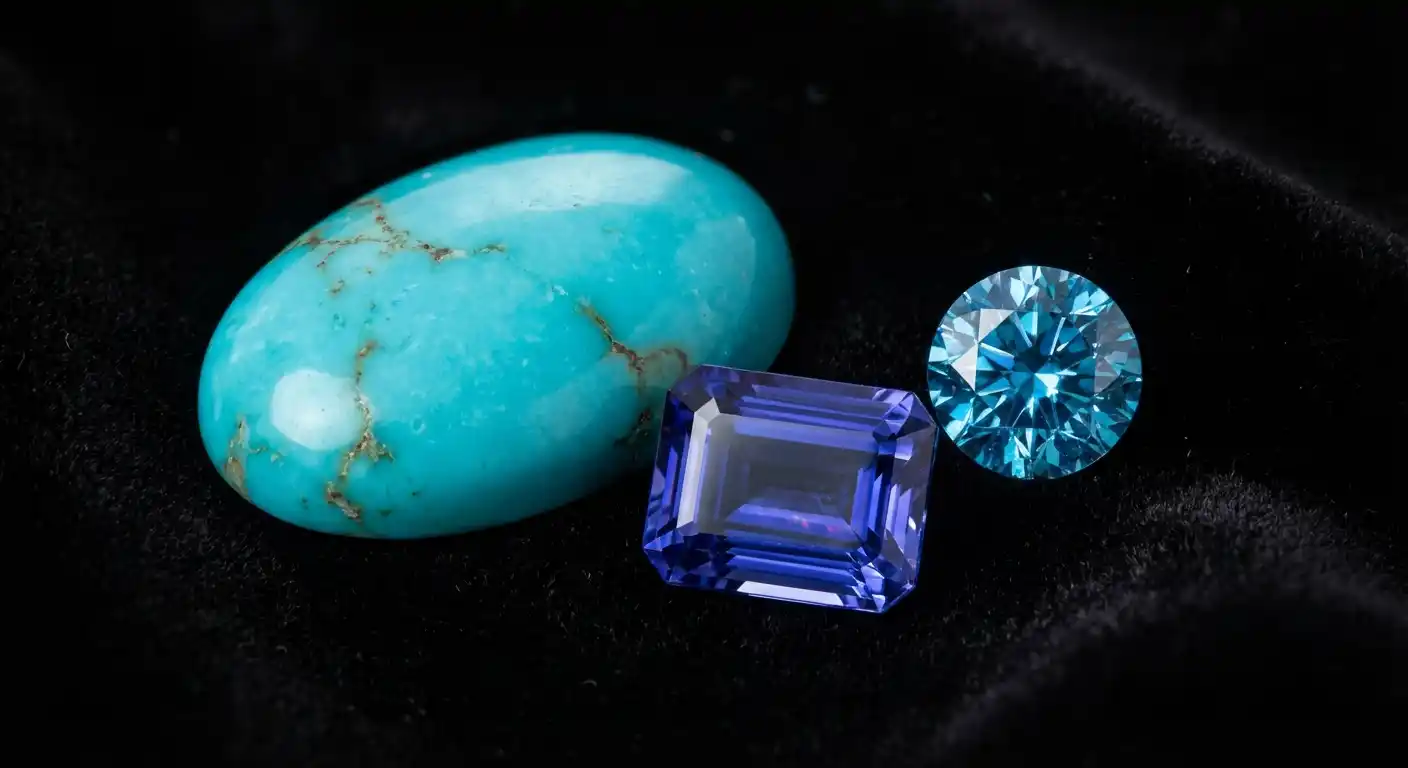
December offers three blue gemstones with vastly different characters. Turquoise, the oldest known gemstone, has been treasured by ancient Egyptians, Persians, and Native Americans for thousands of years. Tanzanite, discovered only in 1967 near Mount Kilimanjaro, exists in just one location worldwide, displaying remarkable violet-blue color. Zircon (not to be confused with synthetic cubic zirconia) is among Earth's oldest minerals with brilliance rivaling diamonds.
These three stones span from turquoise's ancient heritage to tanzanite's modern rarity, offering something for every taste.
Read our complete December Birthstone guide →
How to Choose the Perfect Birthstone Jewelry
Consider the Setting
Different birthstones have different hardness levels, affecting their suitability for various jewelry types:
- Everyday rings: Choose stones rated 7+ on the Mohs scale (diamond, ruby, sapphire, aquamarine, topaz)
- Occasional rings/pendants/earrings: Stones rated 6-7 work well (peridot, opal, moonstone, tanzanite)
- Earrings and pendants only: Softer stones like pearl (2.5-4.5) require protection from scratches
Match Metals to Stones
- Yellow gold enhances warm-toned stones (citrine, Imperial topaz, ruby, garnet)
- White gold/platinum complements cool-toned stones (sapphire, blue topaz, diamond, tanzanite)
- Rose gold pairs beautifully with pink stones (pink tourmaline, morganite, rhodolite garnet)
Quality Factors
Each gemstone has unique quality considerations, but general principles apply:
- Color: Usually the most important factor; seek vivid, saturated hues
- Clarity: Expectations vary by stone; some (emerald) accept inclusions, others (aquamarine) should be clean
- Cut: Should maximize the stone's color and brilliance
- Carat: Balance size with quality; a smaller, finer stone often outperforms a larger, lesser one
Caring for Your Birthstone
General Care Guidelines
- Store each gem separately to prevent scratching
- Clean with warm, soapy water and a soft brush (safe for all stones)
- Remove jewelry before household cleaning, swimming, or sports
- Have settings checked annually by a professional jeweler
Stones Requiring Extra Care
- Opal: Keep away from heat; avoid ultrasonic/steam cleaners
- Pearl: Apply perfume/hairspray before wearing; wipe after each wear
- Emerald: Avoid ultrasonic cleaners; many are oil-treated
- Tanzanite: Avoid sudden temperature changes; no ultrasonic cleaning
- Turquoise: Avoid all chemicals including perfume; highly porous
Frequently Asked Questions
What if I don't like my birth month's stone?
You're free to wear any gemstone you love! Many people choose stones based on color preference, meaning, or simply what appeals to them. Our Birthstone Quiz can help you discover stones that match your personality regardless of birth month.
Can I wear a birthstone that isn't my month?
Absolutely. While traditional beliefs held that a stone's powers were strongest during its designated month, modern practice welcomes wearing any stone year-round. Many people build collections of all twelve birthstones.
What if my month has multiple birthstones?
June, August, October, November, and December all have multiple birthstone options. Choose based on personal preference, budget, or meaning that resonates with you.
Are treated gemstones okay to buy?
Many birthstones are commonly treated to enhance color or clarity. Heat treatment (sapphire, ruby, tanzanite) and irradiation (blue topaz) are stable and accepted. Always ask about treatments and ensure disclosure.
Which birthstone is most valuable?
Ruby, emerald, and natural alexandrite are among the most valuable per carat when of exceptional quality. However, value varies enormously based on quality—a fine garnet can be worth more than a poor ruby.
Explore each month's birthstone in depth through our individual guides, and discover your perfect gem through our Birthstone Personality Quiz. Whether shopping for yourself or selecting a meaningful gift, understanding the rich history and symbolism of birthstones adds significance to every piece of jewelry.
About the Author
Alfreda Borror
Alfreda Borror is the founding editor of Opulent Opal, writing research-based buying guides on diamonds, birthstones, and fine jewelry.